

Tiergarten, Berlin
Tamara K.E.
Ink Under the Skin
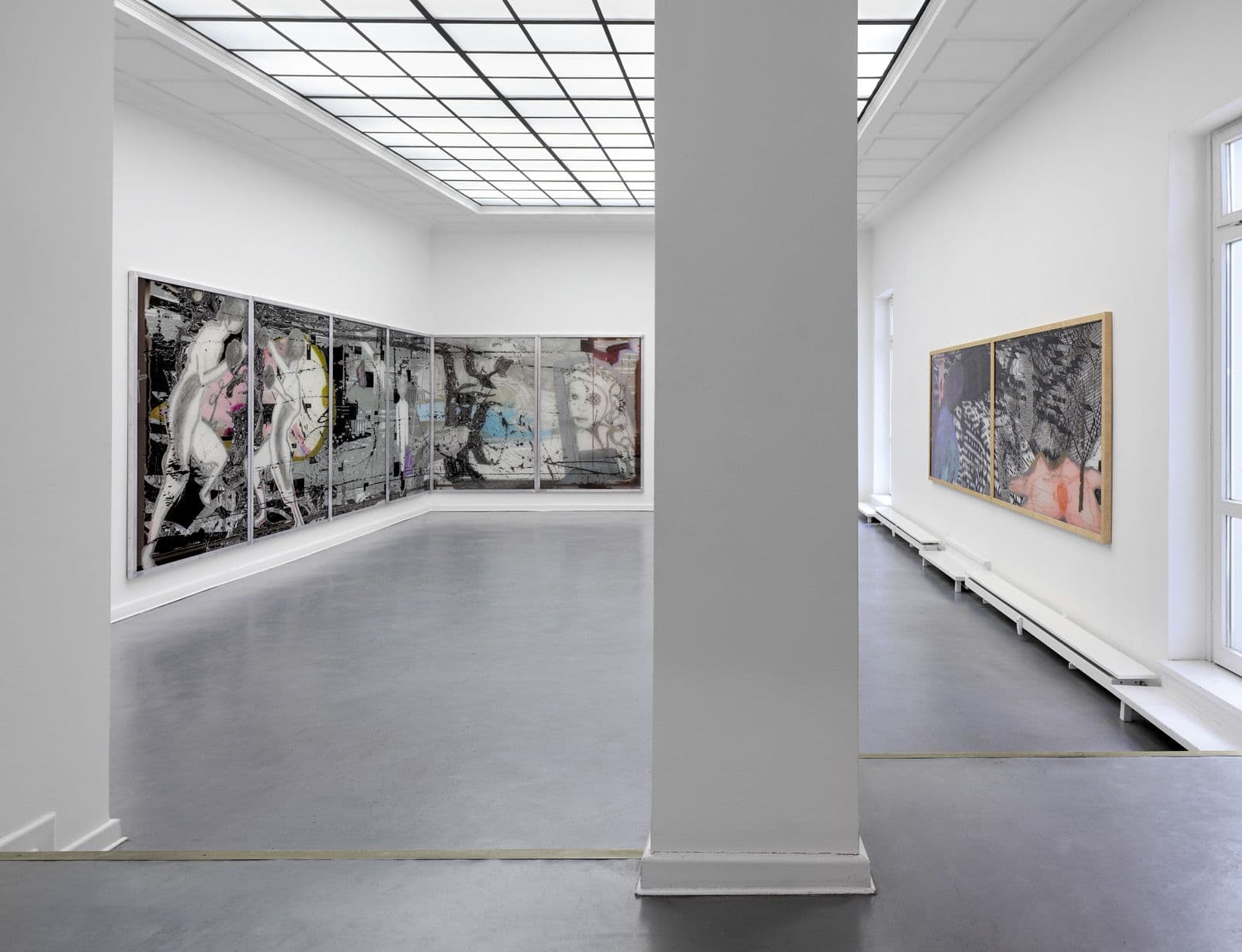
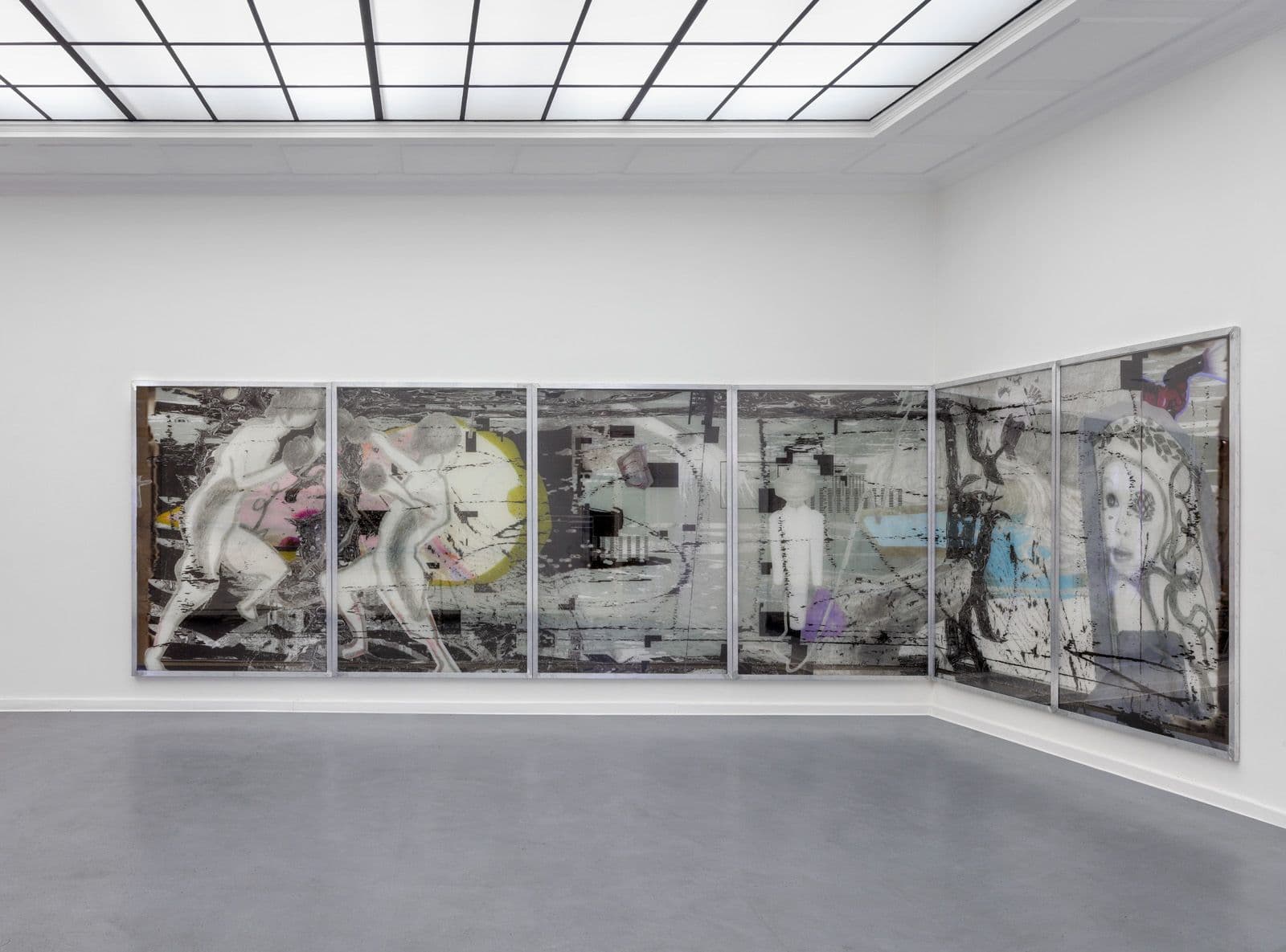
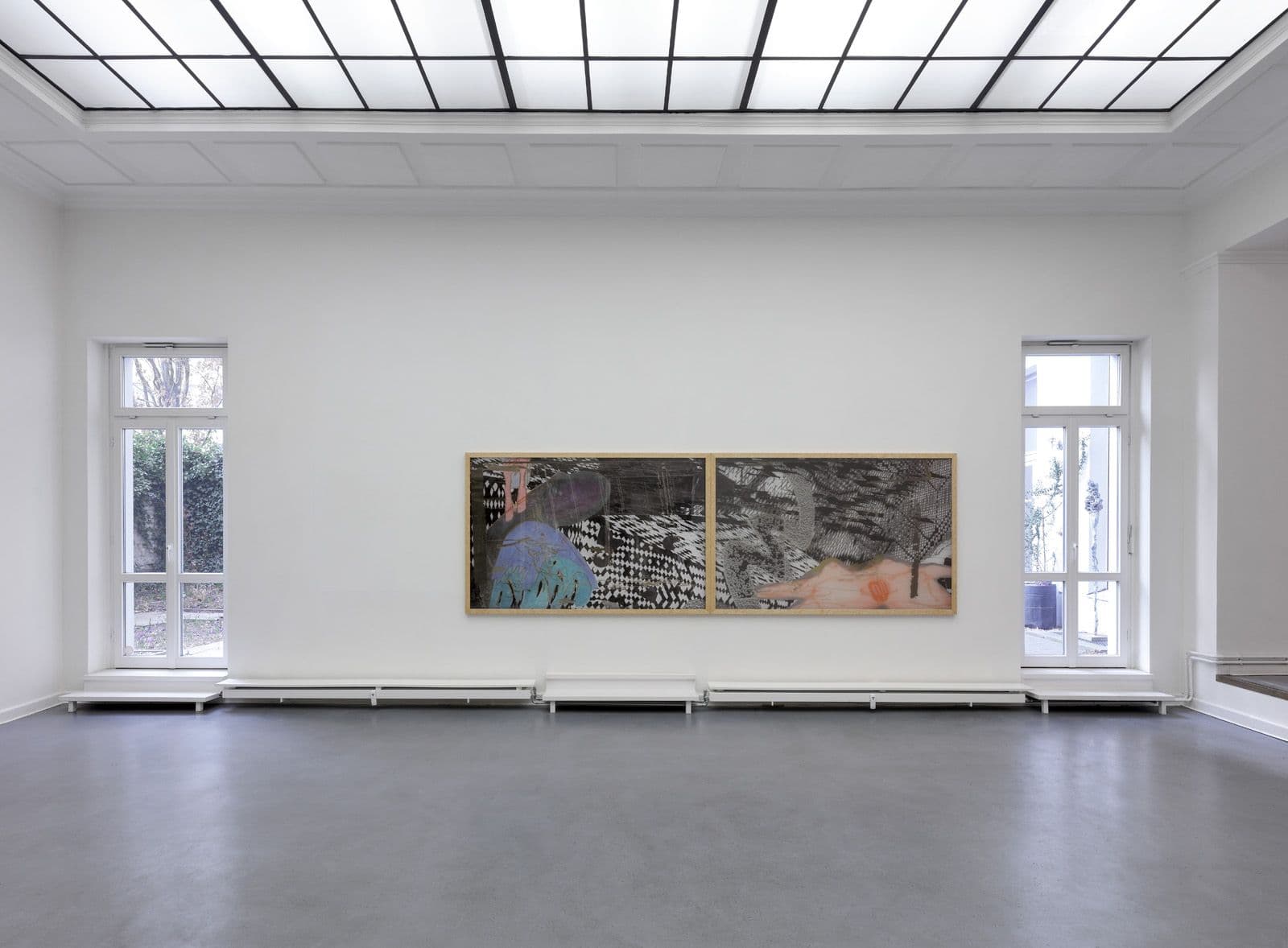
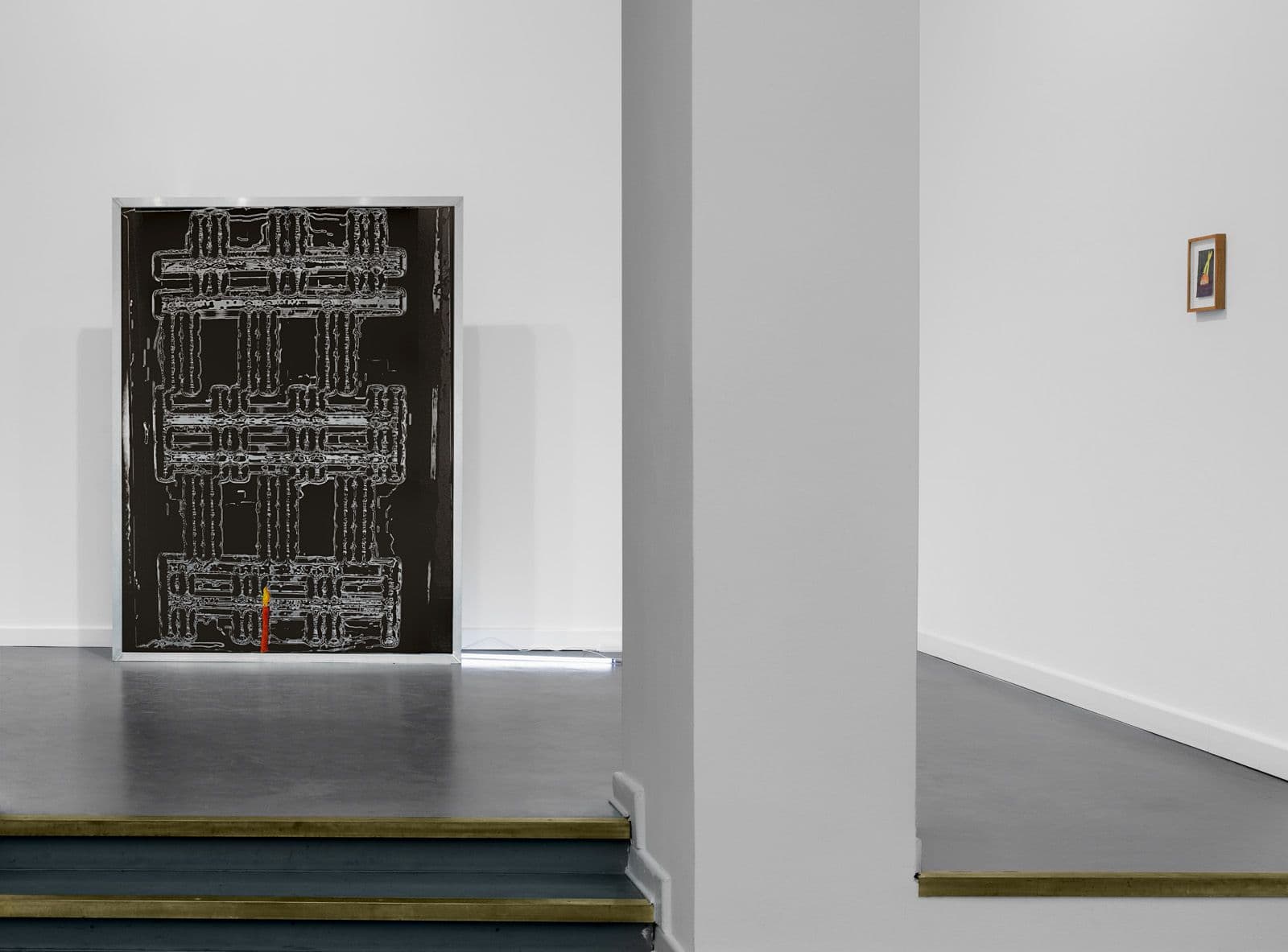
Aurel Scheibler[Please scroll down for German version / Für Deutsch bitte scrollen Sie nach unten] Aurel Scheibler is delighted to be showing a solo show of new works by Georgia-born German artist Tamara K.E. under the title of Ink Under the Skin. Ink Under the Skin is K.E.’s first solo exhibition in Berlin. At the same time, her output from the years 2001 and 2003 are included in the show 31: Women at Haus Huth, Sammlung Daimler, Berlin, from February 29 onwards. Ink Under the Skin comprises two monumental pieces on filmscreen that are no less than ten and four meters in size as well as miniature-like drawings produced with a Copic Marker pen and covering the entire breadth of the world of images Tamara K.E. has created. The display is rounded out by two freestanding filmscreen works, neon tubes scattered around the space as well as a lightbox. In her works, Tamara K.E. combines the classical medium of painting with a Photoshopped world of images that she then prints out with analogue methods. In terms of both pictorial idiom and creative process, there is no clear separation of analog and digital. The pieces reflect our cultural memories, newer or already wide-spread socio-political themes, and address the progressive transition into a digital world. K.E.’s work start with Copic Marker pen, pencil and watercolor drawings. She then scans them, digitizes them and in the process dissects them into the individual pictorial motifs. Invented comic figures, stencil-like figures and isolated objects are embedded in a multi-layered, digitally created weave of images. They meld with an amorphous digital masse in which their origins become far less important and with it the idea of authenticity. The image generated onscreen is then printed on filmscreen. The thin, transparent material resembles a membrane, on which the momentary state of the constantly moving, heterogeneous, opaque continuums is visible. Out of this pictorial world, individual themes emerge, like traces and shadows of randomly occurring memories, fields of energy or emotions. They do not jell into rigid settings, and instead an image that is just evolving may just as easily dissolve again immediately into individual particles, that eventually then reform to create another image. Among other things, the titles of the pieces point to this: The Big Twilight Boom II, the large-format, six-part work which presents the moment of this dissolution, the maximum concentration and the state of transition into an unknown future. The idea of constant transformation is innate to the free, random interplay of the pictorial elements. Tamara K.E. emerged in the context of the Düsseldorf art world back in the early Noughties. She studied at the Munich Academy of Fine Arts and at the Düsseldorf Art Academy, where she graduated in 2004. Since 2010 Tamara has lived in Brooklyn / New York and Düsseldorf. The artist is known for both her radical, socio-critical, conceptual paintings and her most recent works, in which she experiments with visual idioms and the opportunities afforded by new technologies. Tamara K.E. represented Georgia at the 50th Venice Biennial in 2003 and was invited to participate in the 1st Prague Biennial in 2003. She has taken part in exhibitions in renowned institutions world-wide, including Haus Huth, Daimler Contemporary Berlin; Sprengel Museum, Hanover; Whitechapel Gallery, London; Central House of Artists, Moscow; CoBrA Museum, Amsterdam; Van der Heydt Museum, Wuppertal; and Kunsthalle Hamburg. Her work groups entitled Next Comes Democracy, which she produced in cooperation with Galerie Hans Mayer (Düsseldorf), is on display in Daimler Contemporary collection at Haus Huth, Berlin, as part of the permanent show. Tamara K.E.’s latest shows included 5 Minutes of Random Love at Galerie Beck & Eggeling Contemporary, Düsseldorf, in November 2019. Tamara K.E. won the Art Prize bestowed by Deutsche Volksbanken und Raiffeisenbanken (Germany); der UBS Art Award for Young Art (Switzerland), and The European Prize for Painting (Belgium). Alongside her work as an artist, she has held lectures and workshops at Goldsmiths University of London, Kunstakademie Kassel, Berlin University of the Arts, the New York Studio Residency Program, Rutgers University (New Brunswick), the State Academy of the Arts Tbilisi (Georgia), and the Dresden Art Academy. Tamara K.E.’s works are included in several private and public collections, including the UBS Private Bank Collection and the collections of Deutsche Bank; Daimler Contemporary; the Van Der Heydt Museum; the City of Esslingen Gallery; Museum SAFN Reykjavík; Deutsche Apotheker- und Ärztebank Sammlung; Museum für Neue Kunst Freiburg and the Jochen and Susi Holy (Munich); Susanne Porsche (Munich); Edward & Phyllis Kwalwasser (NYC) and Philara (Dusseldorf) collections. ***** Aurel Scheibler freut sich, mit Ink Under the Skin die neuen Arbeiten der deutschen, in Georgien geborenen Künstlerin Tamara K.E. in einer Einzelausstellung zu zeigen. Ink Under the Skin ist K.E.’s erste Ausstellung in Berlin. Zeitgleich sind ihre Werke aus den Jahren 2001 und 2003 in der Ausstellung 31: Women im Haus Huth, Sammlung Daimler, Berlin, ab dem 29. Februar zu sehen. Ink Under the Skin besteht aus zwei monumentalen, sich über zehn und vier Meter erstreckenden Arbeiten auf Diafilm sowie aus mininaturhaften Copic-Marker Zeichnungen, die die Bandbreite der von der Künstlerin entwi- ckelten Bildwelt darstellen. Ergänzt wird die Präsentation durch sporadisch im Raum verteilte Neon-Röhren und einen Leuchtkasten. Tamara K.E. verbindet in ihren Werken das klassische Medium der Malerei mit einer im Photoshop überarbeiteten, gedruckten Bildwelt. Sowohl in der Bildsprache, als auch im Entstehungsprozess existiert keine Trennung zwischen analog und digital. Die Arbeiten reflektieren unsere kulturellen Erinnerungen, neuere oder bereits verbreitete sozial-politische Themen und sprechen den fortschreitenden Übergang zum Digitalen an. Den Ausgangspunkt K.E.s Arbeiten bilden Copic-Marker, Bleistift- und Aquarellzeichnungen. Sie werden gescannt, digitalisiert und dabei in einzelne Bild-Motive zerlegt. Erfundene Comic-Figuren, schablonenhafte Gestalten oder isolierte Gegenstände werden ins mehrschichtige, digital erzeugte Bildgefüge eingebettet. Sie verschmelzen mit einer amorphen digitalen Masse, in der ihr Ursprung an Bedeutung verliert und die Idee der Authentizität unwichtig wird. Das am Computer entstandene Bild wird anschließend auf Diafilm gedruckt. Das dünne, transparente Material ist gleich einer Membran, auf der ein momentaner Zustand des sich immerfort bewegenden, heterogenen, unübersehbaren Kontinuums sichtbar wird. Aus dieser Bildwelt treten vereinzelte Motive hervor, wie Spuren und Schatten zufällig auftauchender Erinnerungen, Energiefelder oder Emotionen. Sie bilden keine starren Zusammenhänge, stattdessen kann sich ein gerade entstandenes Bild sofort wieder auflösen und in einzelne Partikeln zerfallen, die sich eventuell wieder neu zusammenfügen. Darauf deuten unter anderem die Titel der Arbeiten hin: The Big Twilight Boom II, das großformatige, 6-teilige Werk, das den Moment vor dieser Auflösung, die maximale Verdichtung und den Zustand des Übergangs in eine unbekannte Zukunft zeigt. Im freien, auf Zufall basierten Zusammenspiel der Bildelemente ist die Idee der ständigen Transformation inbegriffen. Tamara K.E. begann ihre künstlerische Arbeit im Kontext der Düsseldorfer Kunstszene in den frühen 2000er Jahren. Sie studierte an der Akademie der Bildenden Künste in München und an der Kunstakademie Düsseldorf, an der sie 2004 ihren Abschluss machte. Seit 2010 lebt K.E. in Brooklyn / New York und Düsseldorf. Die Künstlerin ist bekannt sowohl für ihre radikalen, sozial-kritischen, konzeptuellen Gemälde, als auch für ihre neusten Werke, in denen sie mit visuellen Idiomen und den Möglichkeiten der neuen Technologien experimentiert. K.E. hat Georgien auf der 50. Biennale von Venedig 2003 vertreten und wurde zur 1. Prag Biennale 2003 eingeladen. Sie hat weltweit an Ausstellungen in namhaften Institutionen teilgenommen, unter anderem im Haus Huth, Daimler Contemporary Berlin; dem Sprengel Museum, Hanover; der Whitechapel Gallery, London; dem Central House of Artists, Moskau; dem CoBrA Museum, Amsterdam; dem Van der Heydt Museum, Wuppertal; der Kunsthalle Hamburg. Ihre Werkgruppe Next Comes Democracy, die sie in Zusammenarbeit mit der Galerie Hans Mayer (Düsseldorf) produzierte, ist als Teil der permanenten Sammlung Daimler Contemporary im Haus Huth, Berlin, zu sehen. Zu K.E.‘s jüngsten Ausstellungen gehört 5 minutes of random love in der Galerie Beck & Eggeling Contemporary, Düsseldorf, im November 2019. Tamara K.E. wurde mit dem Kunstpreis der Deutschen Volksbanken und Raiffeisenbanken (Deutschland); der UBS Art Award for Young Art (Schweiz) und The European Prize for Painting (Belgien) ausgezeichnet. Neben ihrer künstlerischen Tätigkeit hat K.E. Vorlesungen und Workshops an der Goldsmiths University of London, der Kunstakademie Kassel, der Universität der Künste Berlin, dem New York Studio Residency Program, der Rutgers University, New Brunswick, der Staatlichen Akademie der Künste, Tbilisi, und der Kunstakademie Dresden abgehalten. K.E.‘s Arbeiten sind in mehreren privaten und öffentlichen Sammlungen vertreten, darunter UBS Private Bank Collection; Sammlung Deutsche Bank; Sammlung Daimler Contemporary; Sammlung Van Der Heydt Museum; Sammlung der Galerie der Stadt Esslingen; Sammlung Museum SAFN Reykjavík; Deutsche Apotheker- und Ärztebank Sammlung; Sammlung Museum für Neue Kunst Freiburg sowie den Sammlungen Jochen and Susi Holy (München); Susanne Porsche (München); Edward & Phyllis Kwalwasser (NYC) und der Sammlung Philara (Dusseldorf).