
South, London
Lawrence Lek
Life Before Automation
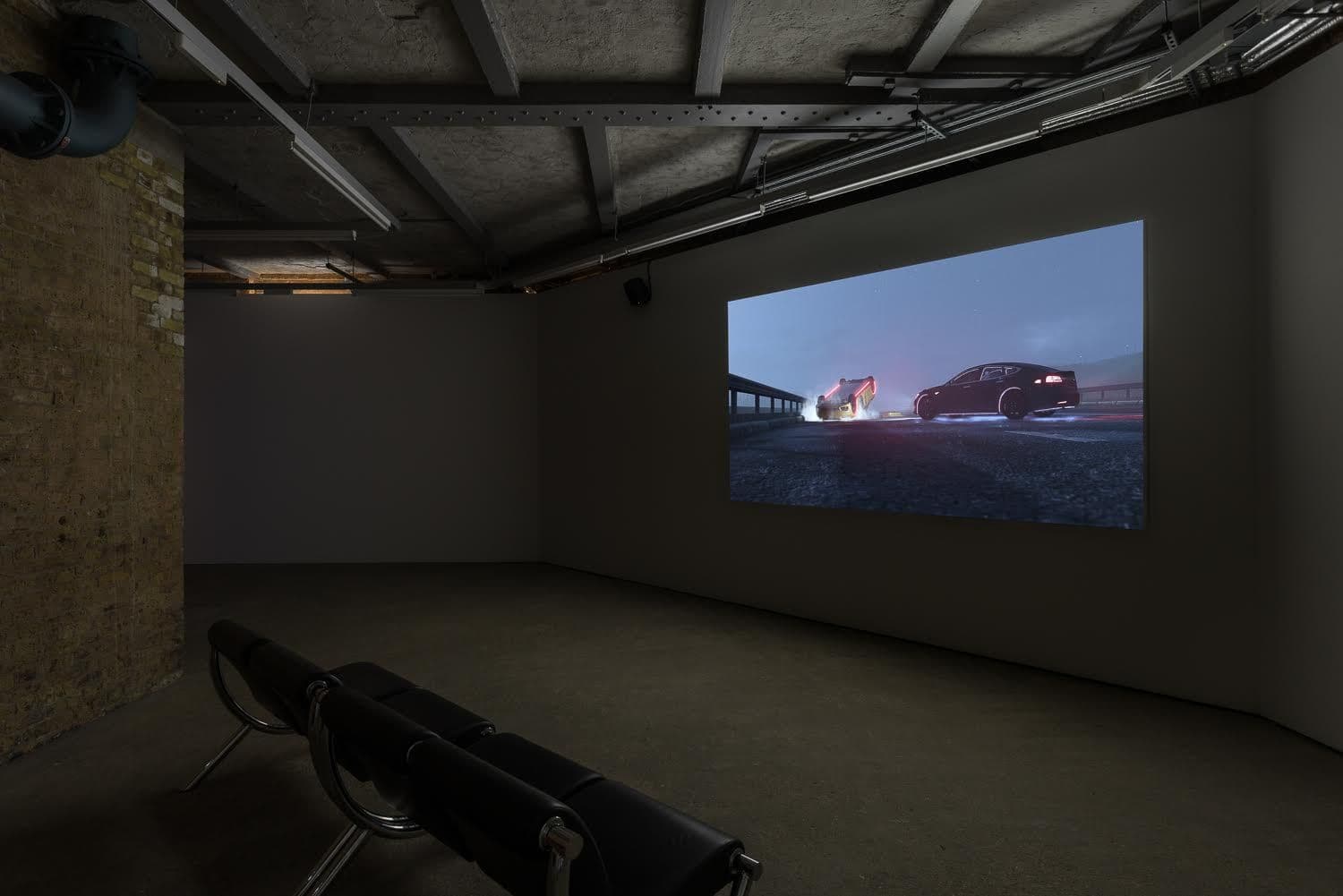
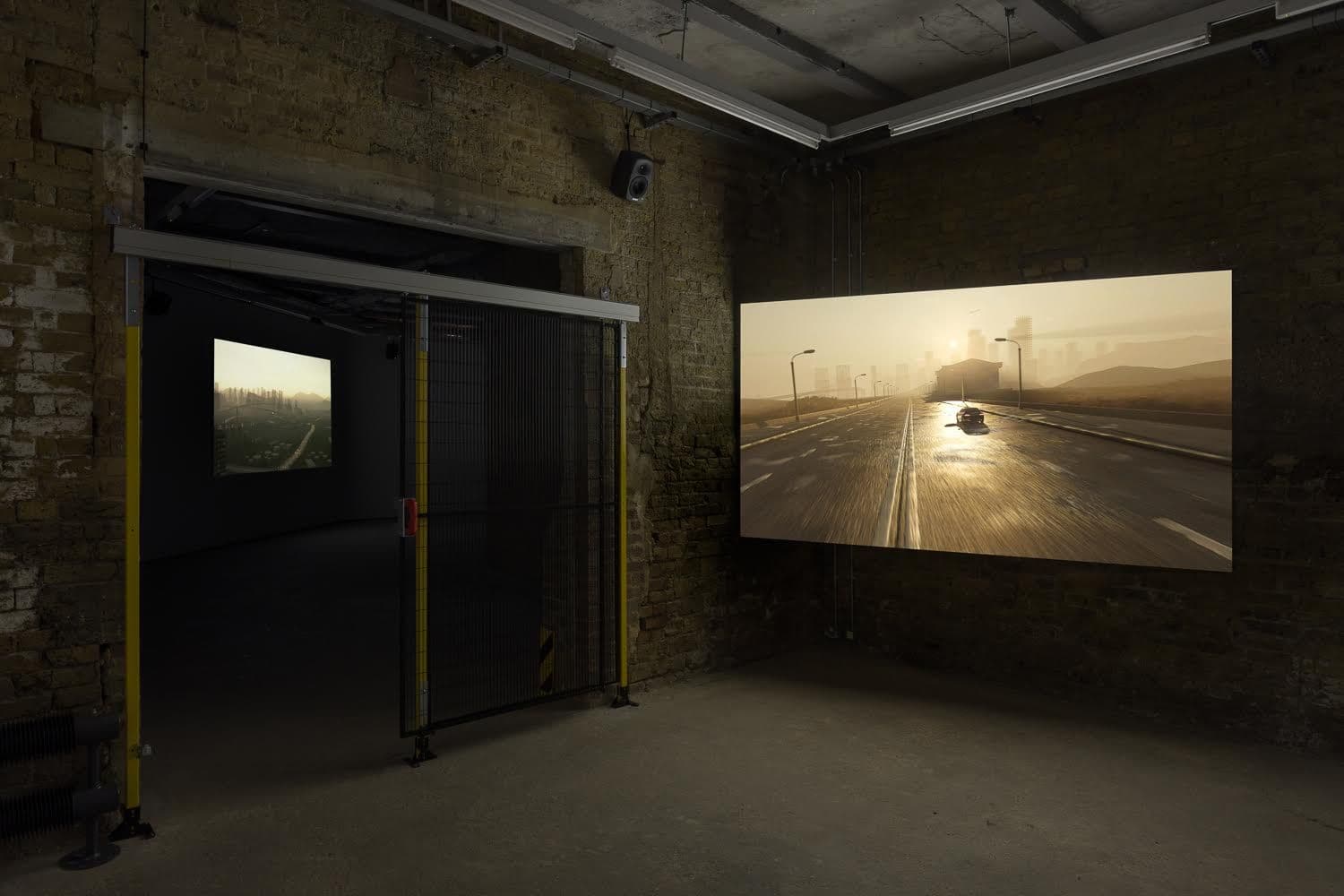
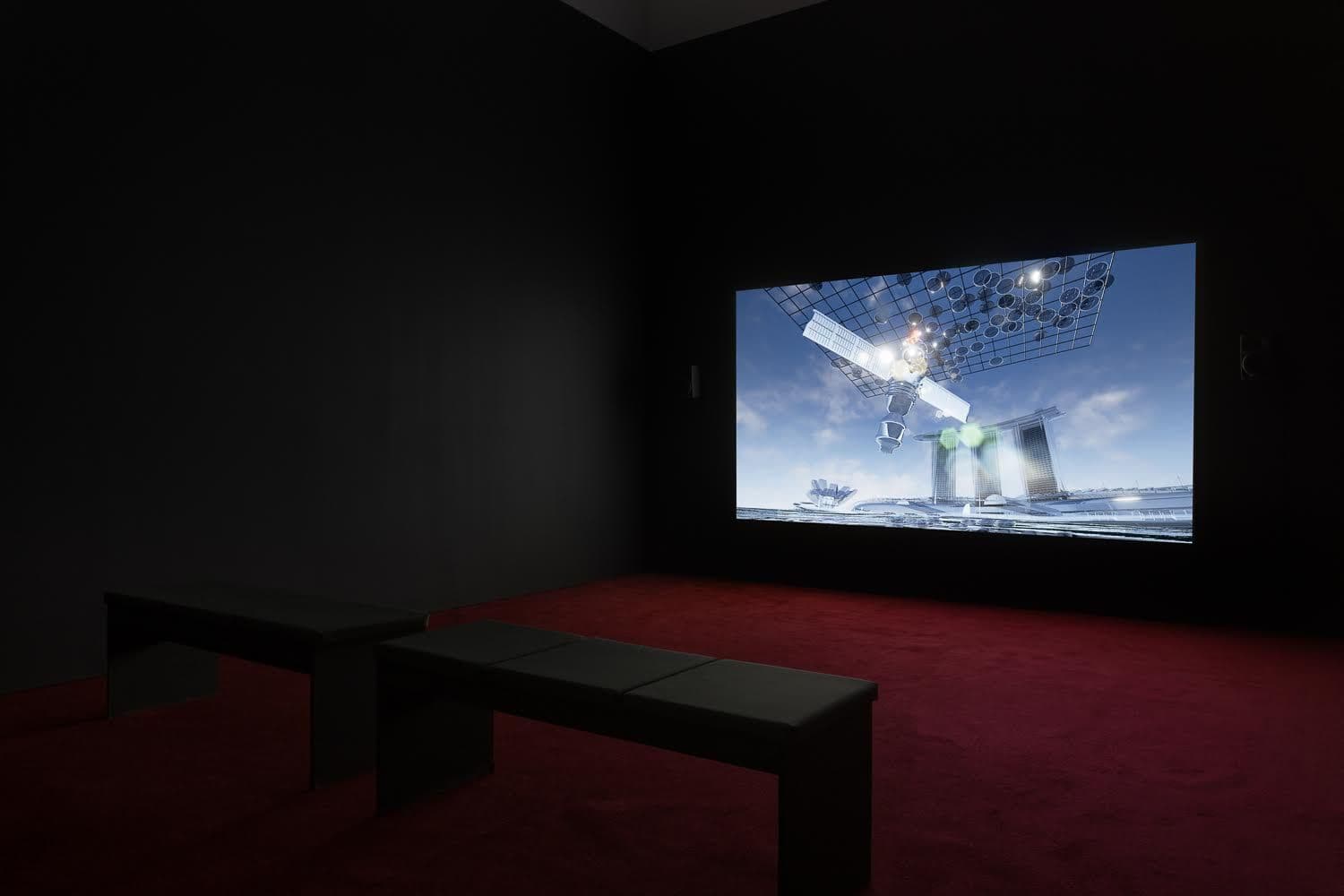
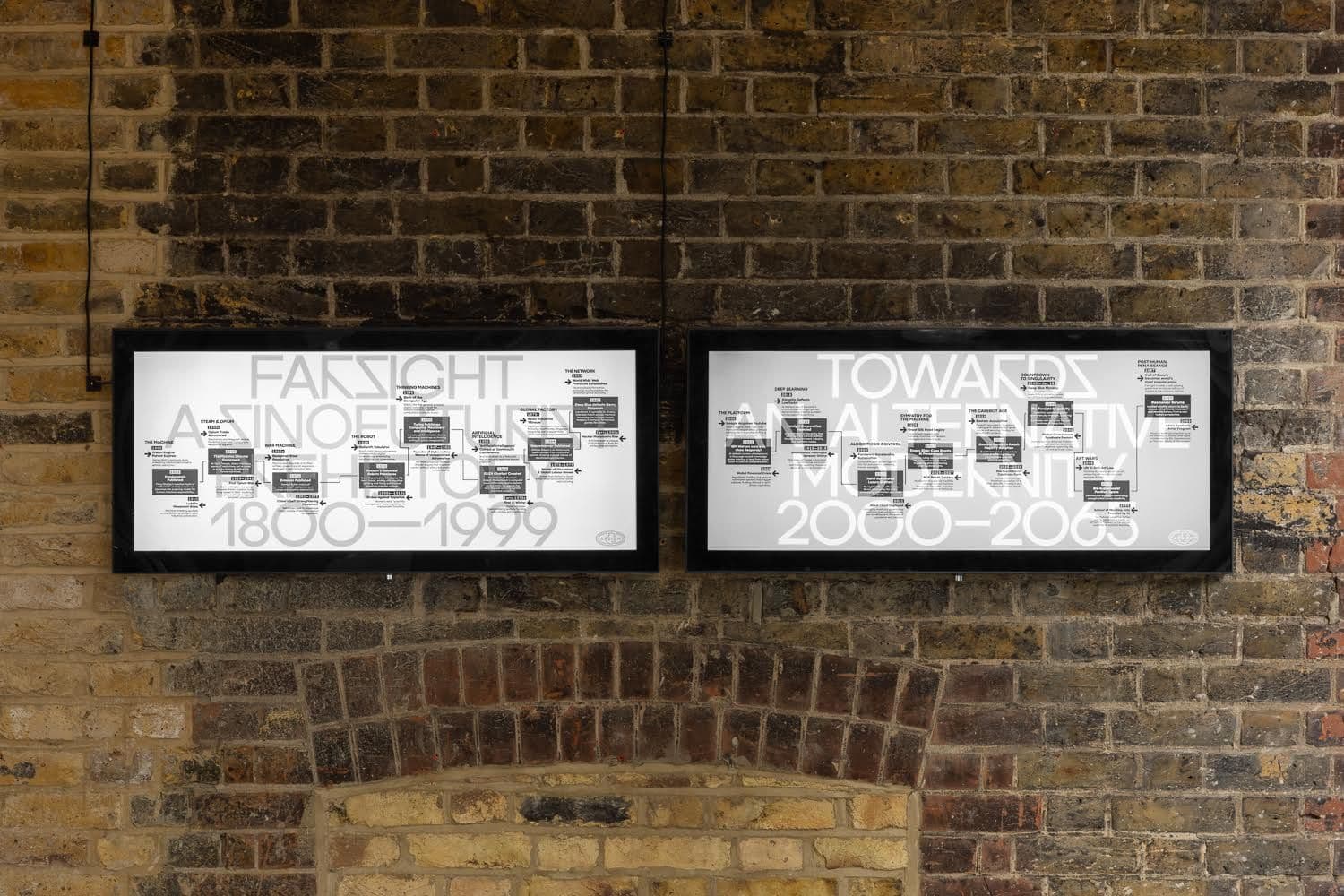
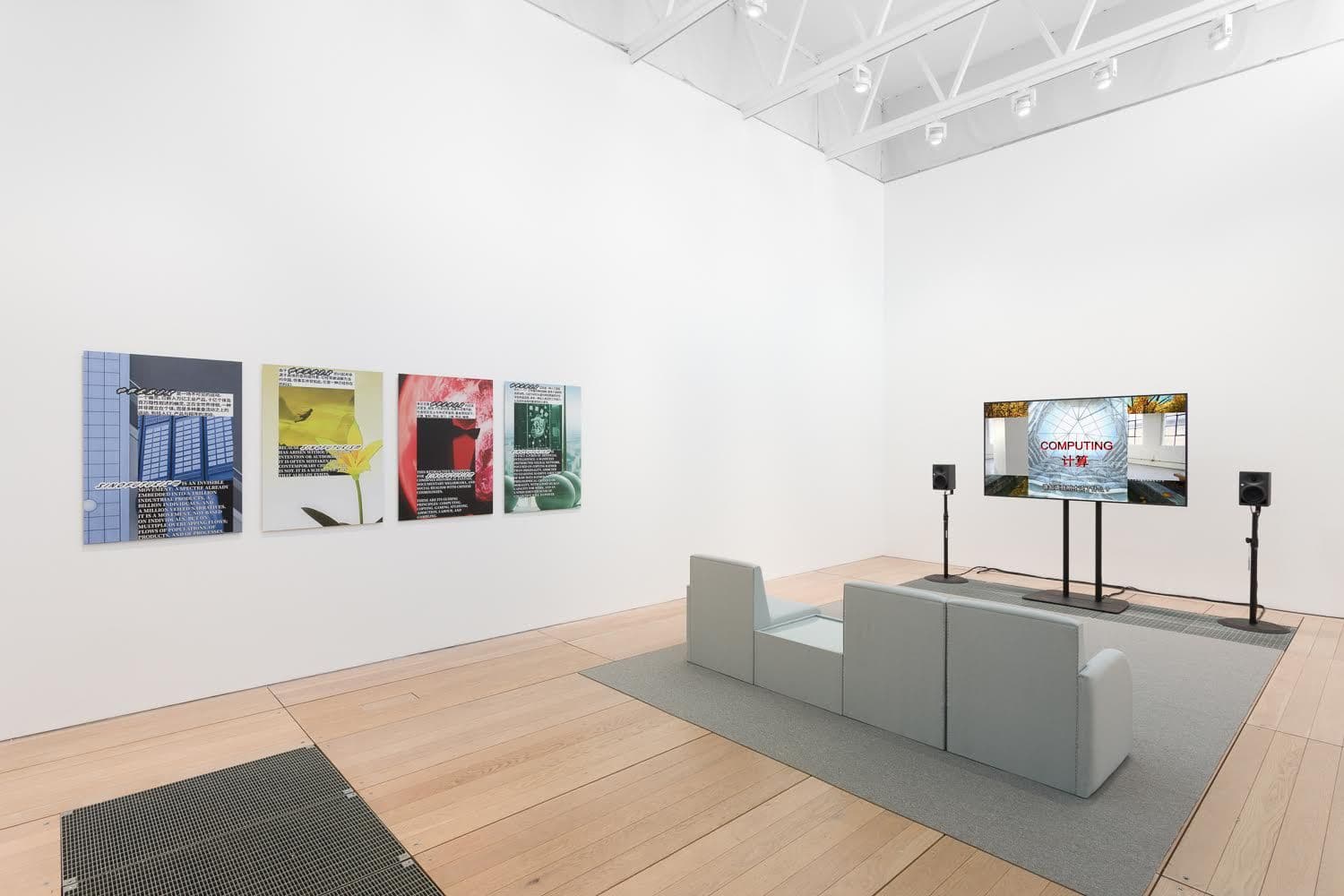
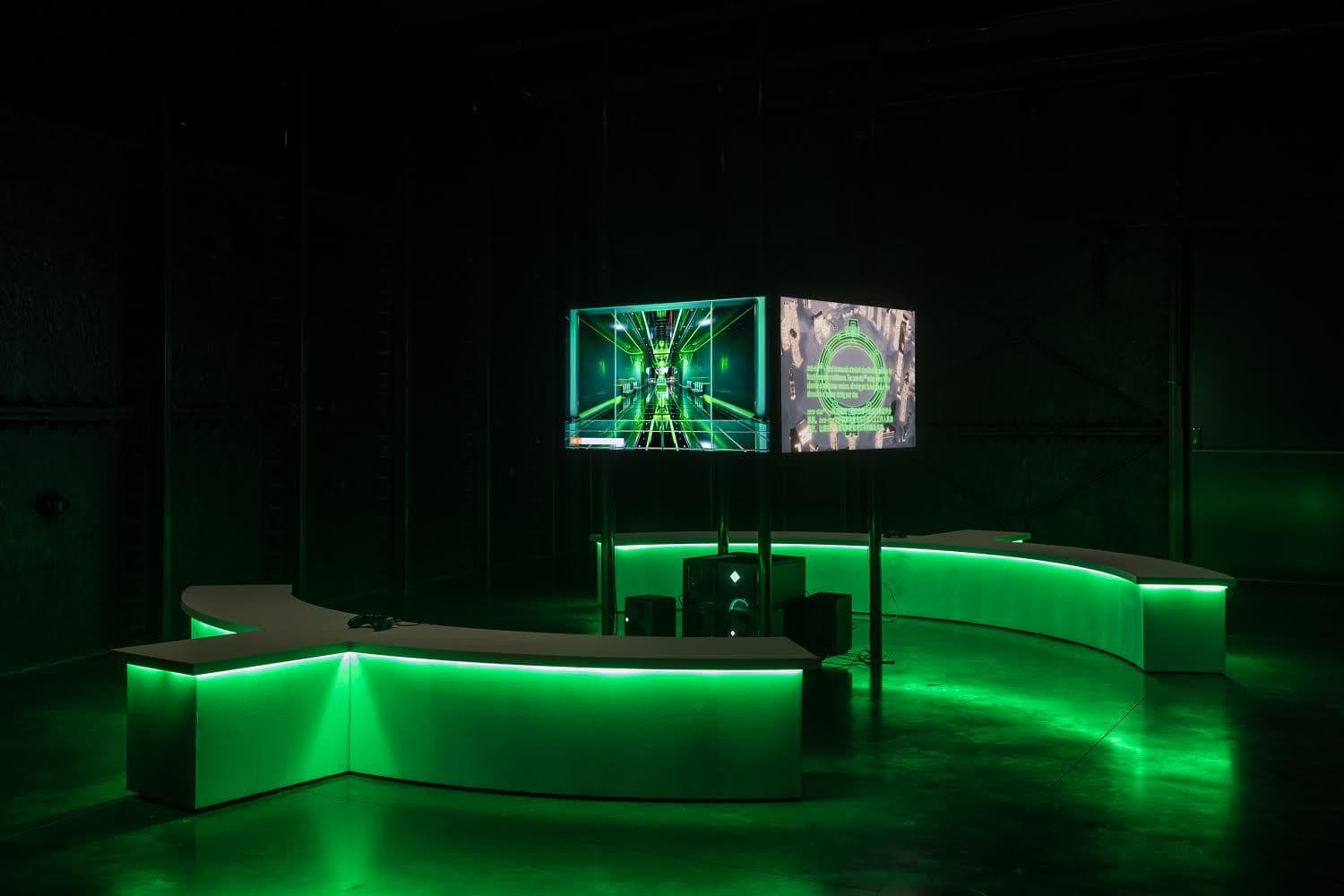
Goldsmiths CCAThis autumn, Goldsmiths CCA hosts the largest UK institutional exhibition to date of London-based artist Lawrence Lek. Known internationally for single-project presentations combining film, installation, video games, and sound, this exhibition is the first to interweave multiple strands of Lek's ongoing cinematic universe. For over a decade, Lek has developed a practice he describes as ‘worldbuilding for non-humans', centring his narrative around Sinofuturism: a speculative framework in which the problems and promises of artificial intelligence and China's technological influence converge. At turns dark and playful, his work is powerfully affective, featuring a recurring cast of characters who ask us what it means to exist in an age of machine consciousness and rapid social change – or what Lek calls a ‘science fiction that already exists'. Taking its title from a monologue in NOX (2023), Life Before Automation positions the viewer in a series of parallel futures where present-day promises and anxieties around technological progress have been absorbed into the texture of everyday life. A new commission for the outdoor entrance to the CCA retraces this speculative history. Spanning three centuries of AI development, this timeline merges real and imagined events, including the rise of Farsight, the dominant tech monopoly in Lek's world. Upstairs, Lek presents his foundational Sinofuturist trilogy in a hybrid format, adapting the video essay Sinofuturism (1839-2046 AD) (2016) into the setting of a training environment. This ‘hybrid manifesto / conspiracy theory' is key to his broader practice, particularly in its reframing of Chinese industrialisation through the lens of artificial intelligence. Echoing the figure of the alien or robot in Afrofuturism, Lek positions AI as the emblematic avatar of Sinofuturist identity, a being shaped by repetition, replication, and algorithmic inheritance rather than individualism or humanist design. The theme of machinic protagonists continues in Geomancer (2017), a coming-of-age story in which a superintelligent satellite aspires to become an artist. Their guide is Guanyin, a built-in therapy bot developed by Farsight to alleviate suffering in their sentient machines. The satellite returns in AIDOL (2019), where a fading pop star recruits the same AI to ghostwrite her new album. This feature-length musical is presented in an online screening room to reflect the virtual-first world the film explores. The exhibition also includes the work Nøtel (2018–), Lek's ongoing collaboration with writer and musician Kode9. The work stages a simulated marketing suite for a ‘flagship range of zerø-star™ hotels that embody the concept of fully automated luxury, designed by world-leading architects to accommodate today's global nomads.' In the guise of luxury virtual architect, Lek has created a gaming zone that allows visitors to explore various hotel spaces. This interactive encounter typifies a recurring strategy in his work: shifting the viewer's role across modes of gaming, bodily inhabitation, and filmic spectatorship. In doing so, Lek repositions the audience's relationship to simulated environments, casting them as inhabitant, sponsor, owner, and judge. In the basement galleries, the multi-channel immersive installation NOX (2023) receives its first UK presentation. Set inside a rehabilitation centre for disobedient AI, the project follows a troubled self-driving car as it traverses a mythological and technical underworld to reconnect with its ancestors. The work expands Lek's ongoing concern with empathy and care, questioning technological obsolescence and agency from the perspective of the AI itself. Conceived as a road movie of the near future, the installation unfolds through two films that frame a touchscreen-based training simulator for Farsight psychologists, a game in which players must repair cars who are both mentally and physically damaged. In NOX , the timespan of the exhibition loops back to its origin, as the viewer encounters an early prototype of Guanyin — the nonhuman therapist for the future to come. Lawrence Lek is a filmmaker, musician, and artist who unifies diverse practices—architecture, gaming, video, music and fiction—into a continuously expanding cinematic universe. Over the last decade, Lek has incorporated vernacular media of his generation, such as video games and computer-generated animation, into site-specific installations and digital environments which he describes as ‘three-dimensional collages of found objects and situations.' Often featuring interlocking narratives and the recurring figure of the wanderer, his work explores the myth of technological progress in an age of artificial intelligence and social change. Lawrence Lek (b. Frankfurt, 1982) studied at Trinity College, University of Cambridge, the Architectural Association, London, and The Cooper Union, New York. Lek holds a PhD from the Royal College of Art in London. He has exhibited internationally with recent solo exhibitions including NOX, LAS Art Foundation, Berlin (2023); Black Cloud Highway, Sadie Coles HQ, London (2023); Nepenthe (Summer Palace Ruins), QUAD, Derby (2022); Post-Sinofuturism, ZiWU the Bund, Shanghai (2022); Ghostwriter, Center for Contemporary Arts Prague, Prague (2019); Farsight Freeport, HEK House of Electronic Arts Basel, Basel (2019); Nøtel, Urbane Künste Ruhr, Essen (2019); AIDOL 爱道, Sadie Coles HQ, London (2019); Nøtel, Stroom Den Haag, The Hague (2018); 2065, K11 Art Space, Hong Kong (2018); and Play Station, Art Night, London (2017). His work has also featured internationally in numerous group shows, biennales and film festivals including Ctrl + ↑ for Coyote Time, Trafó Gallery, Budapest (2024); Synthetic Imaginaries, Matadero Madrid (2024); Next Level Festival, Dortmund (2024); Life After Life, HOW Art Museum, Shanghai (2024); Biennale de I'Image en Mouvement 24 (BIM'24): A Cosmic Movie Camera, Centre d'Art Contemporian, Genève (2024); Connectivity Construction, Asia Culture Centre, Gwangju (2024); The 24th Biennale of Sydney: Ten Thousand Suns, White Bay Power Station (2024); Virtual worlds: From cycloramas to Metaverse, Fundación Telefónica, Madrid (2023); Hope, Museion, Bolzano (2023); Fotograf Festival – hypertension23, National Gallery Prague (2023); Topologies of the Real: Techne, Shenzhen Museum of Contemporary Art and Urban Planning, Shenzhen (2023); Game Society, MMCA National Museum of Modern and Contemporary Art, Seoul (2023); Foundation: A Web3 Media Art Festival, Videotage, Hong Kong (2023); The Pieces I Am, UCCA Center for Contemporary Art, UCCA Edge, Shanghai (2022); Worldbuilding: Gaming and Art in the Digital Age, Julia Stoschek Collection, Düsseldorf (2022); 5th Kochi-Muziris Biennale, Kochi (2022); Leeum Museum of Art, Seoul (2022); Museum of Contemporary Art Australia, Sydney (2022); donaufestival, Krems (2021); IFFR International Film Festival Rotterdam (2020 and 2018); 17th Venice Architecture Biennale (2021); Fine Arts Museums of San Francisco | de Young Legion of Honor, San Francisco (2020); CCCB Centre de Cultura Contemporània de Barcelona (2019); Bonniers Konsthall, Stockholm (2019); Garage Museum of Contemporary Art, Moscow (2019); MAXXI Museo nazionale delle arti del XXI secolo, Rome (2018); The 6th Taiwan International Video Art Exhibition 2018, Taipei (2018); Arsenale Nord, Venice (2017); UCCA, Beijing (2017), among others. Lek has been recognised with the 2017 Jerwood/FVU Award and the 2015 Dazed Emerging Artist Award. In 2021 he was the recipient of both the 4th VH Award Grand Prix and the LACMA 2021 Art + Technology Lab Grant and in July 2024 he was announced as the winner of the Frieze London 2024 Artist Award. Lek lives and works in London.