

Charlottenburg, Berlin
Frank Auerbach
Frank Auerbach
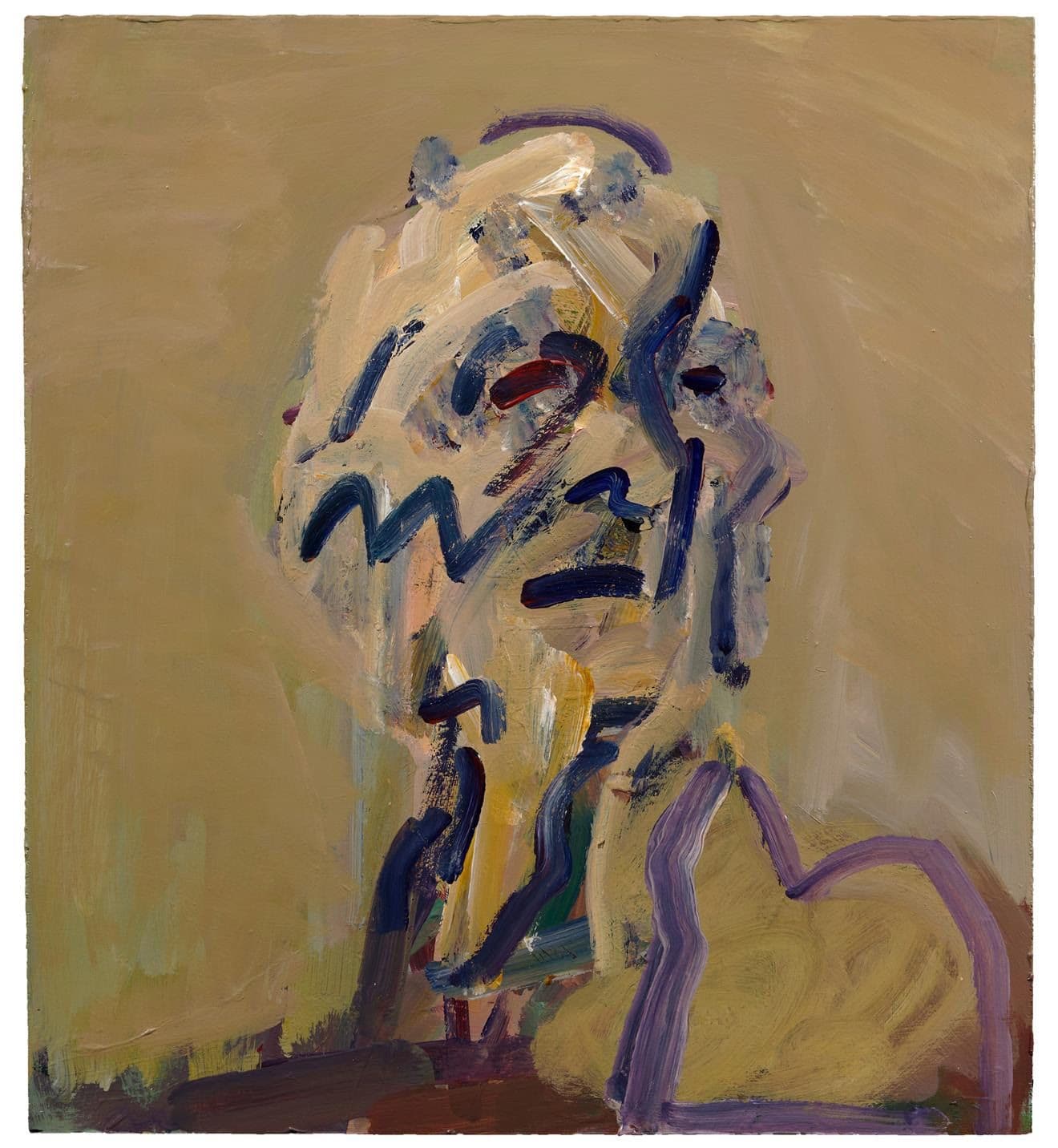
Michael Werner[Please scroll down for German version / Für Deutsch bitte scrollen Sie nach unten] Galerie Michael Werner is pleased to present Frank Auerbach, a retrospective of six decades of paintings and drawings by the eminent German-born, British painter Frank Auerbach (b. 1931 in Berlin, d. 2024 in London). The exhibition takes place in Berlin and is curated by the prominent art historian, longtime sitter and friend to Auerbach, Catherine Lampert. Frank Auerbach is the first posthumous exhibition of the esteemed artist and his first exhibition in the German capital, the city in which he was born and left for England in April 1939. Comprehensive and wide-ranging, the exhibition includes important institutional and private loans, evocative self-portraits from the last decade of Auerbach’s life, and work completed in the last years before the artist’s death in November 2024. Auerbach welcomed the prospect of this exhibition, and the idea that his work would be shown in Berlin. In the autumn of 1963, Michael Werner opened his first gallery in Berlin with works by Georg Baselitz. That same autumn, Werner and Baselitz traveled to London and saw Auerbach’s solo exhibition at the Beaux Arts Gallery. At this time, Auerbach was exhibiting, building his reputation and exploring subjects that would be pursued throughout his life’s work. Paintings and drawings of people, alongside urban landscapes, endured as the artist’s core focus. The landscapes depicted the area near his studio in Mornington Crescent, North London, where he painted from 1954 until his death. By the 1980s, the subjects were limited to a close circle of recurring sitters that included his wife Julia and son Jake. Auerbach stated, “it is very, very important that I get to know my subject intimately, not for any sentimental reasons…The better you know somebody the more things you see about them…You notice configurations and unfamiliar connections that you haven’t noticed before…It simply helps if you have a more precise and demanding sense of what [is] the truth or not.” Auerbach’s familiarity with his subjects lent the possibility for their radical and experimental treatment in paint. The resulting paintings in the 1980s and 1990s became more dramatic, yet at the same time developed a formal coherence that redefined their sense of movement and heightened their mystery. Working from a place of dissatisfaction, the end results of the paintings were always unpredictable and surprising to the artist himself. Auerbach would scrape the still-wet paint off the surface of the canvas or board after each session. He compared the sustained engagement required of his painting process to rehearsing a play. He described how when a play is properly rehearsed, it allows for “improvisation that does not break the continuity.” Towards the end of the 1990s and early 2000s, his paintings became nuanced in a different way, allowing open space to interact more freely with a spontaneous burst of marks that helped him pin down his formal ideas, particularly in his portraits. Frank Auerbach’s work can be found in many public collections worldwide including the British Museum, London; The Hepworth Wakefield, Yorkshire, Louisiana Museum of Modern Art, Humlebæk; The Metropolitan Museum of Art, New York; The Museum of Modern Art, New York; Städel Museum, Frankfurt and the Tate, London. The Arts Council organized a retrospective at the Hayward Gallery, London in 1978, and Auerbach had a solo exhibition at the British Pavilion at the 1986 Venice Biennale, winning him the Golden Lion shared with Sigmar Polke. In 2015 there was a major retrospective of his work that opened at Kunstmuseum, Bonn, later traveling to Tate Britain, London. Catherine Lampert is an independent curator and art historian. She was the director at the Whitechapel Gallery from 1988 to 2001 and has conceived exhibitions of artists for public galleries including Auguste Rodin, Honoré Daumier, Rosemarie Trockel and Francis Alÿs. She co-curated Bare Life, an exhibition of postwar British painting (1950-1980) at the LWL-Museum für Kunst und Kultur in Münster in 2014. She has written at length on Euan Uglow (2007, 2024), Frank Auerbach (2015), Paula Rego (2019), Peter Doig (2011, 2023) and Hurvin Anderson (2022). She is the co-author of Lucian Freud: Catalogue Raisonné of the Oil Paintings (2025). ***** Die Galerie Michael Werner freut sich, die Ausstellung Frank Auerbach zu präsentieren, eine umfassende Retrospektive, die Gemälde und Zeichnungen aus über sechs Jahrzehnten des einflussreichen, in Deutschland geborenen britischen Malers Frank Auerbach (1931–2024) vereint. Es ist die erste Ausstellung über den berühmten Künstler nach seinem Tod im vergangenen Jahr und die erste in der Stadt, die er 1939 verließ, als seine Eltern ihn vor der Verfolgung durch die Nazis nach England schickten. 1963 eröffnete Michael Werner seine erste Galerie in Berlin mit Werken von Georg Baselitz. Im Herbst desselben Jahres reisten Werner und Baselitz nach London und besuchten Auerbachs Einzelausstellung in der Beaux Arts Gallery. Die dort präsentierten Werke bilden das Fundament dieser Ausstellung. Bereits damals beschäftigte sich Auerbach mit jenen Themen, die ihn sein gesamtes Leben begleiten sollten: die unerbittliche Auseinandersetzung mit der menschlichen Figur und das Ergründen der Stadtlandschaft als malerisches Terrain. Seine Londoner Stadtansichten sind untrennbar mit seinem Atelier in Mornington Crescent verbunden, wo er von 1954 bis zu seinem Tod arbeitete. Ab den 1980er-Jahren konzentrierte er sich auf einen engen Kreis wiederkehrender Modelle, darunter sein Sohn Jake und seine Frau Julia. Auerbachs Malerei war ein Prozess der permanenten Revision. Sein künstlerischer Ausgangspunkt war stets die Unzufriedenheit, das Ringen um eine Wahrheit, die sich nie abschließend fixieren ließ. Jedes Bild war eine dialektische Bewegung aus Aufbau und Zerstörung. Nach jeder Sitzung schabte Auerbach die noch feuchte Farbe von der Leinwand oder der Holztafel, ein Akt der Negation, der ihm die Möglichkeit gab, am nächsten Tag erneut zu beginnen. Er verglich seine Arbeitsweise mit den Proben eines Theaterstücks. Nur durch die Wiederholung entsteht jene Sicherheit, die wahre Improvisation erst ermöglicht. Die Ausstellung wird von der renommierten Kunsthistorikerin und langjährigen Direktorin der Whitechapel Gallery, Catherine Lampert, kuratiert, die nicht nur intensiv über Auerbach gearbeitet hat, sondern ihm über Jahrzehnte auch Modell saß. Zur Ausstellung erscheint ein Katalog mit Texten von Catherine Lampert, Matthew Holman, Danièle Cohn und Johanna Adorján.