
Hannam, Seoul
Lee Ufan & Mark Rothko
Correspondence
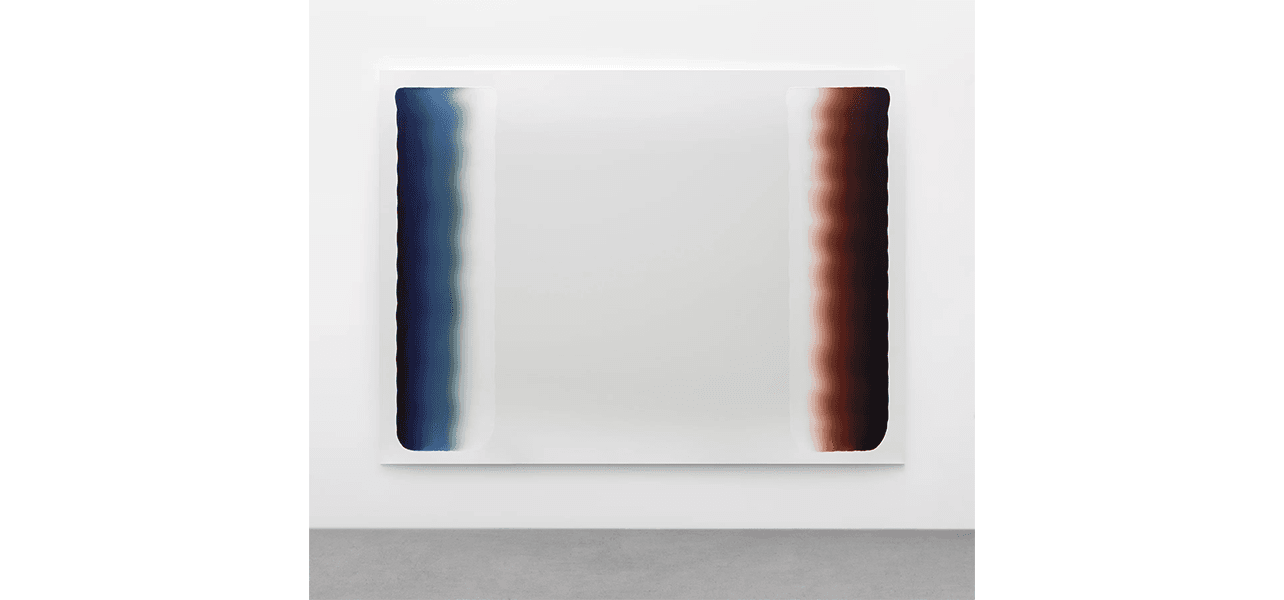
Pace GalleryPace is pleased to present Correspondence: Lee Ufan and Mark Rothko, a two-artist exhibition curated by Lee Ufan in collaboration with the Rothko family, at its Seoul gallery. The show spans two floors of the gallery, bringing a suite of paintings from Lee’s Dialogue and Response series, made between 2018 and 2023, into conversation with major works by Mark Rothko from the 1950s and 1960s. Born in 1936, Lee Ufan was a leading figure of the Japanese avant-garde group Mono-ha in the late 1960s. His artistic practice, which emphasizes the relationships between space, perception, and object, developed from his deep appreciation for nature and materiality. Rothko, a pioneer of the New York School, is one of the most influential artists of the 20th century, known for his Color-field paintings of immense scale that are imbued with psychological and spiritual import. While each artist’s work will be given a dedicated space and presented separately in the upcoming show in Seoul, the exhibition will draw out the many resonances and intersections—in terms of color, surface, and atmosphere—that cut across both artists’ work. The paintings of Rothko have long been celebrated for their ability to summon the sublime powers of color, dissolving fields of pigment into expanses of radiant atmosphere. Color is equally potent in Lee’s paintings, though it often emerges as a frozen gesture, in contrast to Rothko’s gesture-less surfaces. If Rothko’s indecipherable application of paint evokes the scumbles and fogs of late Titian—flooding the entire canvas and erasing any sense of line or hard contour—Lee’s forms are comparatively crisp and self-contained. Yet both artists use color as a locus for eliciting a deeply contemplative state in the viewer, and both deal with the aesthetics of air, emptiness, and vapor in their work, investigating painting’s capacity to intensify our experience of color and to produce an effect that is at once awesome and meditative, conveying both power and quiescence. For these two artists, painting becomes a tool for crystallizing the ephemeral into the concrete. Lee’s works capture the fleeting energy of a brushstroke and concretize it into the immediacy of color, making it feel as solid as stone. In a similar way, Rothko congeals atmosphere into the fixed stability of form. In Lee’s work, the brushstroke is intimately tied to the artist’s breath—this vapor, this “atmos” of the lungs, which settles onto the canvas and takes the form of a picture. Rothko’s paintings often have the sense of nebulous clouds—as if air masses were taking shape, brooding within an expanse of darkening sky. Situating the artists in dialogue, the presentation in Seoul explores how their works embody these poetics of vapor and air. Seen together, they speak to the climatic possibilities of abstraction, in which paintings produce their own weather, transforming and reshaping our experience of space and our very presence within it. In addition to his paintings, the exhibition will also include a new sculpture by Lee, Relatum – Correspondence (2024), installed in the gallery’s courtyard. Featuring a heavy stone dropped on a steel plate, this work examines the relationships between individual elements as defined by both space and objecthood. Lee Ufan (b. 1936, Kyongsang-namdo, South Korea) emerged as one of the leading figures of the Japanese avant-garde group Mono-ha, in the late 1960s. Emphasizing the relationships between space, perception, and object, his works develop from an appreciation of nature and the inherent qualities of his materials. Here, the action of repetitive minimal marks denotes an association between the body and temporality. Combining artistic practice with philosophical writing, Lee’s oeuvre is characterized by thoughtful and direct iterations of gestures, engaging the viewer in contemplation of abstract forms and vivid restraint, manifesting in sculpture, paintings, and works on paper. Mark Rothko (b. 1903, Dvinsk, Russia; d. 1970, New York), a pioneer of the New York School, is predominantly recognized for his mesmerizing Color-field paintings of immense scale produced between 1949 and 1970, which followed his works of figurative and biomorphic imagery. His stylistic explorations resulted in a proliferation of works on paper and canvas, with layered transparencies of vibrant pigments and earth tones culminating in luminous and ethereal soft-edged compositions. His approach to painting emphasized an experimental engagement with process in order to fully articulate a universal expression. Among Rothko’s artistic philosophies, he held that painting was a deeply psychological and spiritual experience through which basic human emotions could be communicated.