
Marais, Paris
Miryam Haddad
Le Sel D'un Songe
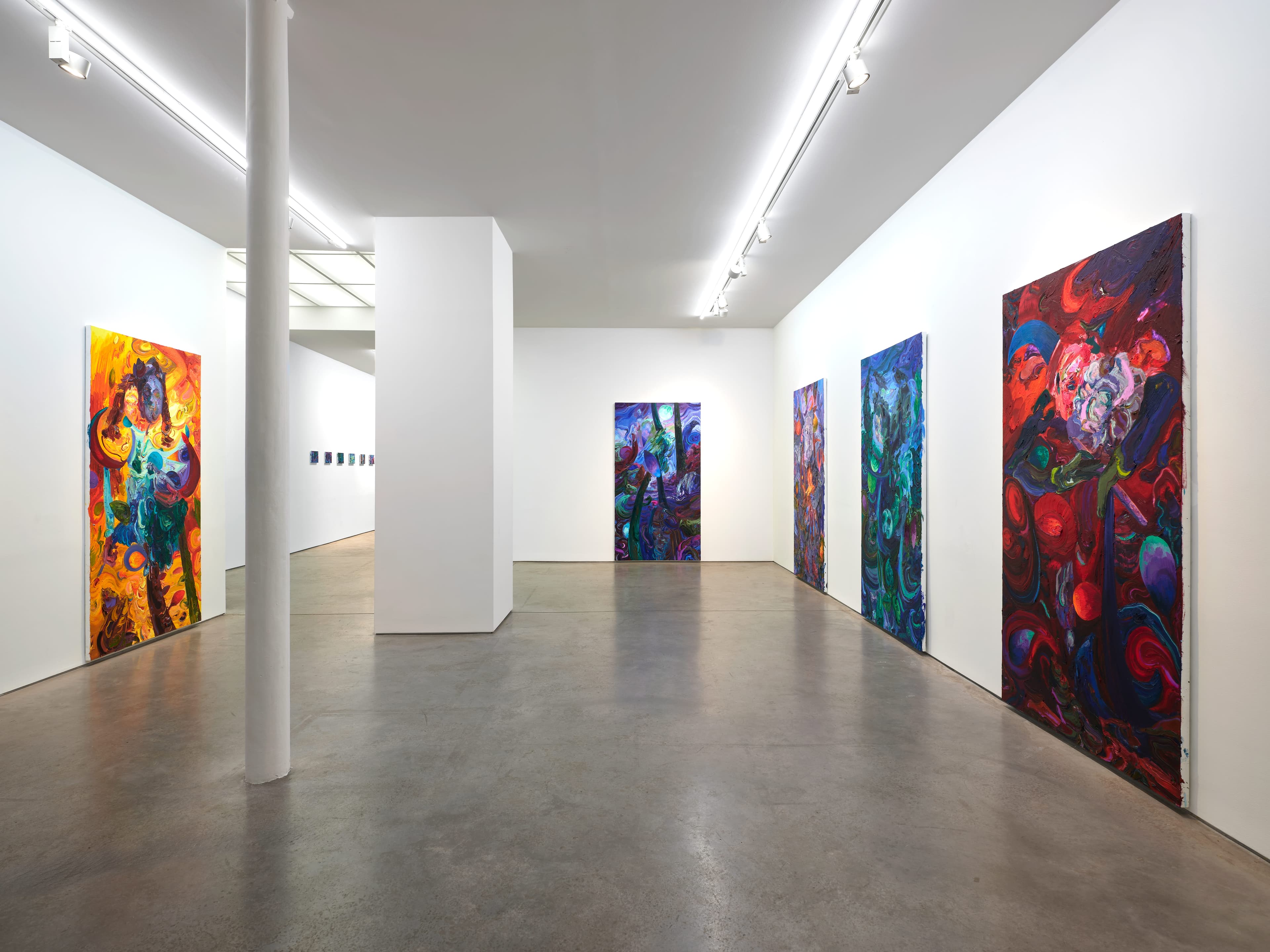
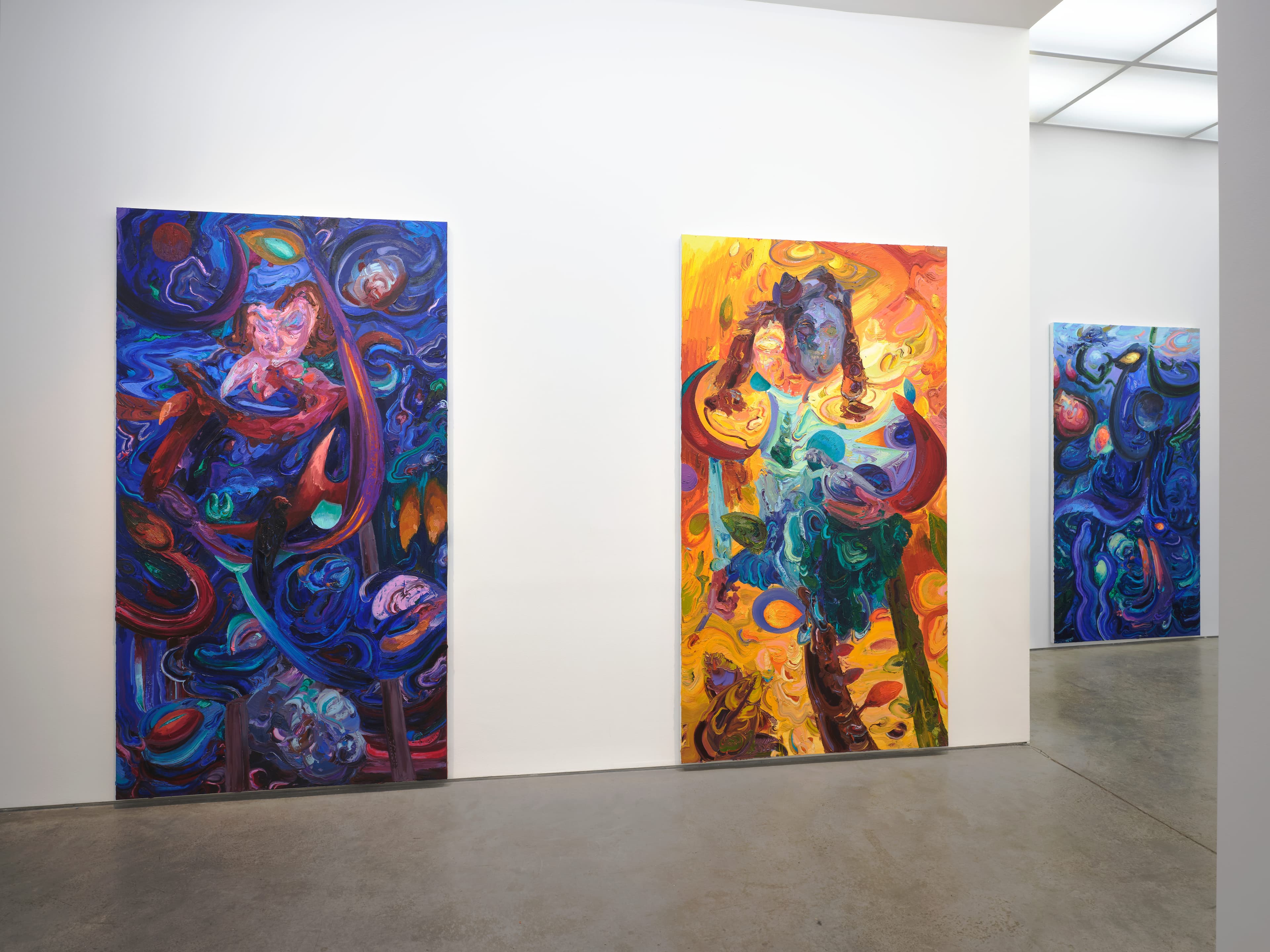
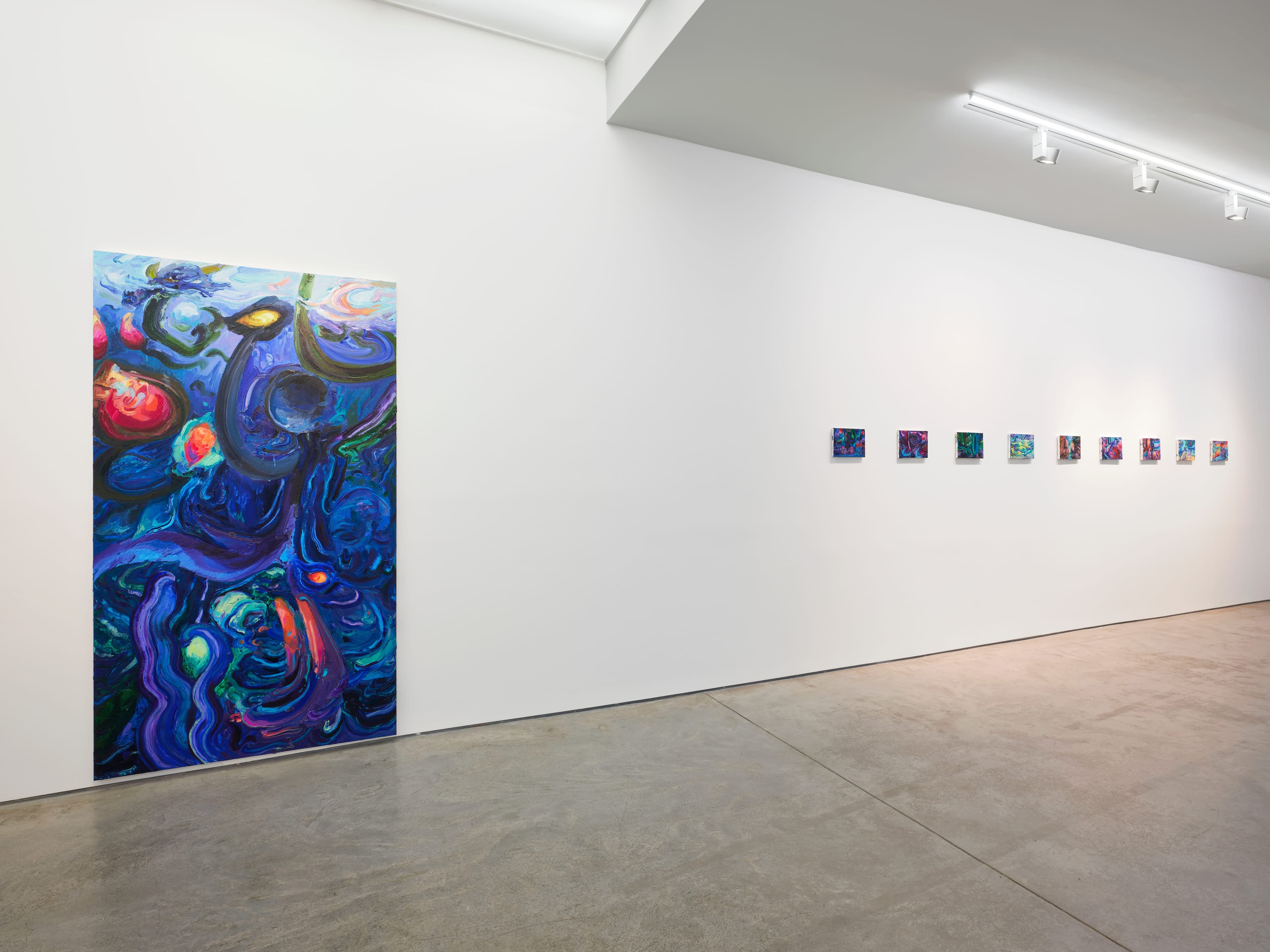
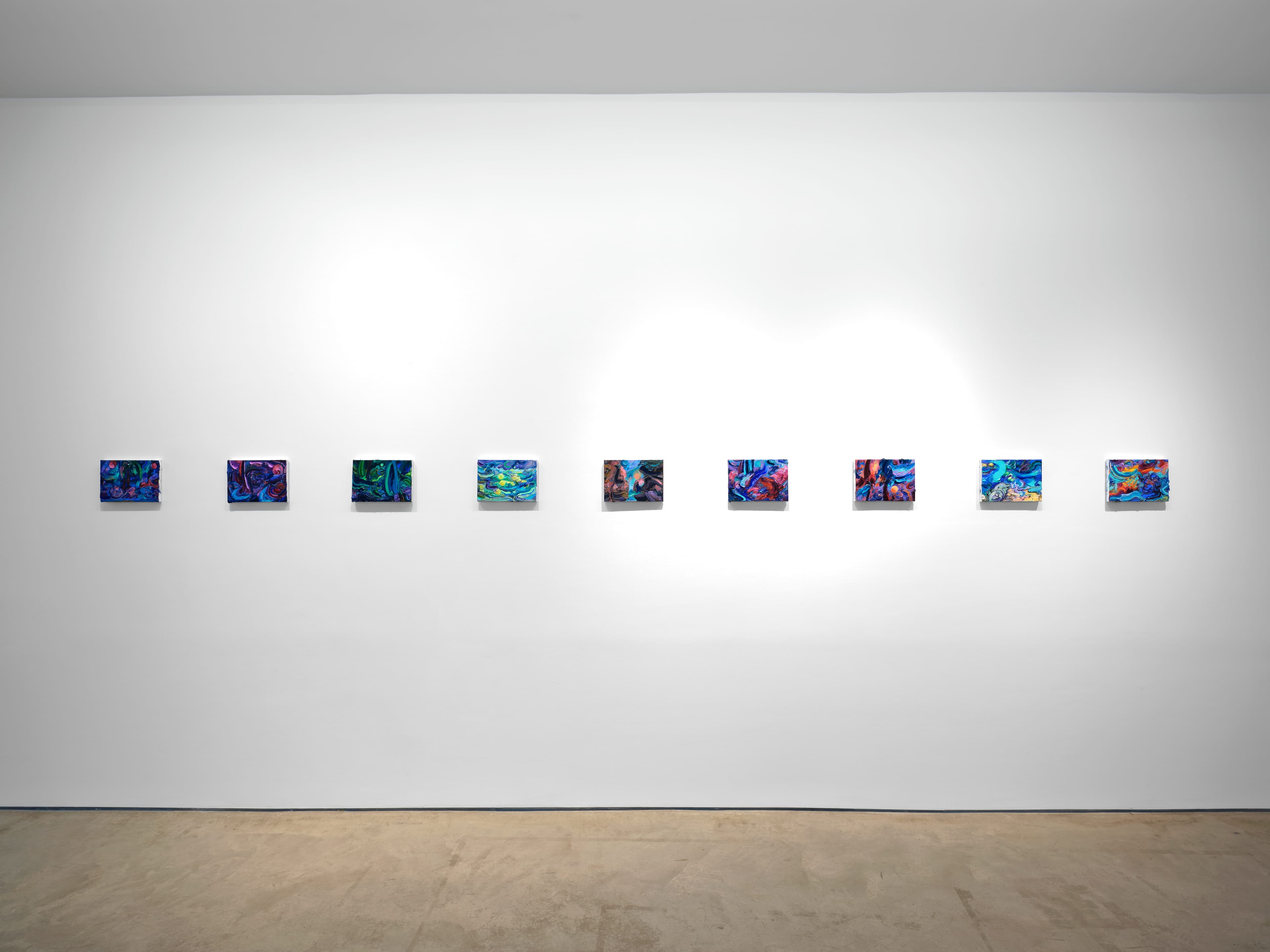
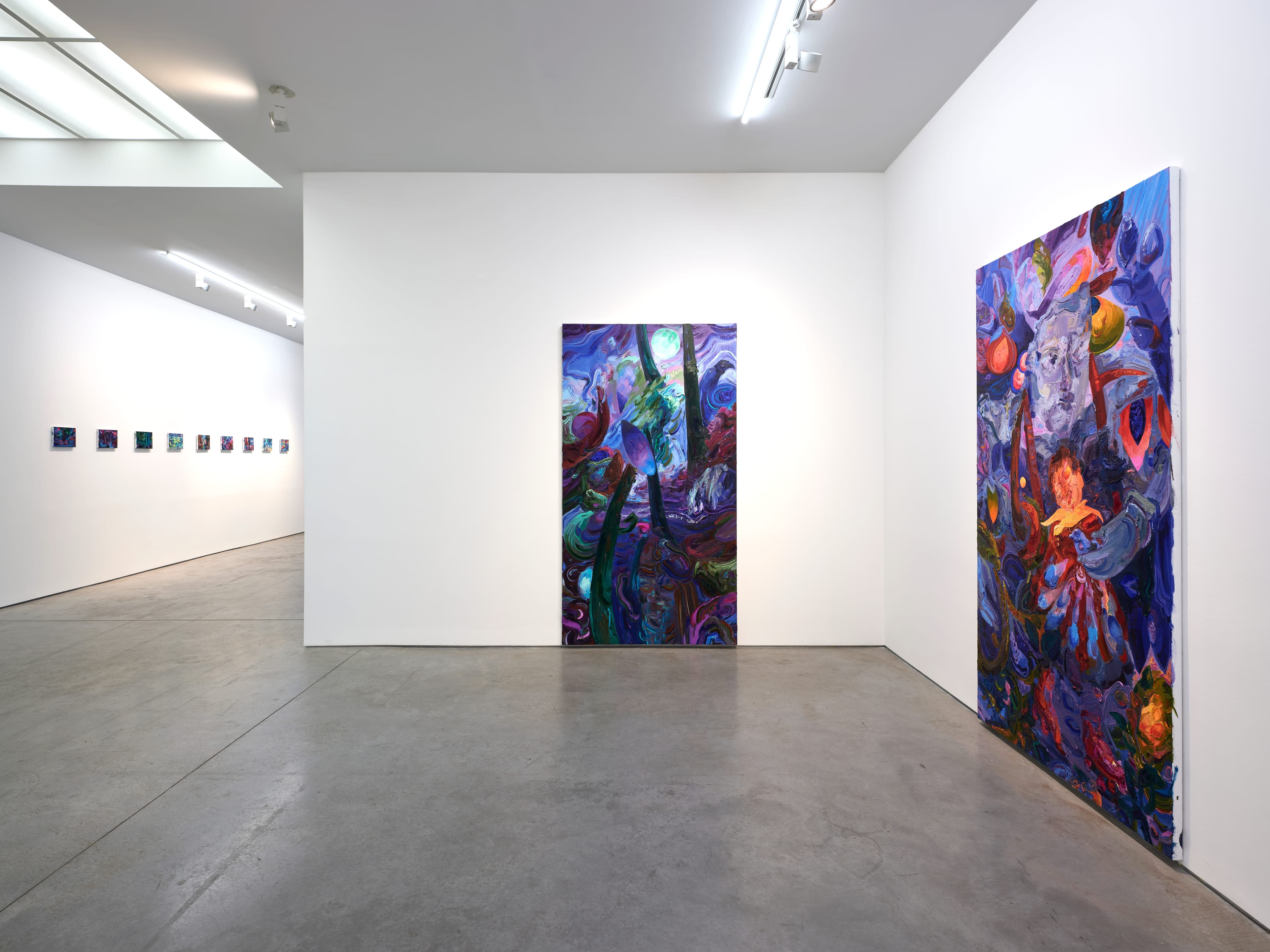
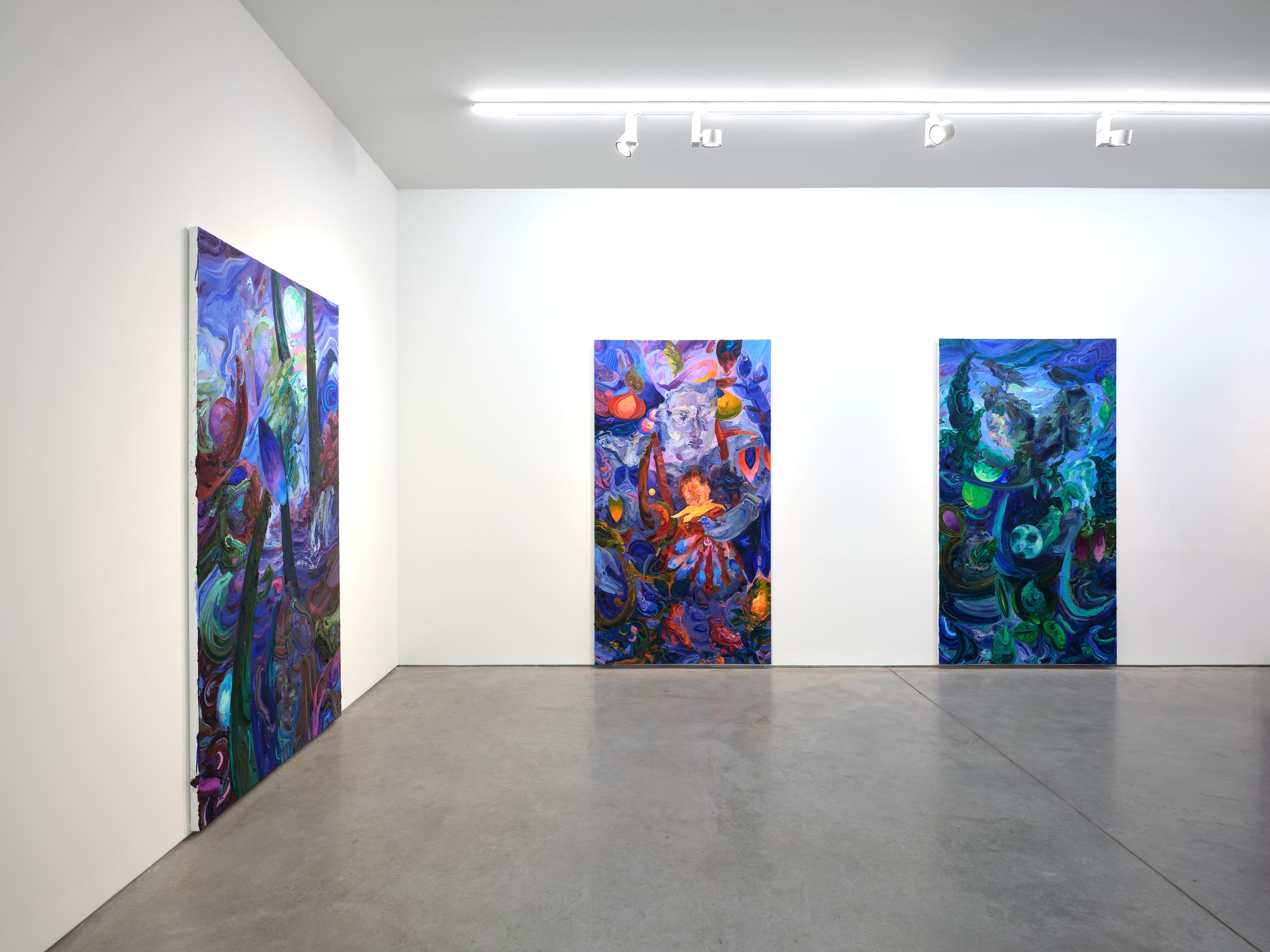
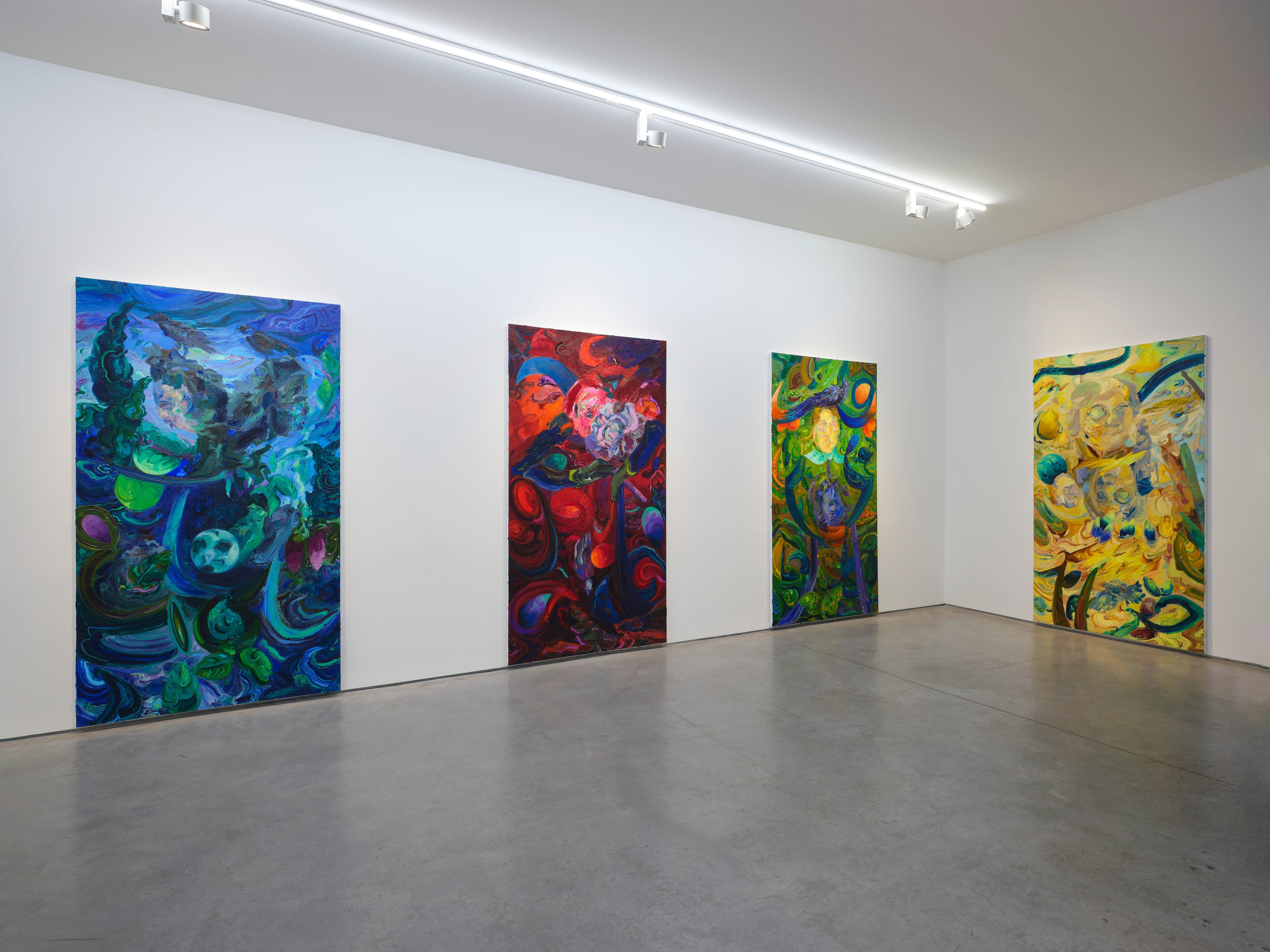
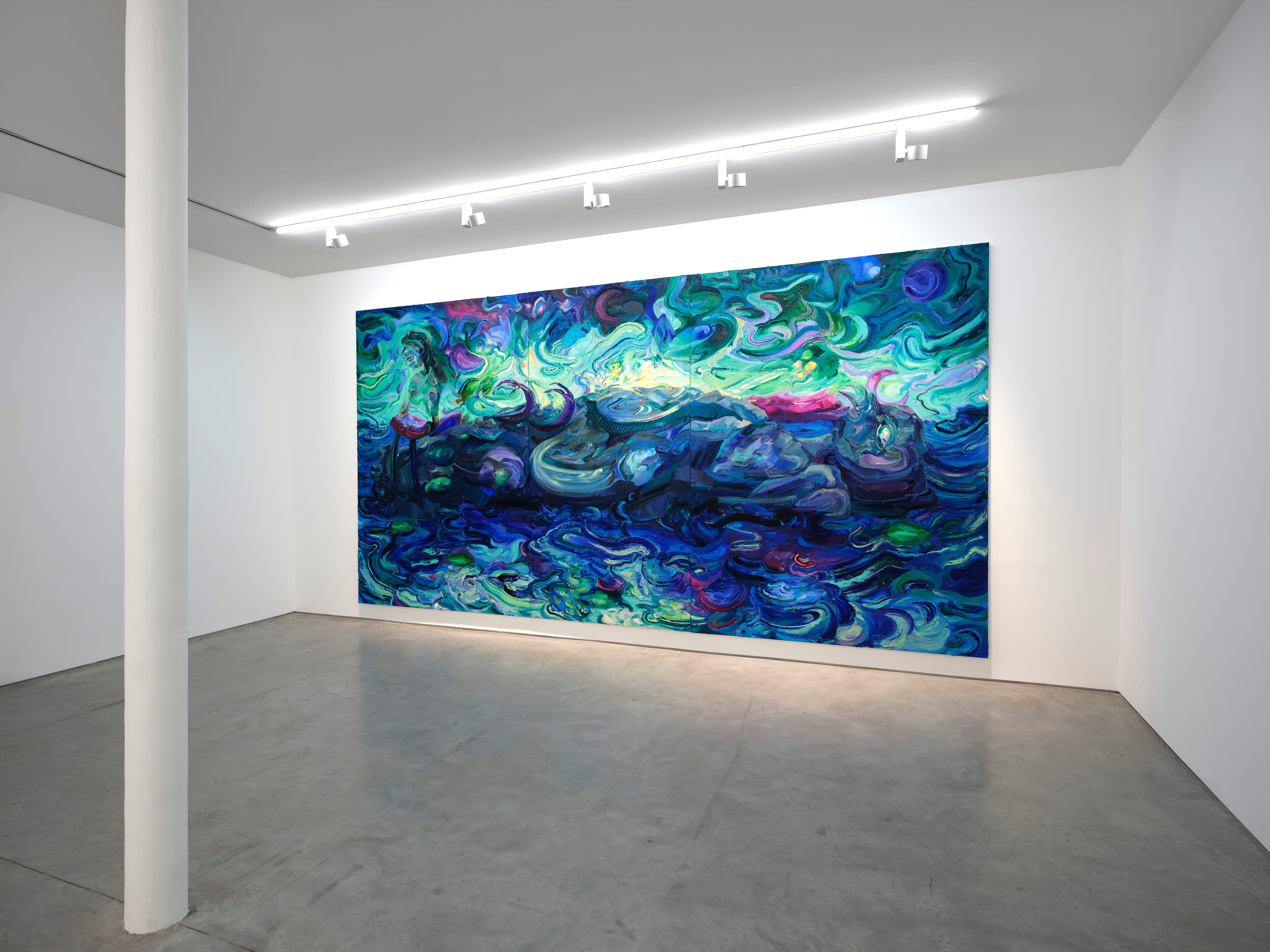
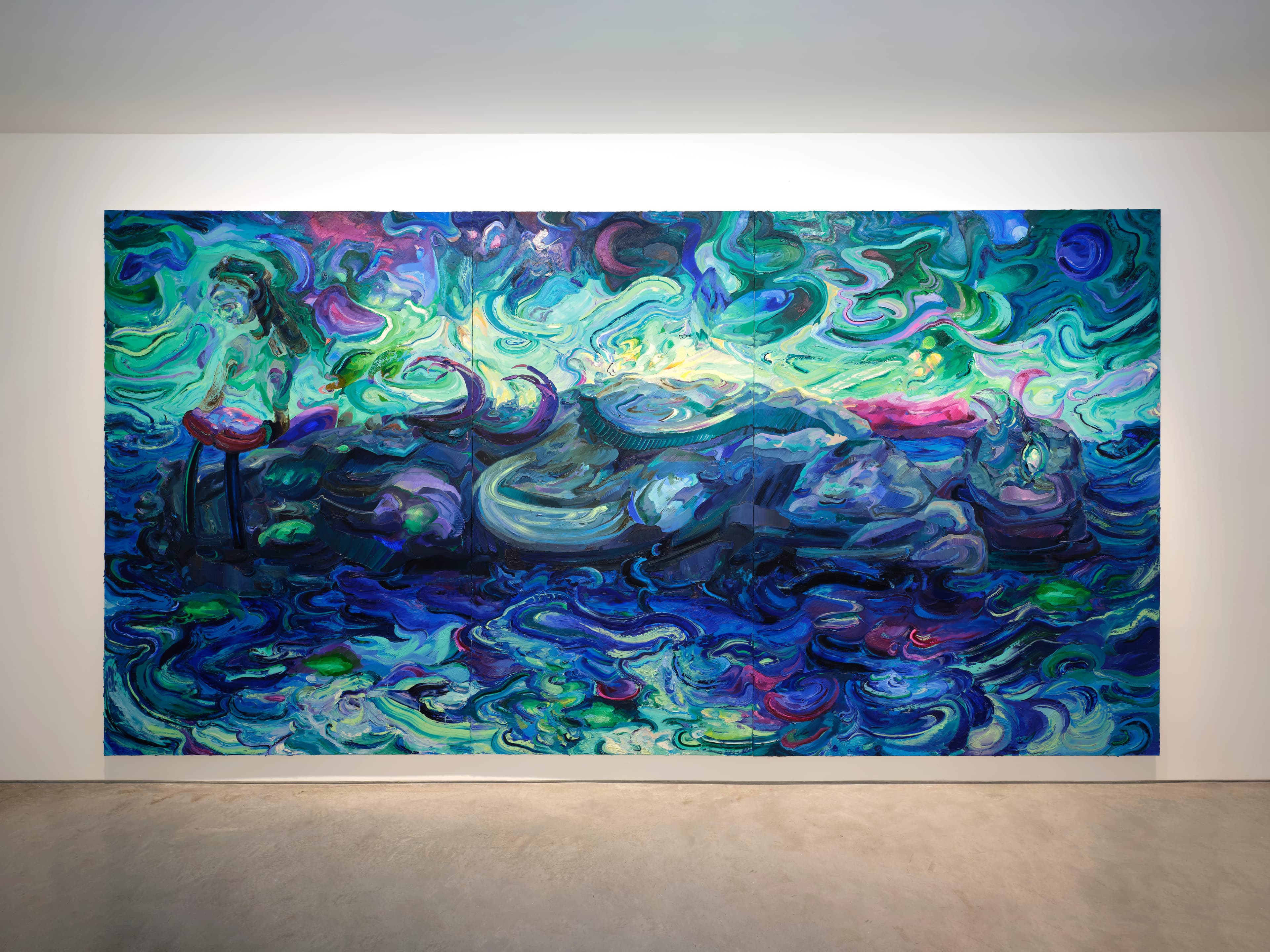
Art : ConceptOn each canvas, a series of chromatic and gestural events seems to have taken control of the order of representation. That order resists because across the restless surfaces, time and time again, something simultaneously appears and disappears, preventing the series from resting solely on its formal singularity. Each time, visual memory is called upon without reaching certainty: there are human or animal forms, doubtless vegetal ones, too. Faces. At times, there are vertical signs of rootedness. Hands, arms—joined together or lifting something? Birds. All are more or less discernible, yet none carry a fixed identity. Miryam Haddad describes the powerful visual imprint left by the statuary of Palmyra, which she saw at the museum of Damascus, but clarifies that she is not describing a specific object. The emergence of figures caught or embedded in the movement of matter and the play of color is deliberately disrupted by the absolute freedom the artist allows herself. No image, in the sense of likeness, takes precedence. Yet, the figures are there by default, haunting the surfaces. In the first room, the sensation of physical saturation is sustained by large variations in the thickness of the oil paint and in the stridency of the colors. The bold tones openly refuse to harmonize. Retinal persistence and chromatic reverberations amplify these clashes. Blended areas—worked directly on the canvas until pure tones are muddied and the contrast between light and dark is blurred—give way to sharper divisions driven by the contrast of complementary colors (blue and green against red and orange in Porte 1 (Door 1), the most figurative). Rather than a subject, each surface is a distinct pictorial situation, and the gathering of these nine canvases around us forms the opposite of a system. It becomes a kind of dramaturgy that begins with the appearance of almost carnivalesque figures (Portes 1 to 3) with assertive contrasts and greater visibility, and closes with surfaces where these figures spread without spatial or narrative hierarchy. […] From the first to the last Porte, bursts of singular gestural energy cut across the different pictorial situations. Sometimes augmented with color additions, these larger, almost athletic inscriptions can align with possible anatomical elements, located where arms or legs would be. Yet they are so barely descriptive that they become autonomous and take on the role of signs. […] Writing plays an important role for Miryam Haddad. It sets her paintings in motion. The paint distorts writing and carries it beyond the mechanics of meaning, moving away from Arabic calligraphy taken as a folklore. For her, as well are important: Mahmoud Darwish’s poem On a Canaanite Rock at the Dead Sea, which speaks of the loss of territory and exile, was the trigger that led to this exhibition, representing a year of work. However, in the poem as in Haddad’s paintings, the aim is neither to deliver a message nor to voice a complaint. In Darwish, meaning is conveyed through the detours of some narratives, and, in this exhibition, a visual experience without pause or breath produces sensory imprints in place of direct meaning. […] The spatial register of the second room breaks with that of the first. On one side, there is a line of very small formats. On the other side, a monumental canvas occupies an entire wall: Le sel d’un songe (The Salt of a Dream). In contrast to the intimacy of the small canvases, which demand close viewing, the large painting envelops you in something like a disrupted horizon or a sky crossed by solid waves. To see what unfolds within it, real distance is required—a shift in focus. The Graines (Seeds), by contrast, are microcosms that must be observed from very close range to find the figures within them. As the title suggests, they may also be in a state of germination. The disproportion between the dimensions of the large painting and the others strengthens their effects in turn, and the physical movement required to pass from one to the others is no accident. When facing this painting, our disorientation is deliberate: we must exercise our capacity to regain balance. Le sel d’un songe is first and foremost an experience of physical submersion. No door, by the sea, opened before me. […] No door, by the sea, closed upon me. From a distance, figures appear. One—a human—stands on the left, above a darker blue form at the center of the canvas’s width. Everything unfolds in the way anatomical elements might: a tilted head, torso, legs, and once again joined arms, then the details of a bird’s head whose body extends to recognizable claws on the left, are literally held captive by the movement of the entire surface. The scale is such that one is struck by the complex weave between gestural rhythm and figurative detail, especially because of the striking absence of contours. […] Dissolution, dissemination, and the rhythmic treatment of figures and narrative within the painting are necessary operations for approaching this work, more so than our well-worn Western debate about the tension between abstraction and figuration. One might naturally think of the pathos of disfiguration in Fautrier or Dubuffet. However, Haddad finds her own tension between image and painterliness, and allows neither to prevail: both or nothing. Pathos recedes before the violence of the colors. The atomization of images is countered by the movement of matter. An almost magnetic chromatic field collides with our sensory field, and the painting becomes performative. Looking at it alters us. Text, fragments of figures, and our gaze are caught in different scenarios of thickness where they intermittently gain foothold. How can we not see this as a deeply human condition? Between detachment and immersion, or between rational clarity and sensory submersion. The power of this painting’s appearance rests on a paradox: it is both hallucinatory and materially present. […] In Haddad’s work, the multiplicity of sensory interactions unsettles us and offers little comfort. We hallucinate. This almost disturbing materiality is put to the test by the figures that haunt it; these likenesses are altered by gestures that write the surface without explaining it. The conflicts of reality and those within us reemerge on the canvas. They free us from the automatisms of memory and emotion, opening our eyes wide. A war rages against me and within me… Stranger. —Marie Muracciole