
West, London
James Capper
Curve-Based Syntax
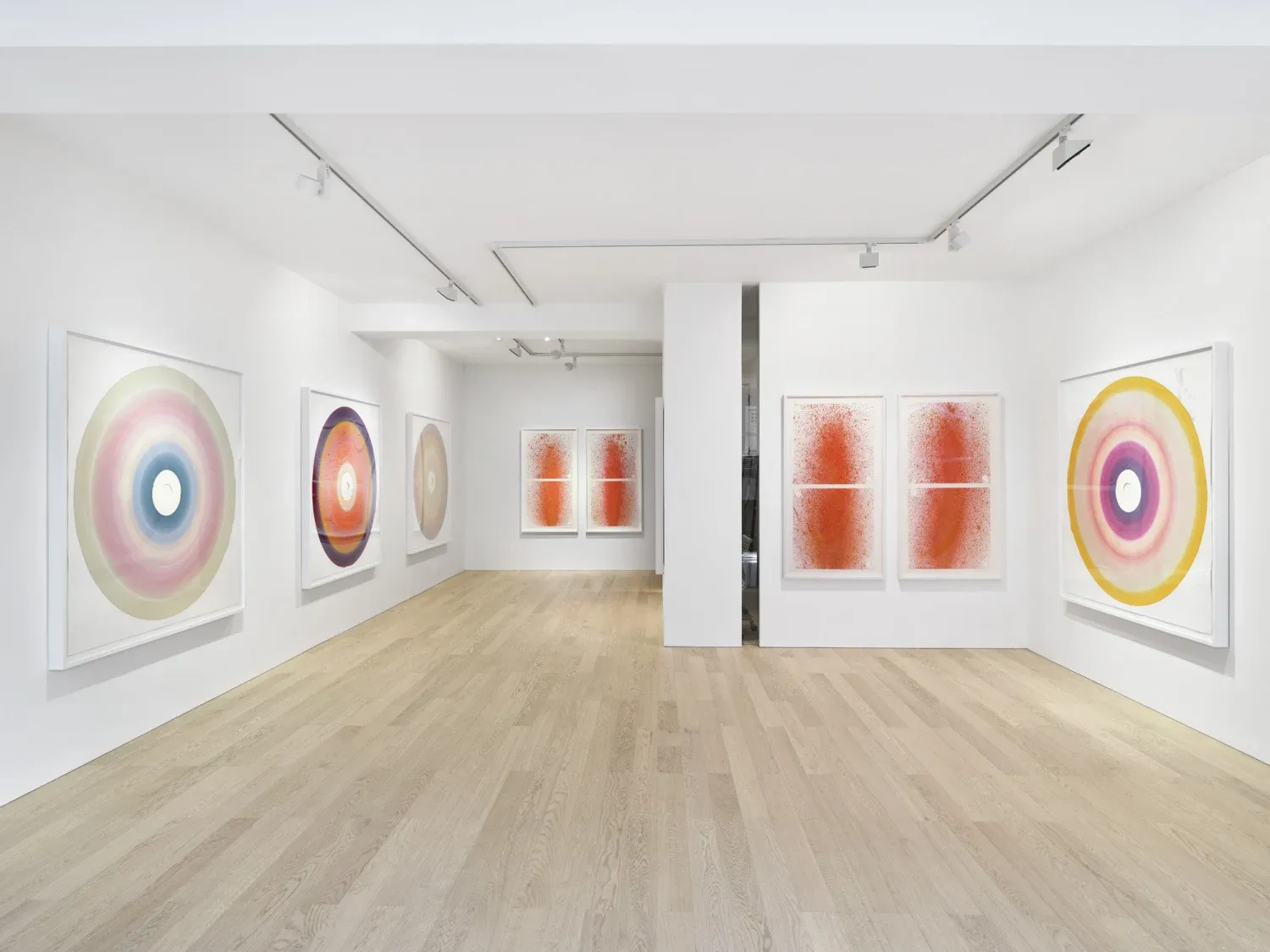
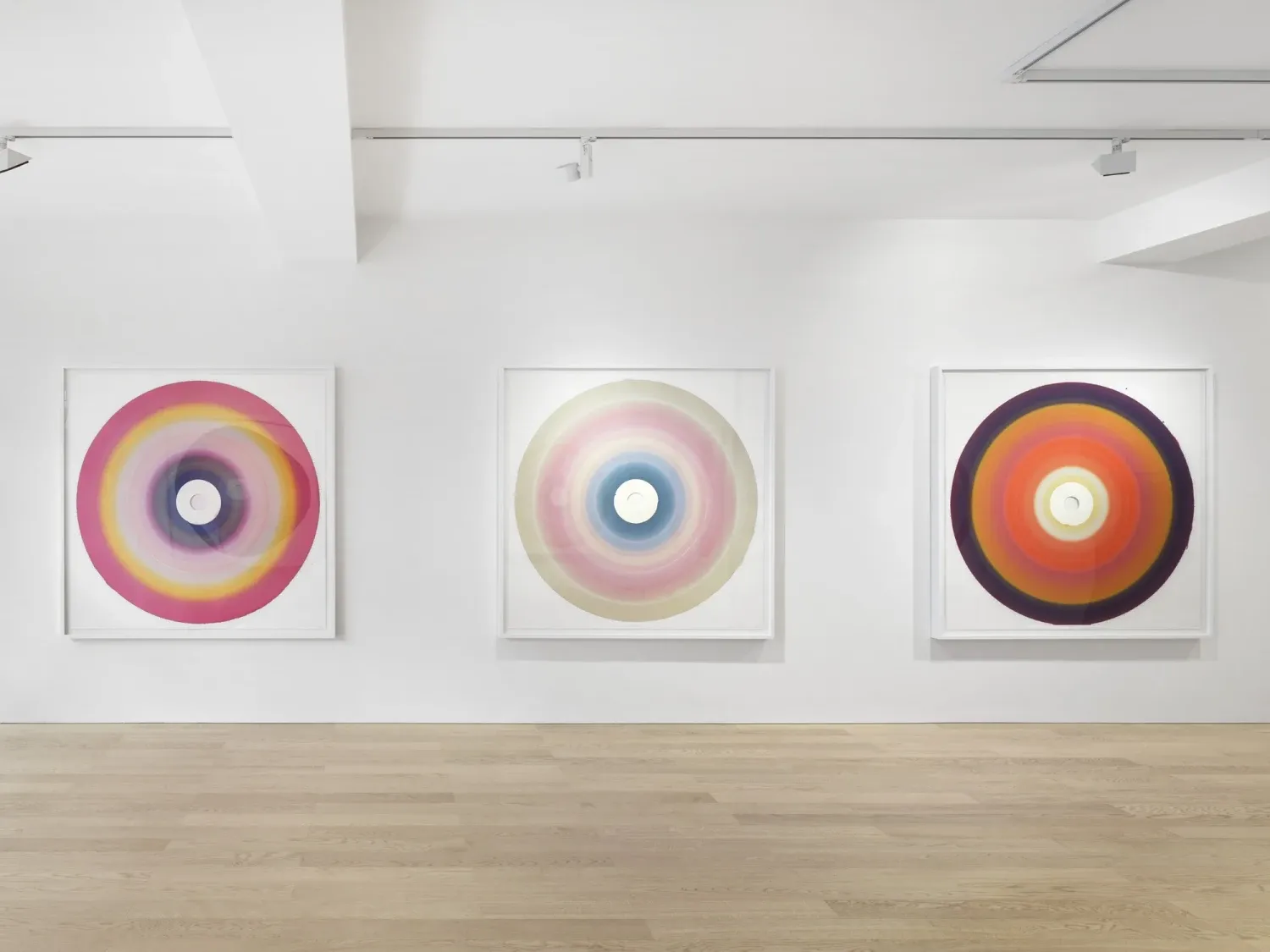
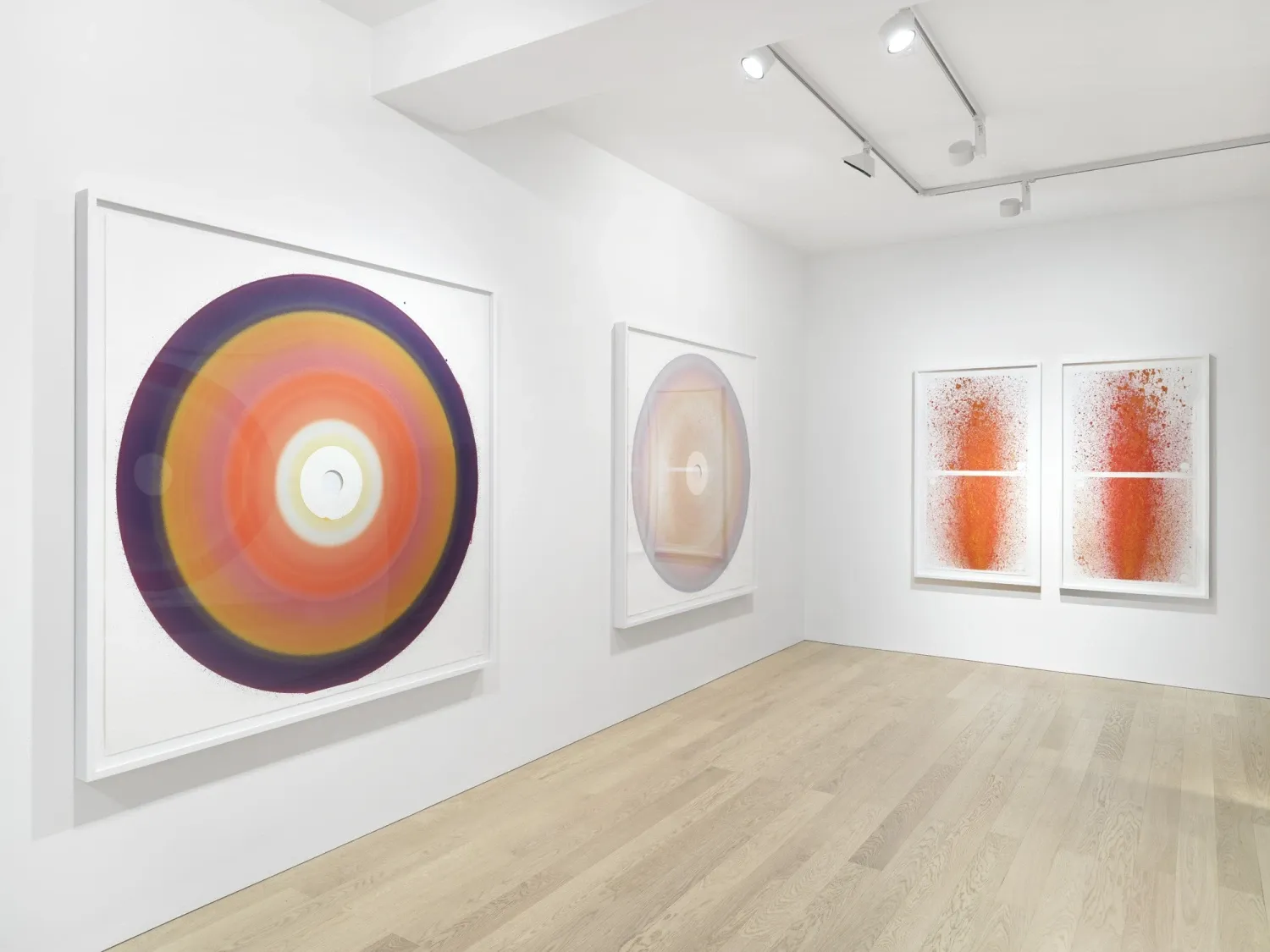
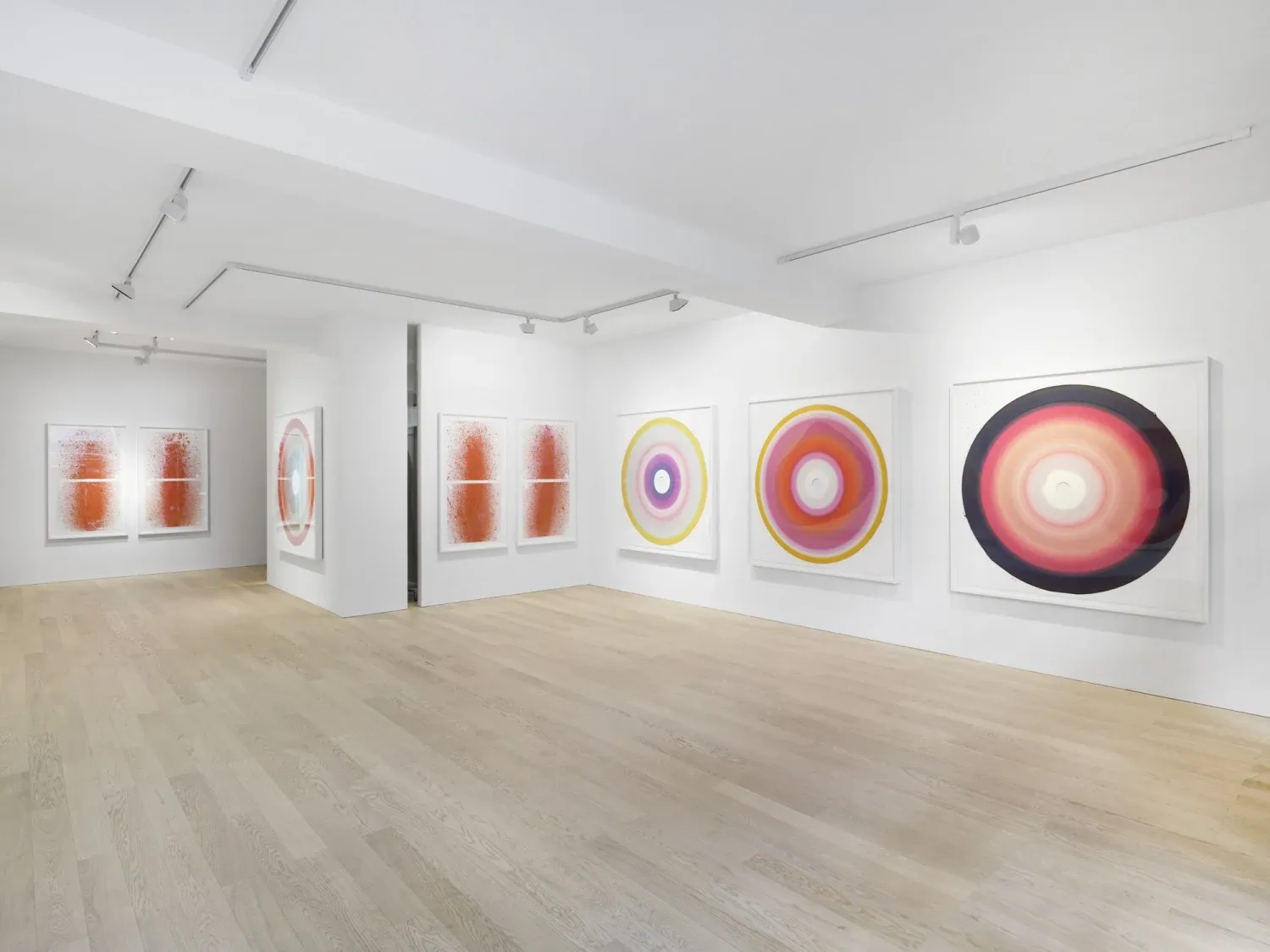
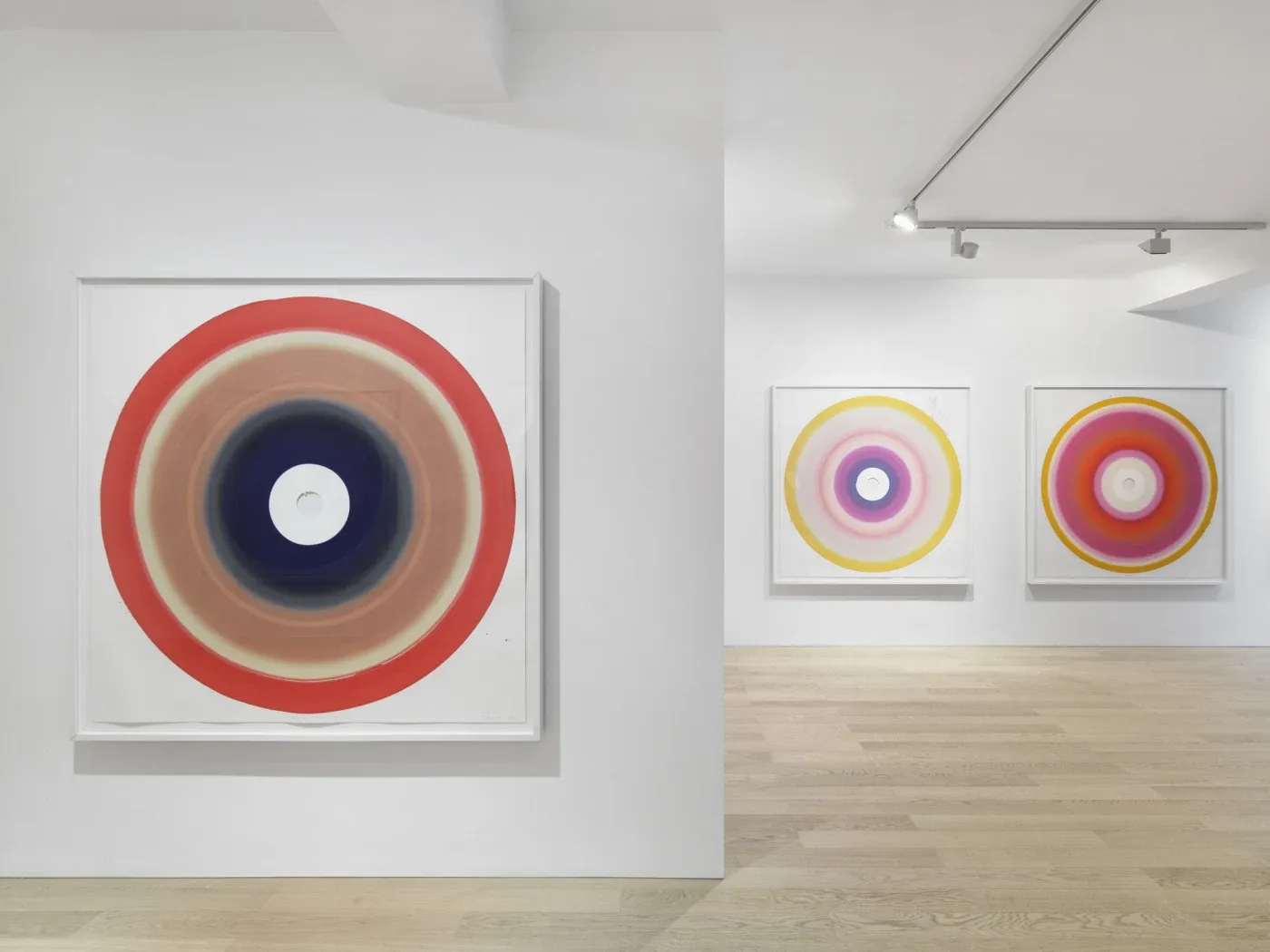
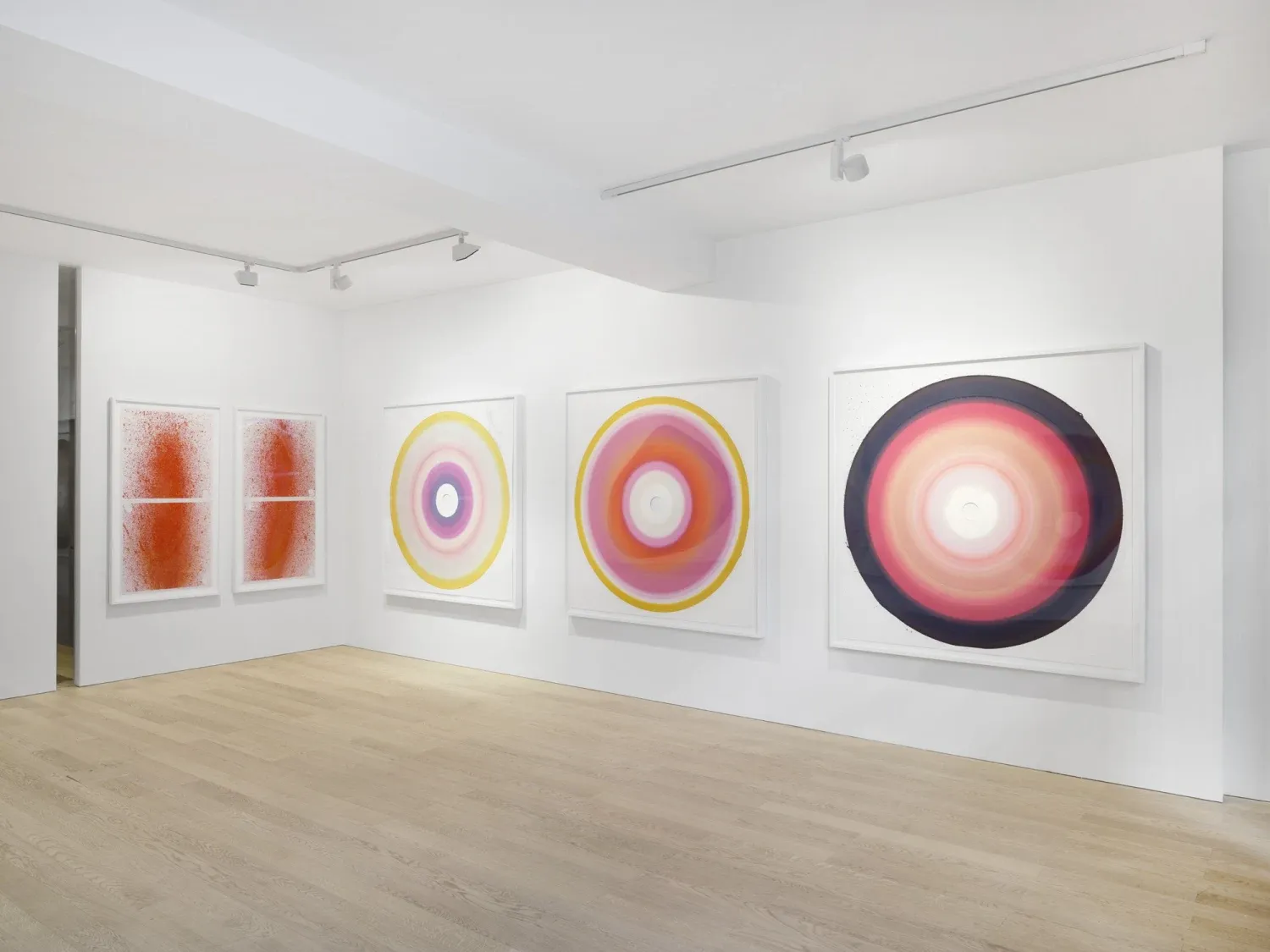
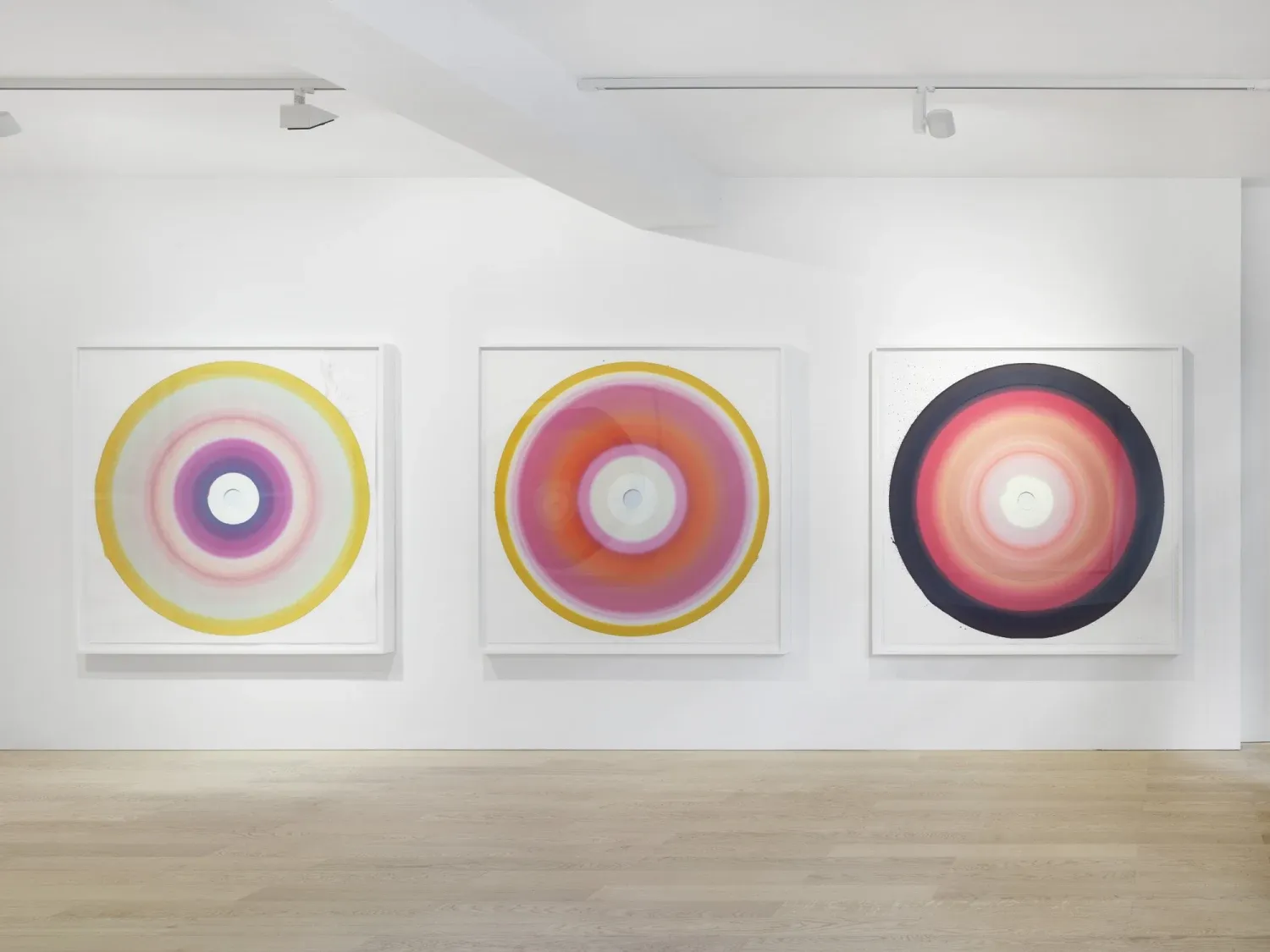
Albion JeuneAlbion Jeune is pleased to present a solo exhibition by British artist James Capper (b. 1987, London), whose interest lies in the intersection between painting, engineering, and industrial processes. Curve-Based Syntax features two new series - twelve Rotary Paintings and four sets of Speckled Paintings. Custom fabricated hydraulic machines roll and distribute industrial marine paint across paper, resulting in abstract and colourful works. Grounded in Capper’s research into speculative engineering, natural evolution, and biomimicry, the exhibition explores how machines can imitate the Pattern Alphabet: a series of shapes used to catalogue the diversity of plant and animal species, which illustrate the way nature grows and forms from its most basic elements. The Rotary Paintings, imitating the ‘circle’ of the Pattern Alphabet, form an ongoing body of work which Capper has been developing since the Covid pandemic. In deep shades of red, purple, white, and golden yellow, these interlocking spheres compose a repetition of circles on the page, alternately evocative of planetary rings and the trancelike spin of a hypnotist’s wheel. They were created using his Hydrapainter - a studio-fabricated machine consisting of a square table with a hydraulic motor - which rotates an arm in order to apply marine paint via a roller in an endless loop over the surface of the paper. Like Robert Rauschenberg, Capper sees his artistic endeavor as being a reporter of his time as well as a sculptor. Each painting is named after a confiscated Russian super yacht - a reflection of the current geopolitical situation and the West’s resolve following the invasion of Ukraine. In the back of the gallery hang the Speckled Paintings. Created using the recently developed Speckler machine, these works are designed to provoke an ‘explosion’ in the Pattern Alphabet. Capper’s meditations on the current geopolitical situation take shape through abstraction, in patterns evocative of instability and violence. The machine rains down paint in bright, industrial shades, producing volatile works that resemble a volcanic eruption. In their dot-like formation, the patterns also suggest a mass of data points - a subtle evocation of the personal information being collected by technology companies and used by governments, often without our knowledge or permission. Capper’s work reveals his deep understanding of modernist art: from Duchamp’s responses to twentieth-century politics with his pioneering DaDa readymades – In Advance of the Broken Arm (1915-1964), to David Smith’s Medals for Dishonor 1906 – 1965, along with his brightly-painted, welded, steel sculptures. Capper’s oeuvre is distinctly of our time - the invisible but overarching technological state hovers alongside the blurred circles in the Rotary Paintings, suggestive of the pandemic-era limbo in which they were conceived: in which routines felt increasingly hazy, and personal will became abdicated to a digital reality we could not entirely control in the aftermath and subsequently unstable world we are in today. Seen as a whole, Curve-Based Syntax acts as a beautiful but uneasy evocation of our future in the age of the machine.