
Tribeca, New York
Group Exhibition
Little Birds and Our Daily Prayers
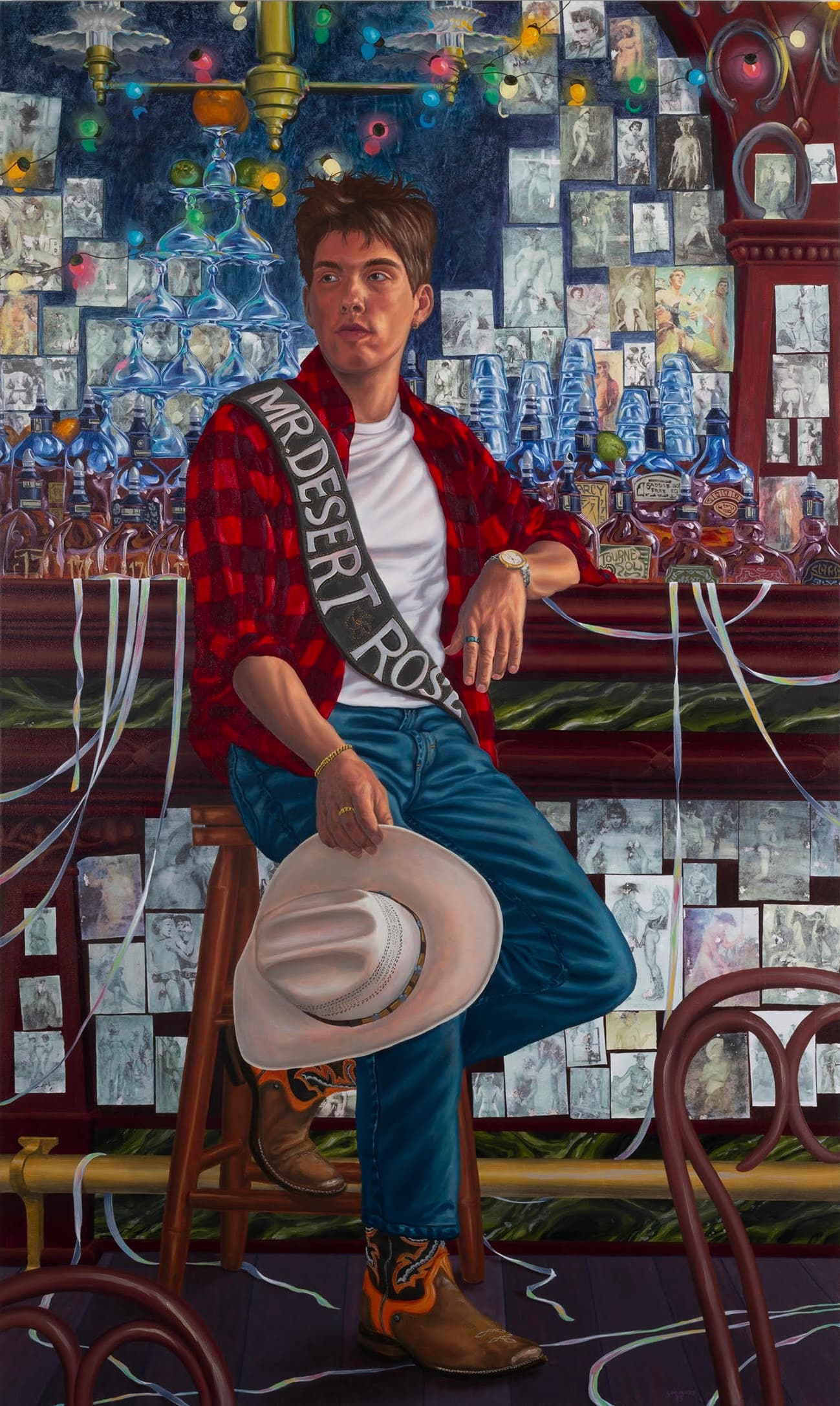
Locker RoomCameron Barker, Creighton Baxter, Earthen Clay, Mia Fabrizio, Abbey Gilbert, Khari Johnson-Ricks, Ryan Leitner, Robert Martin, Marla McLeod, Chris Minard, Brett Park, Anthony Peyton Young, Anthony Viti The Locker Room is pleased to present Little Birds and Our Daily Prayers, a group show co-curated with Cameron Barker. The exhibition brings together artists who engage, grapple, and dispute how queerness transforms the everyday. The works move beyond queerness as identity and toward queerness as essence—a divine energy that animates mundane life. It is an essence that outs us: irrepressible, embodied, in the soul—swishing our hips and lisping our lips. The terms, rites, traditions and rituals are often associated with organized religion but Queerness is a language so ancient, religion can only try to mimic its cadence. Our rites are counted by bumps in the road underneath motorbikes, sweat sacraments made on dark dance floors and daily shacharit made by applying the wettest application of lip gloss imaginable. Faygeleh, in Yiddish, means “little bird”, and has been used as a slur for “girly” boys. Birds possess an extraordinary ability to find their flock even in dire conditions. Girly boys, boyly girls, and all our siblings who do not fit—we sing a similar song and we listen. We answer one another’s prayers. Our existence becomes reliquary. Anthony Viti and Creighton Baxter engage in technical rituals of accumulation and removal. Working with found surfaces — moving blankets, discarded papers — imbued with previous lives, they archive not only acts of queer being but evidence of the body itself: pleasure, residue, proof. Their works immortalize the sacrament of living. Brett Park and Marla McLeod operate as two sides of the same coin. McLeod’s work exudes abundance, while Park builds from institutional absence. Through research and reconstruction, they generate presence within systems marked by erasure. Beautification as holiness — seen in the Islamic concept of tazyeen or the Jewish practice of hiddur mitzvah — resonates in their gestures. Architecture is assumed, adorned, and queered as its supposed neutrality is called into question. Earthen Clay and Khari Johnson-Ricks transform obstacles into sites of mediation, self-reflection, and growth. Clay forms relics of bodies shaped by oppressive conditions — works whose very existence testifies to adaptation and self-forged strength. Johnson-Ricks welds steel through tension, rhythm, and heat, mending material through intensity. Strength emerges through connection. Robert Martin, Anthony Peyton Young and Abbey Gilbert explore ancestral honoring, revealing the queer within cultural inheritance. Their works function as both ode and offering — holy text for those who came before and those yet to come. Mia Fabrizio and Chris Minard consider rites of transformative pain and the queer ritual of reverent irreverence. What do we do with anger and injury inherited from oppressive systems? They reshape it — molding frustration into meaning, reclaiming power from its source. Cameron Barker and Ryan Leitner fabulate the corporeal divine. When shifts from the expected are embraced rather than resisted, possibility expands. Their works imagine the body not as fixed, but as wondrous — sermons of difference as unifier, love for the commonality of divergence, resisting the capitalist impulse to manufacture the “other.”