
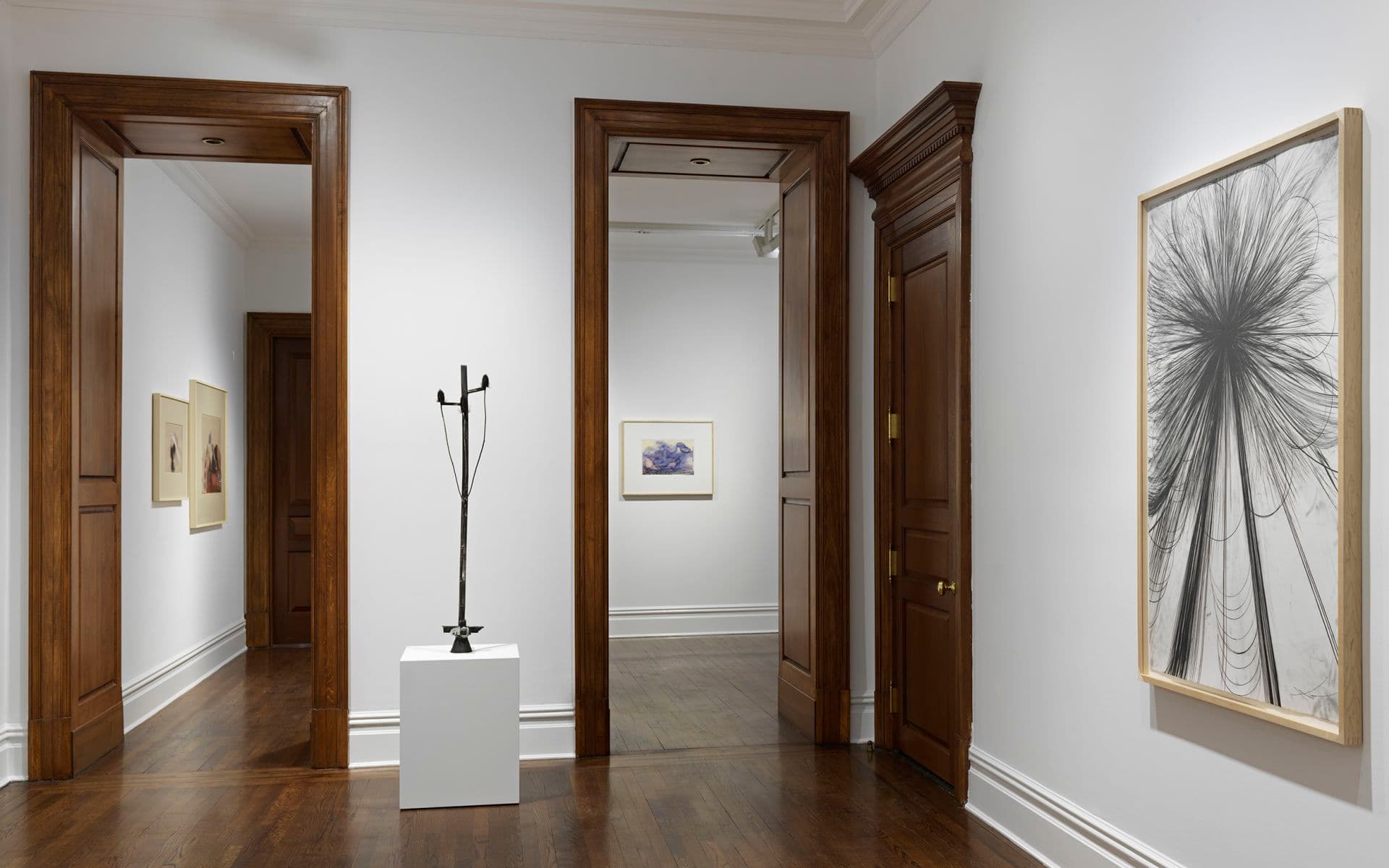
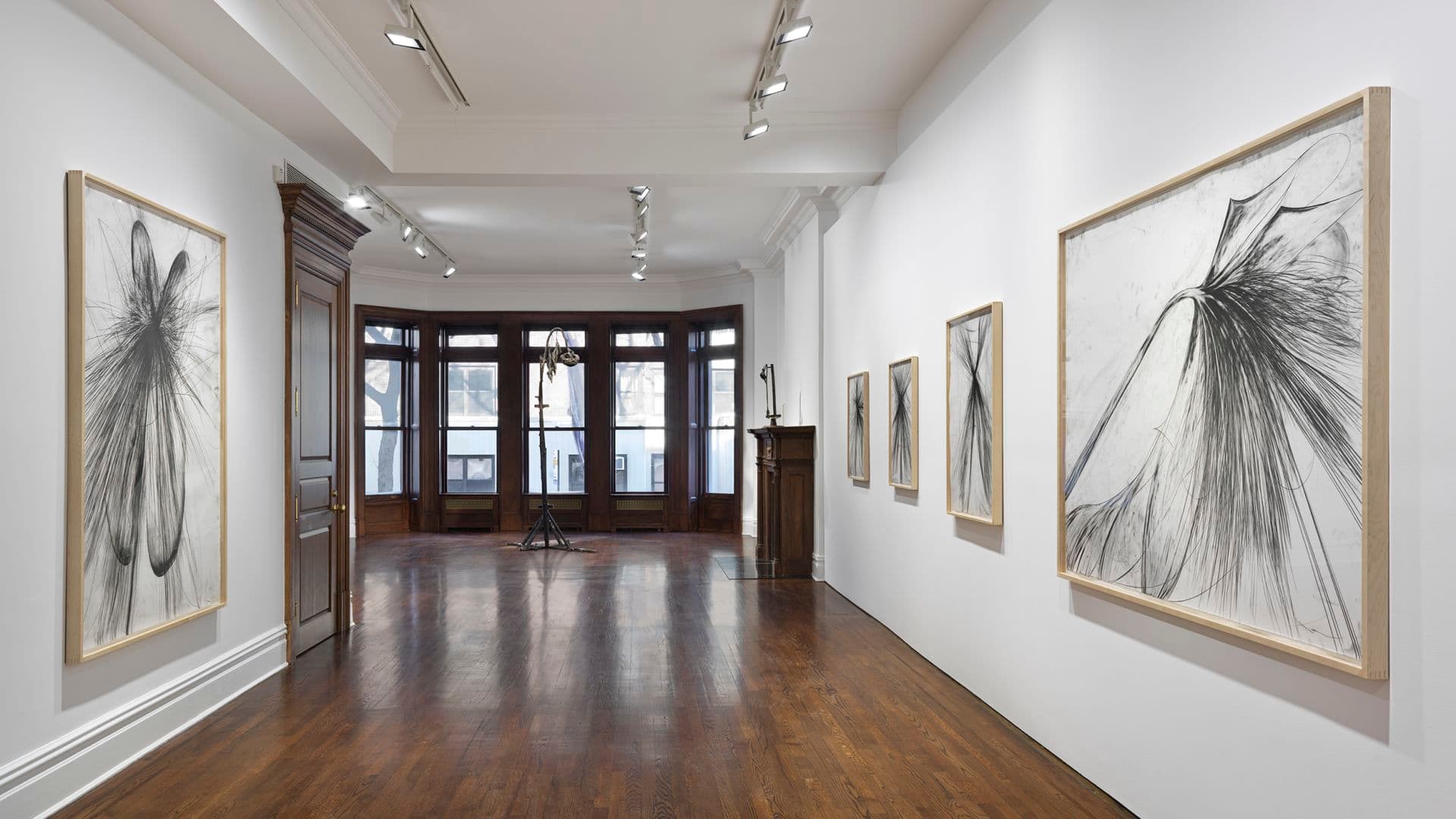
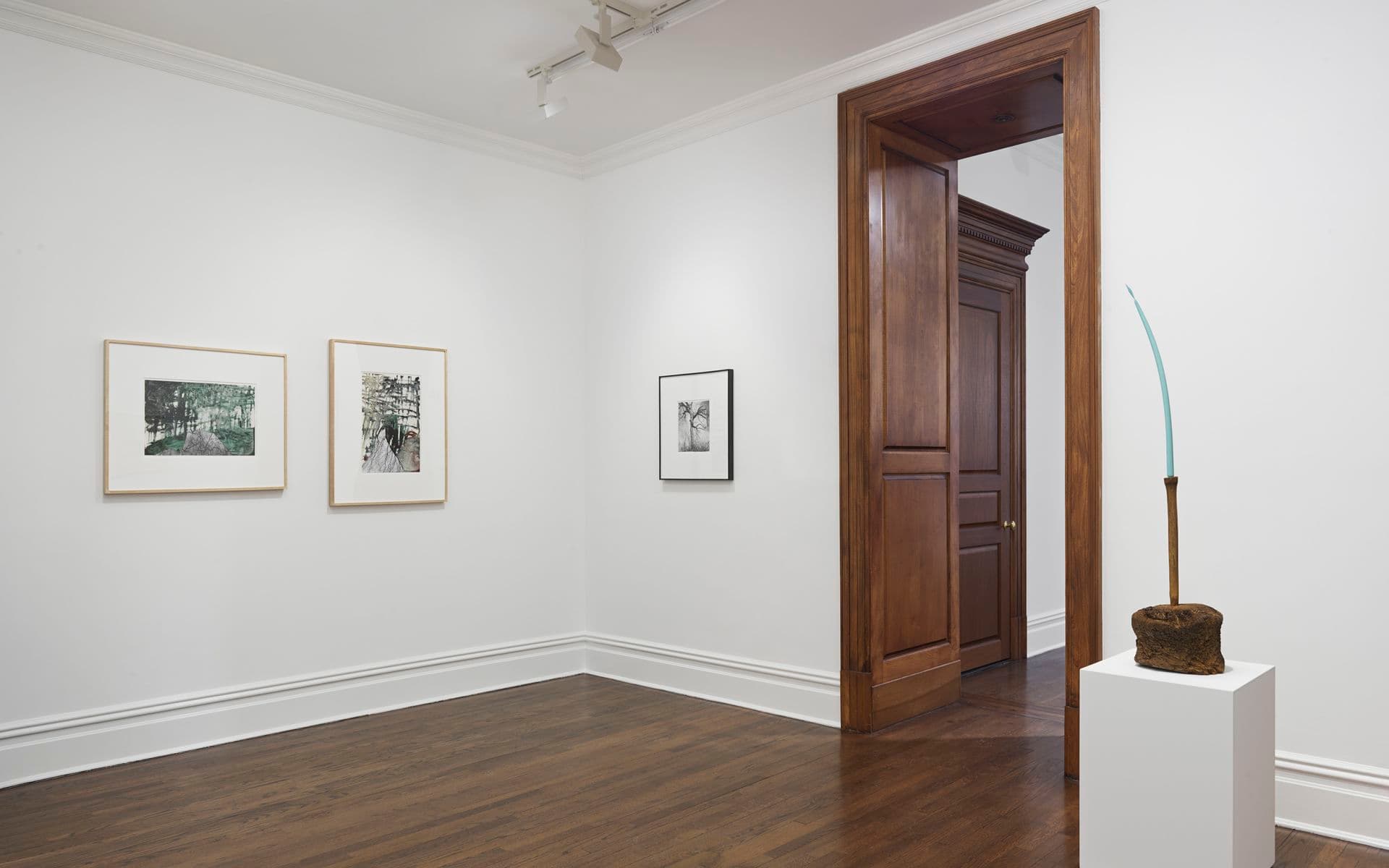
Upper East Side, New York
Sterling Ruby
Atropa
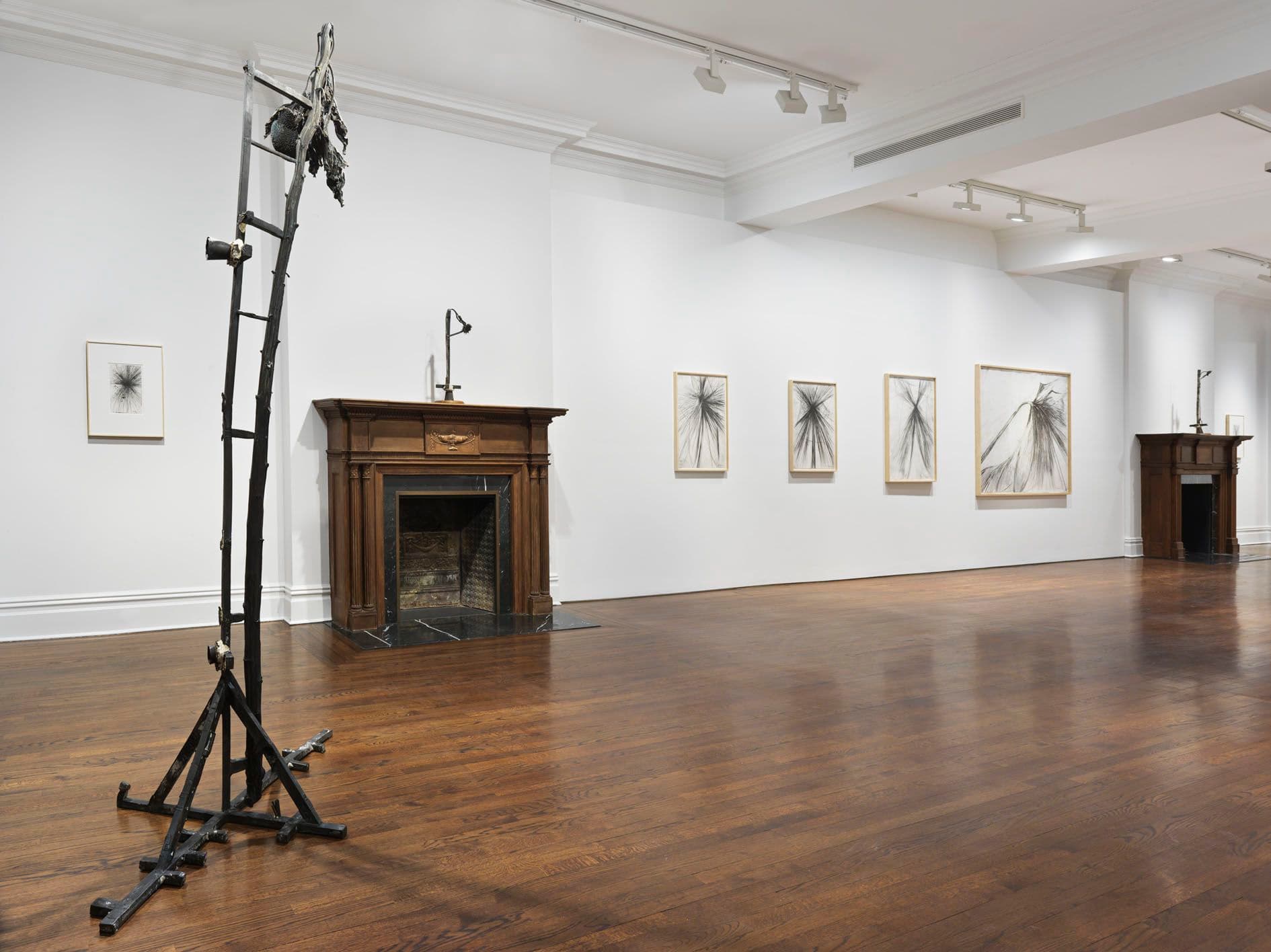
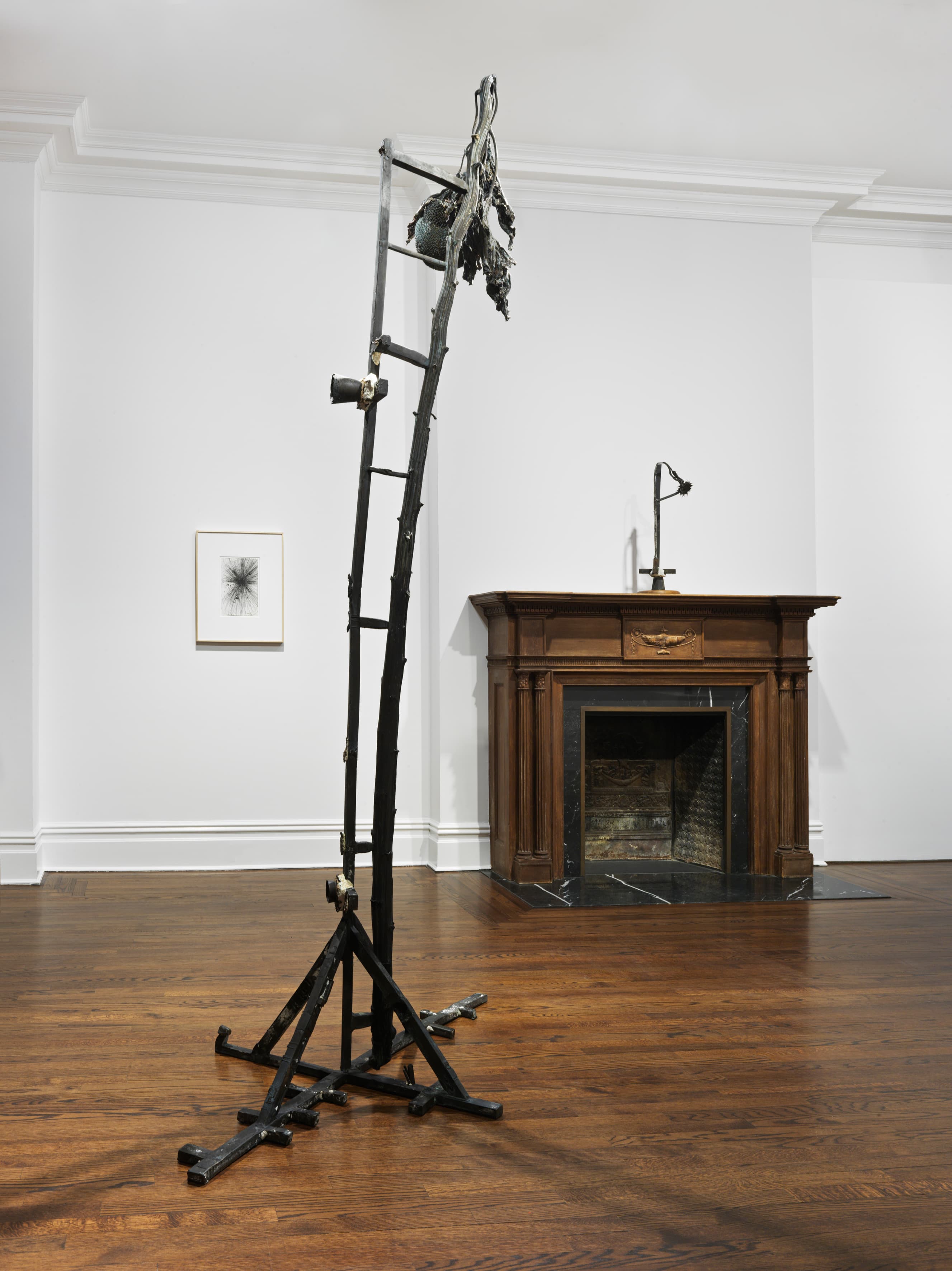
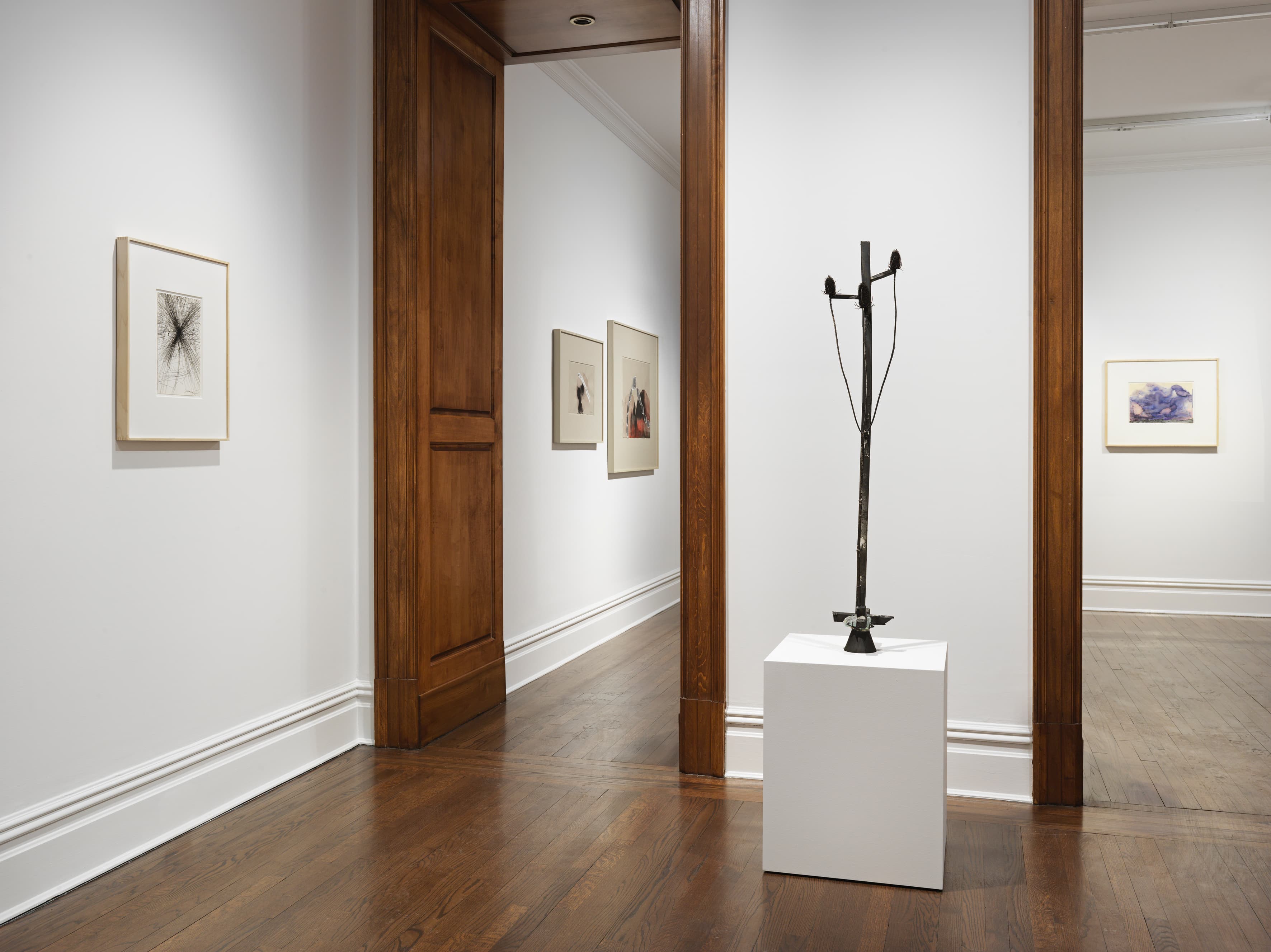
Sprüth MagersSterling Ruby's multifaceted practice spans painting, sculpture, textile, ceramics and video, and is defined by its sustained engagement with our chaotic present. For over two decades, his work has explored themes of violence, confinement and societal pressures through a consistent focus on material and artistic process. Atropa, featuring all new works by Ruby, is named for the nightshade genus (commonly known as deadly nightshade) that references Atropos – the Greek Fate who cuts the thread of life to bring death. The exhibition engages with the paradox the plant embodies: lethally toxic yet medicinally valuable, a convergence of destruction and restoration. New graphite drawings represent the culmination of a series Ruby began thirty years ago, characterized by their palimpsestic quality. Executed with raw energy and painstaking labor, these works prioritize instinctive gesture and automatic drawing over conventional representation. Arising from dense layers of frenetic lines, erasing and smudging, rhythmic textures coalesce into botanical forms, offering fragile glimpses of nature within their turbulent surfaces. “Flowers have become these memorials — icons of things changing and ceasing.” —Sterling Ruby Building upon Ruby’s obsessive mark-making, the pen-and-ink drawings deploy delicate, rapid lines that burst into dark, compulsive voids, from which petal and leaf shapes materialize. Rendered with relentless intensity, each motif collapses the boundary between what is seen and what is imagined—figuration emerging as a byproduct of the drawing process itself. The watercolor collages extend the Drftrs series (2013–present), in which fragmented photographic elements float through gestural painted landscapes. Here, blue washes establish atmospheric space against which a downed tree anchors the lower edge, demarcating a horizon line. This emphatic horizontality suggests stasis rather than the upward growth associated with vitality and life. Two new Drftrs subseries are included in the exhibition. In Splitting (2025), distorted, monochromatic collaged images of nature reference a psychological defense mechanism where perception polarizes into binary categories—wholly good or bad, absent any nuance. Works such as Hippy and Kissing Hippies (both 2025) employ watercolor stains to conjure faces of embracing figures crowned with wreaths against neutral grounds, invoking counterculture iconography, particularly the flower as symbol, an element central to Ruby’s broader visual vocabulary. A new bronze series, Bound Flower (2025), is the exhibition’s sole sculptural component. Each unique work originates from a specimen cultivated in Ruby’s studio garden—cut, dried and directly cast, the burnout process incinerates the flower, creating a bronze ghost of the original. Significantly, finished pieces retain the utilitarian infrastructure of their fabrication: gates and sprues through which molten metal flowed remain attached, functioning as constraints that bind the botanical form in a state of arrested time. “A few years ago, I started growing a flower garden in my studio. It was initially made to produce live-burnout sculpture casts in bronze and aluminum. I was thinking about the iconography of flowers throughout history, as still lives, to represent life and death, for wedding or funerary arrangements. … Over time, the cyclical seasons saw these plants die off and regrow. I witnessed how the dead flower heads, leaves, and stalks became shadows of their previous selves.” —Sterling Ruby