
Hollywood, Los Angeles
Sawako Goda
The Story of the Eye
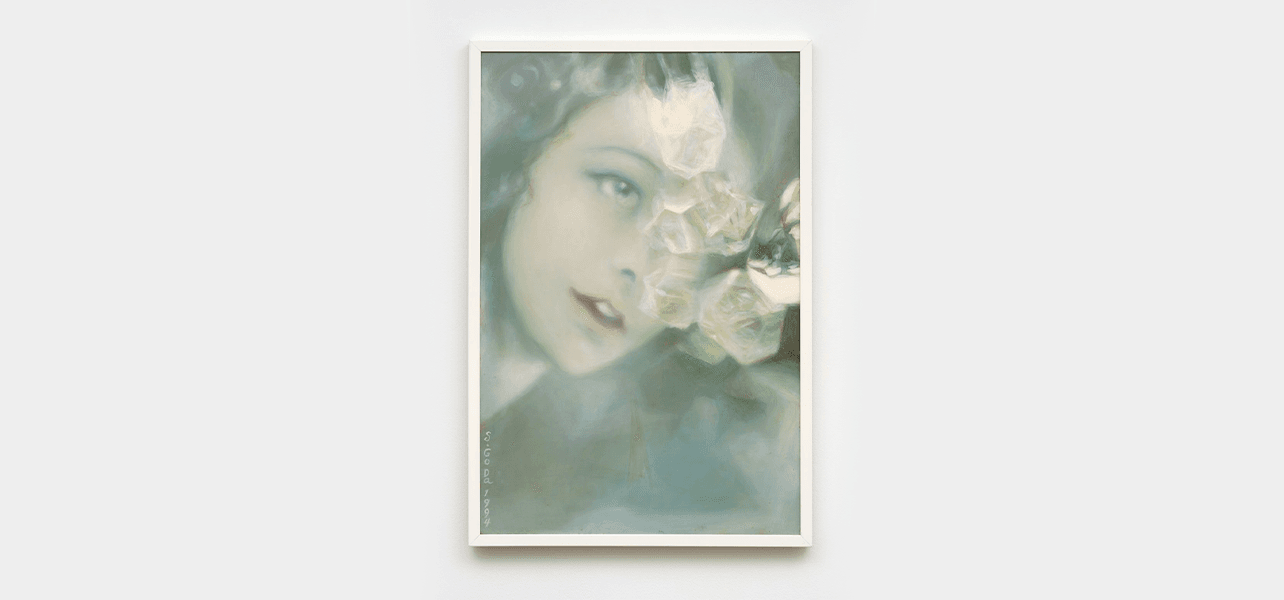
Nonaka-HillNonaka-Hill is proud to present Sawako Goda's The Story of the Eye, an exhibition of paintings, sketches and ephemera marking the representation of The Estate of Sawako Goda (b. 1940 - d. 2016), a complex artist celebrated by the Japanese avant-garde during her remarkable 50 year career, yet virtually unknown in the United States. Born in 1940 in Kōchi Prefecture, Japan, the artist Sawako Goda traversed, in the first half of her life, many aspects of Japan’s inventive postwar avant-gardes. Precocious, she gained early attention in the mid-1960s for junk assemblages of materials collected on still-war-damaged streets, which she shaped into whimsical mutant dolls or spindly, inoperable home appliances webbed in twisted wire, simultaneously tarnished and bejeweled. Fun With Junk read the title of Goda’s first book, published internationally in 1966. Wind the clock forward half a decade and find the restless Goda living in New York City with her then-partner, Tomio Miki—an “Obsessional Artist” and a contemporary of Yayoi Kusama—and at a pivotal moment. On returning to Japan in 1971, she began painting in oils, drawing inspiration from old magazines and photographs found in a New York antique shop, and from a precious book, the Museum of Modern Art’s catalogue of E. J. Bellocq’s Storyville Portraits, which depicted prostitutes in early 20th century New Orleans. Decadent, faded, surreal, seedy glamor became her central preoccupation— musician Lou Reed makes more than one appearance in her work in this period. She painted prolifically, made illustrations for magazines and advertisements, and, over the course of the 1970s, designed stage sets and posters for underground theater troupes, including Jūrō Kara’s Jokyo Gekijo (Situation Theater), and Tenjō Sajiki (Top Floor Gallery), a troupe led by the avant-garde poet and dramatist Shūji Terayama. Another pivot, in the late 1970s, found her embracing film mediums more directly, in the form of a now-lost film, Nightclubbing (1977), which borrows its title from an Iggy Pop song, and Polaroid sequences such as Flower Child (1981): shimmering portraits with unblinking painted eyes. Goda lived, over this period, in a high-rise in Wakabayashi, Setagaya, a ward southwest of Tokyo, and among other prominent artists and poets. If her work stood out for its Western preoccupations—surrealist portraits of film icons Marlene Dietrich and Veronica Lake, tributes to Reed and Marcel Duchamp’s femme alter-ego Rrose Sélavy—she was nevertheless throughout this period woven tightly into a rich community of forward-thinking artists and was showing her work regularly. In the mid-1980s, however, this weave began, slowly then suddenly, to fray. She became increasingly obsessed with a different fantasia, that of ancient Egypt. After a visit to Cairo with her two daughters in 1978, she decided, in 1985, to relocate there permanently—and not to one of the nation’s cosmopolitan cities, but rather to Gabal Takouk, a Nubian village on the Nile near the Aswan Dam. The move proved less than permanent. Despite its beauty, the heat was intense, the village offered few work opportunities to foreigners, and the international mail system—which Goda, working as a contributor for Asahi Shimbun, needed to send her work to Japan—was unreliable. They returned to Japan after just a year. Yet the encounter with Egypt provoked a dramatic transformation in her life—she saw spacecraft and heard the voices of the dead—and her practice, which became increasingly visionary and abstract. Under the influence of ancient Egyptian iconography—particularly the Eye of Horus—she drew eyes with a renewed obsession, and with her camera sought out gelatinous eyeball- like globes everywhere in nature. Borrowing from the Surrealist technique of automatic drawing, she produced scribbled abstractions with color pencils, at times avoiding the facility of her highly trained hand by drawing with pencils wedged between her toes. The eminences of Old Hollywood returned, as well, in new artworks that situated Lillian Gish and Pola Negri alongside Nefertiti, and often fixated on an isolated eye, sometimes with gem-like geometries emerging from their sclera. Where Goda’s 1970s portraits had embraced a color palette not far from German Expressionism—the unnatural greens of Ernst Kirchner or the deathly pallor of Otto Dix—Goda’s colors in the 1990s became more silvered, uncanny, and luminous, evoking inner vision and optical disability: monochromacy, blurring, and macular degeneration. Indeed, Goda suffered persistent retinal problems after 2000 which blurred and distorted her vision, and eventually lost the use of her right eye; she produced notebooks of blind drawings around this time. One wonders idly if she might have encountered, around 1990, Vaughan Oliver’s Surrealist-influenced designs for the English record label 4AD, or the blurred aesthetics of the band My Bloody Valentine—maybe not. More apposite are the reflections of the American artist and postmodern critic Peter Halley, who wrote, in his 1984 essay “The Frozen Land,” of the “culture of old movies,” in an endlessly mediatized world, which produces an “asynchronic present” in which actors from the past persist forever in their varied celluloid simulacra: as children, adults, and corpses. “Is Shirley Temple a child or a woman? Is Lauren Bacall twenty or sixty years old?” he wondered. This postmodern necropolis, Halley says, also enacts a paradoxical denial of death. One is reminded, again, of ancient Egypt, which had its own approach to eternity, mediated through an insistence on preserving the faces of the iconic dead forever. There is, in other words, a shock when one encounters Goda’s portraits of living actresses like Helena Bonham Carter or Isabelle Adjani; they seem too present, too alive, to belong in Goda’s cinematic afterlife with Gish and Greta Garbo. To call the artworks that Goda produced in her last two decades only “ghostly” or “deathly,” however, is to take things too far. She was equally transfixed by life: the curled whiskers of a beloved cat, flower buds and blooms, and, everywhere, ovoid shapes—eggs. As the Surrealist Georges Bataille intuited in his 1928 novella The Story of the Eye, the eyeball and the egg are uncanny proxies (and, in Bataille’s scandalous telling, each opens the way toward orgasm). Goda’s story of the eye is equally full of eggs, from as early as the psychedelic eggs she made in the late-1960s and reaching apotheosis in her final decades. Eggs invoke creation and new life: yolks rupture and flow; bulbs burst into flowers that re-enact the creation of the world; eyeballs rupture like stars into gaseous nebulae. In other words, Goda’s eyeballs always want to hatch, to birth otherness. And, subject to the desiring gaze, each of her beloved actresses could also parse as just this sort of bud-egg-eye. Their fullness embodies the possibility that the death-life of cinema might rupture, and then flower, into something like another world. In the last decades of Goda’s life, she lived in Kamakura, a seaside city south of Tokyo that she initially scorned, in her daughter Noyubo’s telling, as embodying a “stereotypical image of Japan,” something Goda’s proclivity for otherness disposed her to resist. Kamakura’s remove, however, came to suit her in a different way, by allowing her work to spool out according to its inner needs: its visionary, rather than social, logic. This separateness had consequences. Arguably it licensed scholars to omit her work from most surveys of postwar Japanese art. Likewise, Goda’s 2003 retrospective at the Shoto Museum of Art consolidated a narrative of her life as a charismatic outsider who worked “more or less independently of the major trends in the art world.” Maybe her work, with its Western references, was seen as not Japanese enough? Goda’s work exposes the brittleness of these containments; like eggshells, they break, spilling cosmic light and gooey yolk. —Julian Myers-Szupinska, Sawako Goda: The Story of the Eye