

Lower East Side, New York
Stephanie Cora Hayden
Bike Time
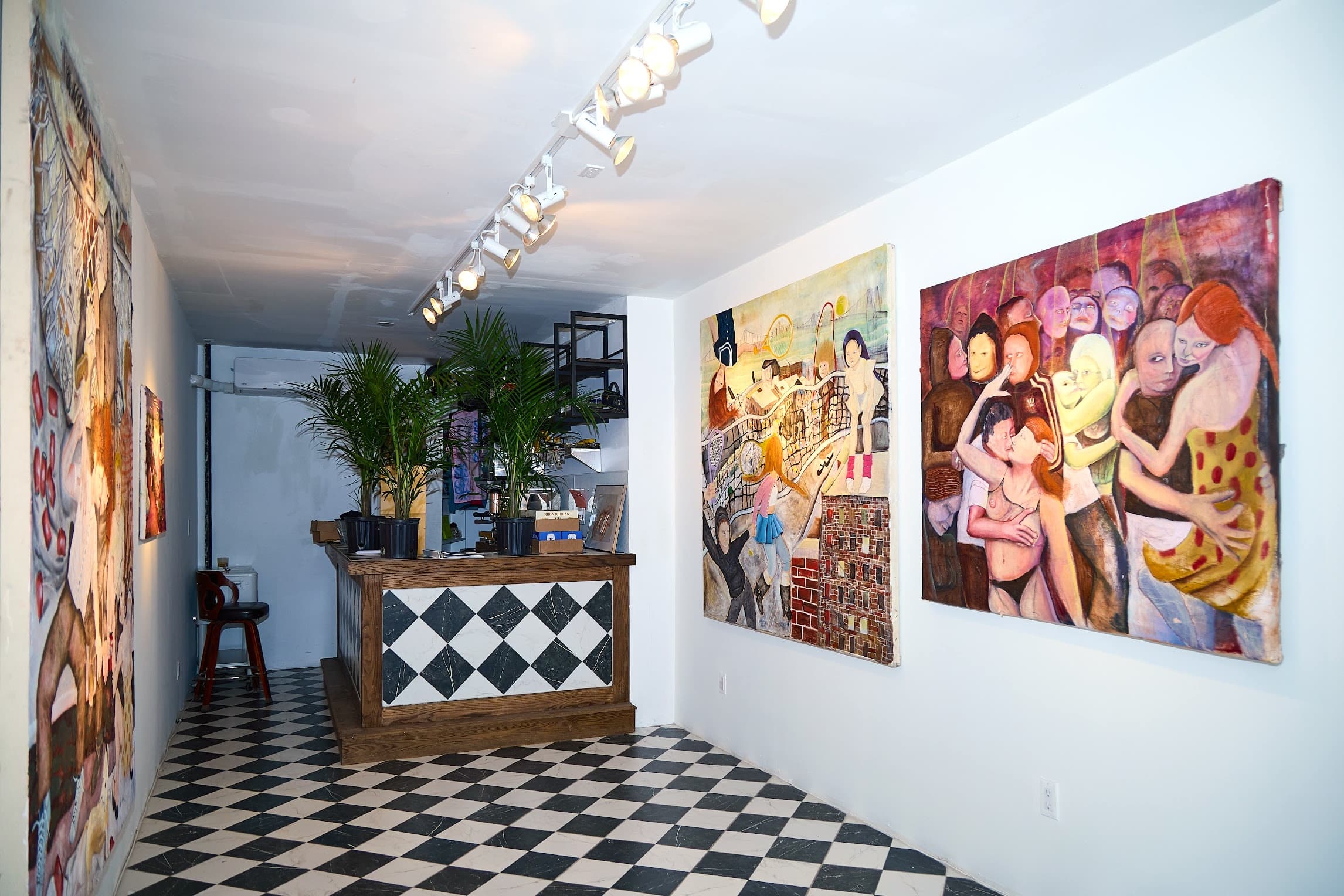
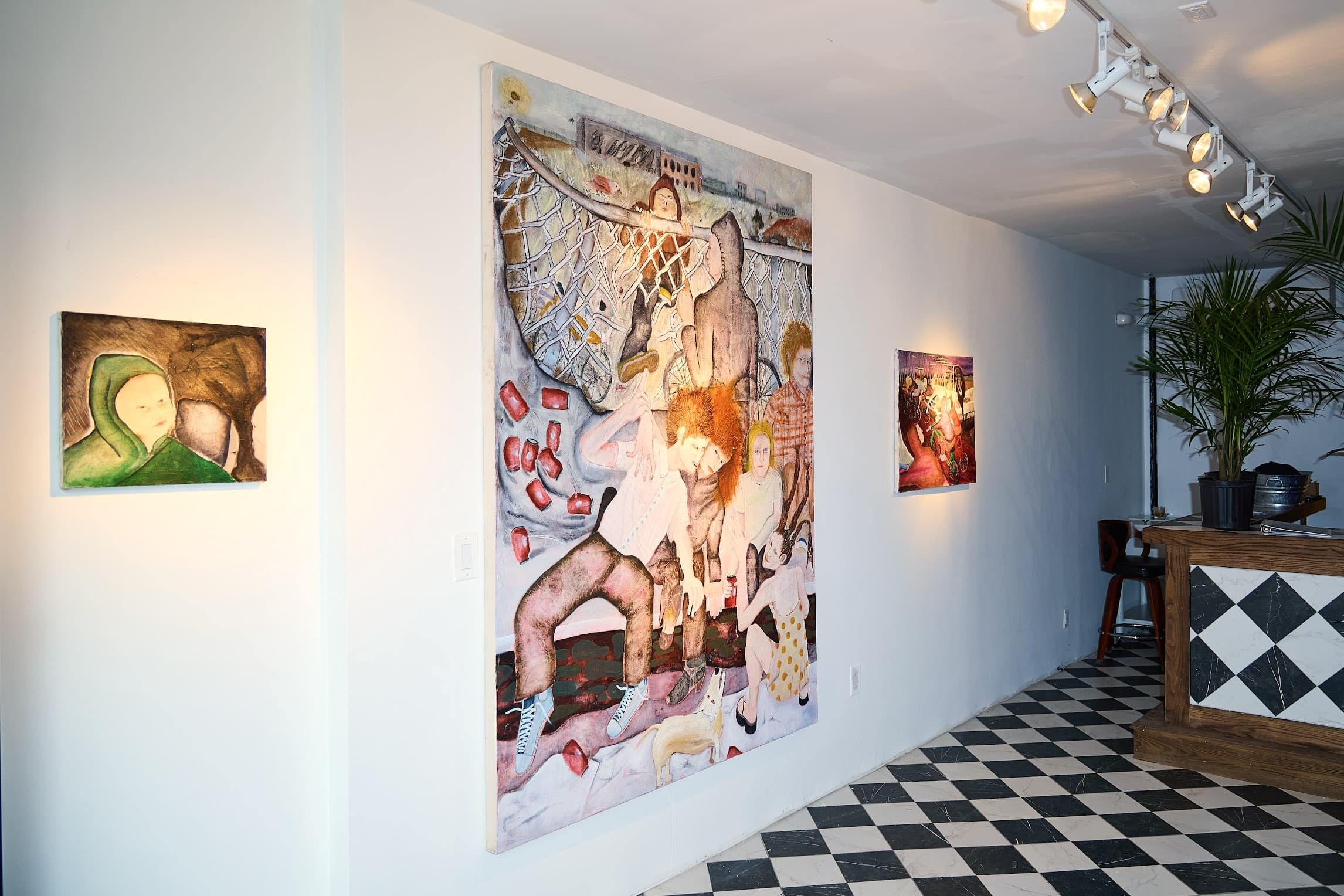
Sitting RoomSitting Room Gallery is proud to present Bike Time, a solo exhibition of new works by Stephanie Cora Hayden. In Hayden’s ongoing series, Bike Time, Hayden explores landscape, street culture, and identity through a romanticized feminine lens. By centering on the “wild girl” archetype, the work foregrounds women in subcultures traditionally defined by men, establishing their importance in spaces far removed from domestic life. This body of work chronicles a collective odyssey of friends navigating the streets via bicycle —a vehicle of autonomy that carries them through a landscape of romance, drama, and mystery. Hayden’s experimental practice explores an array of textures that aims to create tactile, weathered surfaces that mirror the grit of the street. Using a mix of paint, charcoal, and multiple layers of tissue paper applied with a wheat-pasting technique as a direct nod to graffiti, I build up layers that mimic the passage of time, as a way to record history and the natural wear of the elements. While these narratives are contemporary, the compositions pull heavily from the drama and scale of art history, lending a sense of historical weight to these modern myths. Through this layering of material and meaning, Hayden is able to capture the tension between the physical reality of the street and a cinematic, almost dreamlike, enduring hope for salvation. Stephanie Cora Hayden (b. 1991) is a Brooklyn-based painter, illustrator, and animator whose multidisciplinary practice bridges the worlds of street culture and classical composition. Initially recognized for her animations in the Road Kill skate video series and her graphic work for independent skate brands, Hayden’s early aesthetic was deeply shaped by the bold line work and visual grit of Chicano street art. Hayden holds a BFA in Dance from the University of North Texas. She translates her expertise in anatomy and choreography onto the canvas, treating her compositions as staged movements. Her technical process involves a complex layering of wheat pasting—a direct nod to the ephemeral, tactile nature of street postering—which she uses to build rugged, experimental textures beneath her paint. This physical foundation mirrors the urban environments that inform her work, allowing her to "choreograph" narratives of love and mystery within a weathered, three-dimensional space.