


Belleville, Paris
Cleopatra Gones & Talia Maidenberg
My Baby Just Cares For Me
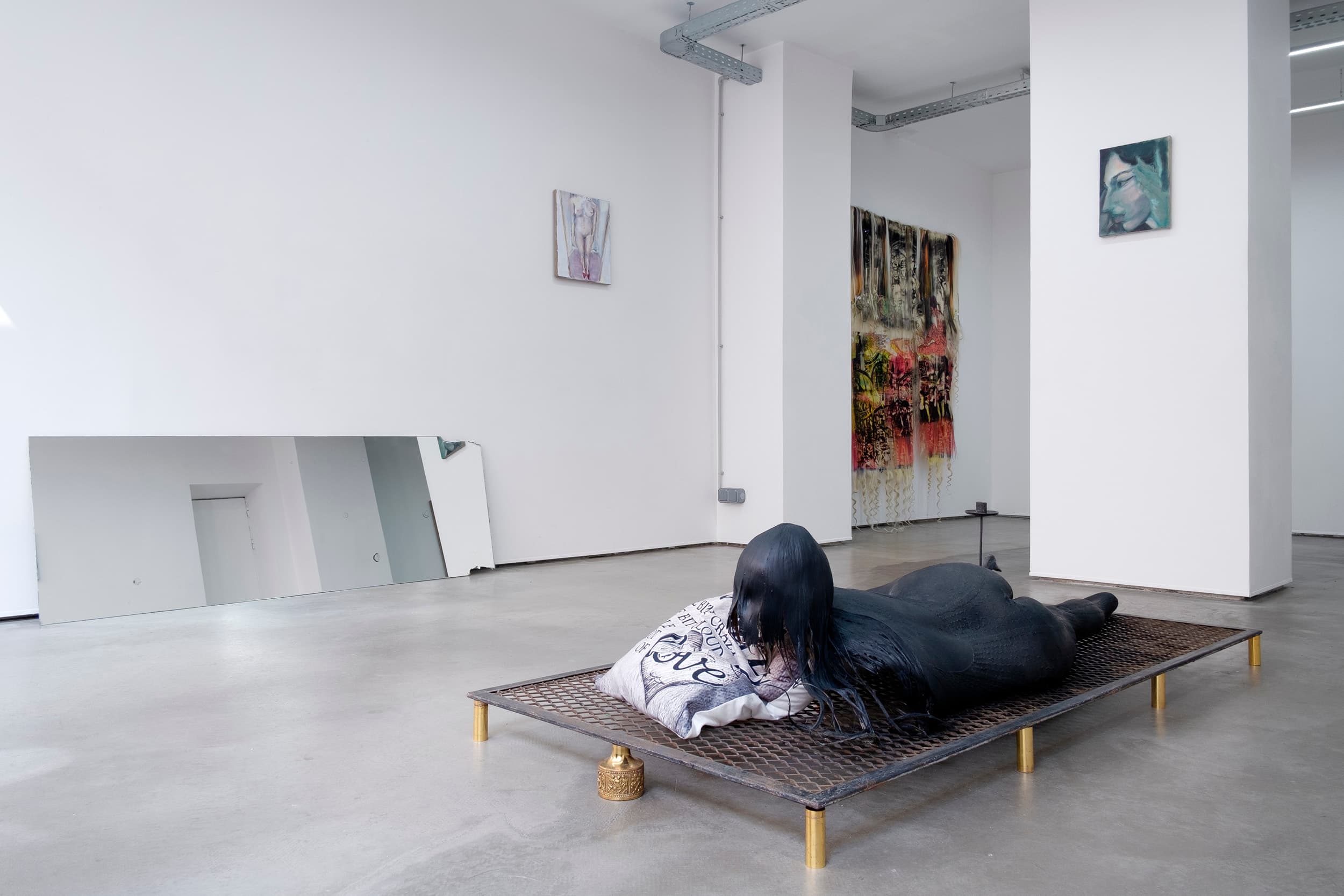
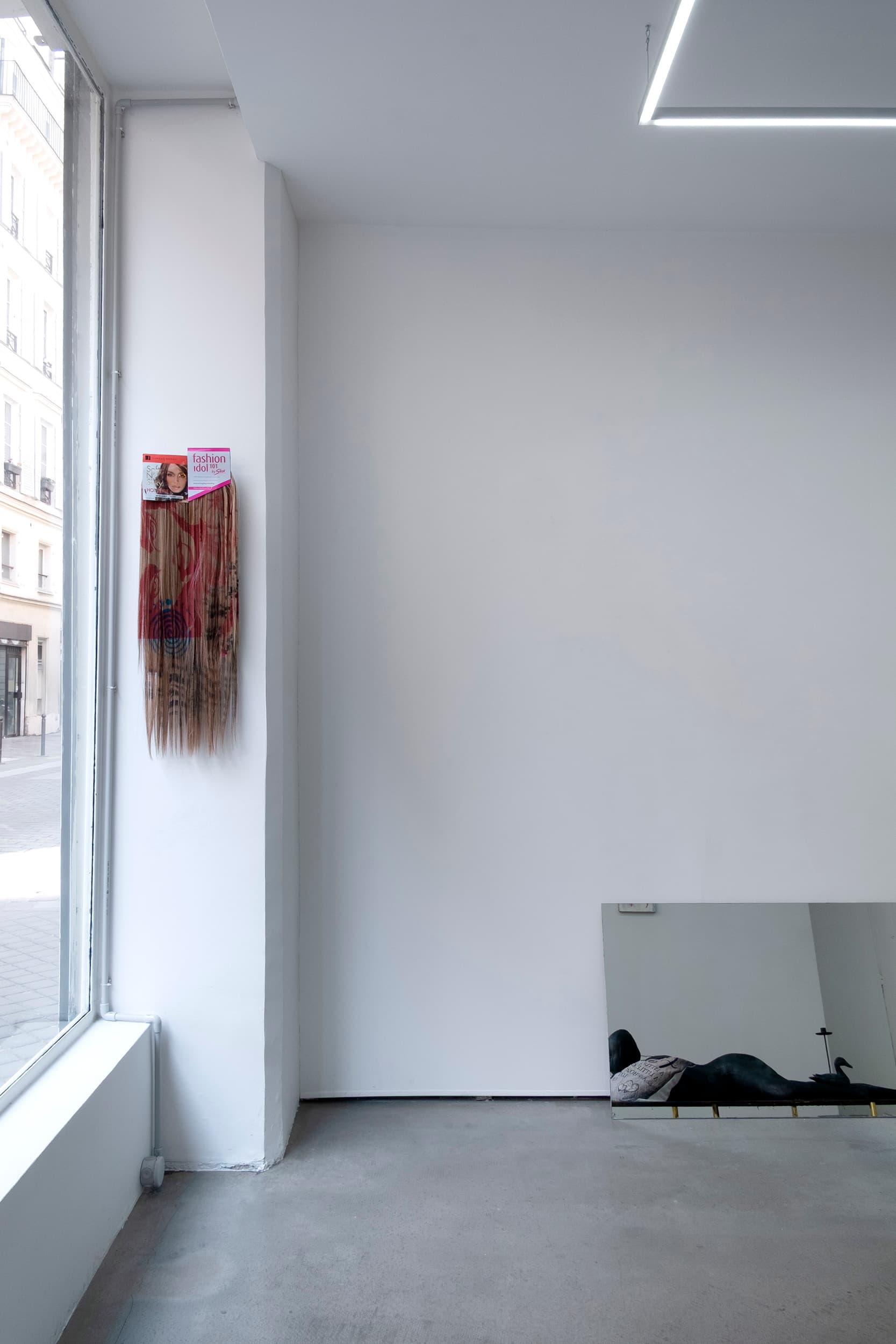
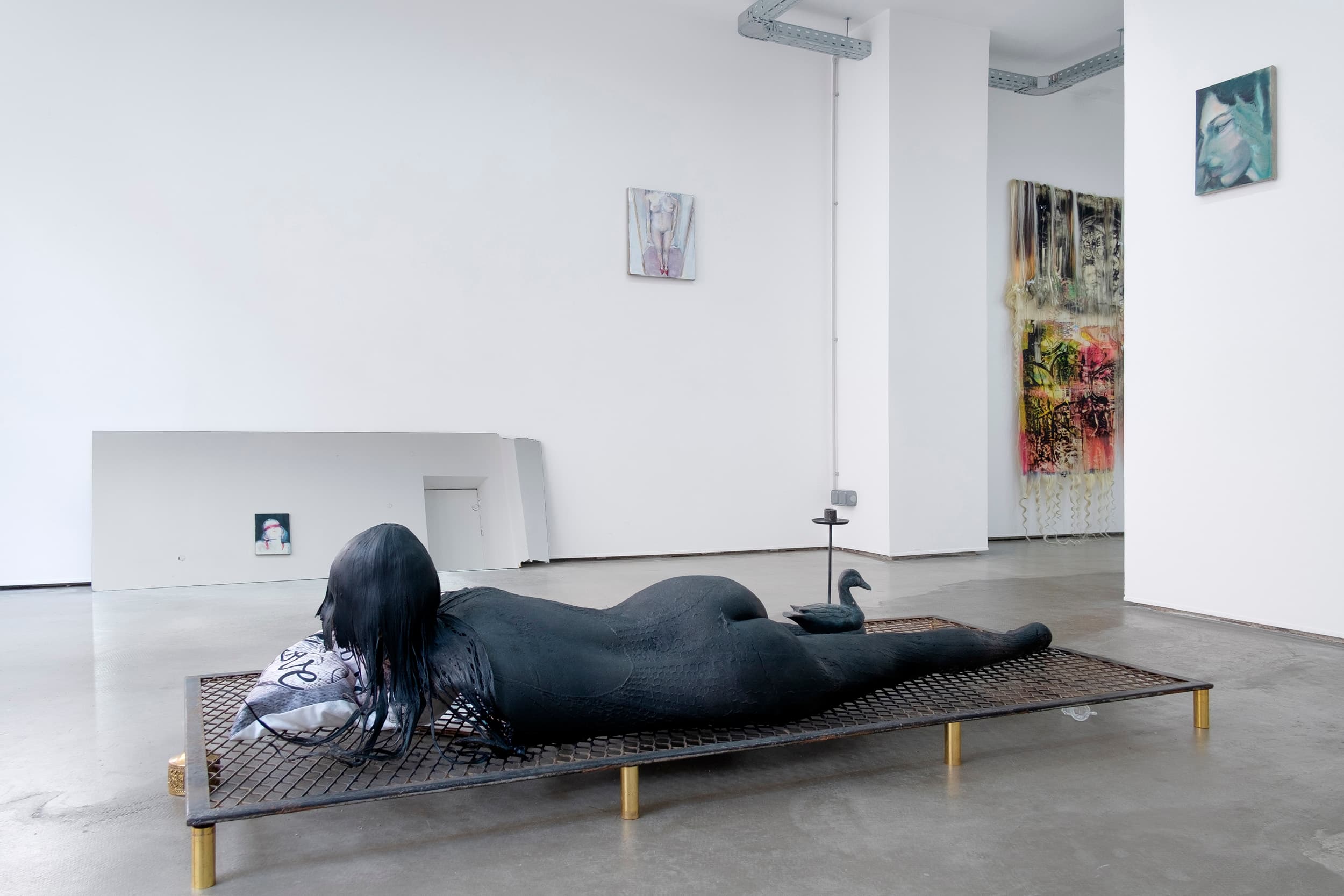
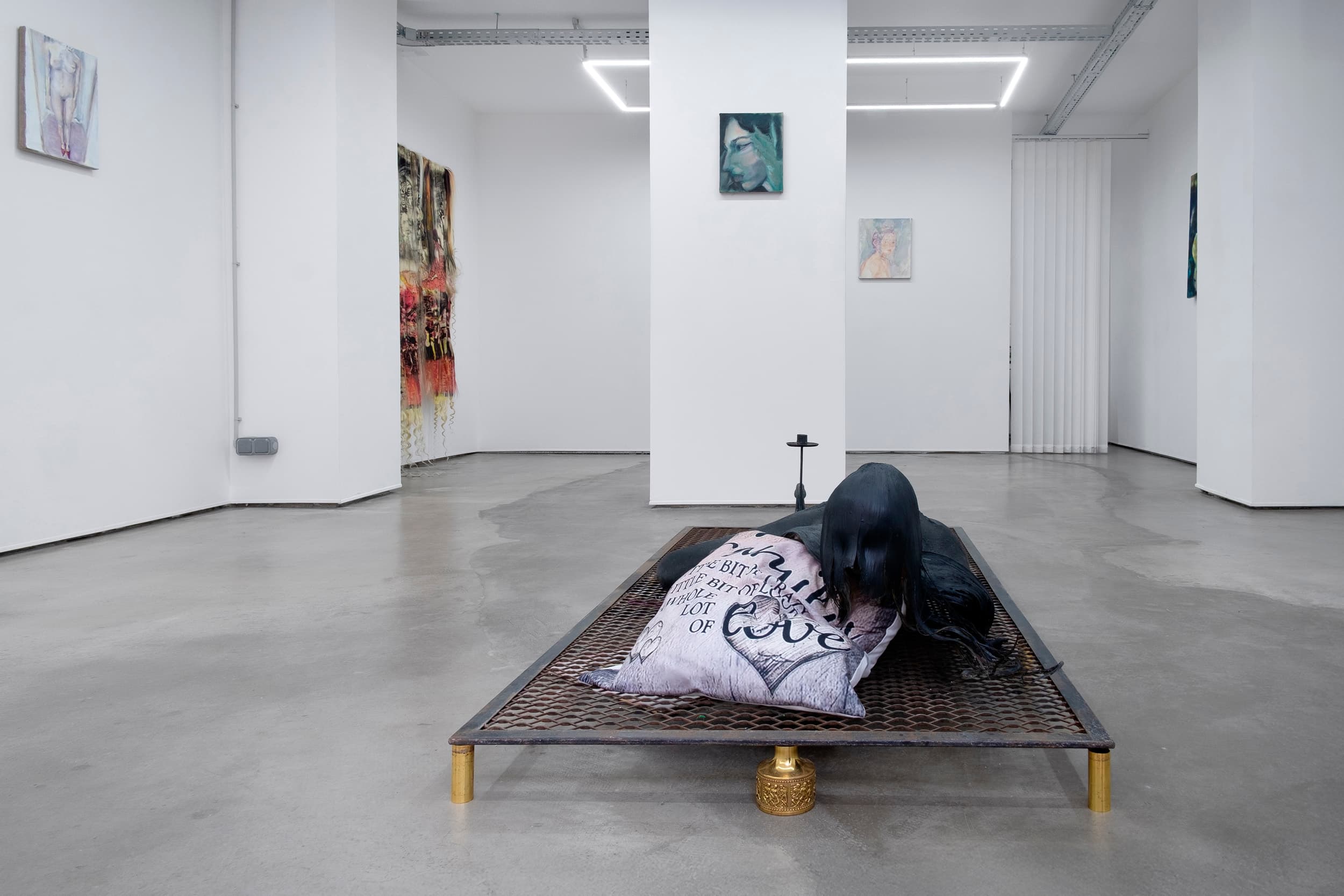
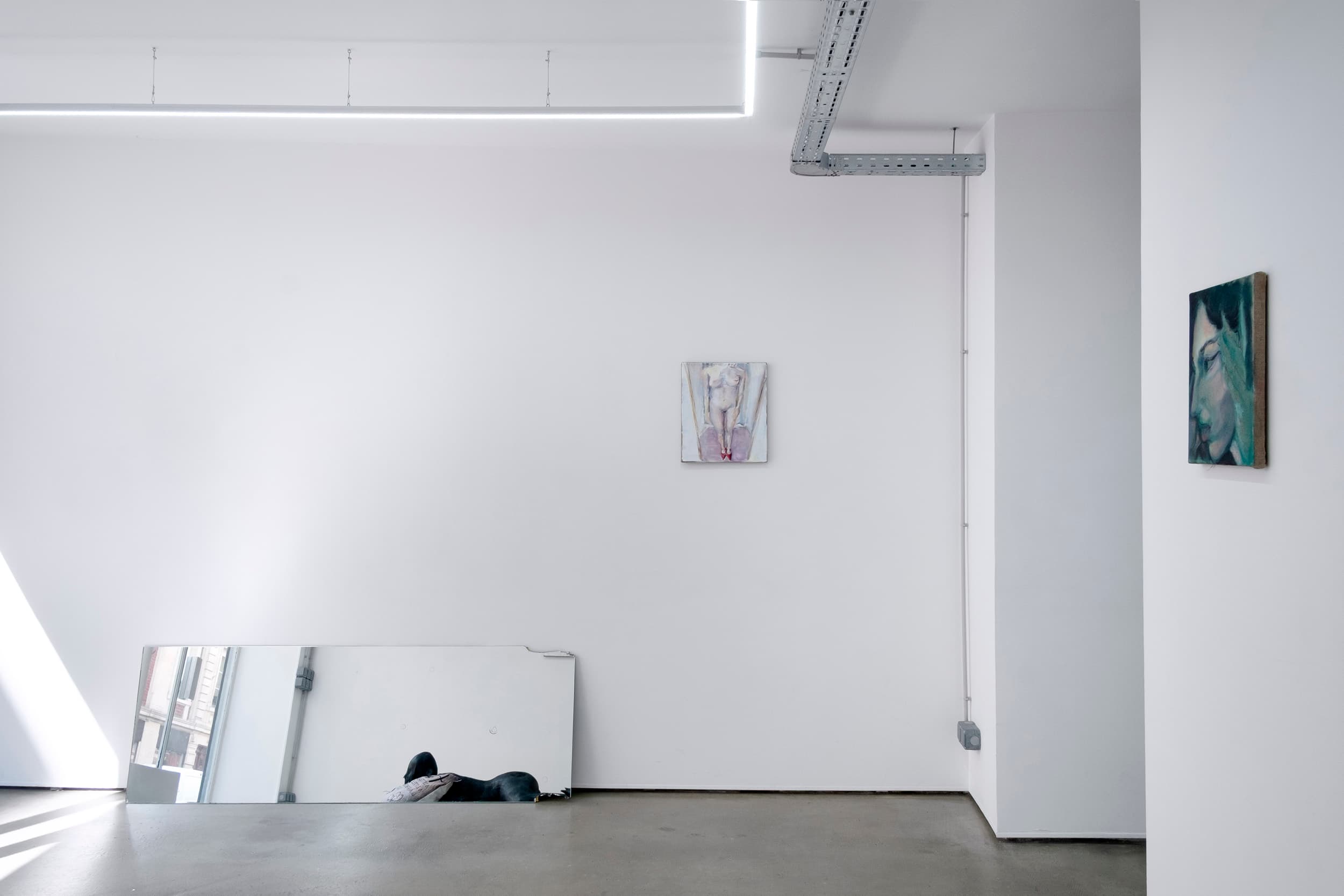
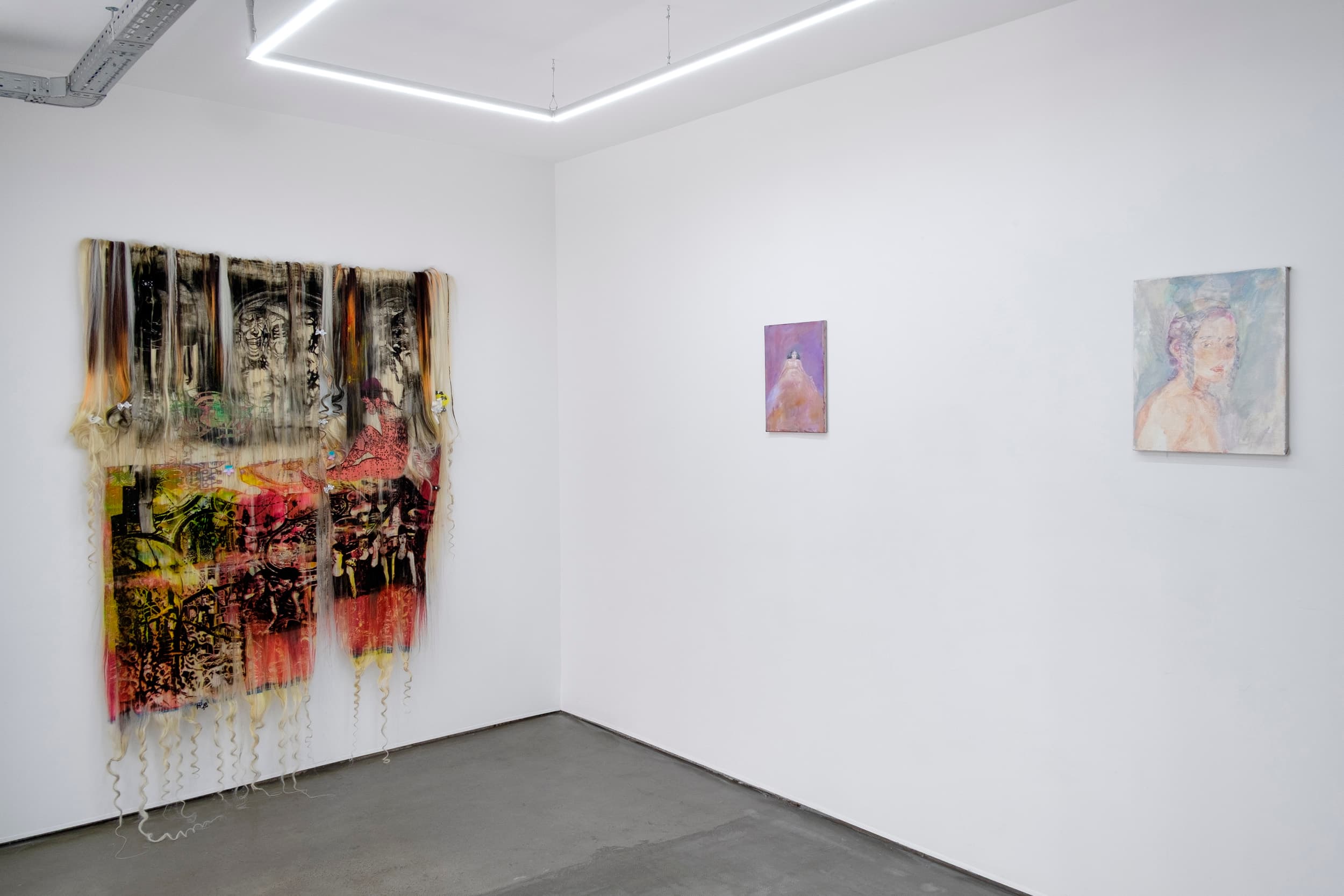
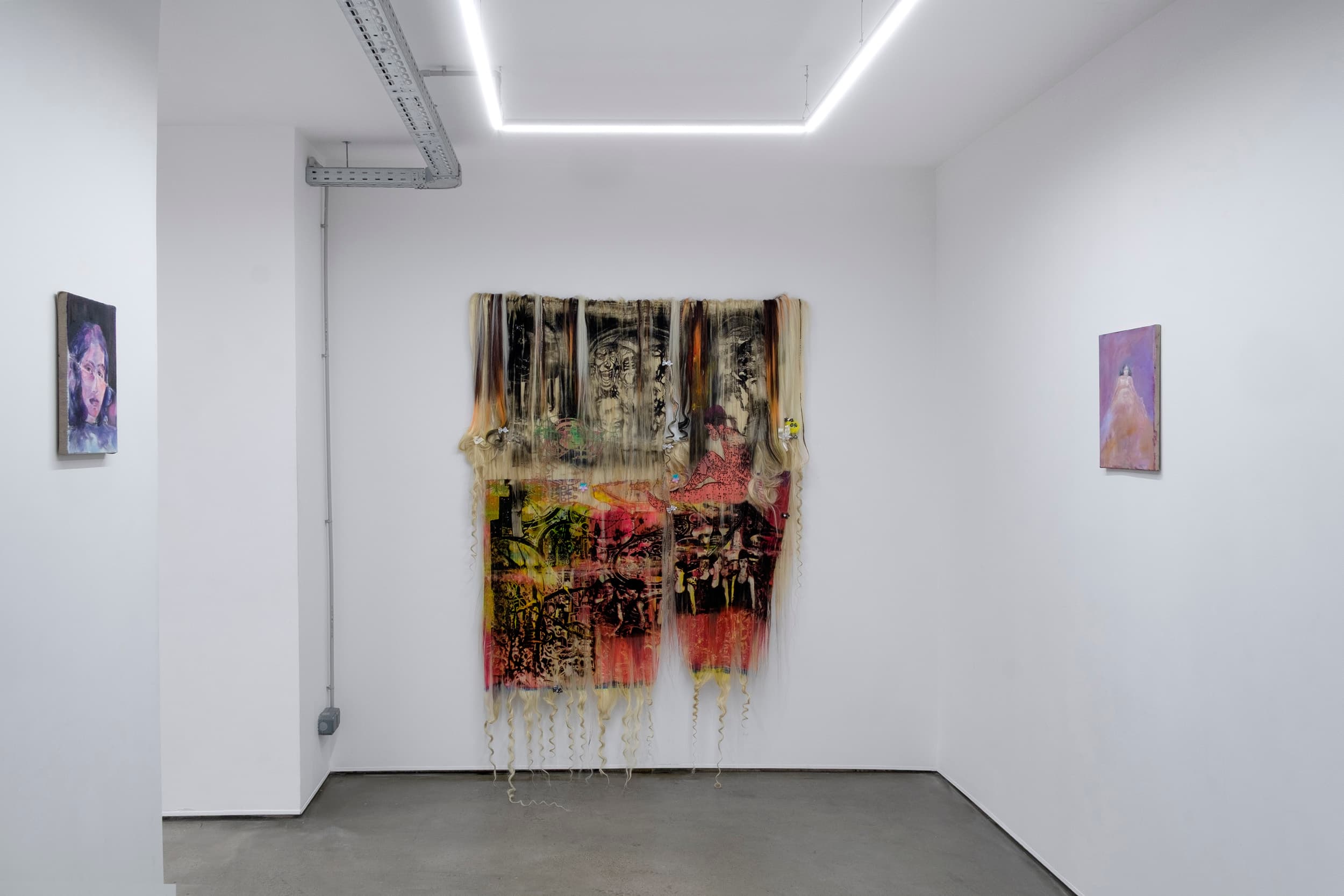
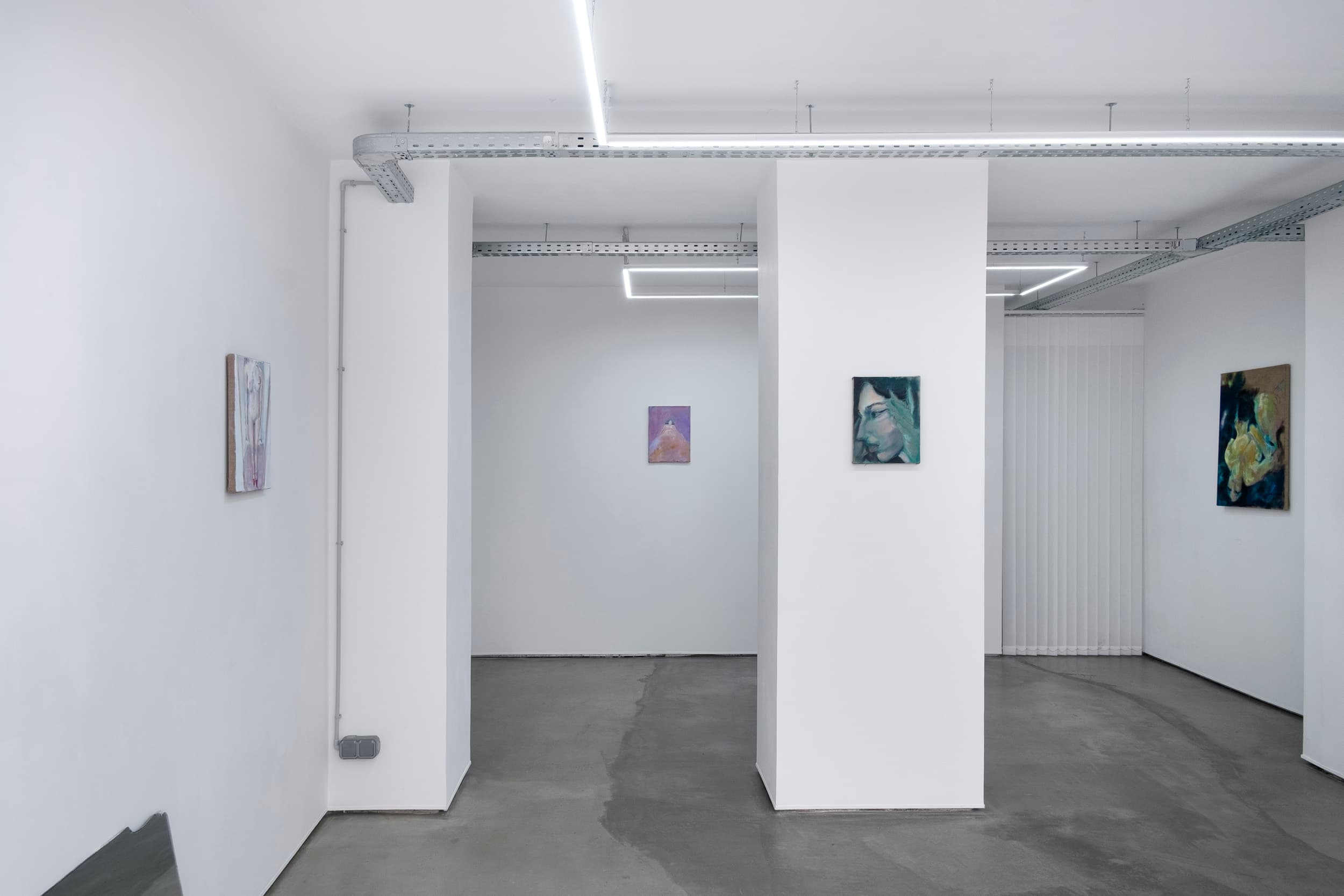
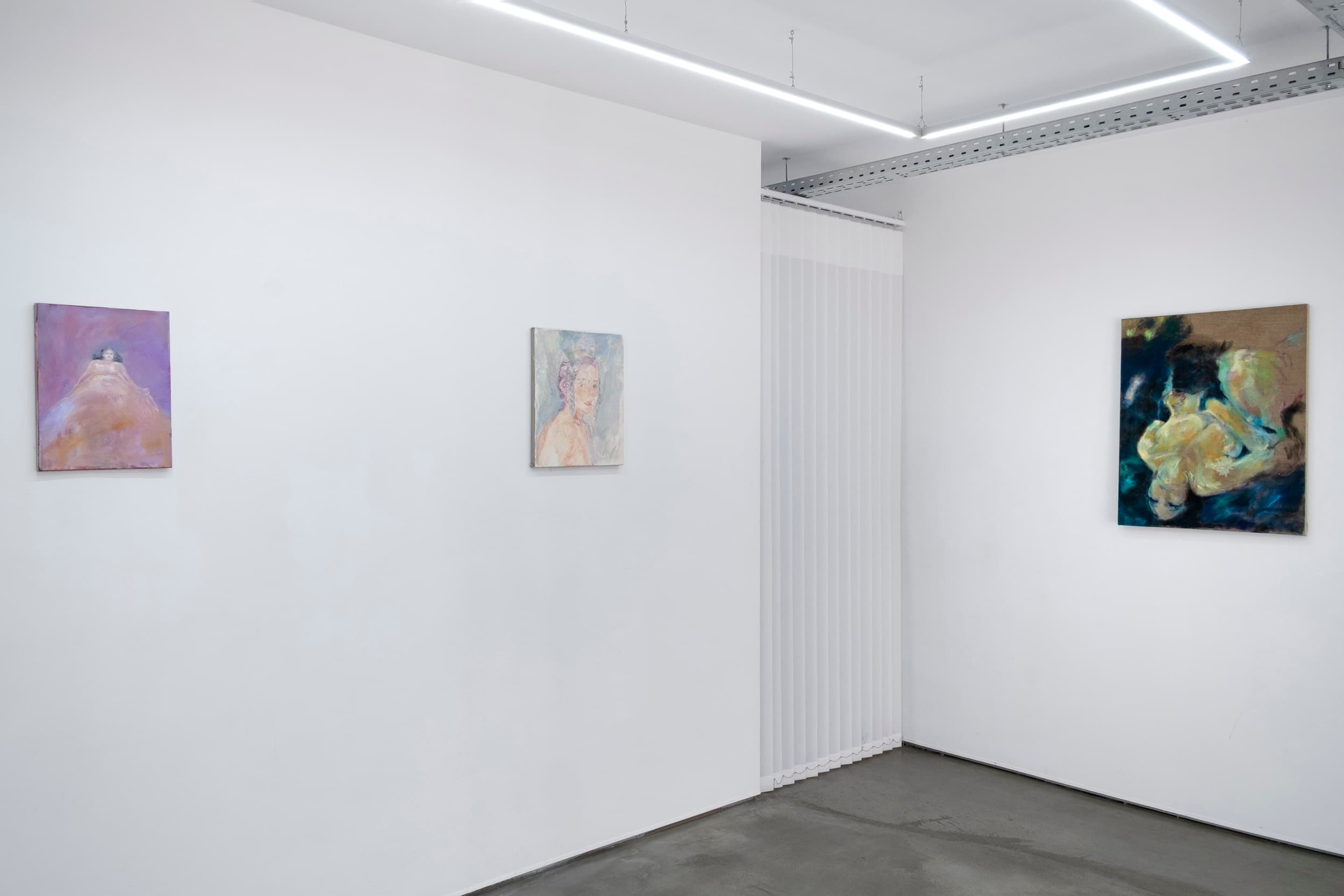
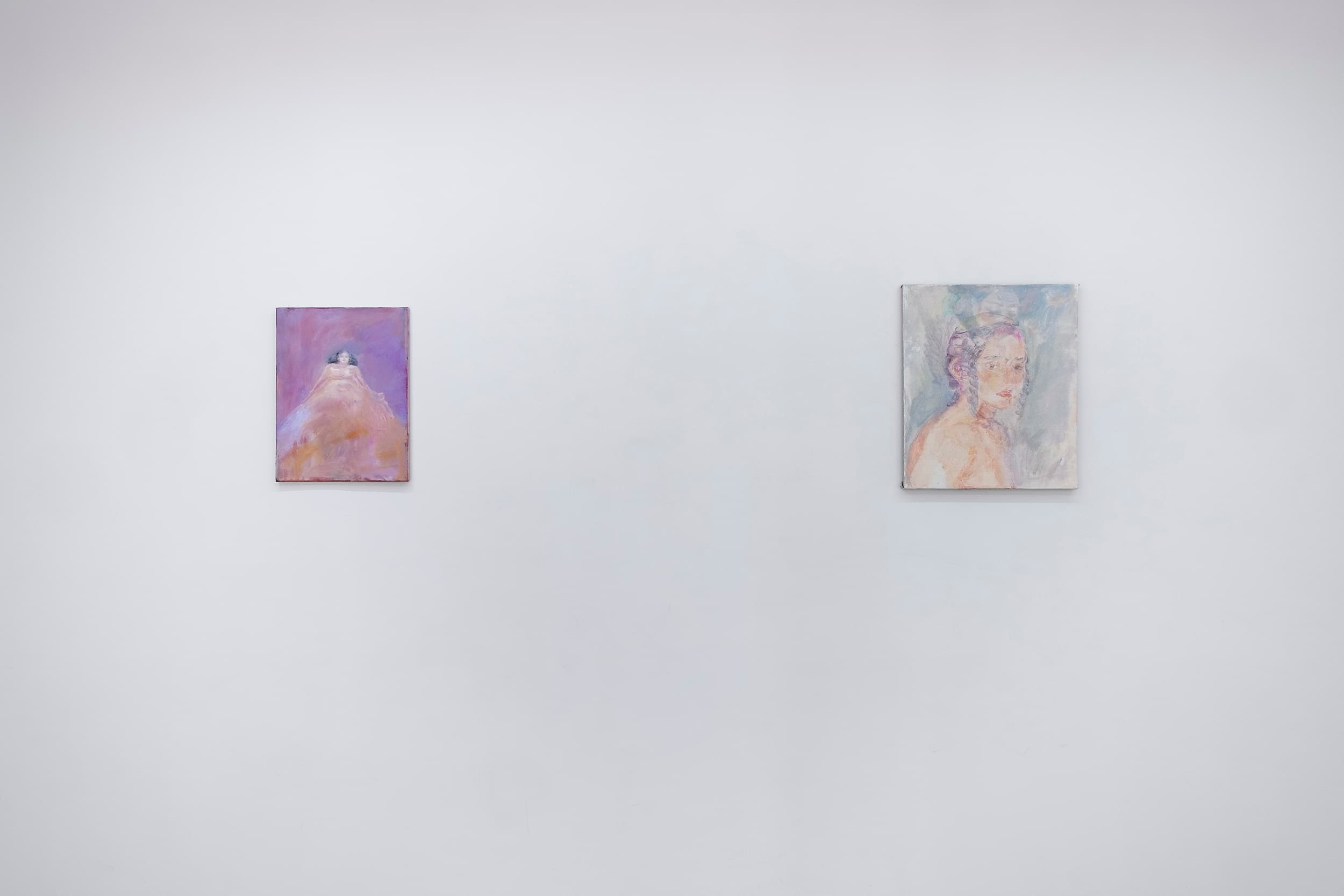
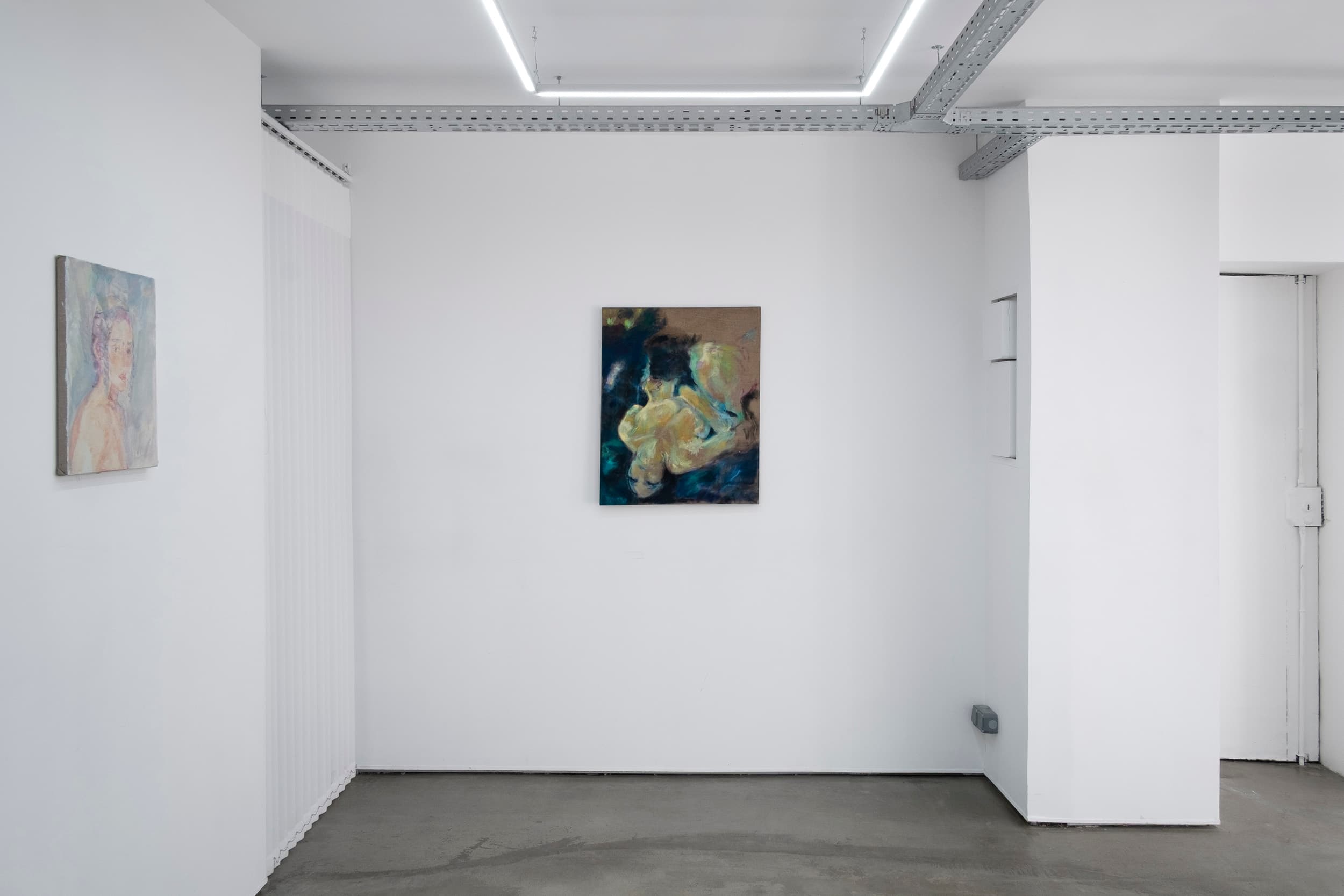
Exo Exo"I wonder what’s wrong with baby ? My baby just cares for me" It all begins with the promise of absolute love. A hallmark of 1960s romantic standards, this refrain—so widely circulated that it appears stripped of any personal meaning—capitalizes on an idealized vision of absolute love. By choosing this title, Cleopatra Gones and Talia Maidenberg enact a gesture of critical reappropriation, shifting its symbolic scope once again. To find meaning here, one must strip away all forms of romanticism: it is in the words themselves, now charged with reflective substance, that the displacement takes place. First with baby, which crystallizes a fundamental ambiguity. Beneath an apparent tenderness, it reveals the architecture of asymmetrical relationships in which one depends and the other protects. Then with care, which is less about attention than about moral and emotional responsibility. To use this term is, unconsciously, to institute a sentimental hierarchy in which one becomes the guarantor while the other is placed in a position of vulnerability. It is the mother–daughter bond that unfolds here through the evocation of Nina Simone, the transformation of this relationship over time, the fraught experience of motherhood, the injunction and parental duty that collide with the choice of an artist’s life. To inhabit one’s body is perhaps always to inhabit one’s mother’s body, extending within oneself what she has transmitted. Ambivalent by nature, care oscillates between a gesture of love and a silent constraint, depending on who gives it and who receives it. In a den-like space reminiscent of a bedroom, feminine figures seem to live a life sheltered from view. Though exposed to our gaze, nothing appears to dictate the gestures and postures of these bodies absorbed in their own reflection. At the center of the space rests a body to which a name has been refused. In Cleopatra Gones’s Sculpture sur sommier, narration is lodged at the very heart of materiality. A mixture of lime and sand, the cast summons the imaginary of male-dominated trades—as if from the existence of men, absent from the narrative, only an inscription in matter remained. On this surface, the imprint of a mesh emerges as though from beneath the skin, less ornament than the persistence of an old mark. A stigma inscribed in flesh, lingerie exceeds intimacy to become memory: the memory of the fetishization of Black bodies, of the gazes and violences that preceded it. Extending perception, the mirror facing it tears the body from its tangible presence to offer it a second life, like a parallel narrative whose reflection becomes the receptacle of our projections. In Talia Maidenberg’s paintings, the mirror likewise does more than reflect the self; it becomes the very tool through which the self shifts and takes shape in its encounter with otherness. The artist observes her own body in order to paint it, but the reflected image is anything but objective: it fragments, distorts, sometimes constrains the figure, turning the body into a site of projection toward other existences. In her paintings, identity is fluid, in the process of recomposition. Fragmented faces coexist with uneasy, cramped silhouettes. In this unstable space, the fleshly envelope becomes both adornment and prison, caught in a fragile attempt to grasp itself without ever managing to settle. These introspective reflections, vectors of parallel narratives, detach bodies from their materiality to offer only their image. Replayed within them are the gestures of beauty repeated before the mirror: dressing, combing, applying makeup—rituals of imitation through which forms of femininity are transmitted. This circulation of lived experience through gestures of care resurfaces in Cleopatra Gones’s Love Is Wicked, where hair becomes a symbolic extension of the maternal figure. The idea of transmission as teaching, but also as a form of psychic contamination, ultimately gives rise to quasi-mutant female figures whose bodies and gestures are traversed by those of the women who came before them. —Cléo Farenc Cléopatra Gones (born 1999 in Amadora, Portugal) lives and works in Paris. Her work explores the tensions between care and power through installations and sculptures that subverts objects of beauty and intimacy. Informed by colonial legacies, she fragments representations of Black femininity to bring forth a ritual, sensual, and political imaginary in which the body becomes a living archive. Cléopatra Gones has participated in several group exhibitions, including at the Musée Eugène Delacroix (Paris) in 2022, at Confort Moderne (Poitiers) and Espace Voltaire (Paris) that same year. Her work was also shown at the Palais de Tokyo in Foudre Sentimentale (2022–2023). In 2025, she took part in Felicità at the Palais des Beaux-Arts de Paris. Talia Maidenberg (b. 1998, France) lives and works in Paris. Her paintings explore the strange and unsettling dimensions of desire within a feminine universe. Her figures often appear isolated, solitary, and at times caught in ambiguous relationships between sensuality and consumption. Talia Maidenberg presented her first solo exhibition at Galerie Sorgenfri (Oslo) in 2024. She then took part in group exhibitions at the Art Encounters Foundation (2025) and Galerie Jecza (2025) in Timișoara, as well as at Ninetto (2025–2026) in Athens. In Paris, she has exhibited with Whitewall Magazine (2025) and La Boulangerie! (2024). In 2026, she presented works in Mexico City with Galerie Georgina Pounds on the occasion of Zona Maco. She will present a duo exhibition at Exo Exo Paris in March 2026.