

Hamptons, New York
Group Exhibition
Veronica, Veronica
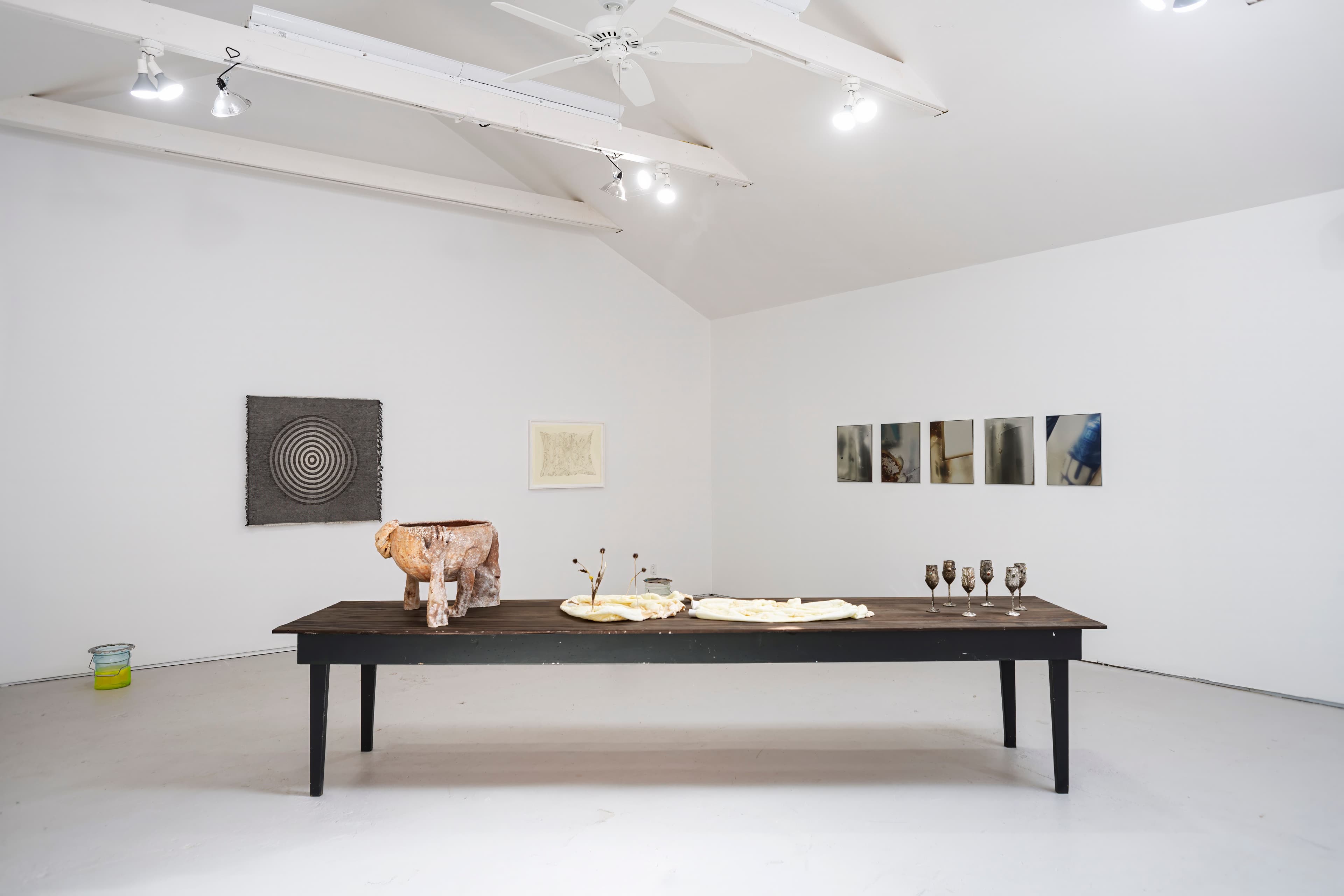
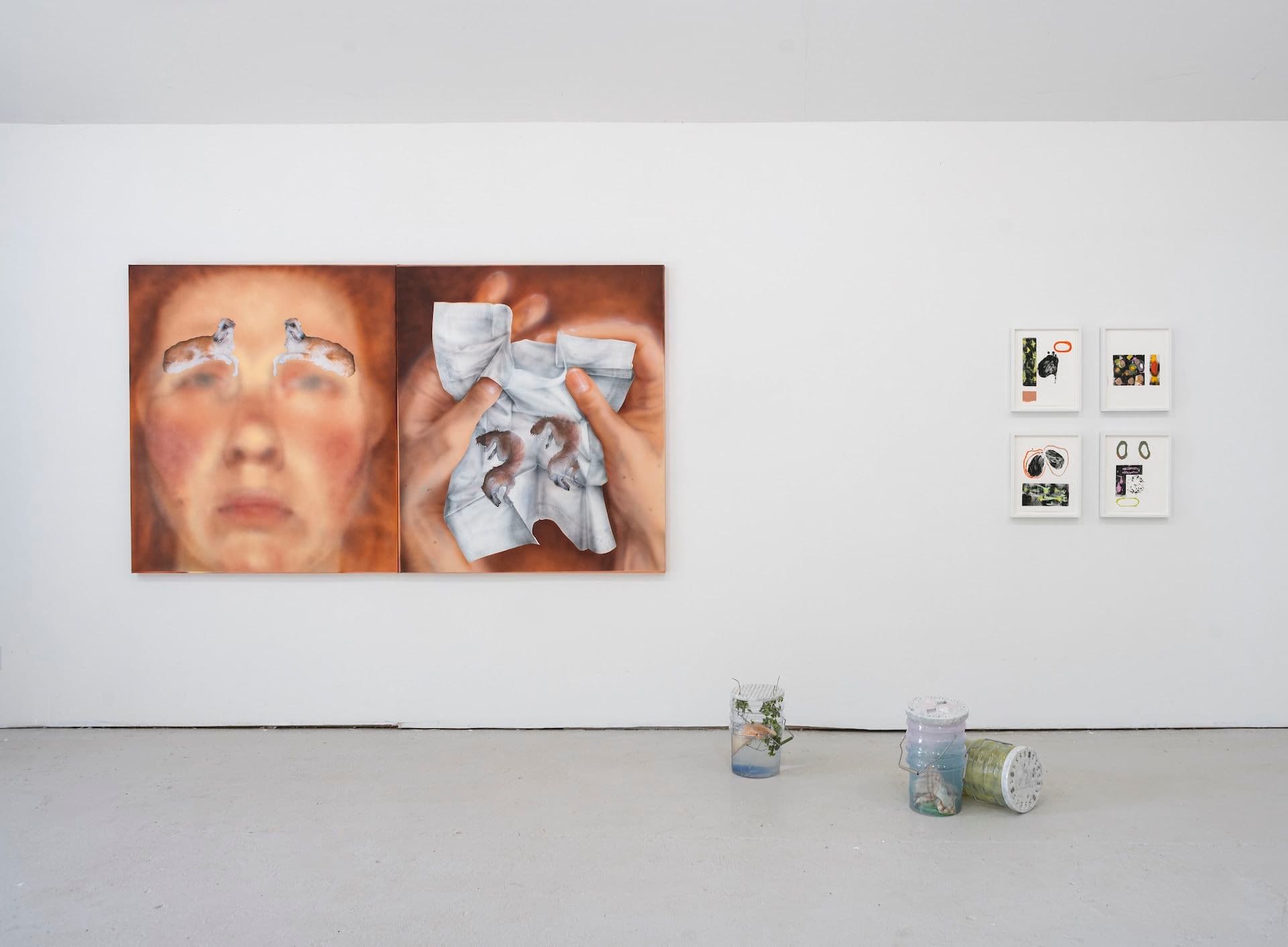
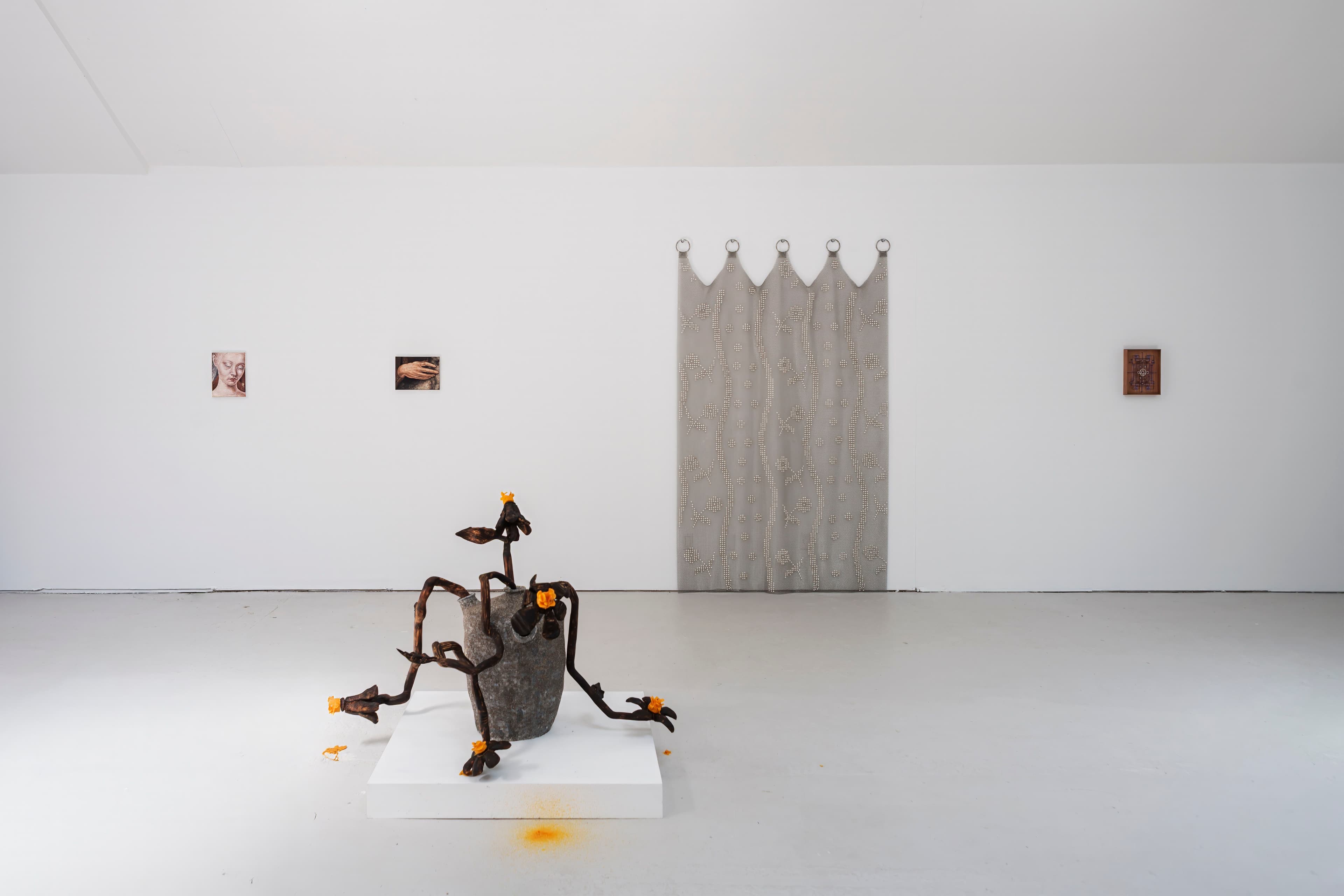
Hesse Flatow EastAlex Batkin, Brianna Rose Brooks, Jennifer Carvalho, Cynthia Chang, Megan Cline, Liz Collins, Pap Souleye Fall, Jack Ferver, Adriana Gallo, Douglas Goldberg, Kara Güt, Martine Gutierrez, Jeremy Jacob, Clementine Keith-Roach, Colin Knight, Antonia Kuo, Hannah Levy, Craig Jun Li, Diana Sofia Lozano, Richard Malone, Helena Minginowicz, Lior Modan, Africanus Okokon, Tamen Pérez, Kent Rhodebeck, Emma Safir, Pauline Shaw, Karinne Smith, Sophie Stone, Jia Sung, Catherine Telford Keogh, Frank Traynor, Wretched Flowers Hesse Flatow is pleased to present Veronica, Veronica, a group exhibition of 33 international artists at its gallery space inside a 4,000 square foot former potato barn in Amagansett. The show, organized by independent curator Andrew Gardner and artist Emma Safir, celebrates the titular patron saint of the image, photographers, linen weavers, and laundry workers, whose legend recounts one of the most exalted examples of image generation and transference in the Western world. The story of St. Veronica does not appear in the four canonical gospels; rather than a biblical figure, her’s is a story that has evolved endlessly over centuries, a true Christian legend. The most widely accepted version was affirmed in the 13th century Bible en françois of Roger d’Argenteuil. In this iteration, Veronica encounters Jesus on his journey to Golgotha, where he is crucified. Seeing Jesus’ suffering, she wipes his brow with her veil, resulting in the transfer of a perfectly replicated image of his visage. The exchange is charged with eroticism; his bodily fluids are quite literally enmeshed in her cloth, an intimate encounter that results in an image that marks one of his final moments in the earthly realm. The Veil of Veronica, held at Saint Peter’s Basilica in the Vatican and said to quench thirst, cure blindness, and raise the dead, would therefore predate the Shroud of Turin, a more widely known relic of cloth imprinted with Christ’s crucified body. As the tale of Veronica was translated and circulated, the popular imaginary surrounding this remarkable duplicated image grew. Artworks depicting a woman holding a draped cloth imbued with a perfectly articulated reproduction of Christ’s face became widely known, including perhaps the most famous, Hans Memling’s Saint Veronica from c. 1470-1475, held at the National Gallery of Art. Other art forms further canonized her story. Passion plays, a regular feature of medieval European life organized by a moralizing church intent on spreading Christian doctrine, regularly depicted Veronica’s encounter with Jesus as one of the final humane moments before he meets the pain and suffering of death. In the 19th century, the interwinning developments of the industrial revolution, fueled by the mechanized production of textiles, and photography, gave Veronica’s mythic status as a protector and keeper of both cloth and image renewed attention, as her saintly patronage extended to include both the laboring textile worker and the nascent technology of mechanical image reproduction. Veronica’s name is a transposition of ancient linguistics: veritas, verus, vero—in Latin, truth, true, truthfully—and eikōn (εἰκών)—in Greek, image, figure, or likeness. Veronica, the carrier of truth, one that holds the truest image. She, the keeper of the trace of Christ, the protector of this most intimate encounter with the king of kings, the first indexical record that his body ever existed. Her cloth, imprinted with an image not made of human hands but of human flesh, this veil charged with both eros and faith, its fibers impregnated with the bodily fluids of a man who would die for his belief. Veronica, truth seer, sayer, and protector. Through her veil, she possesses and defends his mortal flesh, a physical manifestation of a body that could never fully be hers (or anyone’s). Her efforts to extend a simple kindness to the zealot who was soon to be punished for his heresy is a resolutely queer gesture, an act of brave defiance in the face of countervailing forces intent on squelching freedom of belief. It is perhaps no accident, then, that during the height of the AIDS epidemic in the 1980s and 1990s, it was at St. Veronica’s Roman Catholic church in Greenwich Village that suffering gay men were welcomed with open arms, nursed through their tumultuous descents into death at one of the New York City’s only hospices catering to victims of that horrible disease. In an era of “alternative facts” and AI-generated imagery, it feels almost quaint to venerate a saint known for her fierce protection of the truth. But as her story, which has continuously evolved to meet the needs of the present moment, shows, truth can be a slippery and elusive thing. Sure, the literal transposition of blood, sweat, and tears onto cloth can result in one kind of image making, but it’s still a gesture towards truth, the contours of a man’s face, but hardly the real thing. Painters like Memling were religious propagandists, paid handsomely by the church to depict religious gospel with life-like reality, but based on stories that only existed in oral or textual form. With the advent of photography, reality could be easily captured and circulated with the sheer manipulation of light and shadow. But the endless glut of imagery, increasingly disseminated by wealthy and powerful politicians and media barons who were quickly displacing religious figureheads as the proliferators of image-based propaganda, proved that owning the means of truth distribution was as meaningful as the truth that was being depicted. Fidelity to the truth is hard to come by, it seems. Veronica, Veronica therefore considers image generation, transference, and exchange in a post-truth age, one marked by pessimism and disillusionment, as postpandemic social isolation and widely-circulated internet misinformation have fueled a crisis of faith in just about every corner of modern life. The exhibition draws together artists who play with ideas of artistic doubling, replication, and the inherent contradiction of the “perfect” copy, sometimes creating works that intentionally manipulate or distort imagery. Systems of ritual, care, worship, and devotion are also centered, as works rendered in a wide range of materials tease out ideas of fact and fiction, resulting in objects imbued with commitments to beliefs both personal and collective. Many of the works featured play up the material vernacular of ancient traditions, employing the time intensive processes of hand weaving, sewing, metalsmithing, and slip casting, creating works steeped in virtuosic care for making. Here, artists are considering systems of faith anew, reimagining image reproduction and veneration for an era short on hope for just about anything. About the Curators Andrew Gardner is a writer, curator, and historian based in New York. His work focuses on a wide range of topics that grapple with the socio-political dimensions of the human-made world and where art, design, history, technology, and the natural world converge. He has contributed to a wide range of publications, organized numerous exhibitions, and commissioned public art across the U.S. and around the world. He has held positions at the Museum of Modern Art, Cooper Hewitt, Smithsonian Design Museum, Meta Open Arts, the Metropolitan Transportation Authority’s Arts & Design team, and the Bard Graduate Center. Emma Safir (b. 1990 NYC) Safir makes paintings that utilize fabric manipulation, lens–based media, smocking, rasterization, upholstery, and digitization. Her paintings function as screen simulations, proxies and portals. Safir is interested in hierarchies of labor in relation to gender and digitization, and in image making apparatus and distribution. Safir holds a BFA from RISD in Printmaking and an MFA from Yale in Painting & Printmaking. She has had solo exhibitions at Blade Study, Baxter St at CCNY, SHIN HAUS at Shin Gallery and Bunker Projects; and has participated in group shows at Hesse Flatow, Galerie Nicolas Robert, Charles Moffett, Jack Barrett, Lyles & King, among others. She has upcoming solo exhibitions with Hesse Flatow (September 2025) and Buffalo Institute for Contemporary Art (April 2026). Safir lives and works in New York City.