Chelsea, New York
Sam Jablon
Luck or Else
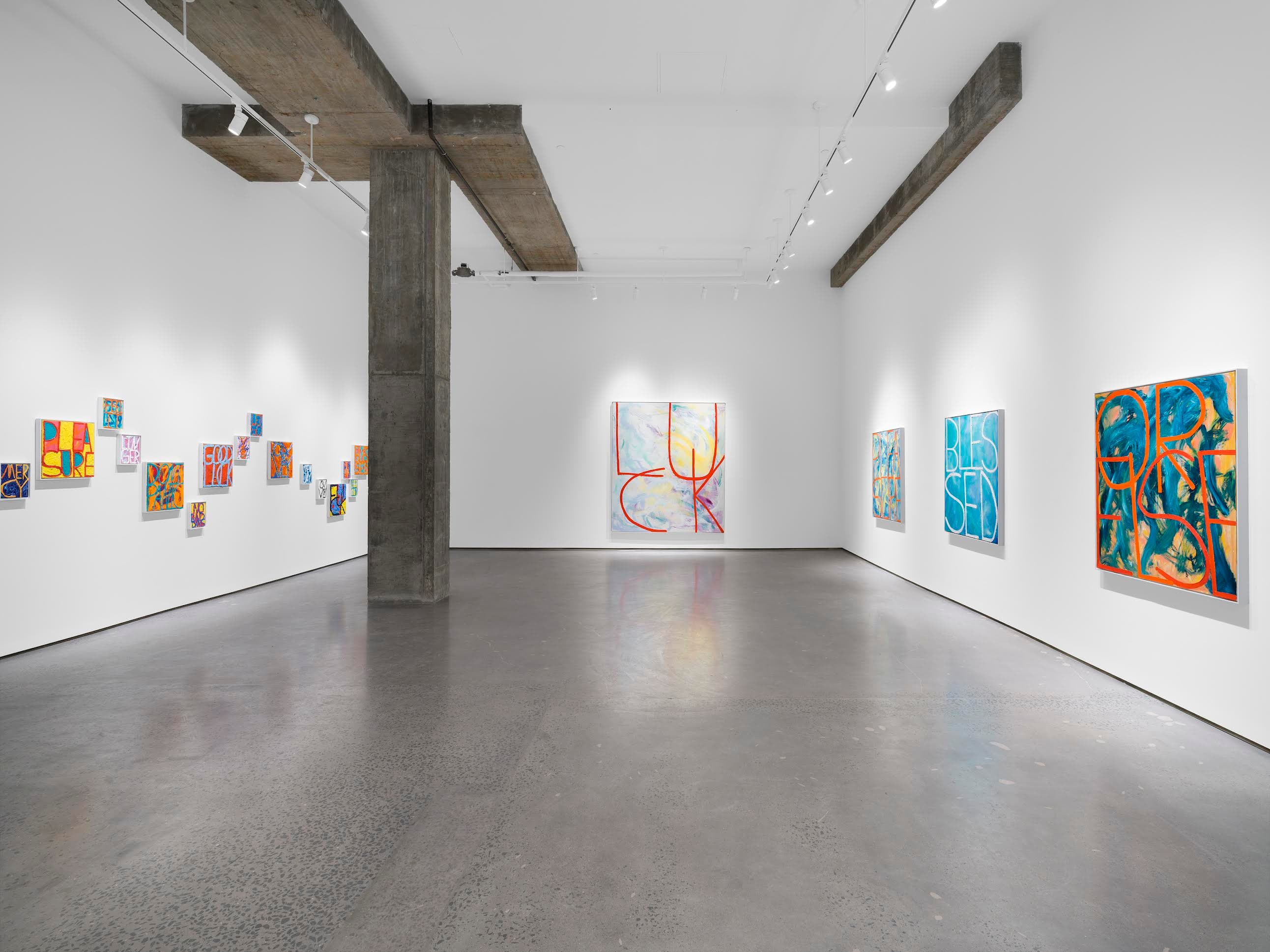
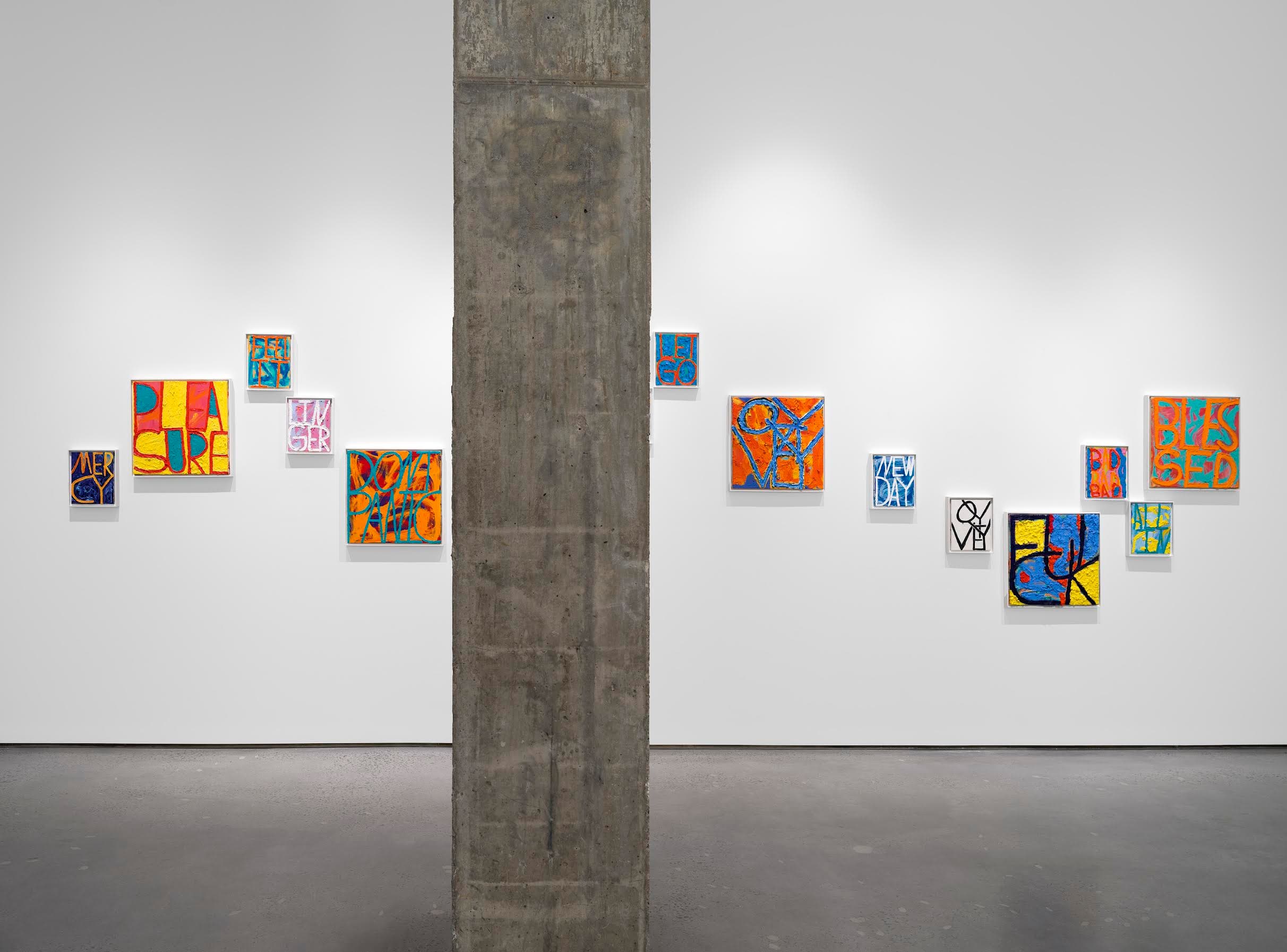
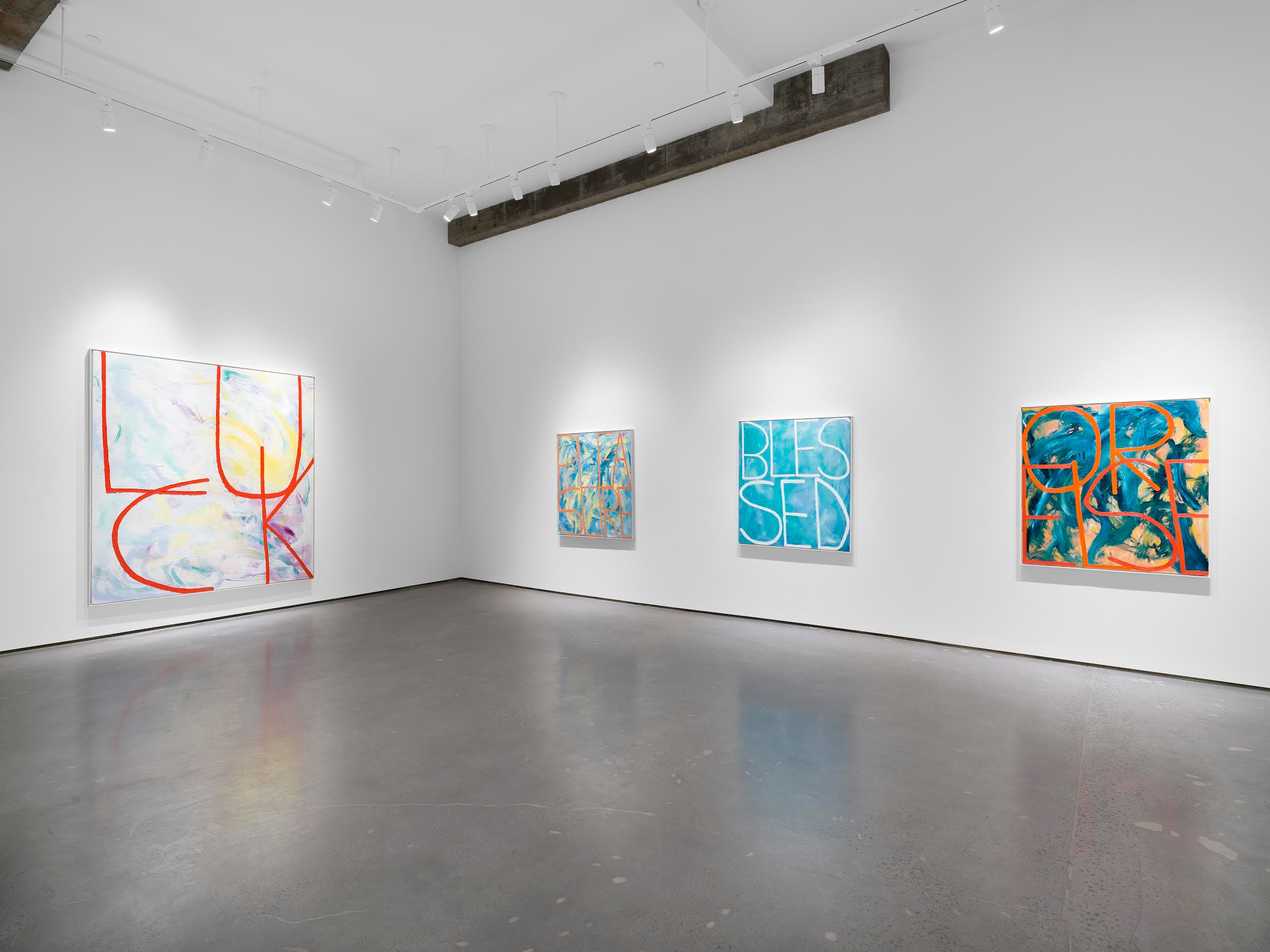
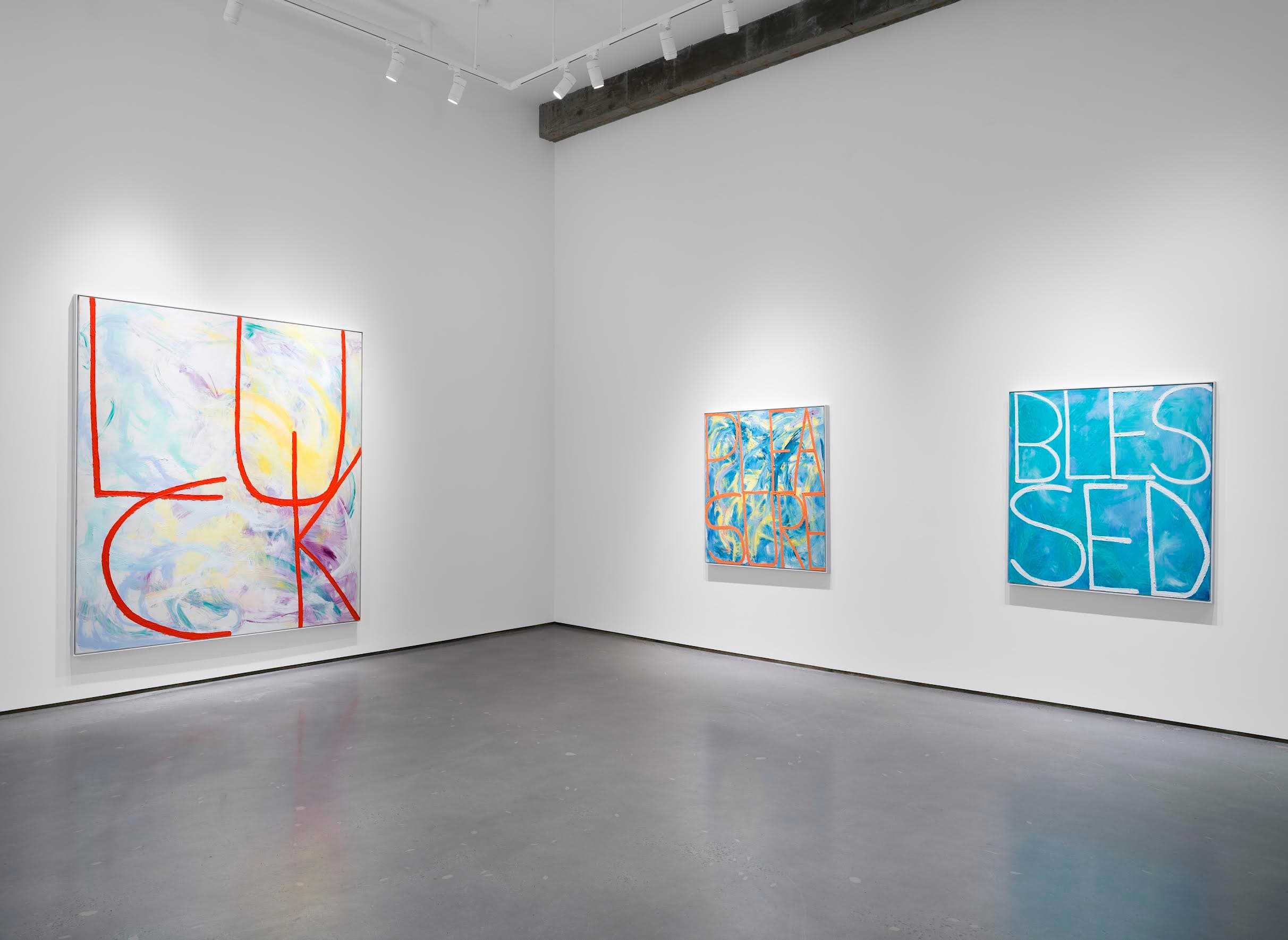
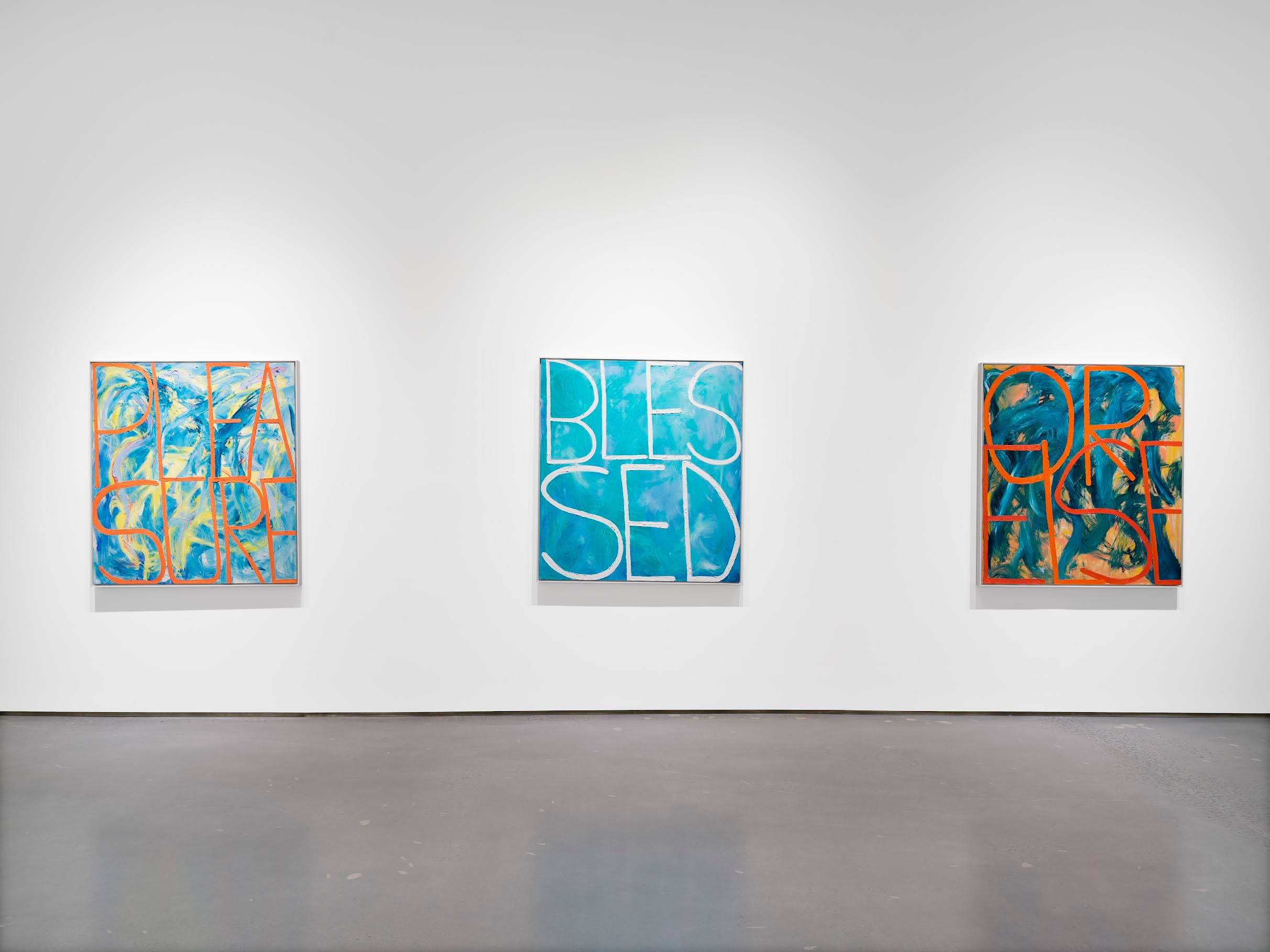
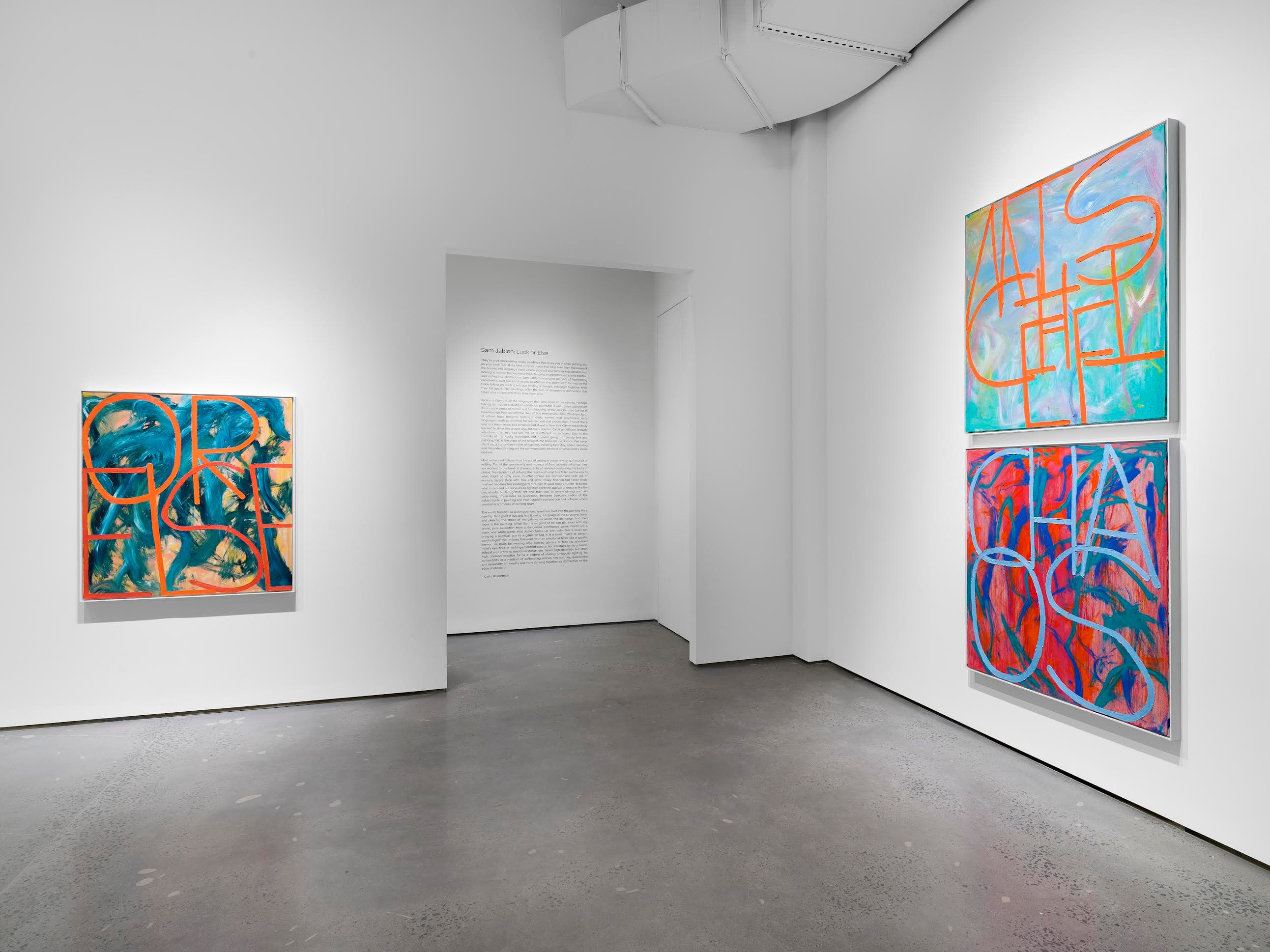
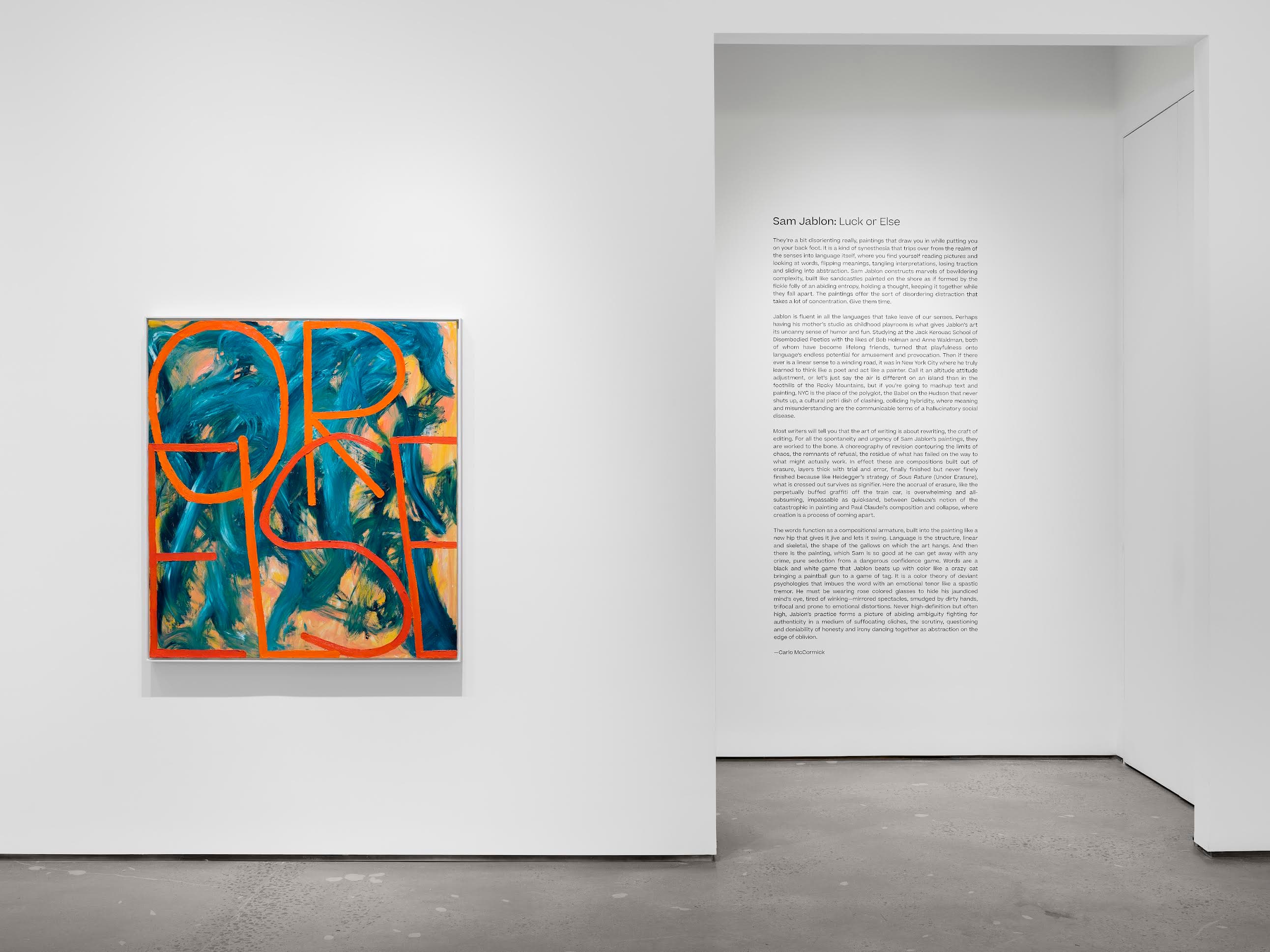
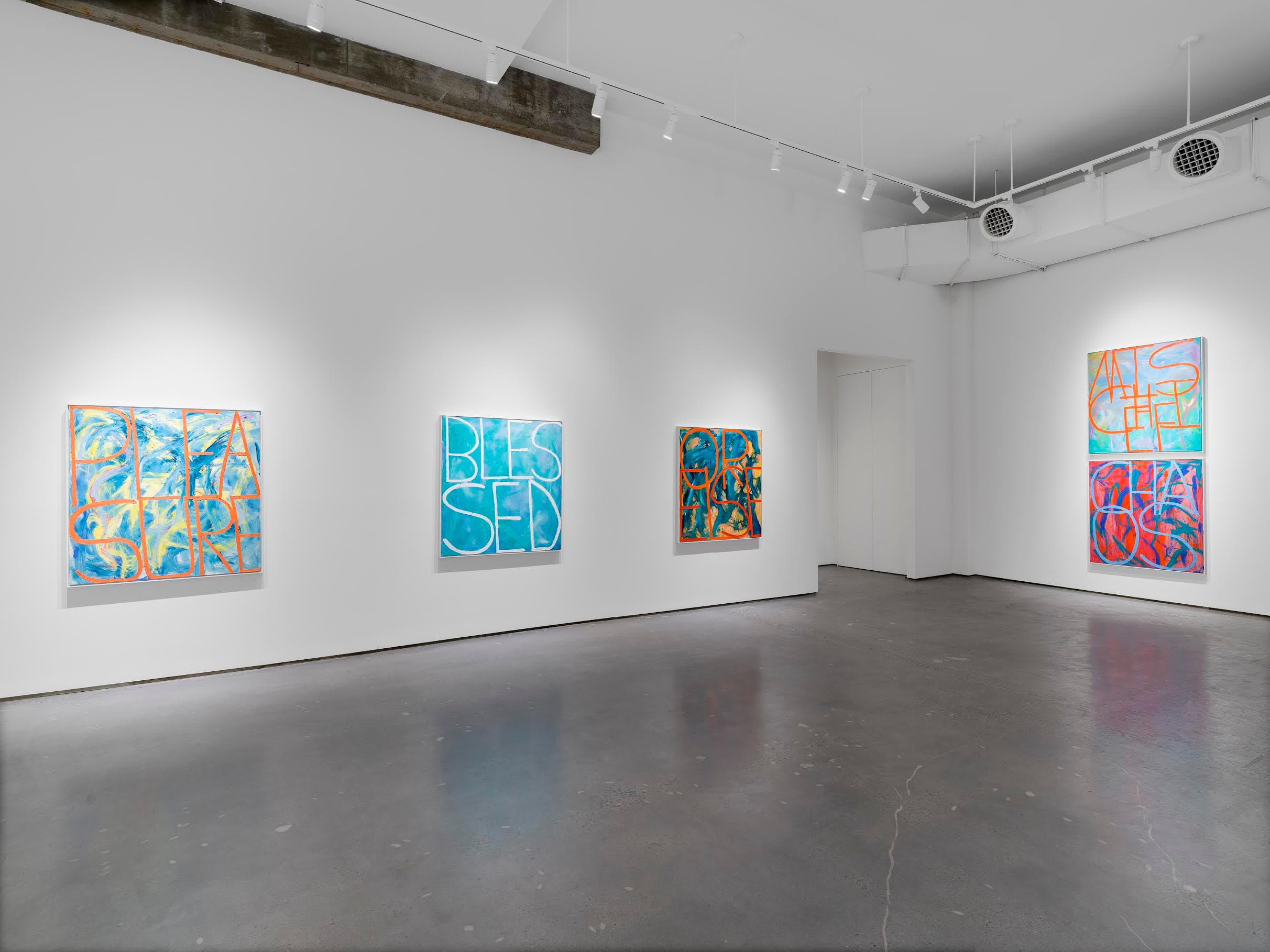
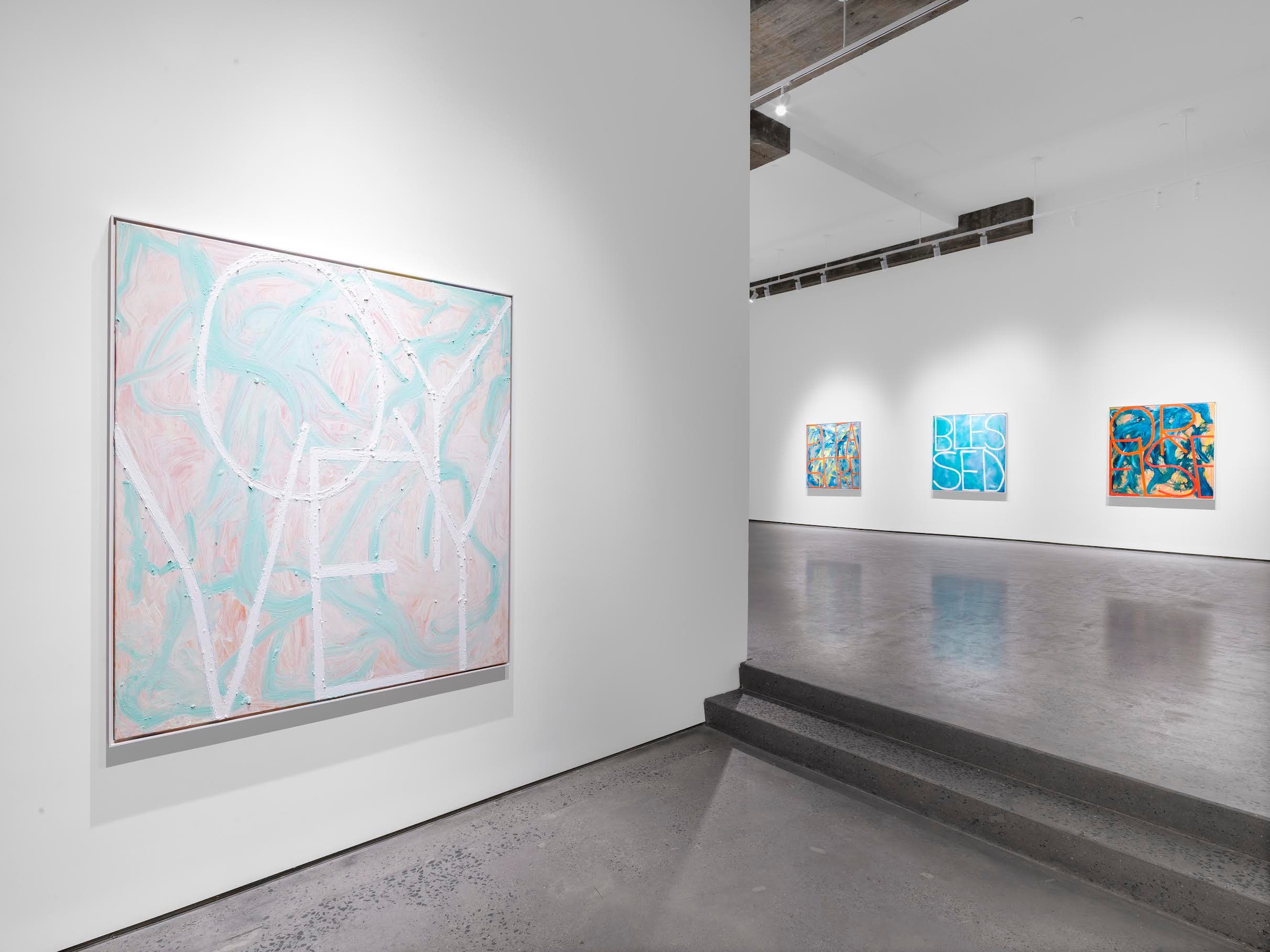
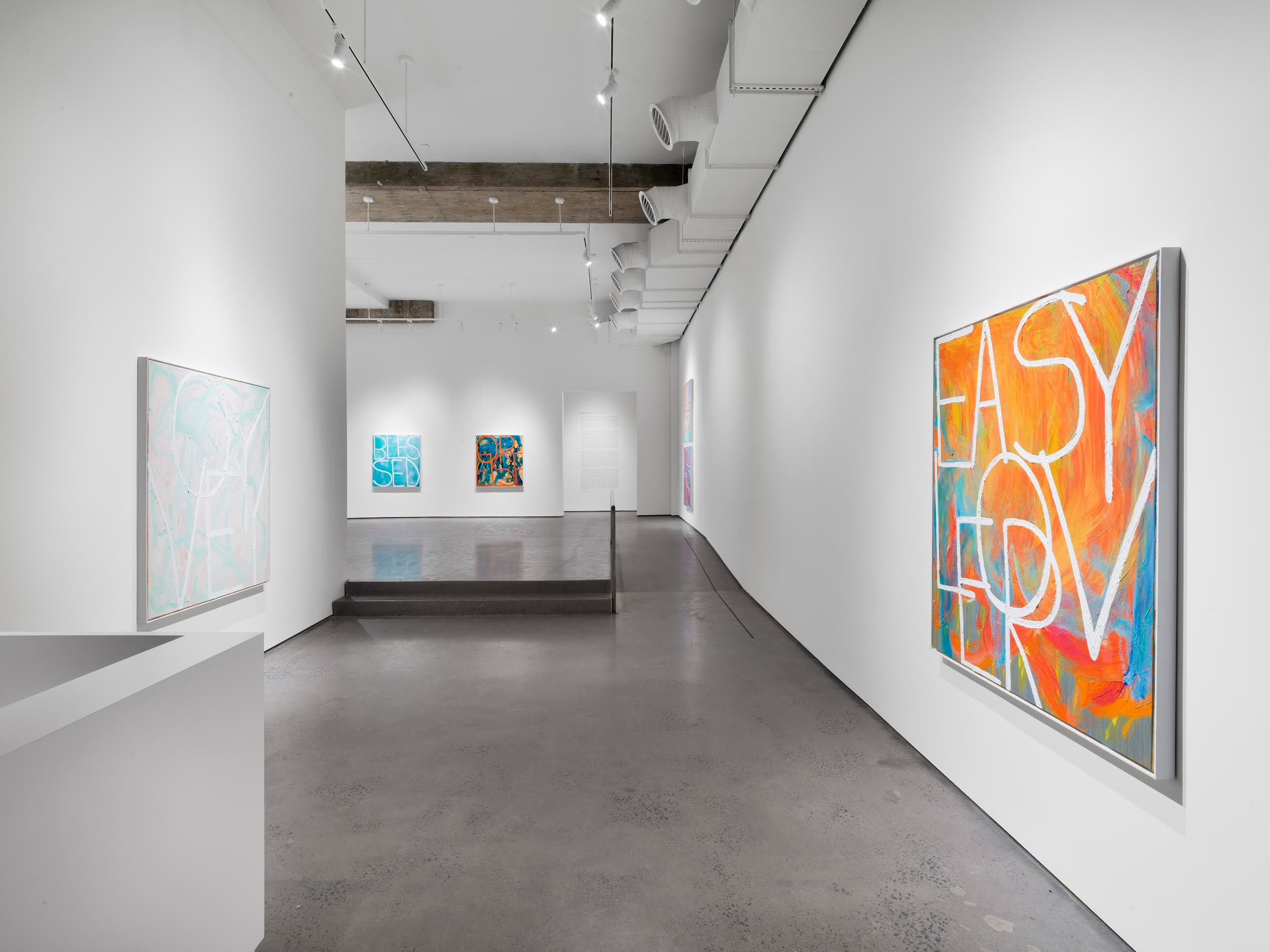
Morgan PresentsThey’re a bit disorienting really, paintings that draw you in while putting you on your back foot. It is a kind of synesthesia that trips over from the realm of the senses into language itself, where you find yourself reading pictures and looking at words, flipping meanings, tangling interpretations, losing traction and sliding into abstraction. Sam Jablon constructs marvels of bewildering complexity, built like sandcastles painted on the shore as if formed by the fickle folly of an abiding entropy, holding a thought, keeping it together while they fall apart. The paintings offer the sort of disordering distraction that takes a lot of concentration. Give them time. Jablon is fluent in all the languages that take leave of our senses. Perhaps having his mother’s studio as childhood playroom is what gives Jablon’s art its uncanny sense of humor and fun. Studying at the Jack Kerouac School of Disembodied Poetics with the likes of Bob Holman and Anne Waldman, both of whom have become lifelong friends, turned that playfulness onto language’s endless potential for amusement and provocation. Then if there ever is a linear sense to a winding road, it was in New York City where he truly learned to think like a poet and act like a painter. Call it an altitude attitude adjustment, or let’s just say the air is different on an island than in the foothills of the Rocky Mountains, but if you’re going to mashup text and painting, NYC is the place of the polyglot, the Babel on the Hudson that never shuts up, a cultural petri dish of clashing, colliding hybridity, where meaning and misunderstanding are the communicable terms of a hallucinatory social disease. Most writers will tell you that the art of writing is about rewriting, the craft of editing. For all the spontaneity and urgency of Sam Jablon’s paintings, they are worked to the bone. A choreography of revision contouring the limits of chaos, the remnants of refusal, the residue of what has failed on the way to what might actually work. In effect these are compositions built out of erasure, layers thick with trial and error, finally finished but never finely finished because like Heidegger’s strategy of Sous Rature (Under Erasure), what is crossed out survives as signifier. Here the accrual of erasure, like the perpetually buffed graffiti off the train car, is overwhelming and all-subsuming, impassable as quicksand, between Deleuze’s notion of the catastrophic in painting and Paul Claudel’s composition and collapse, where creation is a process of coming apart. The words function as a compositional armature, built into the painting like a new hip that gives it jive and lets it swing. Language is the structure, linear and skeletal, the shape of the gallows on which the art hangs. And then there is the painting, which Sam is so good at he can get away with any crime, pure seduction from a dangerous confidence game. Words are a black and white game that Jablon beats up with color like a crazy cat bringing a paintball gun to a game of tag. It is a color theory of deviant psychologies that imbues the word with an emotional tenor like a spastic tremor. He must be wearing rose colored glasses to hide his jaundiced mind’s eye, tired of winking—mirrored spectacles, smudged by dirty hands, trifocal and prone to emotional distortions. Never high-definition but often high, Jablon’s practice forms a picture of abiding ambiguity fighting for authenticity in a medium of suffocating cliches, the scrutiny, questioning and deniability of honesty and irony dancing together as abstraction on the edge of oblivion. —Carlo McCormick Sam Jablon (b. 1986, Binghamton, New York) lives and works in New York City. Jablon received his MFA from Brooklyn College/CUNY (2013) and his BA from Naropa University, Boulder, Colorado (2009). He has performed and exhibited at the Museum of Modern Art, The Queens Museum, Hauser & Wirth, Storefront for Art and Architecture, The Kitchen, Artists Space, Blum & Poe, the Landing, and Ballon Rouge Collective. Jablon’s work is held in the permanent collections of The Ogunquit Museum of American Art, Institute of Contemporary Art Miami, and The Santa Cruz Museum of Art and History, among others. His work has also been reviewed in The New York Times, The Wall Street Journal, Interview Magazine, Art in America, Art News, Hyperallergic, Bomb and the Brooklyn Rail.