
West, London
Group Exhibition
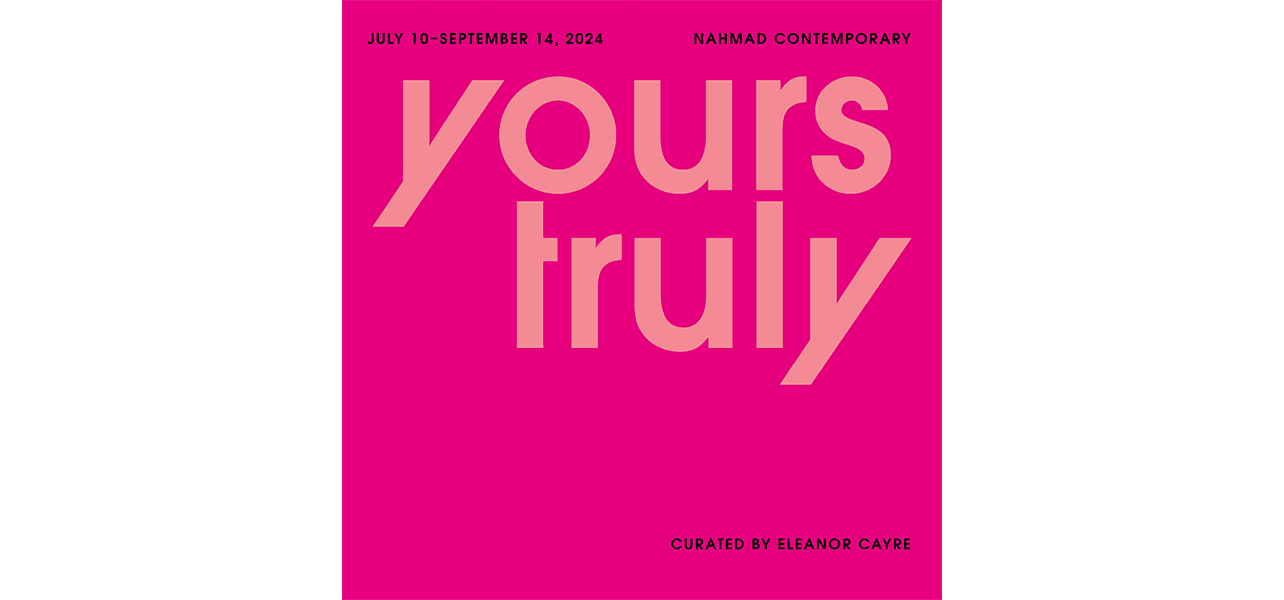
Yours Truly
Nahmad ProjectsNahmad Contemporary is pleased to present Yours Truly, a group exhibition organized by Eleanor Cayre. This exhibition surveys a wide array of recent self-portraits by more than fifty living artists from various nationalities and generations. Featuring paintings, works on paper, and sculptures, the collective works provide a multifaceted, yet distinctive snapshot of the current era. By centering on self-portraits produced in recent years, Yours Truly not only reflects how contemporary artists engage with their own reflections but also offers a glimpse into how they perceive their present environs and the world. The exhibition features artists spanning three generations and from multiple nationalities, including American, Australian, British, Canadian, Chinese, Danish, German, Indian, Japanese, Pakistani, Swedish, and Swiss. While the earliest work in the exhibition is from 2015, the majority of works were made in the last two years. Rather than adhering to a singular style or uniform rubric, the highly varied self-portraits all express the unique impulses and sentiments of our present moment. The title is both tongue-in-cheek and terribly earnest, as, with self-portraits, artists choose what aspects about themselves to reveal or conceal from the audience. Cayre notes, “The artist has always been the artwork’s shadow; all artworks, in a way, are self-portraits, linking the maker to a time and place. This exhibition’s intention is to bring together a disparate group of works that speak to our moment as a collection of experiences, often divergent and rarely in agreement. The very idea of self and subjectivity are often contested notions for the contemporary artist, and there is an interest to include philosophical responses to the idea of the self-portrait. Where might the artist locate themself in the larger discourses that define our moment? Is the artist a phantom figure, a projection of the viewer? Is the artist socially constructed through cultural, racial, or economic definitions? Or is the artist actually something softer, created through moments of intimacy and sentiment? And how might technology affect the artist’s subjectivity?”