

Mitte, Berlin
Takashi Murakami
Michel Majerus Superflat
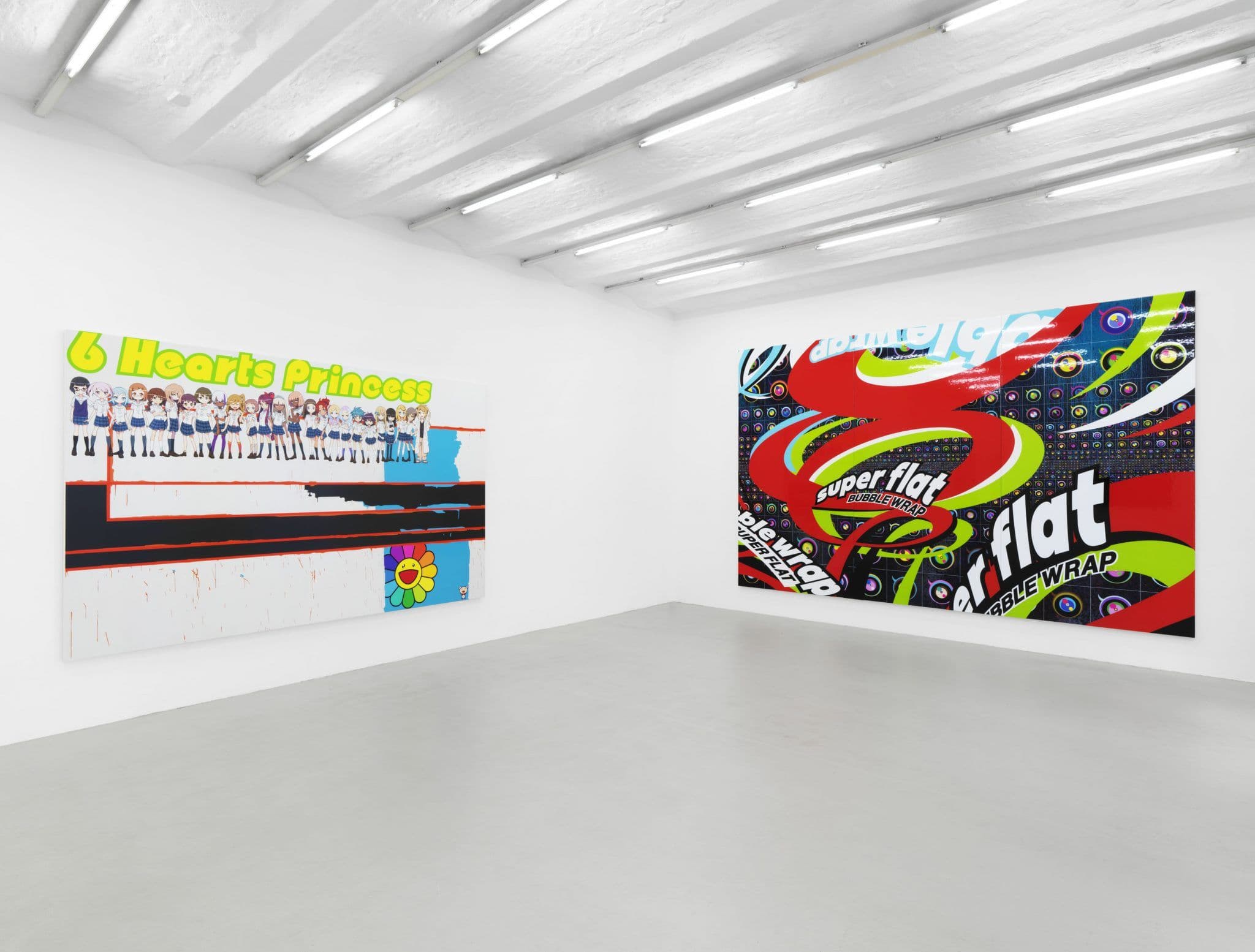
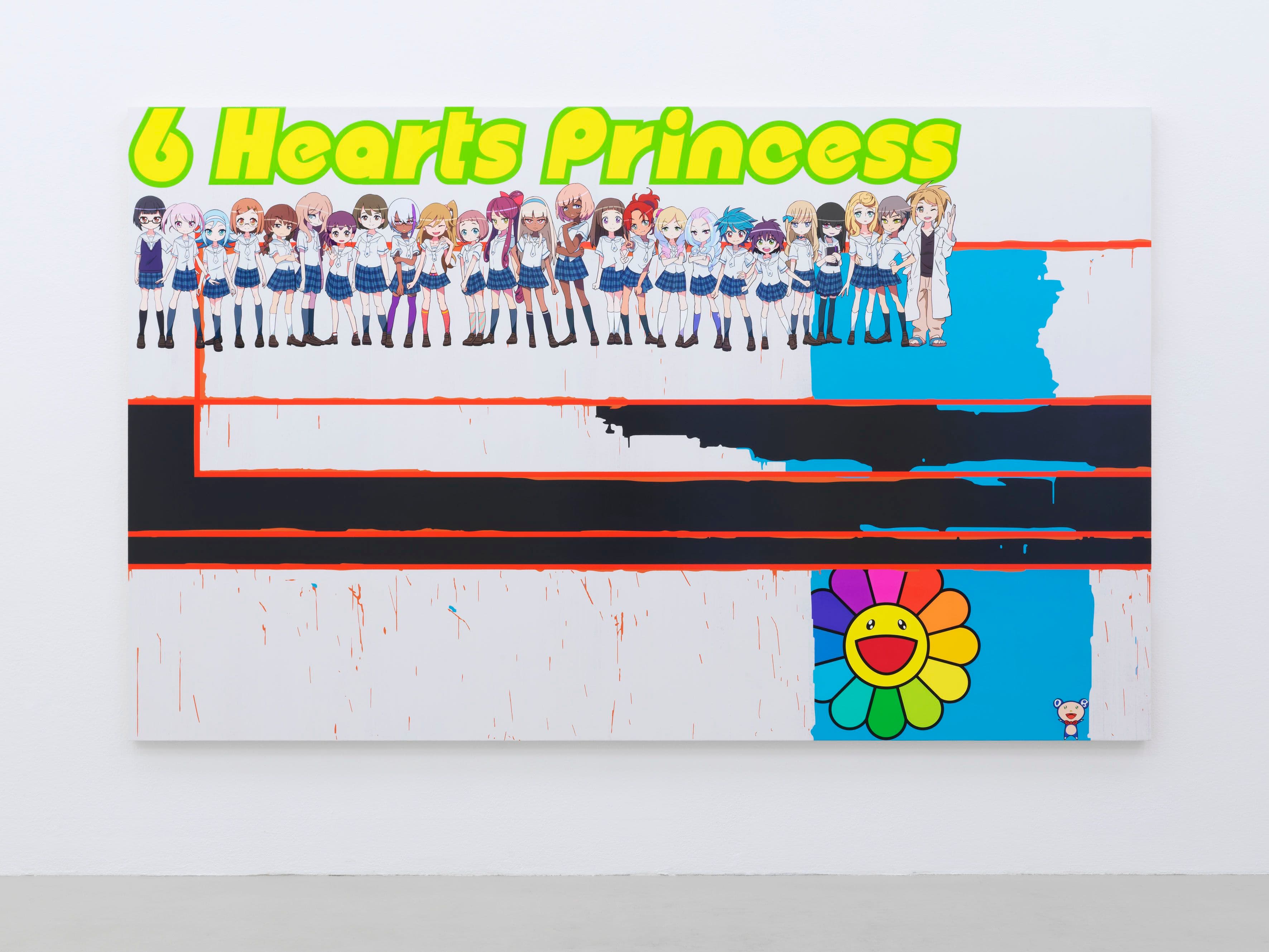
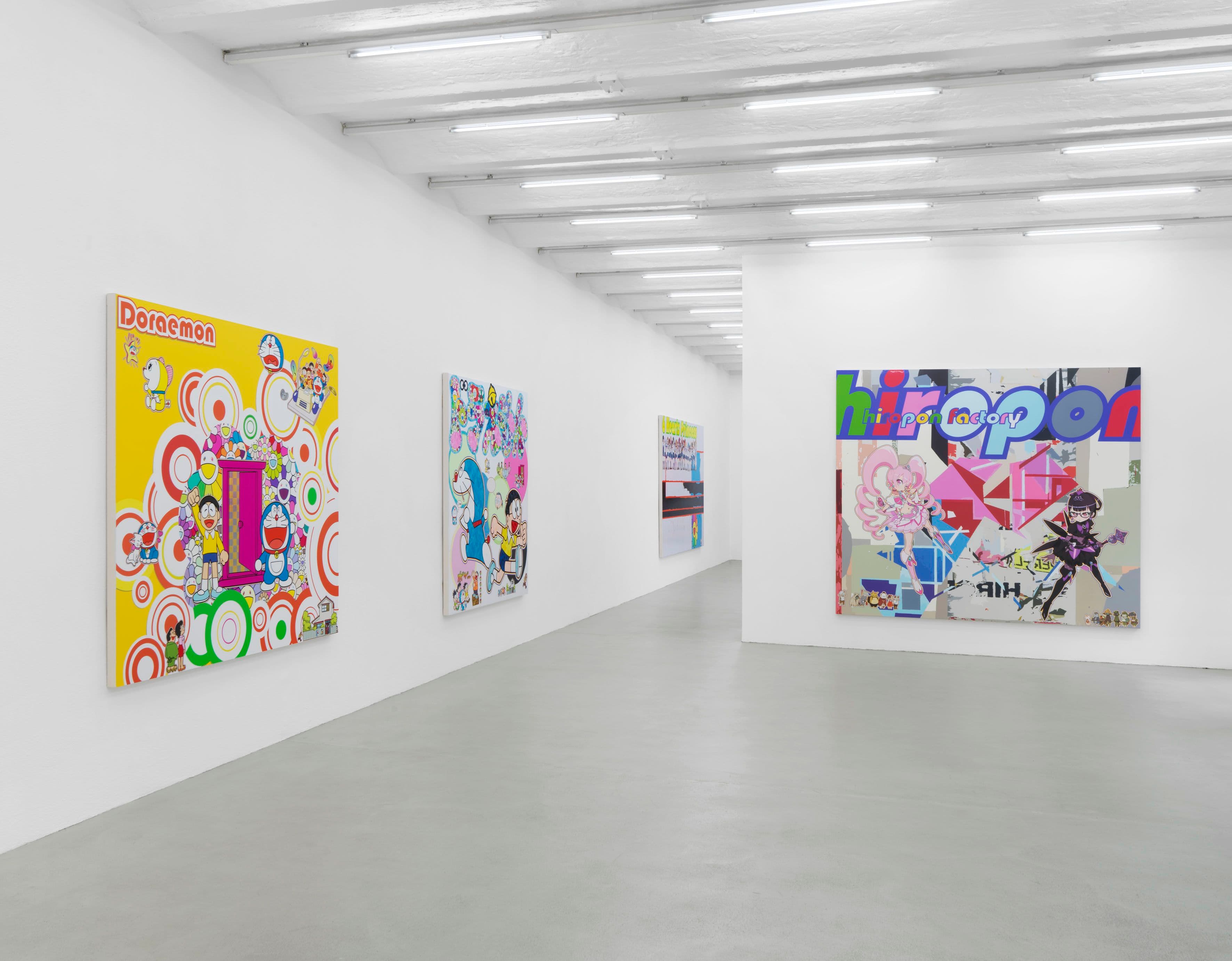
Michel Majerus Estate[Please scroll down for German version / Für Deutsch bitte scrollen Sie nach unten] The Michel Majerus Estate is delighted to present Takashi Murakami: Michel Majerus Superflat, curated by Tobias Berger. Takashi Murakami (b. 1962) and Michel Majerus (1967–2002) both started exhibiting widely in the mid-1990s and can be considered the first generation of artists who fully embraced the post-analog. As early as 1995, Michel Majerus remarked in his notes: “unplugged (…) -> analog digitalized -> fragmented the analog,” perhaps one of the pithiest descriptions of the paradigm shift towards the full digitalization of the world at the end of the 20th century—a time that we are only starting to grasp as being one of the past decades’ most innovative periods for creative minds of all disciplines. Strongly inspired by Michel Majerus’ treatment of street and computer culture, Murakami became interested in Majerus after observing that he was “much more mysterious” than his American counterparts, pushing forward from the “New Painting Movement” of Andy Warhol and Jean-Michel Basquiat, and “twisting things”—a general observation of German art that Murakami is intrigued by and is an approach close to his own practice. This twist is especially interesting in the work of Michel Majerus, “who mixed late ‘80s culture, gaming culture, Japanese pop—everything, but on the surface.” As Murakami states, “It is completely dry—opposite to Anselm Kiefer or Gerhard Richter. This is a new freedom in a painting.” Having only discovered the works of Michel Majerus a few years ago, Takashi Murakami devoted three years to this series; using mostly silkscreens stoked a certain kind of jealousy of how Majerus could achieve the same result with freehand painting. Both highly influential figures and inspirations for many visual artists and other creatives, Michel Majerus and Takashi Murakami also happily absorbed everything around them, which they incorporated into their art. From contemporary graphic design to historical drawings, from machine instructions to computer game graphics and from club flyers to manga heroes—all have been consumed to serve as some sort of springboard to be appropriated wherever suitably inspired. Where Takashi Murakami has appropriated Japanese anime, post-World War II images and the Japanese art historical canon, Michel Majerus was perhaps more influenced by Capitalist Realism, making use of the newest signifiers of the ‘90s like sneakers, computer fonts, company logos and album art created for electronic music. Analyzing Takashi Murakami’s “Majerus series” reveals not only the foresight of Michel Majerus as an artist but also how art, especially art of the Pop and post-Pop periods, is so relevant today. Murakami’s works lay bare how these first flirtations with popular culture have anticipated and shaped our contemporary world dominated by brands, slogans, franchised comic characters, Key Opinion Leaders, Internet memes and fake news, in turn shifting viewers’ perceptions of the image. Murakami is fascinated by Majerus because he, like Murakami, enjoyed the critical twist in this depiction, the twist that defined German art of the post-war generation, filtering global pop culture in a distinctly distanced way. One can observe this critical distance in Takashi Murakami’s works, which grew out of the same postwar generation, albeit on the other side of the world. This distance bred a love-hate relationship with the superficial proposal of pure Pop—a relationship that is summarized in Michel Majerus’ early painting from 1991: Europe - U.S.A., emblazoned with the text “in EUROPE everything appears more serious than in the USA.” Looking back to Michel Majerus’ works from the turn of the century and witnessing the impact that they still have and how inspirational they have been for Takashi Murakami—one of the most knowledgeable connoisseurs of art and artists that I have ever met—Michel Majerus’ wall work what looks good today may not look good tomorrow from 1999 comes to mind. In the case of both artists, one might even dare to proclaim: “What looks good today may even look better tomorrow.” —Tobias Berger ***** Der Michel Majerus Estate freut sich, die von Tobias Berger kuratierte Ausstellung Takashi Murakami: Michel Majerus Superflat zu präsentieren. Takashi Murakami (*1962) und Michel Majerus (1967–2002), die Mitte der 1990er Jahre etwa zeitgleich in zahlreichen Ausstellungen öffentlich sichtbar wurden, können der ersten Künstlergeneration zugerechnet werden, die sich das Post-Analoge gänzlich zu eigen gemacht hat. Bereits 1995 hielt Michel Majerus in seinen Notizen fest: „unplugged --> analog digitalisiert --> zerstückelt das Analog“. Damit beschrieb er pointiert den Paradigmenwechsel hin zu einer vollumfänglich digitalisierten Welt am Ende des 20. Jahrhunderts – und eine Umbruchphase, die wir erst langsam als außerordentlich inspirierende Dekade für Kreative aller Disziplinen zu begreifen beginnen. Murakamis Interesse an Majerus wurde durch dessen innovativen Umgang mit der Street- und Computerkultur geweckt. Als Weiterentwicklung von Andy Warhols und Jean-Michel Basquiats „New Painting Movement“ erschien ihm Majerus’ Werk als „sehr viel mysteriöser“ im Vergleich zu dem seiner US-amerikanischen Künstlerkollegen. Zudem faszinierte ihn Majerus’ künstlerischer Umgang mit Brüchen – ein Phänomen, das Murakami in der deutschen Kunst im Allgemeinen interessiert und das seiner eigenen Praxis sehr nah ist. „Majerus vereinte die Kultur der späten 1980er Jahre, die Gamekultur, den japanischen Pop, alles – aber auf der Oberfläche“, so Murakami. „Sein Werk ist extrem nüchtern, ganz im Gegensatz zu Anselm Kiefer oder Gerhard Richter. Das ist eine neuartige Freiheit in der Malerei.“ Nachdem er dessen Werk erst vor einigen Jahren entdeckte, schuf Takashi Murakami seine Majerus-Serie über einen Zeitraum von drei Jahren, wobei er vorwiegend Siebdruck verwendete und anerkennend feststellte, dass Majerus denselben Effekt freihändig erreicht hatte. Michel Majerus und Takashi Murakami – beides einflussreiche Impulsgeber für zahlreiche bildende Künstler und Kreative – eigneten sich selbst verschiedenste Einflüsse an und verwendeten sie in ihrer Kunst. Sie konsumierten alles – von zeitgenössischem Grafikdesign, historischen Zeichnungen und technischen Anleitungen über Computerspielgrafiken bis hin zu Clubflyern und Mangahelden – und machten das Gefundene zu einem Sprungbrett für die Appropriation. Während Takashi Murakami sich auf japanische Animes, Nachkriegsbilder und den Kanon der japanischen Kunstgeschichte bezog, war Michel Majerus eher vom Kapitalistischen Realismus beeinflusst und verwendete die neuen Referenzobjekte der 1990er Jahre – Markenturnschuhe, Computerschriften, Firmenlogos und die Designs von Elektromusiklabels. Die Auseinandersetzung mit Takashi Murakamis Majerus-Serie offenbart erneut Majerus’ visionäre Kraft als Künstler und die heutige Relevanz von Kunst, insbesondere der Pop- und Post-Pop-Ära. Murakamis Werke zeigen, wie diese ersten Flirts mit der Populärkultur unsere heutige von Marken, Slogans, Comicfiguren, Meinungsmachern, Internet Memes und Fake News beherrschte Welt antizipiert und geprägt haben, und wie diese wiederum die Wahrnehmung von Bildern verändert hat. Murakami ist von Majerus fasziniert, weil dieser – wie er selbst – die Brüche suchte, die bereits die deutsche Kunst der Nachkriegsgeneration prägten und mithilfe derer er nun die globale Popkultur auf nüchtern-distanzierte Weise auswertete. Diese kritische Distanz kann man auch in Takashi Murakamis Werken beobachten, die aus derselben Nachkriegsgeneration hervorgegangen sind, wenngleich auf der anderen Seite des Erdballs. Beide vereint eine ambivalente Hassliebe zum oberflächlichen Vorschlag eines reinen Pop, subsumiert in Michel Majerus’ frühem Werk Europe – U.S.A. (1991) mit dem Schriftzug „in EUROPE everything appears more serious than in the USA“. Rückblickend auf Michel Majerus’ Werke der Jahrtausendwende, ihre immer noch immense Wirkung und Inspirationsquelle für Takashi Murakami – einen der besten Kenner von Kunst und Künstlern, den ich je getroffen habe – kommt mir Majerus’ Wandarbeit what looks good today may not look good tomorrow (1999) in den Sinn. Für beide Künstler ist man versucht zu behaupten: „What looks good today may even look better tomorrow“. —Tobias Berger