
Giardini, Venice
Ilya Kabakov & Emilia Kabakov
Venetian Diary
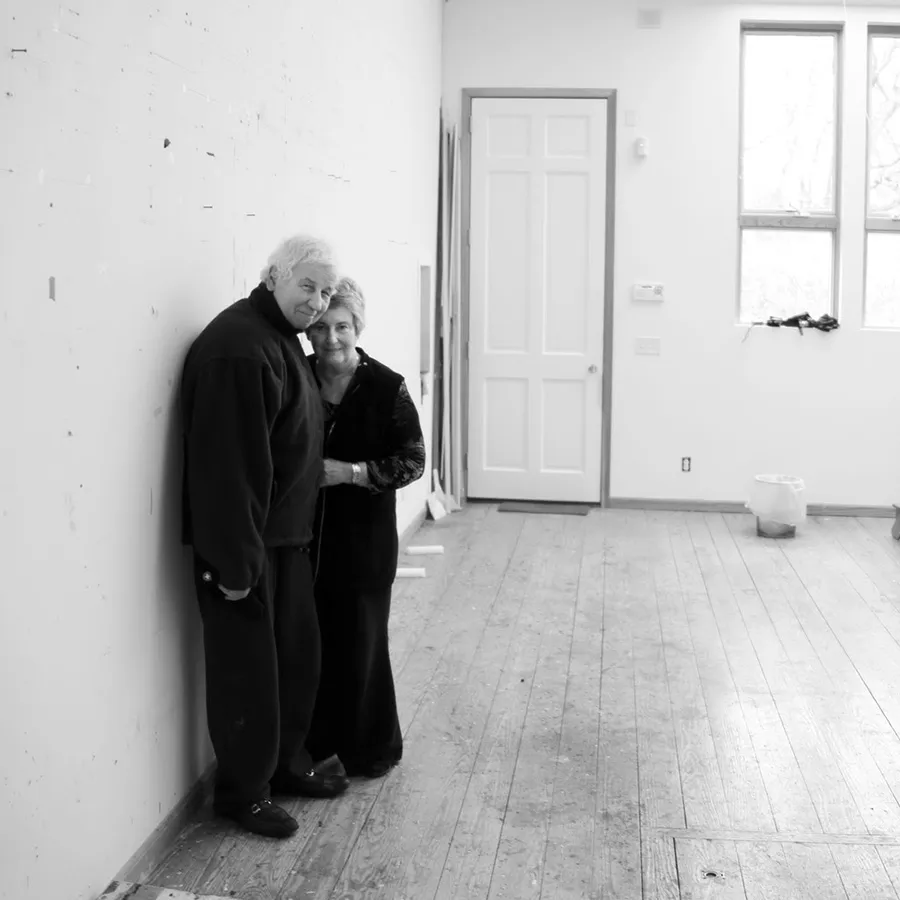
Venetian PavilionOpens Saturday, May 9 Three years after the passing of Ilya Kabakov, Venice pays homage to one of the most important artistic couples on the international stage with Venetian Diary, a monumental and participatory project conceived by Ilya and Emilia Kabakov. The product of their shared vision, the work places at its centre the stories, memories, and objects of Venetians, offering the city an intense collective self-portrait and reaffirming the poetic and conceptual power that has established the duo as seminal figures in the world of contemporary art. Presented in conjunction with the 61st International Exhibition of Art — the Venice Biennale, the project, curated by Cesare Biasini Selvaggi and Giulia Abate, unfolds as a dialogue between the city and the Biennale, across the main floor of Ca' Tron, a historic 16th-century palazzo overlooking the Grand Canal and home to the Iuav University of Venice, and the Venetian Pavilion at the Giardini, as part of the exhibition Persistent Notes, curated by Giovanna Zabotti with Denis Isaia and Cesare Biasini Selvaggi. From May 9th to June 28th, 2026, the show, organised by BAM, transforms Ca' Tron into a huge narrative and relational apparatus. This is not a show about Venice, but a show with Venice. The project traces its origins back to 1993, when Ilya and Emilia Kabakov conceived an installation based on collective storytelling for Ghent, on the occasion of the group show Rendez(-)Vous at the Museum van Hedendaagse Kunst. Today, this original concept is being reimagined for the lagoon city, taking on a new form, deeply immersed in the present and in the city's civic dimension, and rooting itself in the couple's long-standing relationship with the place and its citizens. The protagonists of the work are approximately 550 inhabitants of the metropolitan city of Venice, drawn from different generations, social backgrounds, and urban areas. Each was invited to write a page of the diary, recounting their own bond with the city, and to entrust a personal object capable of representing that bond symbolically. Fragments of lives, memories, desires, nostalgia, and hopes, displayed in showcases like in a museum, compose a human mosaic, layered and surprising, suspended between the past and the future. The categories range from shopkeepers to entrepreneurs, artisans, retirees, homemakers, those who work in the not-for-profit sector, volunteers, athletes, students, gondoliers, creatives, cultural professionals, maritime workers, restaurateurs, hoteliers, historic families, journalists, public servants, and various religious denominations. The artistic project centres the Venetians who never appear on the red carpet but who, with their work and daily dedication, enable Venice to remain alive. The selection thus reflects the social complexity of the city: children, the elderly, newcomers, and families who have lived in Venice for generations have responded to a public open call between January and February 2026, transforming the invitation of the Kabakovs into a collective and democratic gesture. The artist and the curators requested that the stories be signed solely with the first names of the individuals involved. On the one hand, this maintains their privacy in the face of confessions that were at times very intimate, and on the other, each story is a "gift" for the community and, like every gift, it requires anonymity in order to be altruistic. It is a choice that underscores the equal importance accorded to each story and by extension, to each person, without any sort of hierarchy. Displayed in a series of thematic vitrines and accompanied by the narratives of the participants, the collected objects—tools, mementos, minute traces of everyday life and of the future, fragments of intimate biographies—become veritable "resonance chambers" of existence. As the curator Cesare Biasini Selvaggi explains: "They are teddy bears, tools, fragments of mini-biographies which, taken together, compose a map of sentiment, where art stops to be an object to be looked at and becomes an emotional collective diary, reminding us that being protagonists means, above all, being together." In perfect continuity with the poetics of the Kabakovs, masters of the famous total installation, the work is configured as an immersive space in which the individual dimension is intertwined with the collective. The city is not a stage, but living matter, and Venetians are not extras, but leading actors. The intent is both simple and radical: placing the individual at the centre, recognising them as custodians of a heritage that is not just historic, cultural, and artistic, but above all human. As Emilia Kabakov states, "The stories collected reveal just how full Venice is with people working tirelessly to preserve not only the city itself, but also a sense of community we rarely encounter in the digital age. At a time where political, economic, and religious differences seem insurmountable, Venice is a beacon of hope for what can happen when neighbors support each other and share the responsibility of caring for their home for future generations." A complementary component of the work is situated inside the Venetian Pavilion, in dialogue with the project Persistent Notes and in resonance with the curatorial vision of Koyo Kouoh for the Art Biennale 2026 exhibition In Minor Keys, which invites us to attune to the most profound frequencies of the city: those which emerge from its immersed layers, from its domestic and collective dimension, from the intimate stories that constitute its living fabric. Within the sequence of spaces guiding visitors through four symbolic dimensions of the city – submerged, domestic, mythological, and collective – the exhibition unfolds as a network of interdisciplinary artistic interventions in dialogue with one another: Alberto Scodro's sculptures, a composition by pianist Durdust accompanied by an immersive installation conceived by set designer Paolo Fantin in collaboration with H-Farm and Cisco, the works featured in the Artefici del Nostro Tempo project, and Venetian Diary, which activates the relationship between the Biennale and the city, between the Venice Pavilion and Ca' Tron. In this framework, the section dedicated to Ilya and Emilia Kabakov focuses attention on a specific category of Venetians: the creatives. The material artefacts, laden with memories symbolic of personal histories and artistic journeys, assume the value of a gesture of recognition towards those who contribute to the renewal of cultural identity in a city that hosts the largest art event in the world. The project represents the latest, intense stage in a nearly fifty-year bond between the Kabakovs and Venice. It was 1977 when, in the years between the official editions of the Biennale, Carlo Ripa di Meana presented the Biennale del Dissenso and, concurrently, an exhibition dedicated to New Soviet Art. Still in the Soviet Union, Ilya was unable to attend the inauguration, but the event would set the precedent for a long relationship between Ilya, Emilia, and the city. Ilya and Emilia Kabakov Ilya Kabakov (Dnepropetrovsk, USSR, 1933 – Long Island, USA, 2023) and Emilia Kabakov (Dnepropetrovsk, USSR, 1945) began their artistic partnership in the late 1980s, marrying in 1992. Together they redefined the concept of environmental installations through their famous "total installations," immersive works that intertwine personal memory, utopia and failure, dream and irony, reflecting on the universal human condition. Their works are featured in the collections of major international museums, including the Centre Pompidou, Tate Modern, MoMA, MAXXI, the State Hermitage Museum, and the Royal Collection of Abu Dhabi. ArtNews magazine included them among the ten most influential living artists in the world. Since Ilya's passing in May 2023, Emilia Kabakov has continued to realise and develop the projects they conceived together, keeping alive one of the most significant artistic practices of the second half of the twentieth century.
Visit
Giardini