
Midcity, Los Angeles
David Salle
My Frankenstein
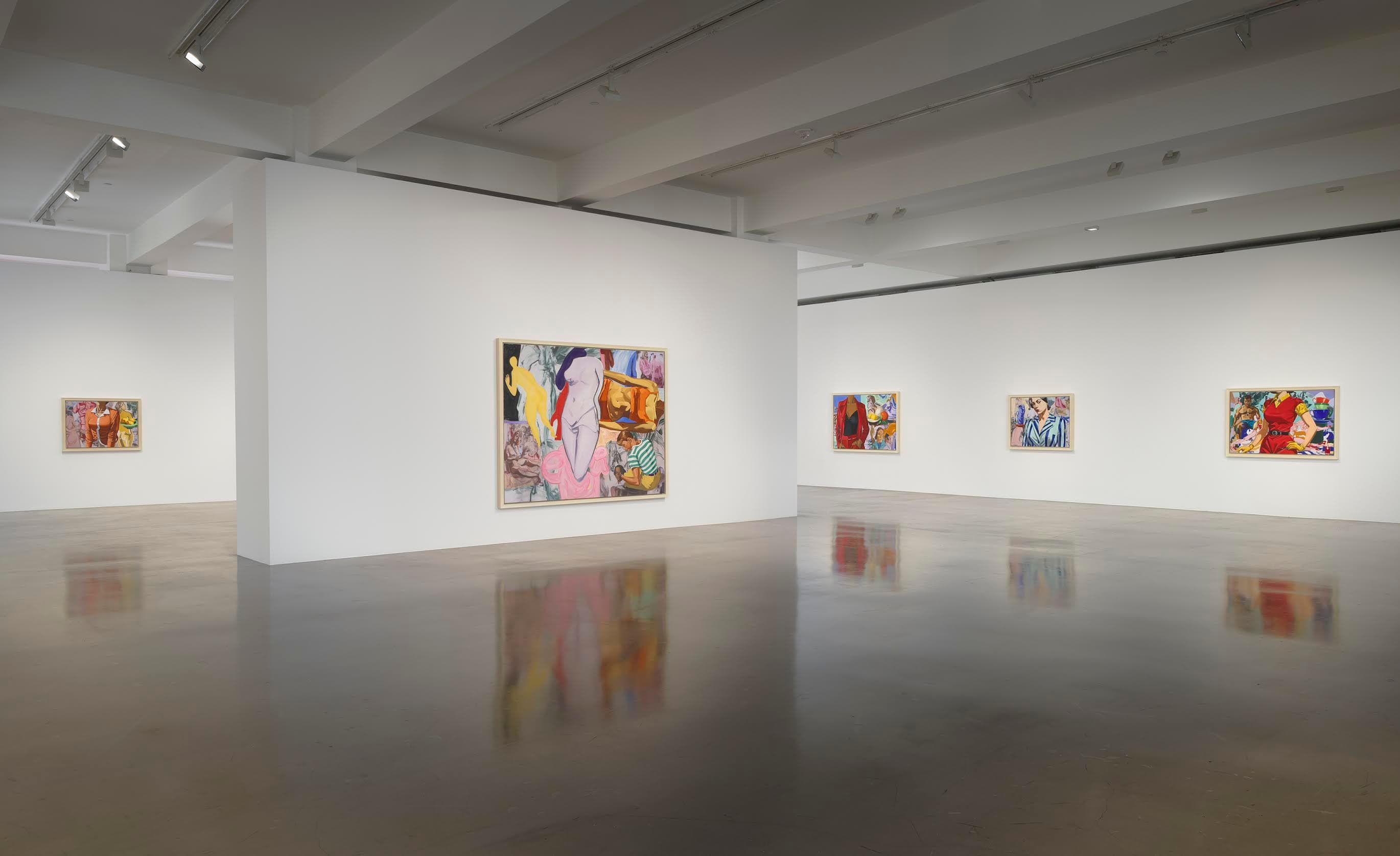
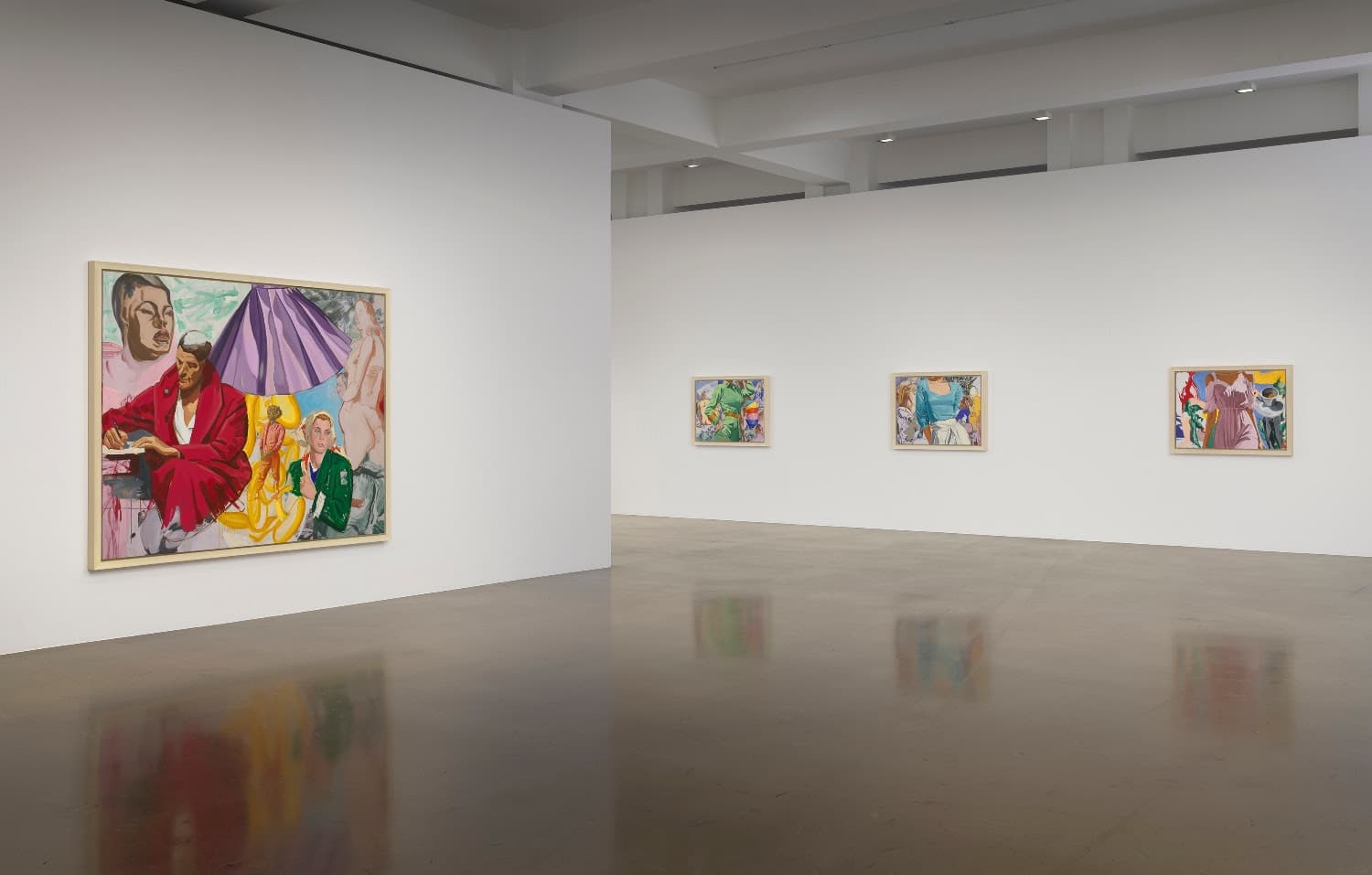
Sprüth MagersSprüth Magers is pleased to present My Frankenstein, an exhibition of new paintings at the Los Angeles gallery by David Salle, one of the leading postmodern painters of the last fifty years. Salle's art is one of juxtaposition, and his artistic "style" is the integration of disparate, contrasting styles. His paintings are analogous to complex musical compositions, in which image clusters, much like musical chords, are arranged at precise rhythmic intervals to produce sensory and emotional resonance. This is the artist’s first solo exhibition in Los Angeles since 1997. Since the 1980s, Salle has plucked compelling imagery from art history, print advertising and, most extensively, his own photographs. He uses this source material to create novel and provocative mis-en-scènes that he revitalizes in paint. Salle’s creative method is to react to certain “givens”; to enter into a visual call-and-response with them. This aspect of his work is akin to the way certain painters at mid-century, notably Robert Rauschenberg and Jasper Johns, incorporated found objects into their paintings; the American flag or bits of urban detritus were the “givens” to which Rauschenberg and Johns responded. The paintings in My Frankenstein continue Salle’s investigation into how machine learning can integrate with traditional painterly techniques. For the past few years, Salle has worked with an engineer to create a generative, proprietary AI model trained on aspects of his own oeuvre, feeding it a tightly edited selection of his past works and prompting it to generate new image configurations. The AI’s weird, counterintuitive reimaginings of Salle's original paintings have become the new “givens” in this most recent body of Salle’s work. The AI compositions form pixelated backgrounds, enlarged and printed on canvas, onto which the artist imposes a new layer of painted imagery. Salle has selected, altered and repainted each one at will, in a dramatic compositional repartee between himself and a machine model of his own making. The exhibition's title reflects the artist's recognition of the conflict inherent in his embrace of this new, still-evolving technology. A potent metaphor for the unintended consequences of scientific ambitions, Mary Shelley's novel Frankenstein cautions against blind faith in one's beliefs and methods—or in any prescriptive methodology. This aligns with Salle's career-long effort to disrupt the connection between an image and the default, or instinctive, interpretations viewers assign to it. The large-scale canvas Birth of Venus (2025) illustrates the incongruous layers of artist, machine and visual reference that characterize Salle's recent works. Bodies in states of undress appear at various scales across the composition: a statuesque marble-colored figure, reminiscent of antiquity, stands at center with one of her arms wilting into a deflated squiggle. A brightly painted woman in a neon-orange bathing costume floats off to the right, while a yellow silhouetted figure on the left peers into a black void. A young boy, hands and lower legs conspicuously missing, adds color and pattern to the already vivid, animated composition. At the canvas' edges, sketchier passages imagined by Salle’s AI model fuse figures and brushstrokes in interconnected and confounding ways that are inspired by Salle’s work, but which the artist himself might never have conceived. Morning (2025), in turn, contains motifs that recur across the exhibition's seventeen canvases: stacked coffee cups, cartoon-like yellow suns, muscular male torsos and headless fashion models sporting colorful, mid-twentieth-century fashions, like a memory-fragment of some department store window display. Here, too, is a mix of figures in vintage clothing. One, however, is upside-down, with a stream of peach paint emanating from a prim pink bow and white neckline. A reclining, bearded odalisque in the lower left hearkens to other art historical sources. References to traditional artistic genres, including still life, landscape, live-model drawing and history paintings, abound at the edges and intersections of each canvas, a sort of metaphysical glue holding the compositions together. The Frankenstein-like suturing of imagery is also illustrated in the painting Master and Margarita (2025), which, like the exhibition's title, takes the name of a celebrated novel—in this instance Mikhail Bulgakov's early-twentieth-century satire of the Soviet state. Two of the painting's main figures could represent the book's main characters: the persecuted writer penning a text in a bright-red coat and pipe (the Master), and his lover (Margarita) in an Eastern European-style headscarf. But rather than illustrating a single narrative, Salle's image clusters work with a contemporary concept of narrativity. They explore the human impulse toward constructing narrative—inviting it, while simultaneously resisting and critiquing it. Salle’s dynamic creative process yields paintings that have the expansive energy of all-over abstraction, but achieved with the use of representational imagery. His alternating collaboration and antagonism with his own AI model resolves into compositions that are propulsively rhythmic, sensorially complex and highly emotive. Each one visually embodies the central question of our time: Who’s ahead, humans or machines? David Salle (b. 1952, Norman, Oklahoma) lives and works in New York. Solo exhibitions include Edward Hopper Museum, New York (2024), Centro de Arte Contemporáneo de Málaga (2016), Museo de Arte Contemporaneo de Monterrey, Mexico (2000), Haags Gemeentemuseum, The Hague (1992), The Tel Aviv Museum of Art, Bayerische Staatsgemäldesammlungen München, Munich (both 1989), Museum of Contemporary Art, Chicago, Whitney Museum of American Art, New York (both 1987), and a major retrospective at Stedelijk Museum, Amsterdam (1999, traveled to Museum Moderner Kunst Stiftung Ludwig, Vienna; Museo d'Arte Contemporanea Castello di Rivoli, Turin; Guggenheim Museum, Bilbao). Group shows include Hill Art Foundation, New York (2023), Whitney Museum of American Art, New York (2017, 2015), Museum of Contemporary Art, Chicago (2012), Metropolitan Museum of Art, New York (2009), La Biennale di Venezia (1993, 1982), Whitney Biennial (1991, 1985, 1983), Carnegie International, Pittsburgh (1985), and Documenta 7 (1982).