
Germain, Paris
Victorien Sardou
Spiritisme
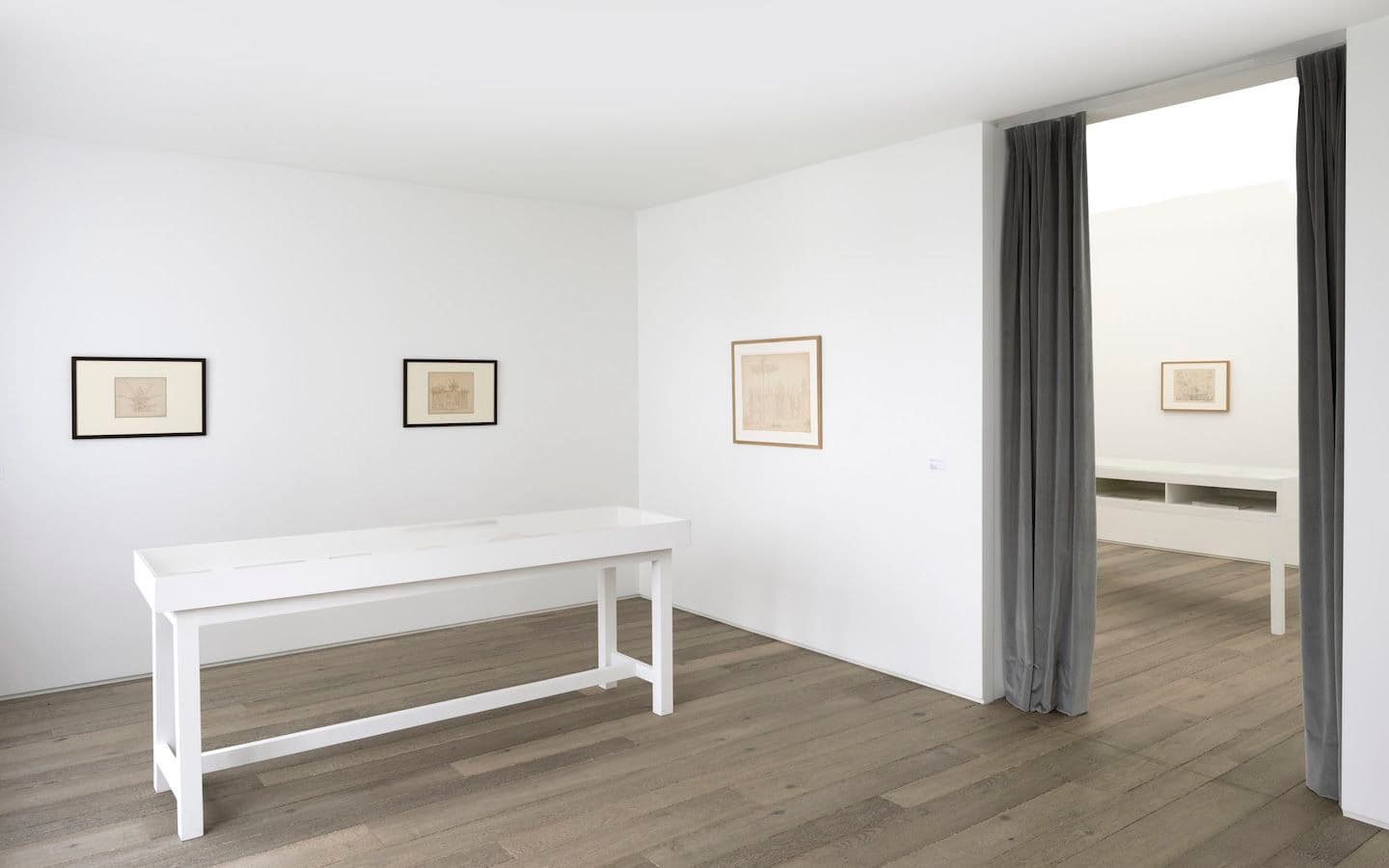
Loevenbruck[Scroll down for French version / Veuillez trouver ci-dessous la version française] Loevenbruck gallery inaugurates its new space with a first exhibition dedicated to the work of Victorien Sardou (1831-1908), precursor of spiritualist art, whose pioneering approach to spiritism was acclaimed by André Breton in a seminal text published in the journal Minotaure in 1933. This new place, with its rediscovered architecture, pays homage to the Surrealist gallery from 1926. Its window display is immortalized by a photograph taken by Man Ray in around 1927, and held at the Centre Pompidou. Victorien Sardou was born in Paris. Forced to give up his medical studies for lack of funds, he earned his living by teaching and at the same time began writing his first plays. Although he went on to enjoy some noteworthy successes, the early days were difficult, and it was probably when one of his manuscripts was rejected, in 1857, that he began to take an interest in spiritism – to which he seems to have been introduced by his father. He made several drawings and prints involving the principle of automatism and said he was guided by the spirit of the Renaissance ceramist Bernard Palissy, the eponymous hero of one of his plays. This exhibition presents an ensemble of six original drawings, along with two remarkable prints, from private collections. These works are put in context by handwritten documents about spiritism which have never been seen before. ***** La galerie Loevenbruck inaugure son nouvel espace avec une première exposition dédiée à l’œuvre de Victorien Sardou (1831-1908), précurseur de l’art spirite, salué dès 1933 par André Breton dans son texte fondateur publié dans la revue Minotaure. Ce nouveau lieu, par son architecture retrouvée, rend hommage à la galerie Surréaliste de 1926. Sa vitrine a été immortalisée par une photographie de Man Ray prise vers 1927, conservée dans la collection du Centre Pompidou. Victorien Sardou est né à Paris. Après des études de médecine abandonnées faute de moyens, il enseigne pour gagner sa vie. À la même période, il écrit ses premières pièces de théâtre. Après des débuts difficiles en tant que dramaturge, il rencontre de notables succès. Probablement à la suite du refus d’une œuvre en 1857, Victorien Sardou s’investit dans le spiritisme. Il réalise plusieurs dessins et gravures grâce à un procédé automatique et se dit guidé par l’esprit de Bernard Palissy – protagoniste de la pièce qui porte son nom. L’exposition présente six dessins originaux et deux études, ainsi que deux gravures insignes en plusieurs exemplaires, provenant de collections particulières. Ces œuvres sont contextualisées par des documents, notamment manuscrits, traitant du spiritisme, qui n’avaient jamais été montrés auparavant.Surrealisme/)