
Matignon, Paris
Moïse Kisling
Moïse Kisling
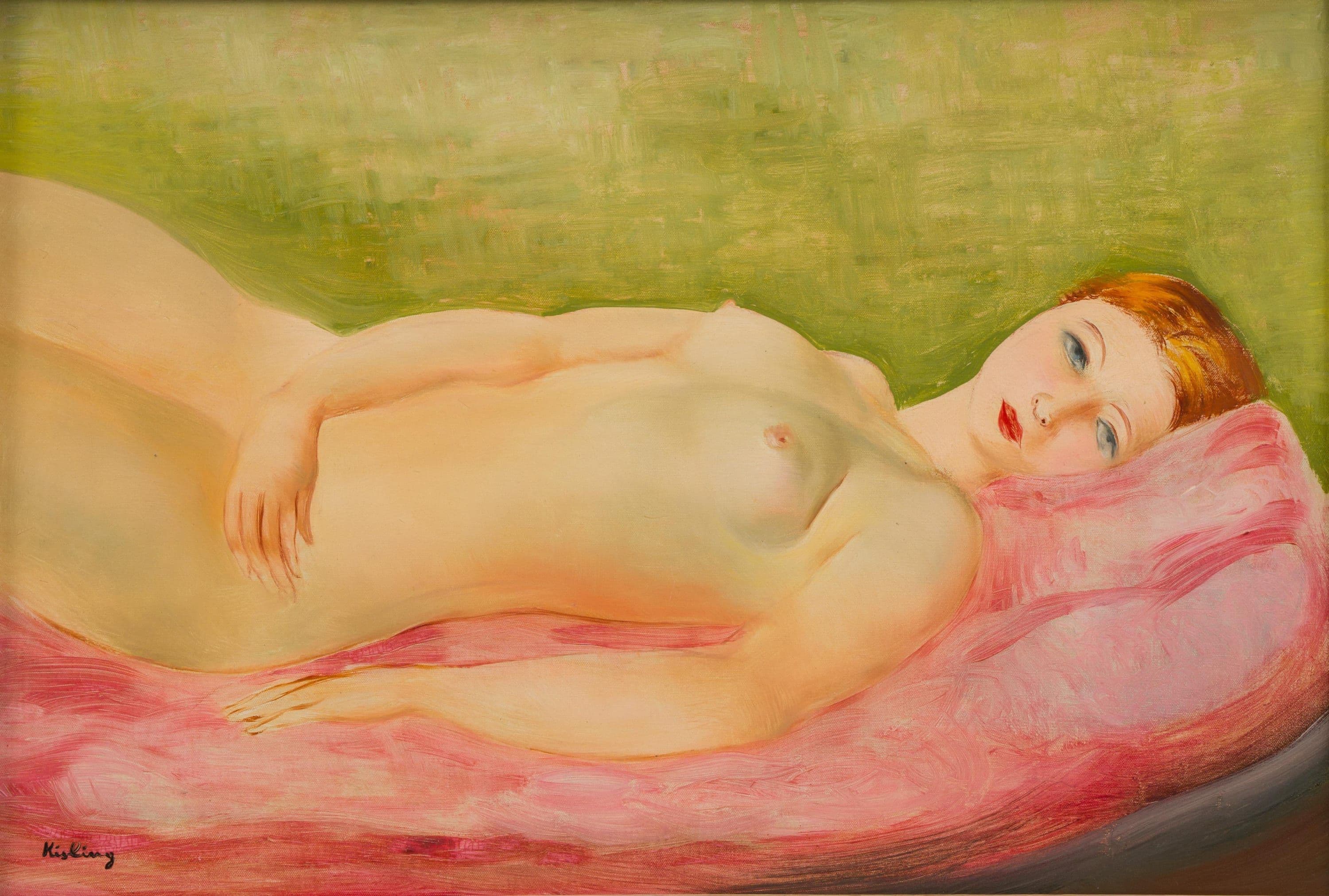
Helene Bailly MarcilhacThe Helene Bailly Gallery is proud to present a monographic exhibition dedicated to Moïse Kisling (1891–1953), a Polish-born painter who became a naturalized French citizen, a singular figure of the School of Paris, celebrated for his mastery of color and his central role in redefining the modern nude. Trained at the Academy of Fine Arts in Kraków, Kisling’s early formation reflects a dual lineage: that of the Post-Impressionist masters—Renoir, Cézanne—and that of his teacher Józef Pankiewicz, who encouraged him to move to Paris in 1910. Settling first in Montmartre, then in Montparnasse, he quickly integrated into the cosmopolitan world of the Parisian avant-garde. His friendships with Modigliani, Soutine, and Braque played a formative role in shaping his pictorial language. Fascinated by the female figure, which he treated as a plastic ideal, Kisling developed a distinctive iconography of the frontal portrait and stylized nude, which would become emblematic of his œuvre. In parallel, his work in still life—particularly in floral compositions—offered a space for chromatic exploration and decorative structure. These flower paintings, rich in color and composed with formal clarity, reveal the same pursuit of harmony and tension found in his figure work. A highlight of the exhibition, Didi (1936) stands as a significant example. The fiery red hair of the model contrasts sharply with the acidic green background, enhancing the delicacy of her porcelain-like skin. The sinuous lines, borrowed from Italian Mannerism, under-score Kisling’s focus on stylized form and elegant curvature. His palette, at times reminiscent of the Pre-Raphaelites—especially Dante Gabriel Rossetti—places this nude at the intersection of classical reference and modern sensibility. By reconciling figurative tradition with bold color and formal synthesis, Kisling offers a singular path within modern painting—one that remains apart from radical avant-gardes yet in continuous dialogue with the aesthetic currents of his time.