

Tribeca, New York
Farrell Brickhouse
The Stationary Traveler
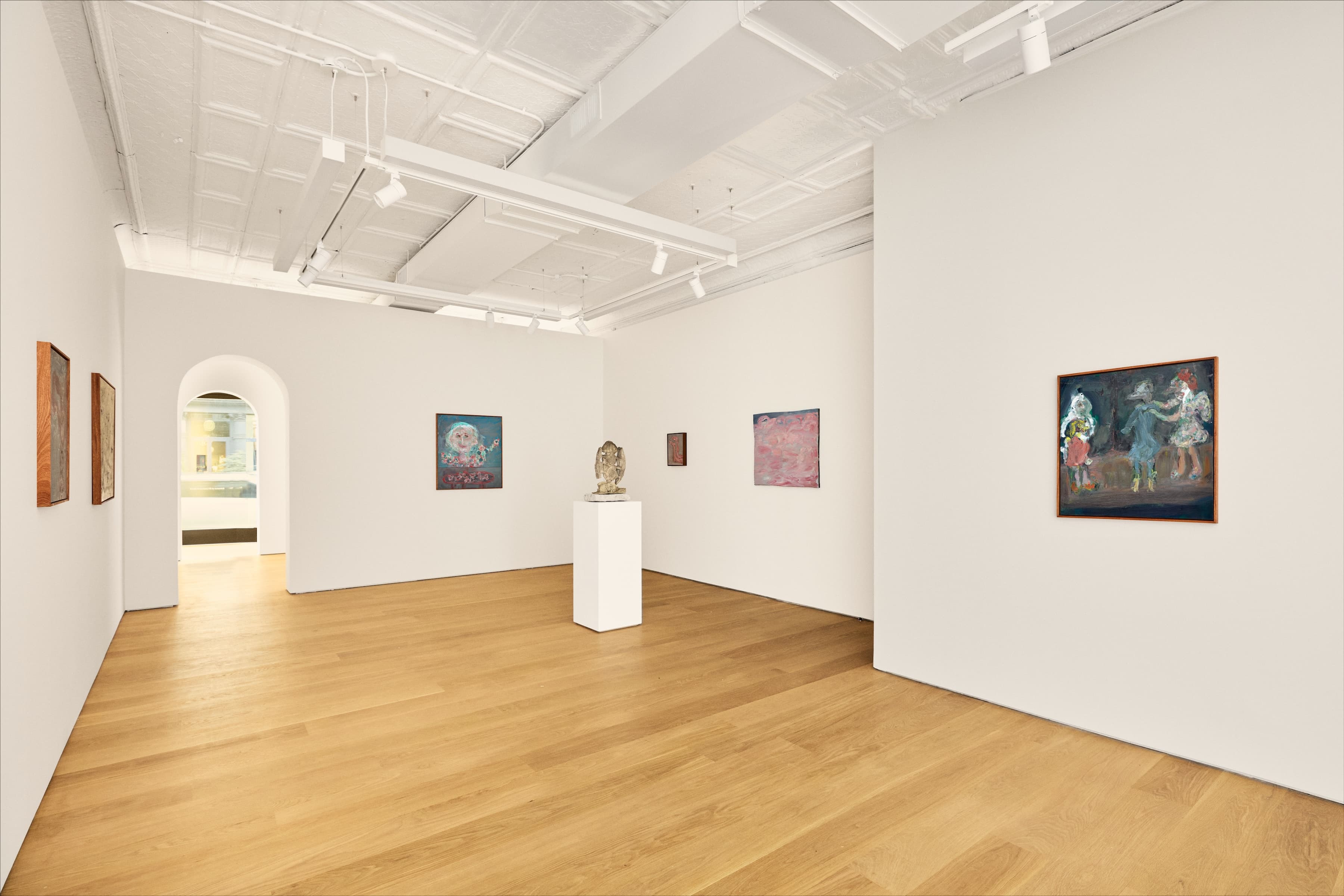
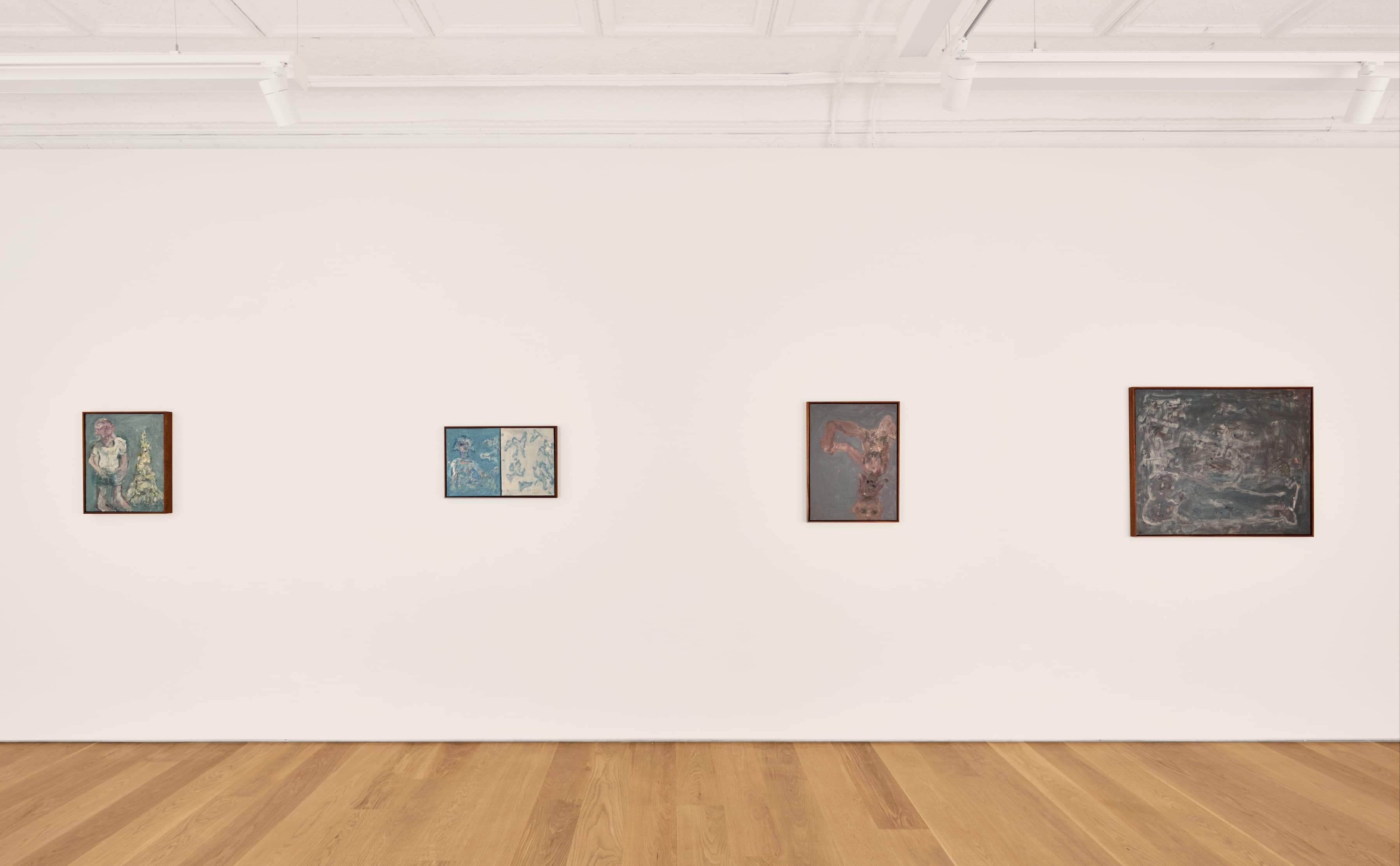
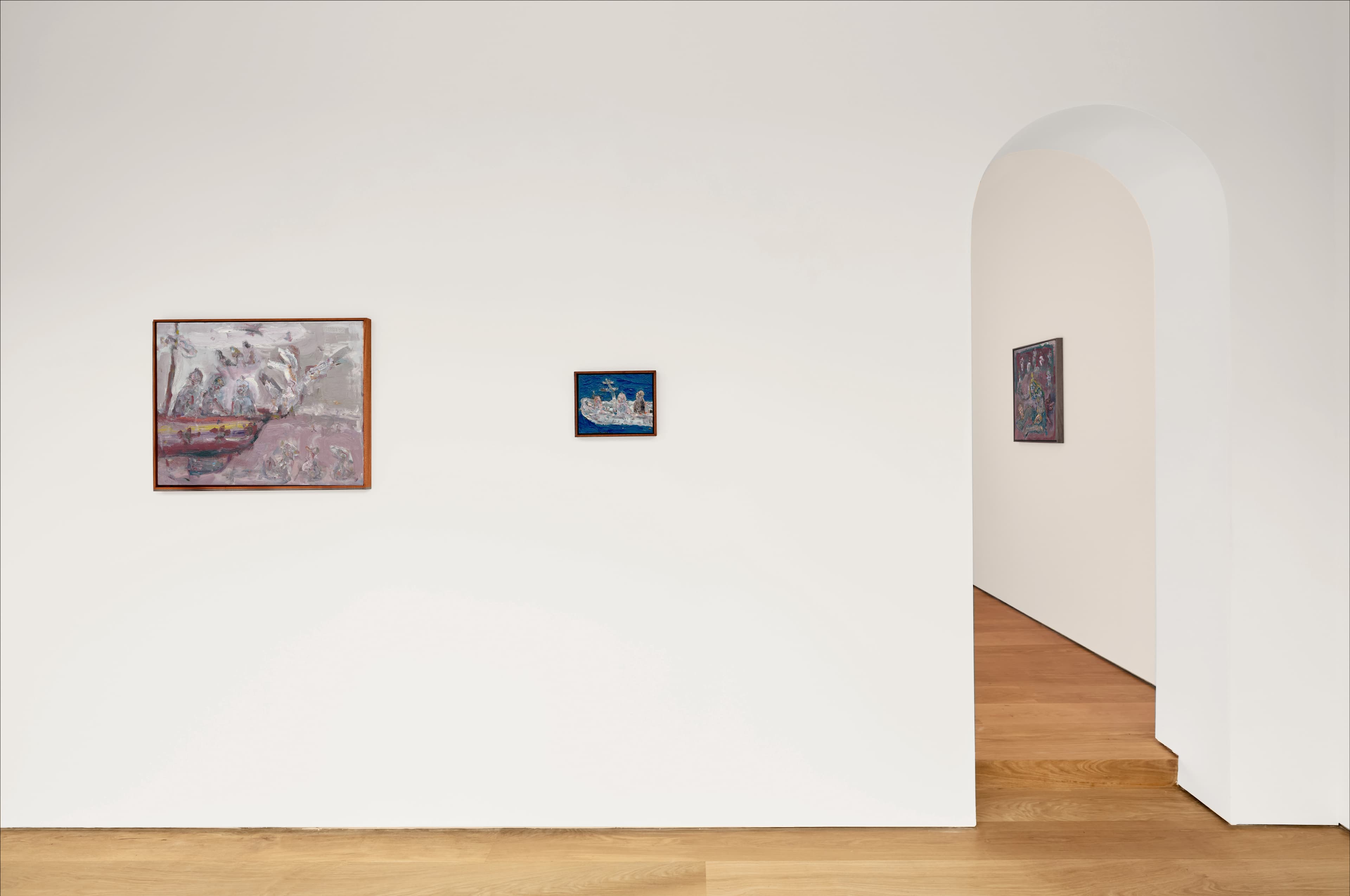
Galerie SardineGalerie Sardine presents The Stationary Traveler, a survey exhibition of works by Farrell Brickhouse at the gallery's Tribeca location. Farrell Brickhouse's paintings have unfolded with sustained conviction alongside the shifting terrain of painting in New York over the past five decades. This exhibition takes the form of a survey of the last twenty-five years of the artist's work, not as a retrospective in the conventional sense, but as a way of situating a body of work that has persistently resisted easy alignment with dominant tendencies, even as it has absorbed and refracted them with unusual clarity. Working at a measured remove from the cycles of visibility that often define the city's art world, Brickhouse has developed a practice grounded in attention: to story, to structure, to the slow accrual of meaning within the painted image. His work occupies a space of near lyricism, one of sustained looking and feeling, where gesture and composition unfold through decisions that feel both intuitive and exacting. To consider this work within the broader history of painting in New York since the early 2000s is to recognize a set of parallel conversations. While the period has been marked by returns to figuration, the reanimation of abstraction, and an ongoing dialogue with the legacies of late modernism, Brickhouse moves along a more oblique path. He remains attentive to these currents without being determined by them. One senses a deep engagement with painting's internal questions rather than with the external pressures of style or trend. Seen together, the works trace their own position within the broader landscape of contemporary painting in New York. Running through the work, however, is something both more expansive and more intimate. Brickhouse's paintings carry the tenor of a kind of romanticism, not in any sentimental register, but as an ongoing attempt to describe a life as it is lived, felt, endured, and remembered. His images unfold as a sequence of encounters, at once personal and archetypal. Figures recur, situations echo, motifs repeat with variation. A man in a boat, a body in motion, a figure returning something to the earth, another poised in recognition of those who came before. These are not illustrations of events so much as tableaus of experience, condensed moments in which the specific and universal begin to blur. The body, too, is registered throughout the work, not simply as image or subject, but as a condition through which experience is felt and understood. His figures carry weight, strain, fatigue, desire, motion; they lean, drift, labor, strive. Even in moments of stillness, the paintings retain a profound sense of corporeal presence, as though perception itself were anchored in the physical sensations of being alive. Paint is used not only to describe the world, but to transmit its force and intensity. The result is a pictorial language deeply attuned to embodiment, in which experience is not rendered symbolically or at a distance, but registered through the body and its continuous negotiation with the world around it. Brickhouse's work draws from a lived trajectory that moves between worlds: the hardness of an early life shaped by the codes and pressures of Queens in the 1950s, the improvisational and materially driven life of a downtown studio, proximity to the city's experimental theater scene of the late 1970s, and the physical and solitary rhythms of working on a fishing boat in Montauk for over a decade. These experiences do not appear as narrative in any direct sense. Rather, they surface as an underlying structure, a mythic thread that binds the work together. What emerges is a language of emblems, figures, and forms that carry meaning beyond themselves while remaining grounded in the contingencies of a particular life. There is, too, a sense of inheritance that runs through the work, a recognition that to paint is to stand, however provisionally, on the shoulders of others. This awareness does not manifest as quotation or pastiche, but as a continuity that feels carried rather than cited. The work acknowledges its precedents while insisting on its own terms, locating itself within a longer arc of making without relinquishing its immediacy. Across the canvases gathered here, moments of beauty and disquiet coexist within the same pictorial field, as the work traces the measure of a life given over to painting. Farrell Brickhouse (b. 1949, Queens, New York) lives and works in Hudson, New York. He received his BA in painting in 1974 at Queens College, the Skowhegan School of Painting and Sculpture, and Boston University, Tanglewood, MA. He began exhibiting in New York in the late 1970s, with early solo exhibitions at Julian Pretto Gallery and Max Protetch Gallery, and went on to show extensively with Pamela Auchincloss Gallery through the 1980s and 1990s. Over the decades his work has been presented in solo exhibitions at John Davis Gallery, Lodge Gallery, Fred Giampietro Gallery, and Life on Mars Gallery, among others, and has been included in group exhibitions at Exit Art, White Columns, the Wadsworth Atheneum, the Painting Center, and institutions across the United States and Europe. His paintings entered significant collections early in his career, and his work has been recognized with grants from the National Endowment for the Arts, the Creative Artists Public Service Program, and the Pollock-Krasner Foundation.