

Marais, Paris
Kenjiro Okazaki
Mettere a Nudo/Aeon Muttered
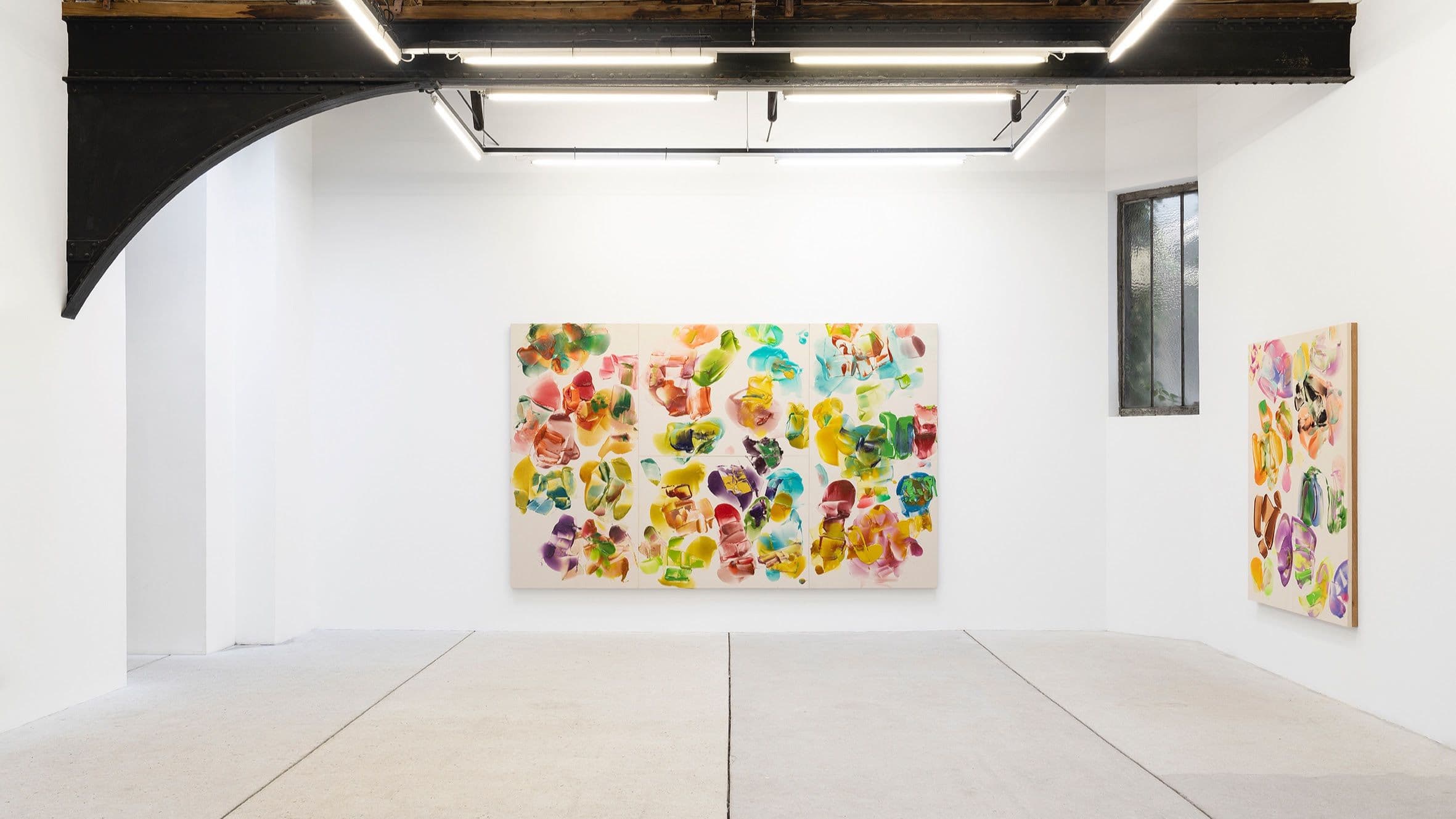
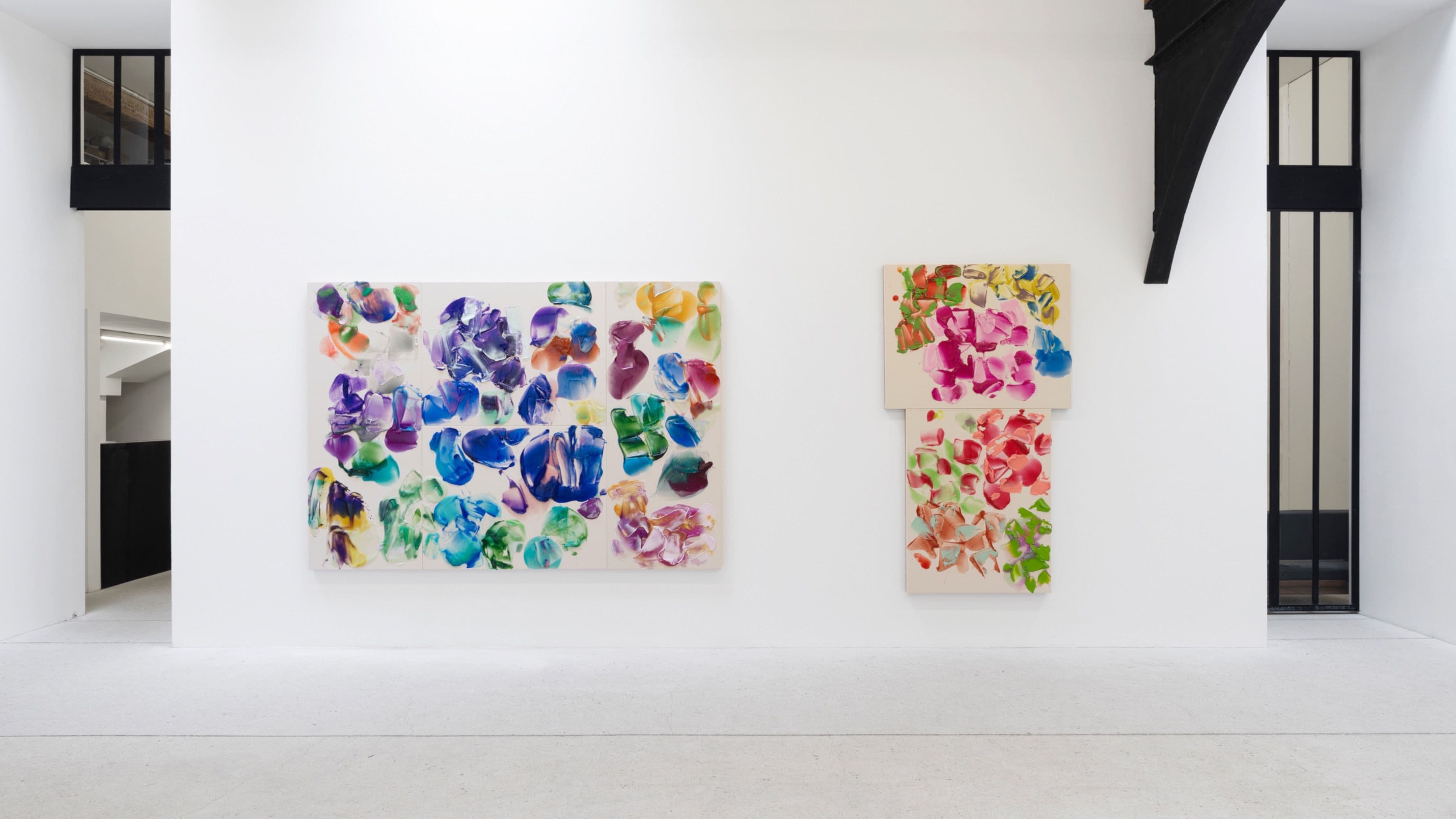
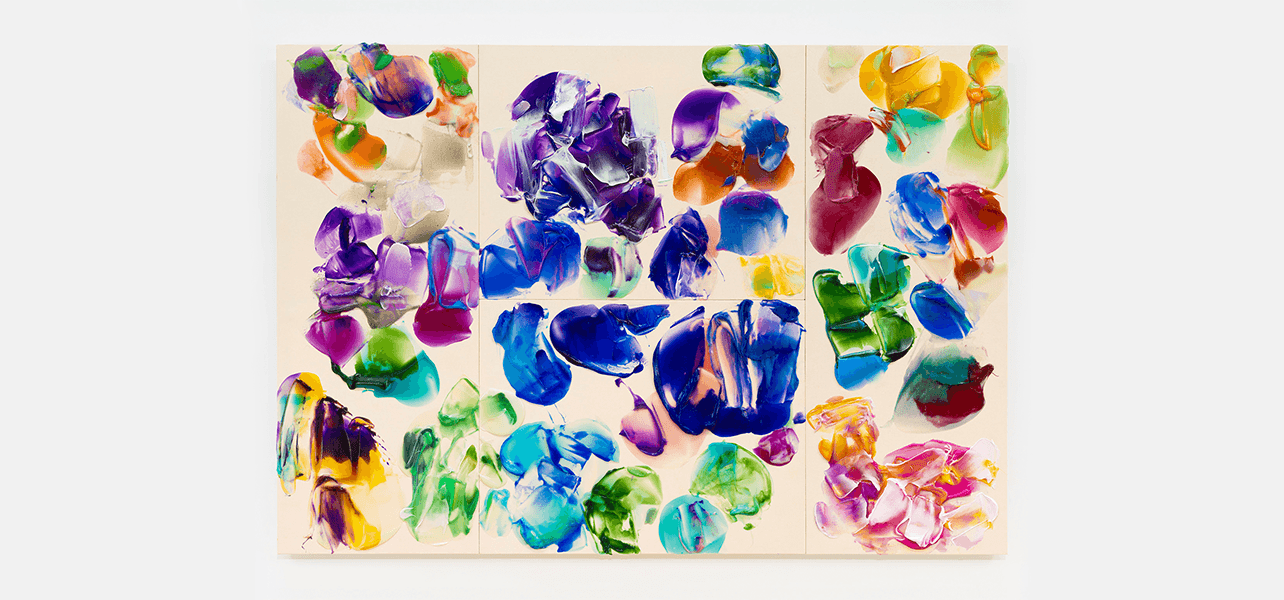
Frank ElbazGalerie Frank Elbaz is delighted to present its second solo exhibition of works by Kenjiro Okazaki. Preceding his major retrospective at the Museum of Contemporary Art in Tokyo (MOT), opening in April 2025, this show features a new series of six large-scale paintings and several “Zero” paintings. Kenjiro Okazaki's artistic oeuvre often explores the fundamental principles of form and creation, transcending the boundaries of specific genres. He perceives diverse subjects—such as painting, sculpture, architecture, and literature—as interchangeable and translatable, while still preserving their unique characteristics.[1] This particular approach is evoked in the exhibition title, a perfect anagram conceived by the artist. "Mettere a nudo" meaning "to lay bare" or "to reveal the truth," in Italian, reflects the human desire to break the seals covering the world and know its ultimate limits. The noun "Aeon", etymologically meaning "life" or "vital force" in English, is often translated as "timeless" or "for eternity". In correspondence to the first part, yet in contrast, the expression implies the emergence of endless murmuring or chatter, suggesting a continuous flow of words or thoughts that persists eternally. In the gallery’s main exhibition space, a wide range of large-scale paintings is showcased; some take on T-shaped arrangements, while others evoke the floor plans of classical architects like Palladio or the layout of tatami mats. The panels, while connected, also stand apart. They maintain continuity yet create distinct breaks, each offering its own perspective.[2] Navigating disruption and cohesion through motion and gravity, Okazaki’s work features clusters of colors and textures—accumulations of tactile, sensual layers of paint, muddled with wet gel-like textures, and thick applications of pastel pigments. In the second room, a suite of new “Zero" paintings, is on display. Ambitious in their own intimate scale which goes beyond the confines of their delicate bespoke frames, they display the visual intensity of his practice. Okazaki’s exploration of smaller formats plays an essential part in his practice, the translucent layers of paint hover onto the surface, as if a residue of a moment, a remnant of what was submerged within. In his intuitive calibration of these escalating stratum, Okazaki employs multiple techniques to conjure ephemeral areas of imagination and history. Often imbued with art historical and philosophical references, his work examines the collapse of history, memory, and form in the present moment. On this occasion, galerie frank elbaz has published a limited-edition booklet exclusively available at the gallery. It features reproductions of the exhibited works, along with a text by art critic Ryo Sawayama and a poem by Korean poet Kyongmi Park. Kenjiro Okazaki (b. 1955, Tokyo) is a renowned artist, architect, and theorist with a diverse practice that includes painting, sculpture, robotics, costume and set design, and architecture. His works are featured in public collections across Japan and exhibited globally. In 2002, he directed the Japanese pavilion at the Venice Biennale's International Architecture Exhibition. He received the Smithsonian Artist Research Fellowship at the Hirshhorn Museum and Sculpture Garden in 2014. His solo exhibition “Kenjiro Okazaki: Retrospective Strata” was held at the Toyota Municipal Museum of Art in 2019-20. A solo exhibition is scheduled for April 2025 at the Museum of Contemporary Art Tokyo. In addition to his artistic work, Okazaki is an active theoretician and critic, having authored several books. His book The Concrete Genealogy of Abstract Art (2018) won the Minister of Education Award for Fine Arts in 2019, while Sensorial Eden: Collection of Critical Essays vol.1 (2021) received the Mainichi Publishing Culture Award in 2022. 1 - R. Sawayama, “Projective Correspondance: The Paintings of Kenjiro Okazaki” essay, in Mettere a Nudo/Aeon Muttered, Paris: galerie frank elbaz, 2024, p.20. 2 - R. Sawayama,op. cit., p.24.