
Midcity, Los Angeles
Blondell Cummings
Dance as Moving Pictures
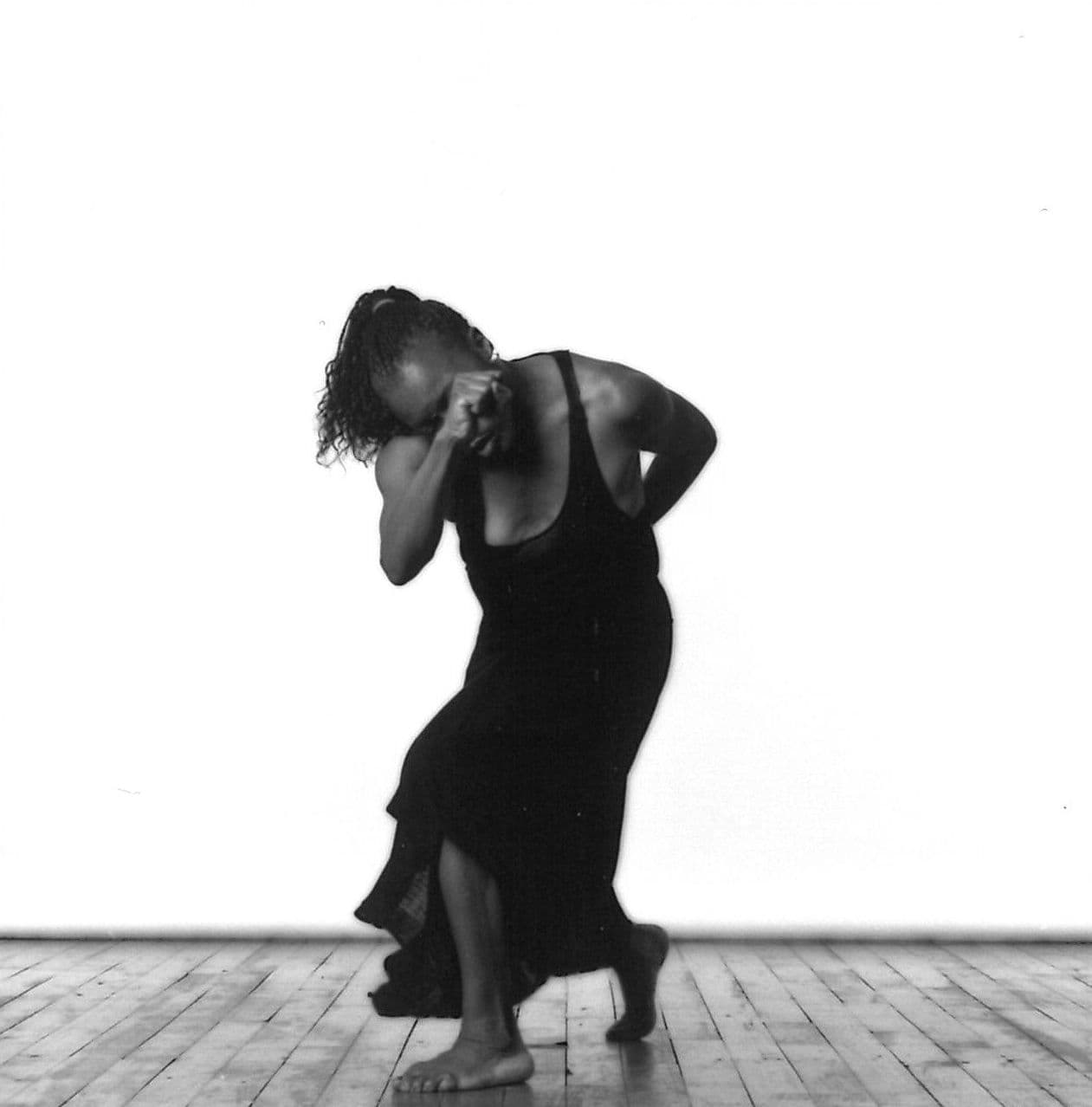
Art + PracticeArt + Practice and the Getty Research Institute (GRI) are pleased to present the exhibition Blondell Cummings: Dance as Moving Pictures at A+P’s exhibition space in Leimert Park. The exhibition is co-curated by the GRI’s Kristin Juarez, Research Specialist; Rebecca Peabody, Head, Research Projects and Academic Outreach; and Glenn Phillips, Senior Curator, Head of Exhibitions, and Head of Modern & Contemporary Collections, with curatorial and research assistance from Samantha Gregg and Alex Jones. This will be the first exhibition and publication presented by the GRI’s African American Art History Initiative. Blondell Cummings: Dance as Moving Pictures sheds new light on the pivotal work of African American choreographer and video artist Blondell Cummings (American, 1944–2015). Through a unique movement vocabulary that she called “moving pictures”, Cummings made dances that combined the visual imagery of photography and the kinetic energy of movement in order to explore the emotional details of daily rituals as well as the intimacy of Black home life. Her gestures often stemmed from personal memories, community workshops, and photographs, and her career reflects a dynamic interest in moving images – along with movement that bridged post-modern and Black dance forms. Cummings found rhythms in daily tasks, using the mundane as a structure from which to improvise. We hear the voices of communities layered throughout her soundtracks: in the oral histories that became voiceovers, in the exchanges with the audience that prompted her improvisational talking dances; and in her groundbreaking collaborations with avant-garde musicians, poets, and writers. For Cummings, the found gesture often provided a bridge between post-modern dance and local communities. As she noted in a 1994 interview: “I think all of my work has had some connection to the community... For instance, maybe someone will give me a particular excited gesture that a family member does. I might take it up into the air or put it down on the floor or turn it around and then give it back to them... I can take liberties because that’s my job as the artist: to show them how I can take their information and transform it into even more of an involved kinetic movement phrase that they might not have seen before.” A+P and the GRI’s presentation of Cummings’s work represents the first museum exhibition dedicated to the artist. The exhibition draws largely from Cummings’s personal video archive of rarely seen works; alongside performance documentation, it also features interviews, photographs, and her lesser-known dance films, including Cycle (1978) and In Night Stir (1983). Together they reveal the artist’s commitment to multidisciplinary art-making that often combined dance with elements of theater, text, photography, and the moving image. Cummings’s archive is in the special collections of the Jerome Robbins Dance Division of The New York Public Library. The GRI’s African American Art History Initiative is an ambitious program that aims to establish the GRI as a major center for the study of African American art history. In addition to acquiring archives and related original sources, the initiative includes a dedicated curatorship in African American Art History, a bibliographer with a specialty in the subject, an oral history program, research projects, annual fellowships, public programs, and partnerships with other institutions, including A+P. The GRI has developed an online research guide to support the study of Cummings. This guide supports an extensive research project dedicated to Cummings, which has resulted in not only the exhibition at A+P, but a companion volume titled Blondell Cummings: Dance as Moving Pictures that includes texts by Sampada Aranke, Blondell Cummings, Thomas F. DeFrantz, Veta Goler, Ishmael Houston-Jones, Meredith Monk, Marjani Forte-Saunders, Elizabeth Streb, Edisa Weeks, Tara Aisha Willis, and Jawole Willa Jo Zollar. This book is being published by X Artists’ Books, Los Angeles and will be distributed in fall 2021. Together these resources, along with a public program series, enact the work of the GRI’s African American Art History Initiative and reflect a more inclusive American art history as well as A+P’s mission of championing the work of artists of color. “A+P is grateful for the collaboration with Getty’s team, including Glenn, Rebecca, Kristin, Samantha and Alex, to bring and make accessible their curatorial vision of Blondell Cummings’s practice to our campus and community in South Los Angeles, after two years of developing the exhibition, and with great support from Cummings’s family and Estate. The exhibition, publication, and public program series are all a reflection of Cummings’s important legacy,” said A+P’s Public Programs and Exhibitions Manager Joshua Oduga. “The exhibition presents A+P and GRI’s shared vision of caring for artists’s practices through honoring Cummings’s work by digitizing the performances she created during her lifetime through archiving and preserving her work,” Oduga further stated. Blondell Cummings (1944-2015) was a choreographer and video artist who mined everyday experiences like washing, cooking and building to create works celebrated for their rich characterizations and dramatic momentum. According to Wendy Perron, Cummings crossed over from modern to postmodern, from the Black dance community to the avant-garde community. Cummings referred to her stop-motion movement vocabulary as “moving pictures,” which combined her interests in the visual imagery of photography and the kinetic energy of movement. Her dances drew from an accumulation of character studies that often began with photography and workshops, and included poetry, oral histories, and projection. Her interest in moving pictures is also evidenced in her commitment to dance films. She both supported the documentation of dance, and created many experimental dance films. Several of these works will be on view in the exhibition Blondell Cummings: Dance as Moving Pictures. Cummings was born in Effingham, South Carolina but was raised in Harlem, New York City and began dance study in the New York public schools. She attended New York University’s School of Education, did graduate work in film and photography at Lehman College, and continued serious dance study at the schools of Martha Graham, José Limón, and Alvin Ailey, along with Eleo Pomare, Thelma Hill, and Walter Nicks. She was also deeply influenced by choreographers who worked across mediums, including Meredith Monk, Yvonne Rainer, and Elaine Summers. In 1969, she became a founding member of Monk’s company The House, where she danced for ten years. In 1978 Cummings formed the Cycle Arts Foundation, a discussion/ performance workshop focused on familial issues including menopause, caregiving, rituals of the everyday, and art-making—emphasizing her commitment to relating the arts to everyday life. She toured extensively in the 1980s and 90s, and by the 2000’s she was a fixture of New York City’s downtown dance community and a committed educator. In 2006, her dance Chicken Soup (1981) was deemed an American Masterpiece by the National Endowment for the Arts.