
Belleville, Paris
Caroline Delieutraz
Bleen
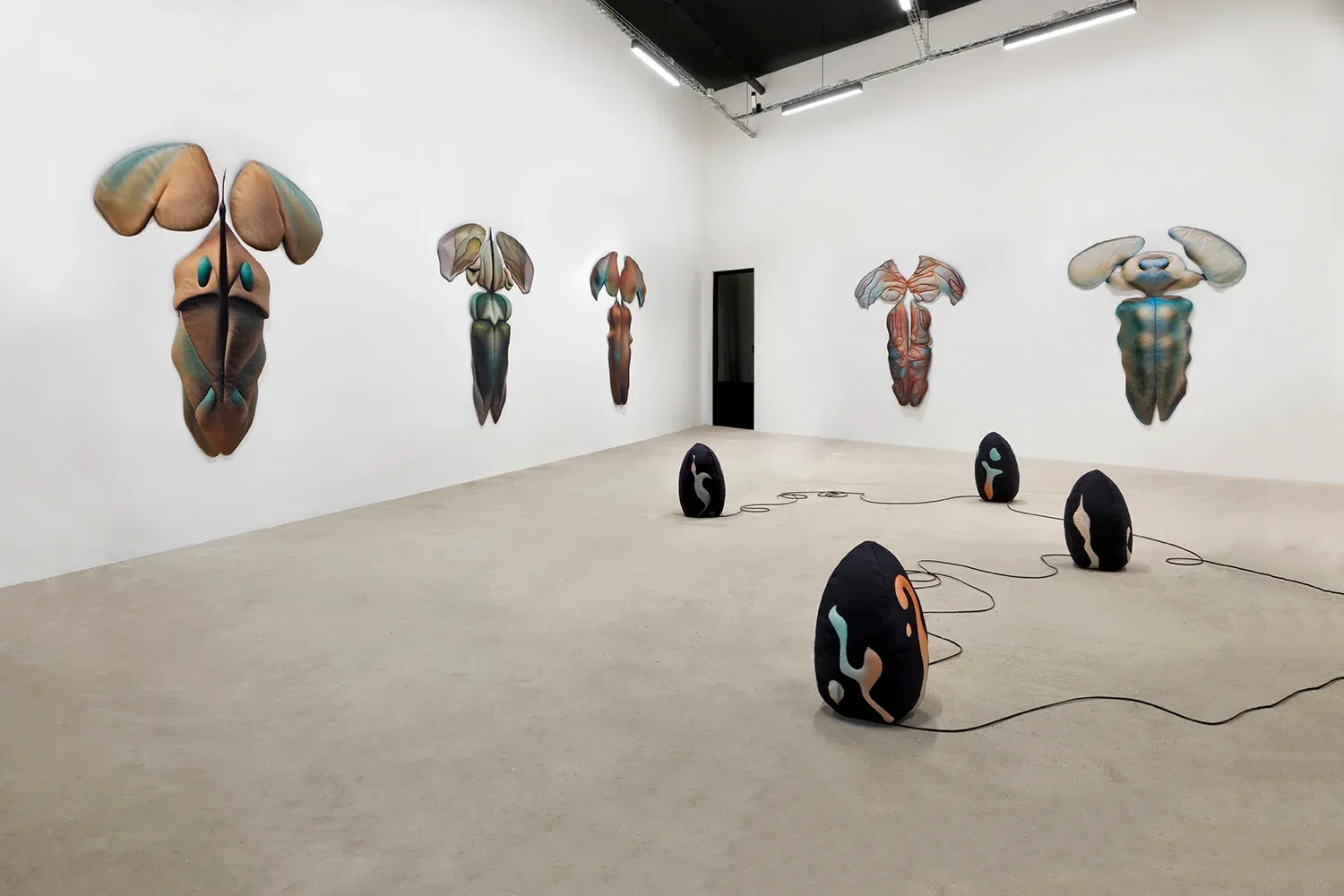
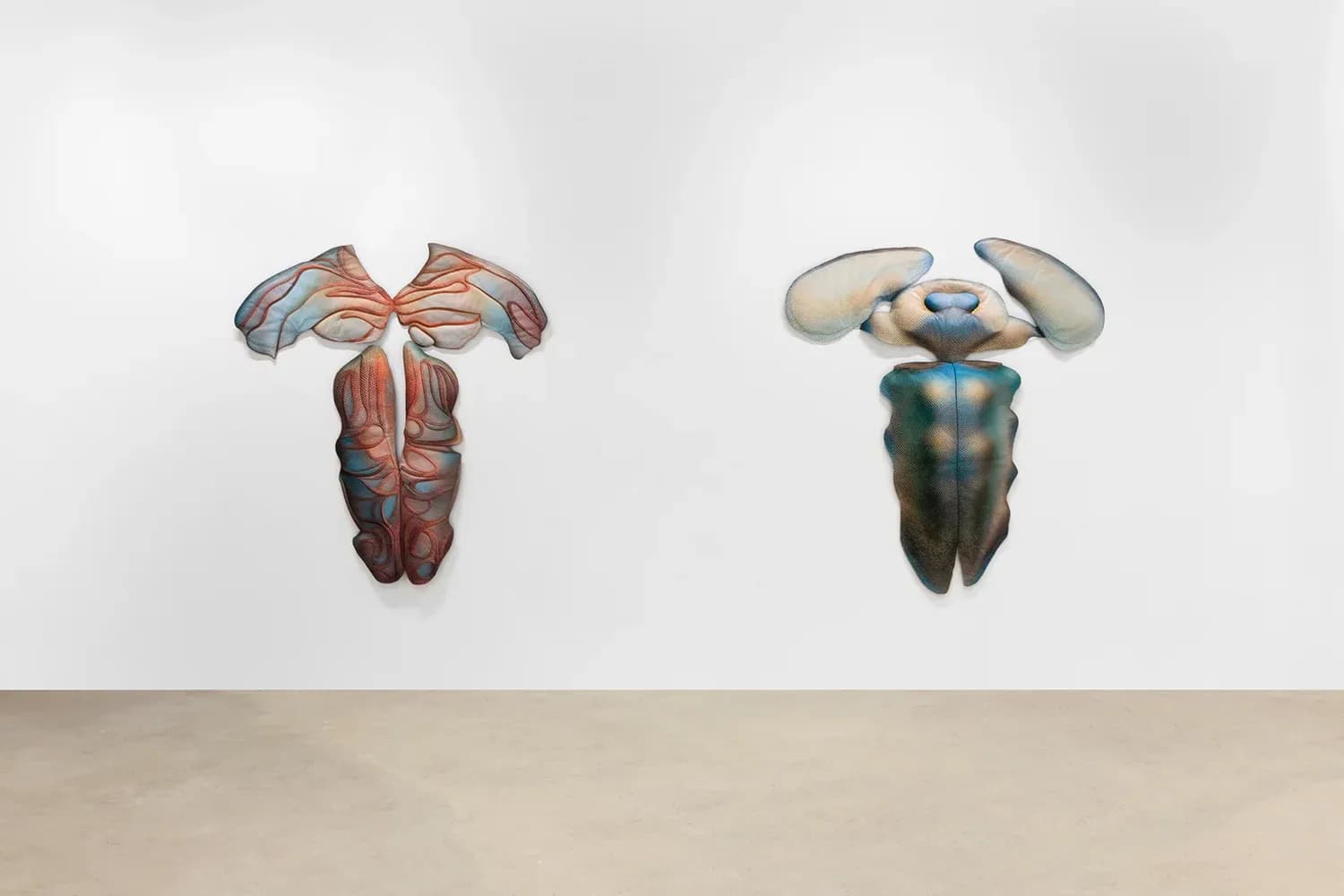
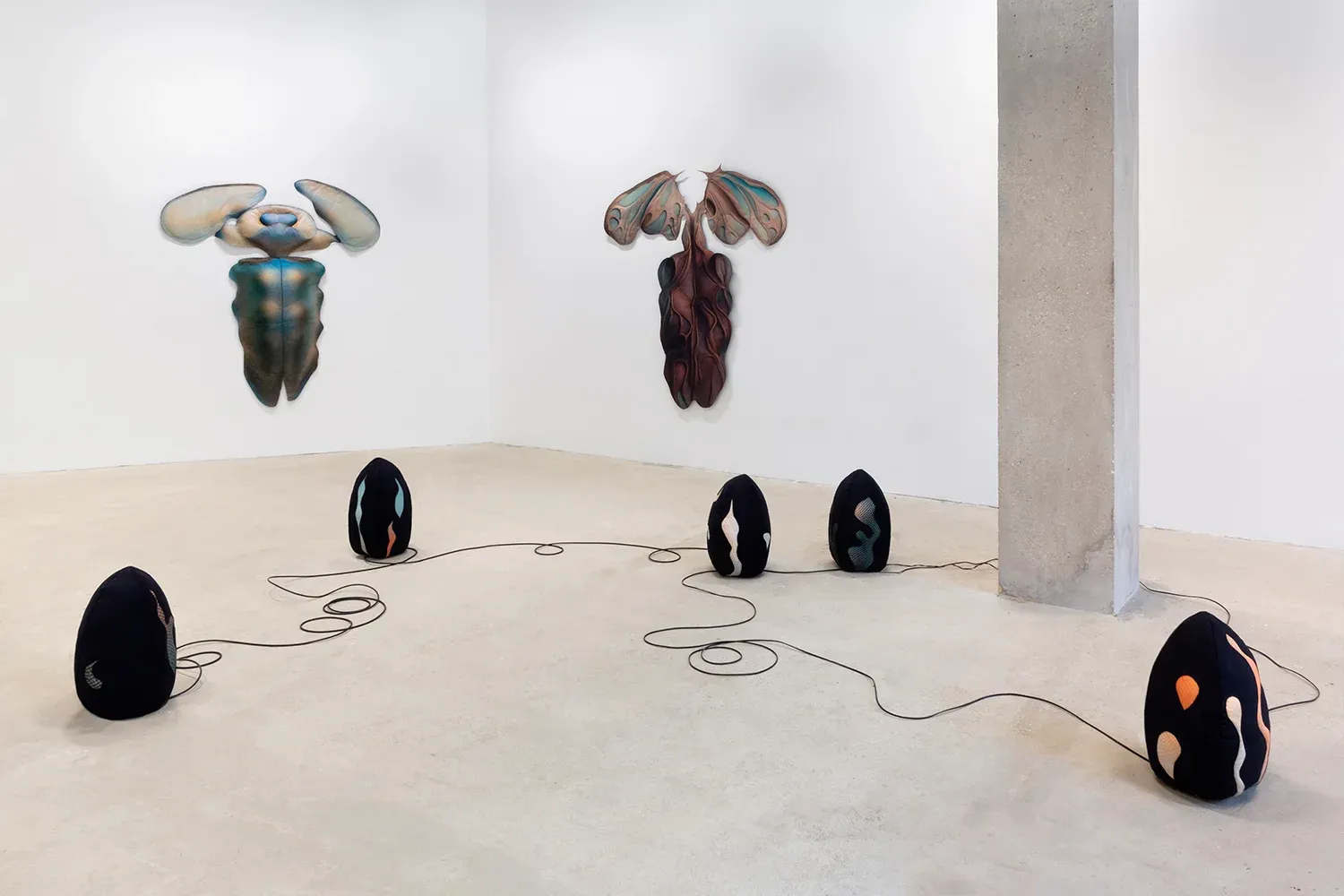
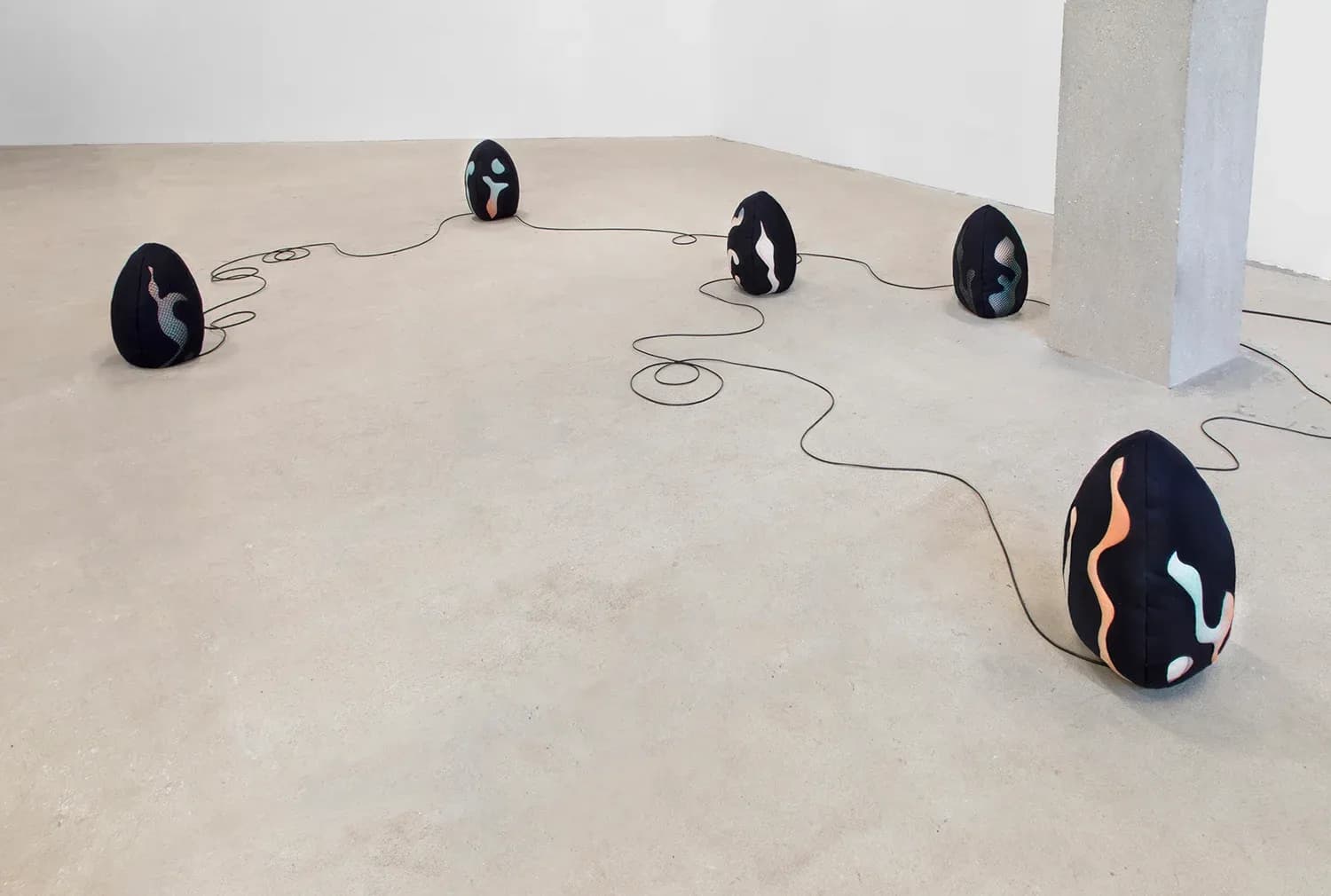
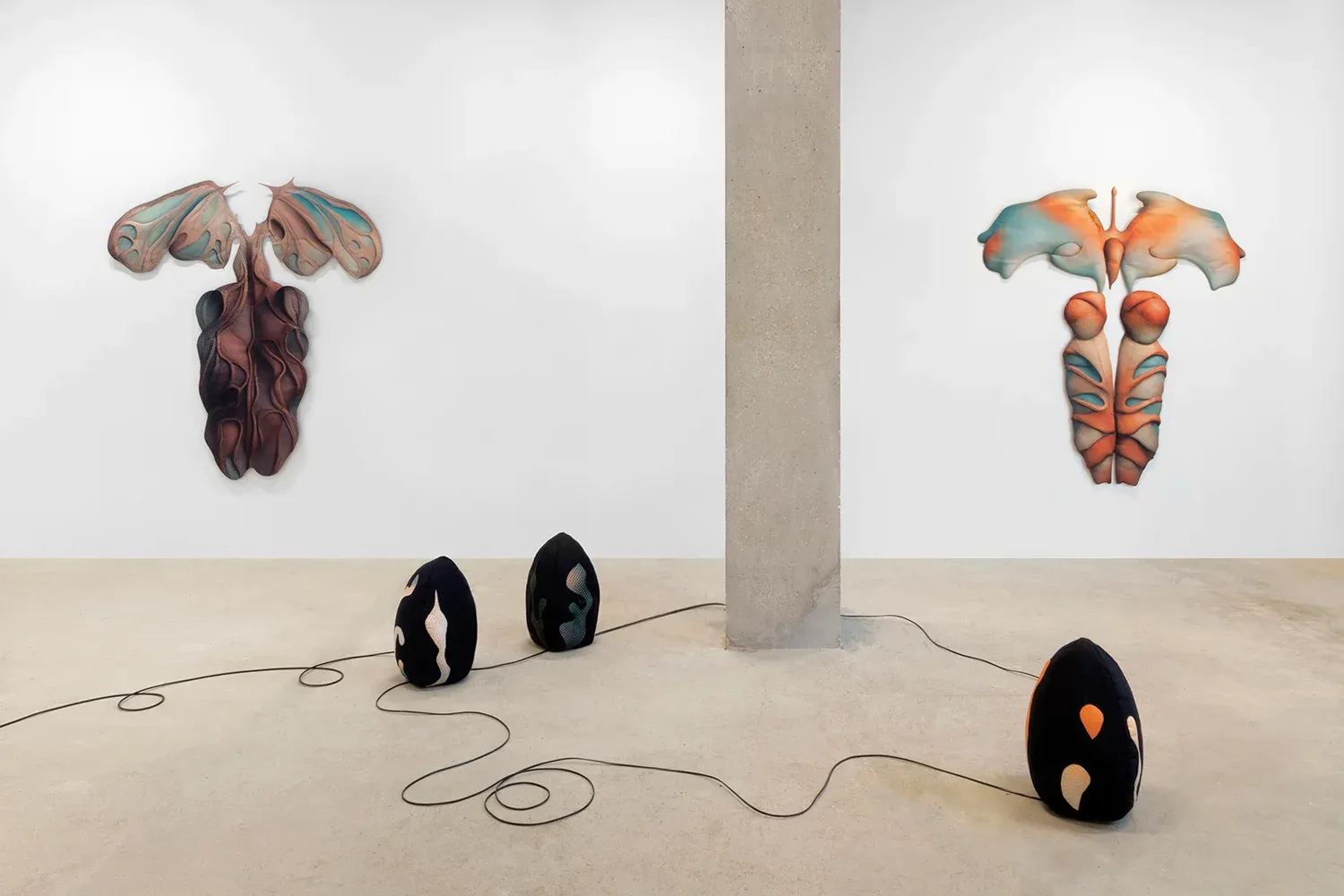
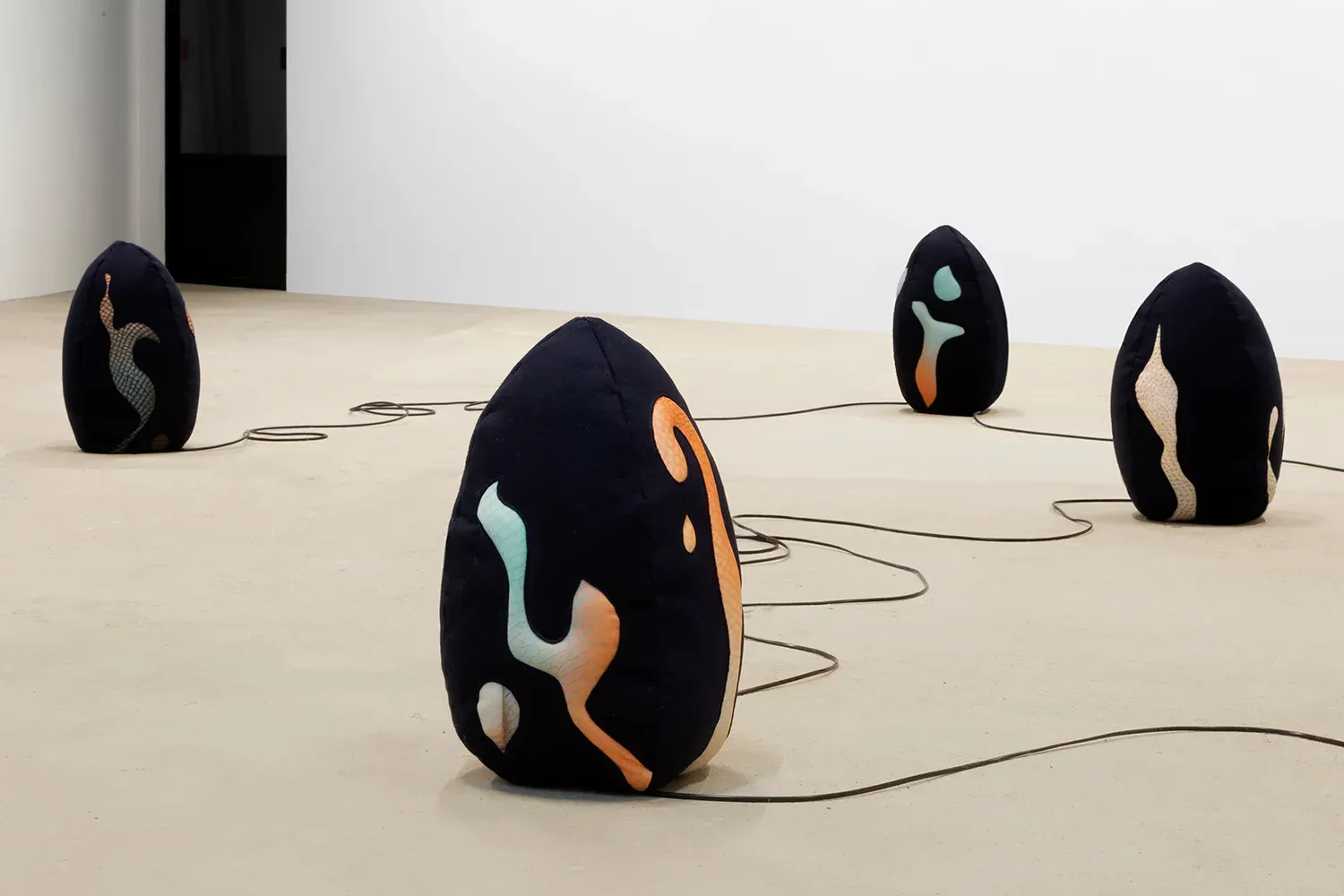
,48 m²[Scroll down for French version / Veuillez trouver ci-dessous la version française] If the term bleen sounds strangely familiar, that’s because it’s a neologism resulting from the fusion of "blue" and "green". The expression was invented in 19551 by the American philosopher and collector Nelson Goodman in response to certain problems resulting from induction, the method of making generalisations from specific observations. For instance, the observation of emeralds led to the assumption that they were green, although there was no guarantee that they would retain this colour in the future. Defining an emerald as bleen (or vleu in French) suggests the possibility that it could change their hue, integrating future potentialities into the reading and enunciation of the present. Entitled Bleen, Caroline Delieutraz’s exhibition unfolds like a world populated by strange "potential" creatures. It’s a world in metamorphosis, which borrows as much from Cronenberg’s science fiction, Kafka’s fantasy world and Thomas Cailley’s latest film, Le Règne animal, where the relationship with otherness and the question of identity are at the heart of the reflections. A vibrant world that echoes our own, where unknown forms of life patiently incubate. In fact, a few eggs lie on the floor, while soft sculptures follow one another on the wall: a series of seven arthropod-like creatures. The iridescent hues range from acid green to metallic blue and earthy crimson. Climbing lianas, spider webs and blood vessels appear to be growing on some of the pieces. These organic motifs are also evocative of futuristic sneaker designs. Others take on reptilian scales. All of these hybridisations reflect a reconfiguration of the living world in which the boundaries between humans, machines, animals and plants are breaking down. These textures, printed on fabric, were first generated and worked with artificial intelligence. Caroline Delieutraz, who navigated the meanders of net art before joining the post-internet movement of the 2010s, is continuing her research into the circulation of images, seeing AI as a powerful tool for probing the collective imagination. But this doesn’t mean that she has abandoned her handiwork. The artist has quilted and sewn all the sculptures, some of them embellished with meticulously embroidered beads. With a softness worthy of a child’s cuddly toy, the works call out to be touched, and could almost be put on like a suit of armour, a garment, a second skin. Their anthropomorphic size suggests a reversal of perspective, allowing us to immerse ourselves in strangeness like in a distorting mirror. Long marginalised as a feminine and domestic practice, couture is reasserting its emancipatory power. In an essay entitled Hardcore Décor: the Comeback of Craft as an Antidote to Cyberfatigue2, art critic Ingrid Luquet-Gad analyses the resurgence of craft as a mode of resistance. Against the backdrop of industrial and digital acceleration, these practices impose a slow, meticulous process, and encourage and value "training of the hand". They involve reappropriating traditional skills that, before they fell into decline, were passed down from generation to generation. The eggs, the ultimate gestation medium, broadcast a soundtrack that fills the gallery space with palpable life. The track was created in collaboration with Sarah Smash, and includes a contribution from ASMR artist Behind The Moons. Ultra-textured, hyper-enveloping, it drapes the audience in a dull, shuddering fog. A crackling electrical circuit, the wind dozing, a flapping wing, a beating heart. Some sounds seem identifiable, even familiar, while others, more altered, sound like encrypted signals to be deciphered. If an extraterrestrial species were to speak to humanity, what would it entrust to us? In Ted Chiang’s short story The Great Silence3, the narrator - a parrot - painfully questions human hopes of making contact with a cosmic intelligence."Their thirst for contact is so great that they have created an ear that can hear throughout the universe. But my fellow parrots and I are right here. Why won’t they listen to our voices?" before concluding, "My species probably won’t be around for much longer; it’s likely that we’ll die sooner than expected and join the Great Silence. But before we go, we will send a message to humanity. We only hope that the Arecibo telescope will allow them to hear it. Here’s the message: Be good, I love you." —Indira Béraud 1 - Nelson Goodman (1955). Fact, Fiction, and Forecast. Harvard University Press. 2 - Ingrid Luquet-Gad (2018). Hardcore Décor: the Comeback of Craft as an Antidote to Cyberfatigue in Zérodeux, n°84. Available online: https://www.zerodeux.fr/essais/craft/. 3 - Ted Chiang (2014). The Great silence. Available online: https://www.ens-lyon.fr/sites/default/files/2019-10/Traduction%20The%20great%20Silence %20Ted%20Chiang.pdf. ***** Si le terme bleen vous semble étrangement familier, c’est parce qu’il s’agit d’un néologisme résultant de la fusion de blue et de green. L’expression est inventée en 1955[1] par le philosophe et collectionneur américain Nelson Goodman en réponse à certains problèmes découlant de l’induction, méthode consistant à tirer des généralisations à partir d’observations spécifiques. L’observation d’émeraudes, par exemple, a conduit à soutenir qu’elles étaient vertes, bien que rien ne garantisse qu’elles conserveraient cette couleur à l’avenir. Qualifier l’émeraude de bleen (ou vleu en français) suggère la possibilité qu’elle puisse changer de teinte, intégrant les potentialités futures dans la lecture et l’énonciation du présent. Intitulée ainsi — Bleen —, l’exposition de Caroline Delieutraz se déploie comme un monde peuplé d’étranges créatures « potentielles ». Un monde en métamorphose qui emprunte autant à la science-fiction de Cronenberg, à l’univers fantastique de Kafka qu’au dernier film de Thomas Cailley, Le Règne animal, où le rapport à l’altérité et la question identitaire constituent le cœur des réflexions. Un monde vibrant qui fait écho au nôtre, où des formes de vie méconnues incubent patiemment. De fait, quelques œufs reposent au sol, tandis que des sculptures molles se succèdent au mur : une série de sept bestioles aux allures d’arthropodes. Les teintes, aux reflets irisés, vont du vert acidulé au bleu métallique, en passant par un cramoisi terreux. Sur certaines pièces semblent croître des lianes grimpantes, des toiles d’araignées ou des vaisseaux sanguins. Des motifs organiques qui rappellent aussi les sneakers futuristes au design bien léché. D’autres, encore, revêtent des écailles reptiliennes. Autant d’hybridations témoignant d’une reconfiguration du vivant où les frontières, qui opposent humains, machines, animaux et végétaux, s’effondrent. Ces textures, imprimées sur tissu, ont d’abord été générées et travaillées avec une intelligence artificielle. Caroline Delieutraz, qui navigue dans les méandres du net art avant de rejoindre le courant post-internet des années 2010, poursuit ses recherches sur la circulation des images, en appréhendant l’IA comme un outil percutant pour sonder l’imaginaire collectif. Le travail manuel ne s’en trouve pas pour autant délaissé. L’artiste a matelassé et cousu l’ensemble des sculptures, certaines agrémentées de perles minutieusement brodées. D’une douceur digne d’un doudou d’enfant, les œuvres appellent au toucher et pourraient presque être endossées comme une armure, un vêtement, une seconde peau. Leur taille anthropomorphe suggère un renversement de perspective ; elle permet de se plonger dans l’étrangeté comme dans un miroir déformant. Longtemps marginalisée parce qu’appréhendée comme une pratique féminine et domestique, la couture réaffirme son pouvoir émancipateur. Dans un essai intitulé Décor hardcore : le retour du craft comme antidote à la cyberfatigue,[2] la critique d’art Ingrid Luquet-Gad analyse la résurgence récente de l’artisanat comme un mode de résistance. À rebours d’une accélération industrielle et numérique, ces pratiques imposent un processus lent et méticuleux, favorisent et valorisent « l’entraînement de la main ». Elles impliquent de se réapproprier des savoirs traditionnels qui, avant de péricliter, se transmettaient de génération en génération. Les œufs, ultime médium de gestation, diffusent une trame sonore qui emplit d’une vie palpable l’espace de la galerie. La piste est créée en collaboration avec Sarah Smash, et intègre une contribution de l’artiste ASMR Behind The Moons. Ultra texturée, hyper enveloppante, elle drape les publics d’un brouillard sourd qui frisonne. Un circuit électrique qui grésille, le vent qui somnole, un battement d’aile, un cœur qui bat. Certains sons semblent identifiables, voire familiers, tandis que d’autres, plus altérés, retentissent comme des signaux cryptés à déchiffrer. Si une espèce extraterrestre s’adressait à l’humanité, que lui confierait-elle ? Dans la nouvelle de Ted Chiang, Le Grand silence,[3] le narrateur — un perroquet — questionne douloureusement l’espoir humain d’entrer en contact avec une intelligence cosmique. « Leur soif d’établir le contact est telle qu’ils ont créé une oreille capable d’entendre dans tout l’univers. Mais mes camarades perroquets et moi-même sommes juste là. Pourquoi ne veulent-ils pas écouter nos voix ? » avant de conclure « Mon espèce n’est vraisemblablement plus là pour très longtemps ; il est probable que nous mourrons plus tôt que prévu et que nous rejoindrons nous aussi le Grand silence. Mais avant de partir, nous enverrons un message à l’humanité. Nous espérons simplement que le télescope d’Arecibo leur permettra de l’entendre. Voilà le message en question : Sois sage. Je t’aime. » —Indira Béraud 1 - Nelson Goodman (1955). Fact, Fiction, and Forecast. Harvard University Press. 2 - Ingrid Luquet-Gad (2018). Décor hardcore : le retour du craft comme antidote à la cyberfatigue dans Zérodeux, n°84. Disponible en ligne : https://www.zerodeux.fr/essais/craft/. 3 - Ted Chiang (2014). Le Grand silence. Disponible en ligne sur : https://www.ens-lyon.fr/sites/default/files/2019-10/Traduction%20The%20great%20 Silence%20Ted%20Chiang.pdf.