
Belleville, Paris
Patrick Van Caeckenbergh
L'Apocalypse 1978 - 2022
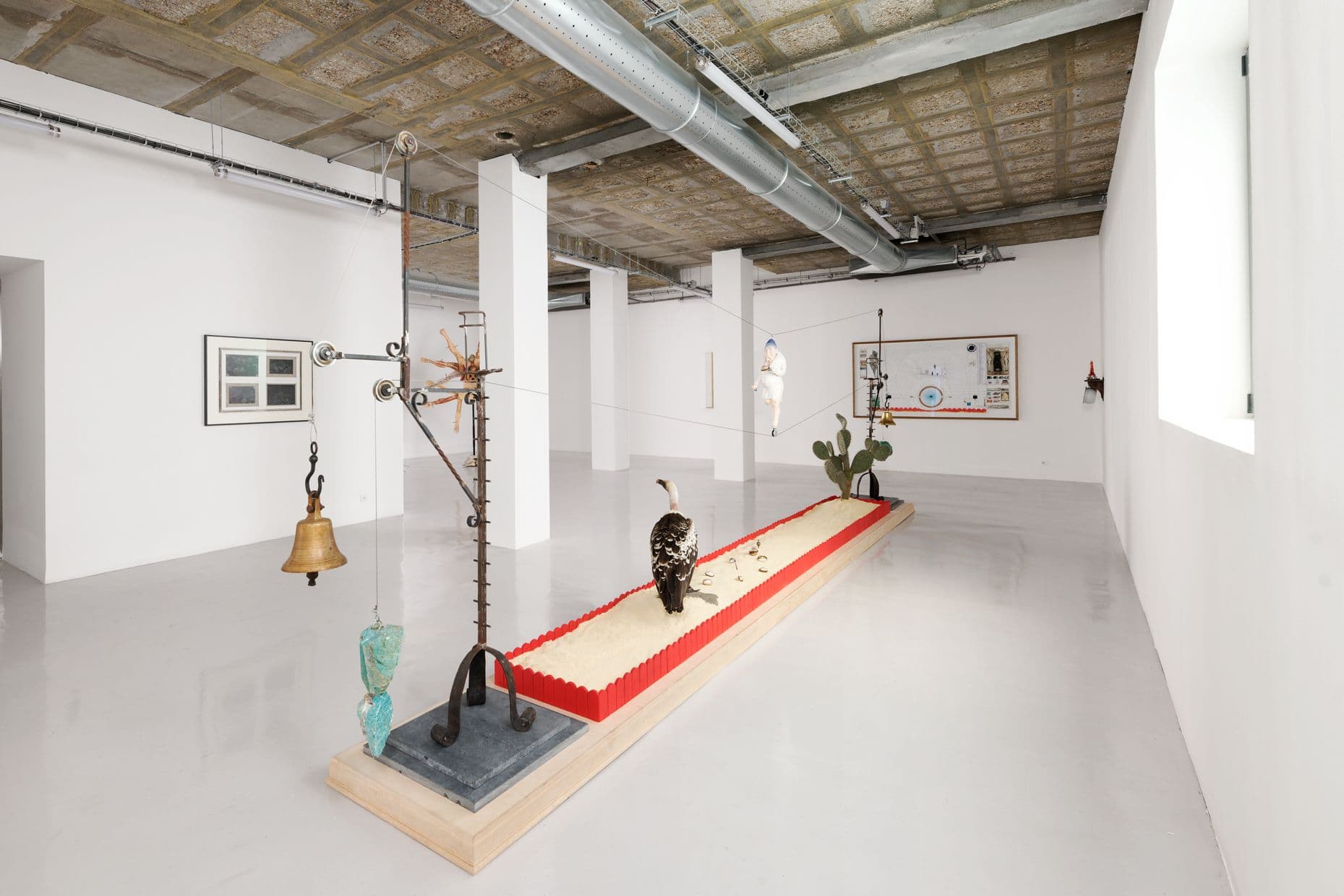
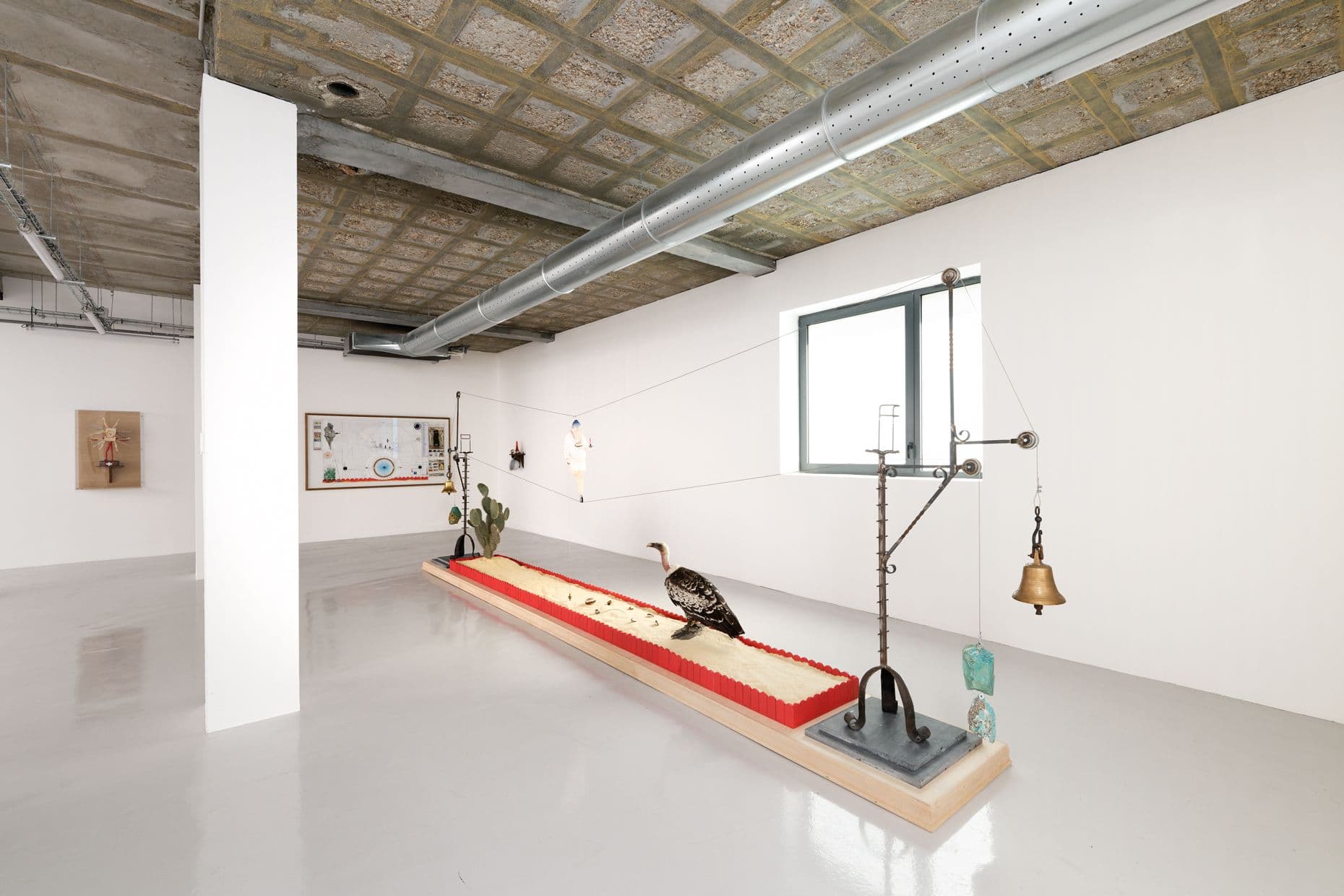
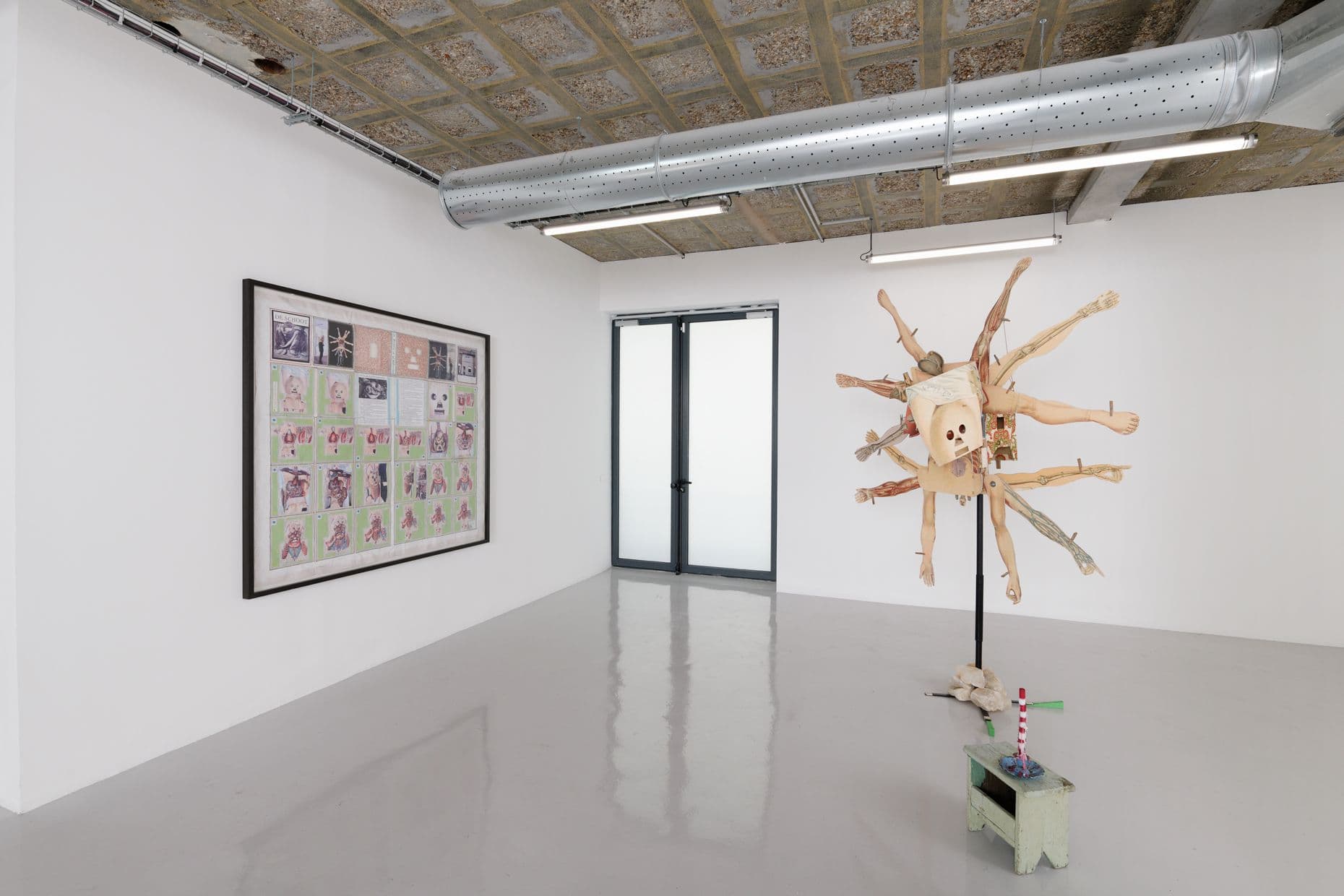
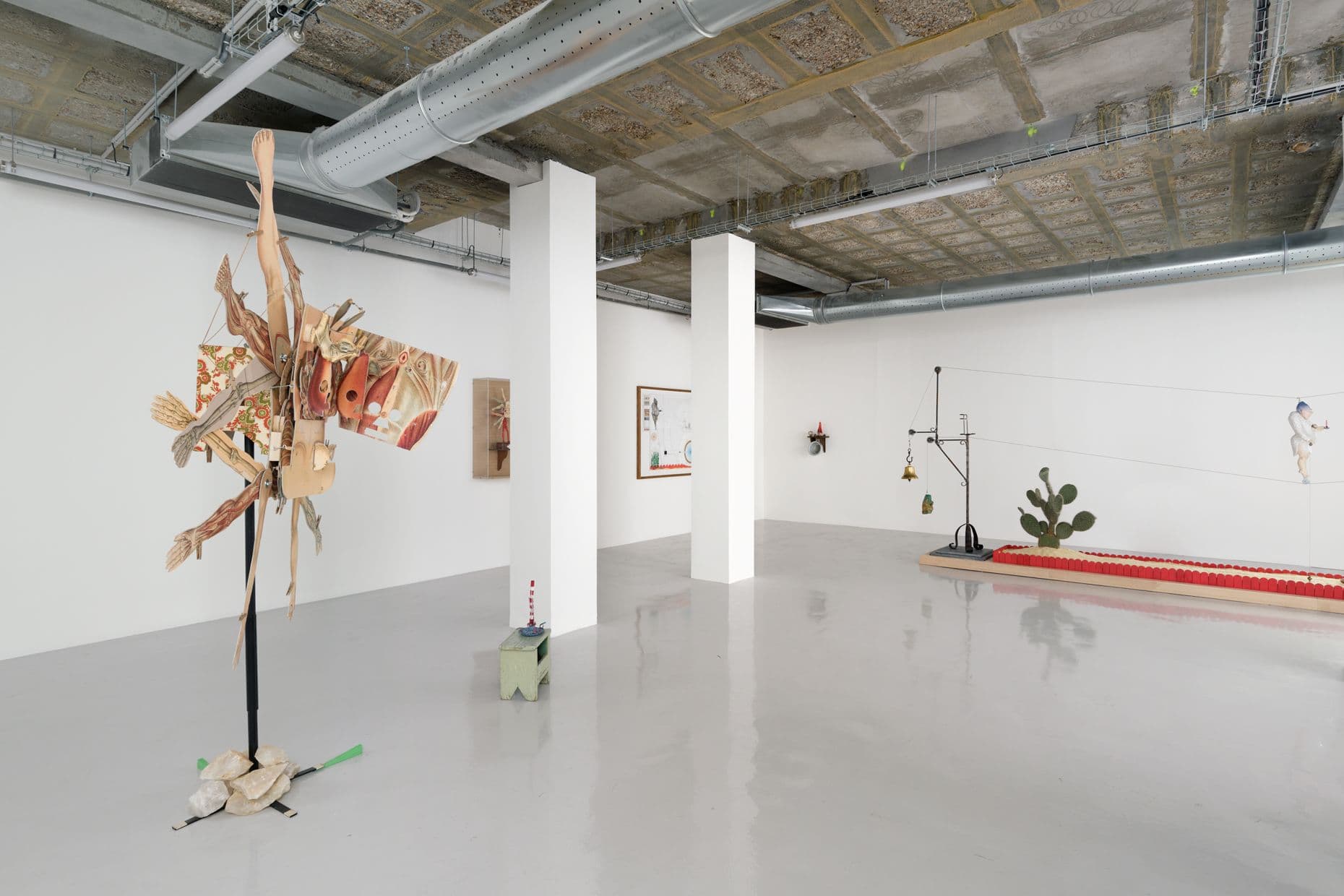
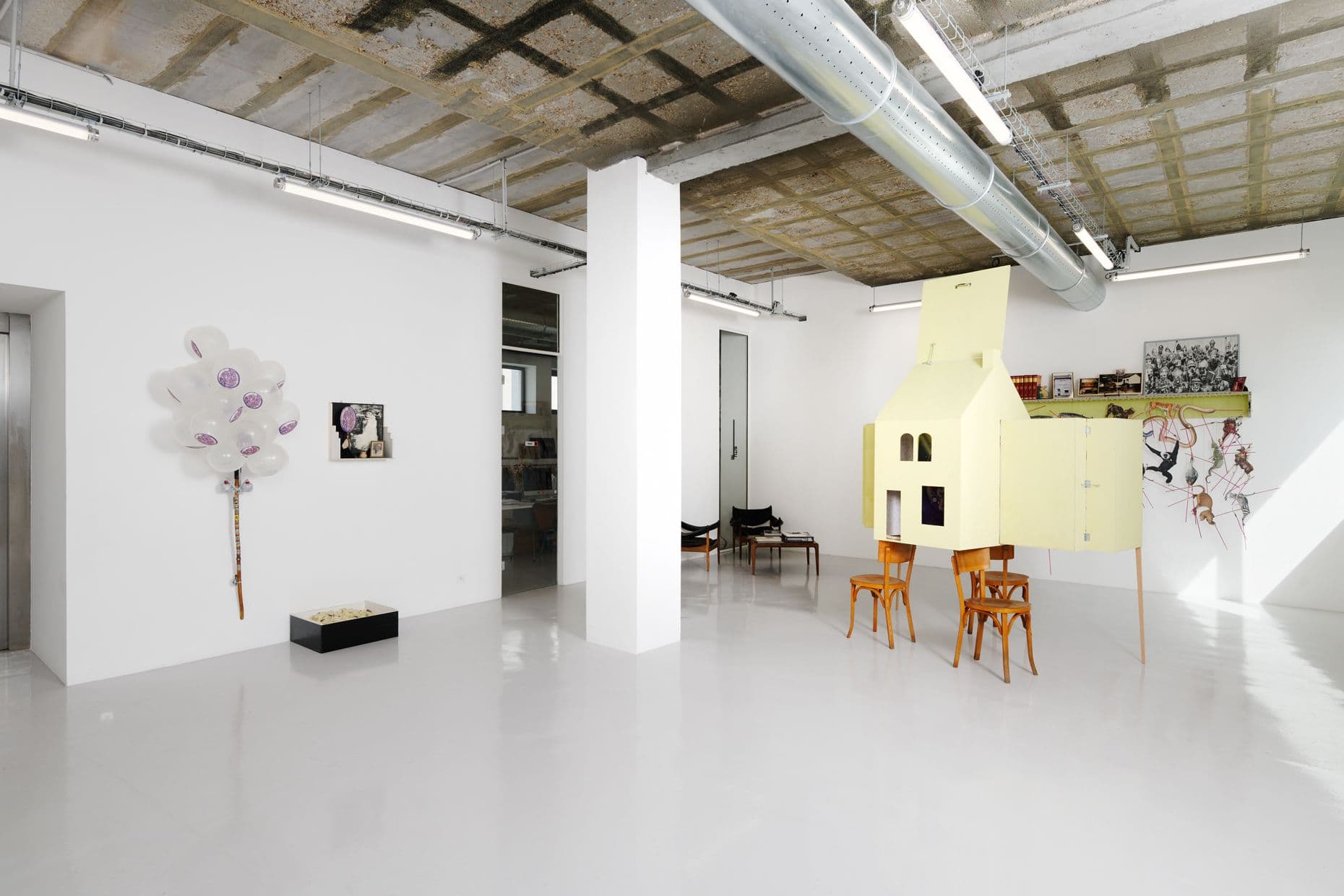
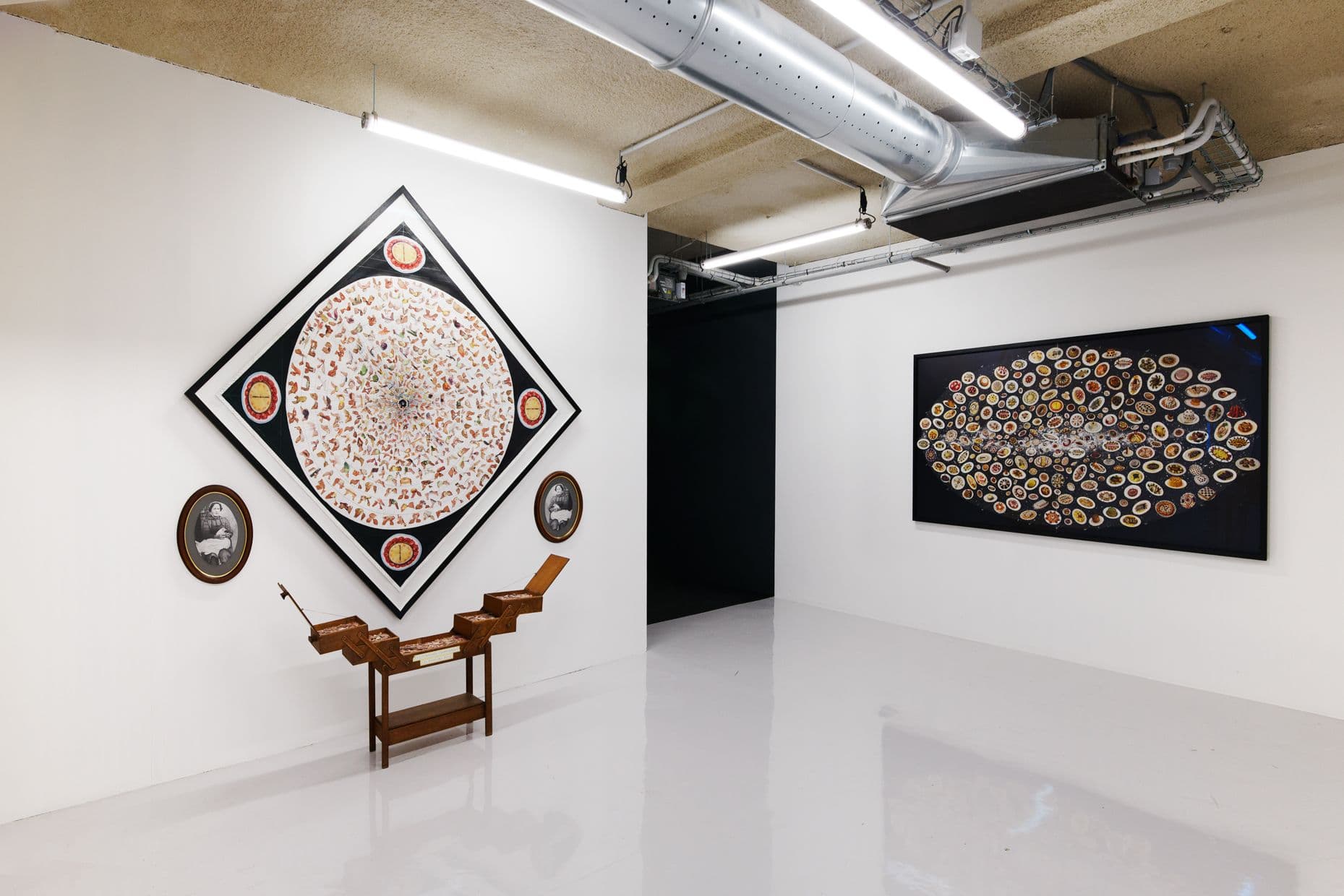
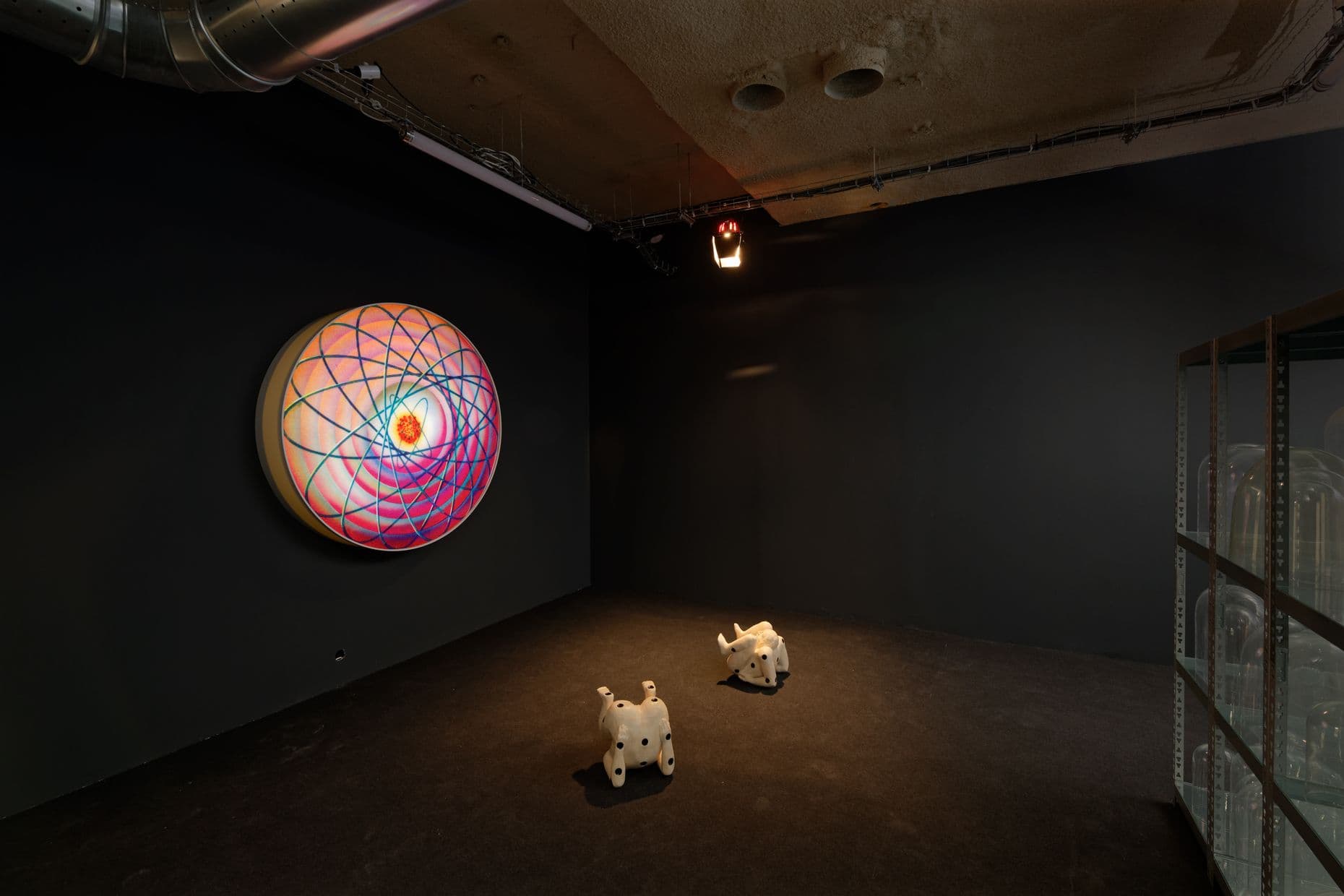
In Situ - Fabienne LeclercExtended Hours: Sunday, May 22, 2pm to 6pm [Scroll down for French version / Veuillez trouver ci-dessous la version française] “I have noticed at present that I’ve forgotten the most important thing: the myths of peoples becoming extinct. I constantly reread them, they are the ones who make me relive, day after day, what metamorphosis is, I learn them, I practice them, I live following their example. The poet is the guardian of metamorphosis and he who does not keep them alive in himself dies before his time.” —Elias Canetti [1] Under the radical title of Apocalypse, the ensemble thought of by Patrick Van Caeckenbergh for his sixth exhibition at the In Situ – fabienne Leclerc gallery (the first took place in 1998) proves to be more mysterious. Based on a principle of the “fruitful ruin,” [2] the artist’s conceptual tinkerings freely combine and merge very diverse areas of thought. The sciences are as though infiltrated by the universe of myths, with their cosmogonies, gods and shamans. The fruit of long ripening thoughts, each creation appears as the entirely provisional materialization of a complex mental edifice. That is why interpretative work is limited to a tightrope walker’s exercise close to that of the practical artist. During our many meetings over time, Patrick generously opened himself up, enlightening me on the meaning of each detail that, within the ensemble, best expresses his thinking. Trying to untie their threads is untangling what is reality from what is the tale; in a certain way it is translating the metaphorical expression that characterizes his fictions into a language that can be shared with the reader-viewer. This clarification effort is inevitably accompanied by a form of loss. Consequently, I must resign myself to my undertaking raising a piece of the veil without completely, very fortunately, solving the enigma. — In an implicit manner, this exhibition is placed under the sign of the autobiography or the spiritual self-portrait. That is why it is proposed both as an intimate revelation and a parabola on today’s world. Although this approach can seem paradoxical, the metamorphoses that Patrick Van Caeckenbergh creates and his imaginative “nomadism” must be accepted right from the start. The death of his mother Jeanne, at Christmas 2018, modified how he regards his past. Earlier, anthropological, his exploration is conducted today “from the interior,” as much as possible. Consequently, the waterfall visible in the collage titled Mon souffle (La marchande de ballonnets) [“My Breath” (The Balloon Seller”)] becomes the metaphor of his origins, applied to both the newborn and the cosmos. The microcosmic drop becomes a balloon, while their multicolored spray becomes a macrocosm. Like many other iconographic elements, this drop is taken from the Winkler Prins encyclopedia, which his mother gave him when he was seven years old and which he his often bought since. Present in many collages, it also refers to his wonder as a child before so many forms of existence. This illustration further refers to the infinitesimal duration that our history holds in the evolution of the universe, proof if ever there was one of the polysemy to which Patrick Van Caeckenbergh is so attached. Le Masque was shown in the Antwerp gallery Zeno X in 2020, for an exhibition that significantly had as a title Le monde à l’envers [“The World Inside-out”]. The attempt to climb back up on the maternal lap is also a sensitive and poetic mediation on the living, the search “for an unquestionable point zero” starting from which everything could have begun. This strange sculpture decomposes the “voyage” below this point, toward the fetal stage, the one that a shaman owes himself to make in order, once he has returned to reality, to “take care” of the other, daily. Incarnating this figure with beneficial social functions starting in the 1990s, Patrick can wear this anatomical mask: his face corresponds to the maternal stomach while the torso, arms and legs reveal their strata, from the skin and muscles to the viscera and skeleton. — The large installation L’Apocalypse (évolution d’un autoportrait 1978-2022) crosses there too autobiography and considerations on the world’s imbalance. To complicate the story even further and to continue to disconcert us, Patrick Van Caeckenbergh takes on an alter ego, the “monosandalos,” associated with the shaman and transformed into the “funambulpus,” an invented word. Once again, the artist identifies himself, metaphorically speaking, with the shaman, feeling socially on the margins of his contemporaries, or even an “outlaw.” The self-portrait visible in the model is accompanied by a description of “beauty spots” to be achieved by the funambulpus, who is “a dwarf, humpbacked, a hermaphrodite, has a pointy head, wrinkled skin and red cheeks.” We couldn’t be less in the norm. It is undoubtedly at this price that his action can be somewhat efficacious. “Shamanism aims at maintaining the cosmic balance, but also the social one, when it has been disturbed by a disaster,” Danièle Vazeilles recalls. [3] In Le Sabbat des sorcières [1989], which Patrick recommended that I read, Carlo Ginzburg defines the monosandalus as “beings (gods, men, spirits) in an unstable equilibrium between the world of the dead and that of the living.”[4] That is why Patrick Van Caeckenbergh imagined the monosandalos-funambulpus-shaman combination as the ideal metaphor of a situation that he intimately experiences. His quest for balance is connected to homeostasis, namely the constants that an organic system must maintain (blood pressure, cardiac rhythm, etc.) in order to survive, regardless of the modifications of its external milieu. However, this idea can also be applied to an ecosystem: far from being self-centered, the evolution of his self-portrait has certain similarities, in an analogical fashion, to that of the Earth. Projecting one’s interiority onto cosmic and terrestrial elements is a behavior developed by a great many peoples who were becoming extinct, evoked by Canetti. In numerous non-Western cultures, man is not thought of as being separate from nature but responsive to it on a daily basis. Because “The animals, plants, spirits, certain objects are seen and treated by them as characters, intentional agents about which it is said that they have a ‘soul,’” Philippe Descola notably analyzes [5]. With a candle-beam in his hand, the one-legged man with the grotesque appearaces of L’Apocalypse moves on a wire stretched between two end points, the hadal zone – the deepest of the ocean – and the celestial universe. Endeavoring to understand the moment when humans stopped “taking care” of their vital milieu, the artist reminds us that a feeling of belonging, far from any anthropocentrism, must comprise our horizon. In order to restore a semblance of harmony within the “Earth-system,” certain solutions could be sought in animist cultures. The situation in the Anthropocene era, that geological revolution due to the human footprint alone, is unfortunately more alarming. “The Anthropocene is a point of non-return. I designates a geological bifurcation without any foreseeable return to the ‘normal’ of the Holocene,” the researchers Christophe Bonneuil and Jean-Baptiste Fresso explain. [6] Consequently, the presence of the stuffed vulture in the installation does not presage anything good. Other elements present in the model of L’Apocalypse are organized around a magnificent full-scale drawing functioning as a “thought machine.” Bringing us to still other tracks, it informs us about how the artist designs his parabolas, with the obsession to bring everything together. The cactus is an interpretation of the oval medallions of the paradigmatic Tree of Knowledge – Essai d’une distribution généalogique des sciences et des arts principaux (1751) – created by Diderot and D’Alembert in the Encyclopédie. We know that the arborescent structure was (and still is) used as a tool to synthetically classify the extreme diversity of the real. The undertakings of assimilation, digestion and condensation of knowledge, in Patrick, are expressed in the following formula: “Leave everything, continuously stirring, gently until it...” This time, it is incarnated in another figure, L’Oxoclave – a name invented from the bouillon concentrates Oxo (the equivalent of Knorr). The small shell of Œuvres complètes provides an example of this principle: its interior bellows conceal a bouillon cube that potentially contains the totality of the past and future Œuvre. But to attain such a concentrate, to achieve the “magic formula” that is inscribed above L’Oxoclave, the artist must begin his journey every day, in a “very autistic” fashion, he says. It is this deep nature of his personality that he reveals through an additional character, the ethnologist Vladimir Propp [7], who devoted his life to establishing a classification of recurring schemas in fairy tales. Within this conceptual labyrinth, two engravings illustrate the development of the artist’s self-portrait: the volcano, that is, his “inner island” mutated into an “atoll,” gradually disappearing. If Patrick Van Caeckenbergh adopted them, in giving them an image-laden form, these formulas taken from Paul Valéry [8], they are displaced from meditation on the “ego” to a vision of the world stretching to its end. The bouillon cube, shortly before so fruitful, because it made it possible to begin everything once again, indefinitely, was mixed with arid sand. Consequently, the precarious balance of the tightrope walker is thought of in an analogous fashion with the current peril lying in wait for the community of living beings. Among the other adjectives thanks to which the artist defines himself, that of “manager of the threshold” is central. The threshold should be understood as the border between an inside and an outside, concerning autobiography, between introspection and the anthropological approach, between the singularity of he who has synesthesia and the normality of the common “domestic animal”; concerning art, Patrick, through his creations, can travel between the imaginary and reality, following the cycle of the “eternal return.” The conception of visual stories in the artist can be compared to the creation of myths and tales, all symbolic activities notably governed by the use of stories. In following Carlo Ginzburg, we can ensure that the figures and objects act within the work as “semiophores,” that is, that their vocation is to signify. Thus, in L’Apocalypse, the magic formula, the cactus, the amazonite, the chimes, the candle, the compass rose, the children, and so on, beyond the immediate sensitive experience, are to be understood as words inside a parabola in which they have a specific meaning. — In Patrick Van Caeckenbergh, the metaphor often becomes gastronomic of which La Gastronomie cosmogonique offers a perfect illustration. Incorporated into the collage titled Au sommet de l’Olympe, the text accompanying the photo of an appetizing plump chicken are taken from a work by the sociologist Richard Sennett. [9] The recipe for “chicken Albufera-style” by Mrs. Benshaw, a virtuoso cook of Iranian origin, is written in a very poetic but not very explicit oral language. That is why it demands clarifications, which are recopied here by hand. The artist contrasts a “consumption of the world of animals and plants” devoid of conscience with a spiritualized vision. The image-laden expression transfigures the death of the chicken, giving its boning and its metamorphosis into a dish to be eaten an almost sacred dimension. Once again, we can detect in it the paradigm of Patrick’s sensibility regarding the living, his “intimate and daily ecology.” The second component of La Gastronomie cosmogonique is comprised of a large collage in a square format tipped on the point, Les mains des dieux [“The Hands of the Gods”], placed above a sewing box in an accordion configuration, called a travailleuse. This type of opening structure, frequent in his production, makes it possible to reveal or conceal its content, in this case, hundreds of hands busy at culinary tasks, that the artist cut out during several decades. Arranged in concentric circles by decreasing size, they seem dragged down into a cosmic hole. A third collage brings together in a colorful galaxy a quantity of dishes magnified by gastronomic inventiveness. Evoking our gargantuan appetite on the planet-wide scale, these representations cause a degree of metaphysical vertigo. Two identical medallions show a peasant woman holding a chicken on her lap like a cat, another incarnation of what Patrick designates by the expression “taking care.” — A tribute to his mother, the most directly autobiographical creation is unquestionably Le Teatrino, closely linked to the house where he was born. Located in the small working-class village of Alost, in East Flanders, it is a symbolic space for him with a matrix value. Concretely, it is the “cozy dwelling” of happy moments, the place of his first experiences and games, of reading the encyclopedia that would nourish his work until the present day. In attesting here to the cohort of animals, accompanied by minerals, flowers and the shamanic fly amanita, with their aesthetics full of freshness and beauty. Having hyperthymesia, a syndrome meaning a highly developed autobiographical memory, Patrick has always been the archeologist of his past. As in Le Masque, the return takes place here to the beginnings. The model shows a set of photos mixing self-portraits and scenes from family life as well as two views of the façade of his childhood home. It is also reproduced in ceramics on the tombstone of his mother Jeanne. We can guess that an entire universe irremediably disappeared with her death. Adopting this house’s shape and proportions, the dimensions of the Teatrino are those of a seven or eight-year-old child. The precarious position of the architecture echoes that of the funambulpus like in the world’s ecological state. Within the theater itself, it places other animal figures, this time in the form of puppets. Being able to evoke the reification of the living, these puppets are also animated by the charm of a child’s imagination. It is clearly this imaginative power that the artist cultivates and that impregnates his works with a sense of the marvelous. The second installment (Archive de Teatrino) is offered as a system, that makes it possible to spatially deploy a second group of articulated animals. Brought together on the shelf, we find images that condense Patrick’s past: the encyclopedia, the photograph of Jeanne on the threshold of the house, as well as a black-and-white view taken during the famous Alost carnival. During the St. Martin festivities – that moment when the world is upside-down – “people are metamorphized into sorts of demons,” creating confusion in the child at the time and shaping his vision of the world. In the center, the reproductions of two sculptures connected to the family home and the death of his father Frans, Mobile Home (1986) and Le Cheval (The Horse, 1985-86). For the exhibition, the artist moreover designed a much smaller version, using the proportions of the kitchen table. With seeming candor, the body of Le petit cheval (2021) is made from glass jars, its head from a series of plates and its tail from hanging flatware. As always, the question here is also making something with the means at hand, according to the attitude that characterizes the activity of the tinkerer to which the artist lays claim. For God dobbelt niet (God doesn’t gamble) (2015 - 2020), Patrick Van Caeckenbergh had two medieval figures of different genders reproduced that are transformed into giant dice. A time machine, the deliberately theatrical scene is related to the games of his childhood. Putting himself in the position of a magician, the adult artist reactivates its memory. Associated for the occasion with the luminous sign illustrating an atom, as well as with L’histoire pittoresque du vide (1997-2017), the dices makes reference to the enigma that the world’s origin still constitutes today, or the void starting from which matter might have been created. Very common until recently with the villagers of Flanders, glass globes fitting into each other contained representations of saints. This attempt at visualizing the void crosses the religious symbol and the scientific approach. Without any solution, the visual poetry of causality and chance subsists from the microcosm to the macrocosm. — Applied to Patrick Van Caeckenbergh, the expression “personal mythology” is particularly relevant. [10] His reflections on the fragile balance of the living are passed through the autobiographical filter, as art and life cannot be dissociated. In his “evolution of a self-portrait,” apart from the figures and alter ego evoked, he humorously takes on the role of the “galactic paleontologist, the cosmogonic geologist and the molecular anthropologist.” His appropriation of the modes of expression typical of “magical” or “wild” thinking is assimilated with tinkering. Lévi-Strauss establishes such connections: “Tinkering,” he writes, that “science of the concrete,” has similarities with the myth, both founded on the “speculative exploitation of the sensitive world in sensitive terms.” [11] Deeply learned, subtly critical, Patrick’s work is always marked by visual poetry, a quality whose singularity in the field of today’s art must be recognized. Reality, however cruel, is metamorphosized into images of an astonishing beauty. 1 - The artist recopied this passage in what he calls his “lines of thought,” asserting that its content stands on its own. Elias Canetti, “Le métier du poète, discours munichois, janvier 1976,” in La conscience des mots, Paris, Albin Michel, 1984, p. 324. 2 - Unless otherwise stated, all the citations come from our exchanges during the month of January 2022, earlier meetings or are taken from his texts published in Abracadabra (Palais des beaux-arts de Bruxelles; CCC Tours, 1992). 3 - Danièle Vazeilles, Les chamanes, Paris, éditions du Cerf, 1991, p. 39. 4 - Carlo Ginzburg, Le sabbat des sorcières [1989], Paris, Gallimard, 1992 for the French translation, p. 219. 5 - Philippe Descola, La fabrique des images. Visions du monde et formes de la représentation, Musée du Quai Branly/Somogy éditions d’art, 2010, p. 13. 6 - Christophe Bonneuil, Jean-Baptiste Fressoz, L’événement anthropocène. La Terre, l’histoire et nous [2013], Paris, Seuil, 2016, p. 35. I have borrowed the expression “Earth-system” from them. 7 - Vladimir JA. Propp, Morphologie du conte [1928], Paris, Gallimard, 1970 for the French translation. Ginzburg recognized his debt to the Propp method. 8 - Didn’t Valéry write “between Ego and me, things and others have raised a coral ring. I am Atoll.” Correspondance [with Gide] 1890-1942, p. 508. The author constantly makes reference to the author of Monsieur Teste. 9 - Richard Sennett, Ce que sait la main. La culture de l’artisanat [2008], Paris, Albin Michel for the French translation, 2010, p. 258 to 260. Original publication: The Craftsman. 10 - Concerning the formation of the idea of the individual myth – in 1949 in Lévi-Strauss, then in 1953 in Lacan – and its uses in art in 1963 by Harald Szeemann, see notably Fabien Faure, “’Every version belongs to the myth.’ Étienne-Martin seen by Harald Szeemann,” Mythologies et mythes individuels à partir de l’art brut, under the dir. of Anne Boissière, Christophe Boulanger and Savine Faupin, Villeneuve d’Asq, Presses universitaires du Septentrion, 2014, p. 15-36. 11 - Claude Lévi-Strauss, La pensée sauvage, Paris, Plon, 1962, p. 25. ***** « Je m’aperçois à présent que j’ai oublié le plus important : les mythes des peuples en voie de disparition. Je les relis sans cesse, ce sont eux qui me font revivre jour après jour ce qu’est la métamorphose, je les apprends, je les pratique, je vis à leur exemple. Le poète est le gardien de la métamorphose et celui qui ne les garde pas vivantes en lui-même meurt avant son temps ». —Elias Canetti [1] Sous le titre radical d’Apocalypse, l’ensemble pensé par Patrick Van Caeckenbergh pour sa sixième exposition à la galerie In Situ – fabienne leclerc (la première eut lieu en 1998) s’avère plus mystérieuse. Reposant sur un principe de « ruine fructueuse [2] », les bricolages conceptuels de l’artiste associent et fusionnent librement des domaines de pensée très divers. Les sciences sont comme infiltrées par l’univers des mythes, avec leurs cosmogonies, leurs dieux et leurs chamanes. Fruit de longs mûrissements, chaque réalisation apparaît comme la matérialisation, toute provisoire, d’un édifice mental complexe. C’est pourquoi le travail interprétatif confine à un exercice d’équilibriste proche de celui que l’artiste pratique. Durant nos nombreuses rencontres dans la durée, Patrick s’est généreusement livré, m’éclairant sur le sens de chaque détail qui, au sein de l’ensemble, exprime au mieux sa pensée. Chercher à en dénouer les fils, c’est démêler la part de réalité et celle du conte ; c’est en quelque sorte traduire l’expression métaphorique qui caractérise ses fictions en un langage partageable avec le lecteur-spectateur. Cet effort de clarification s’accompagne inévitablement d’une forme de perte. Aussi, faut-il me résoudre à ce que mon entreprise soulève un pan du voile sans résoudre tout à fait l’énigme, fort heureusement. — De manière sous-jacente, cette exposition est placée sous le signe de l’autobiographie ou encore de l’autoportrait spirituel. C’est pourquoi elle s’offre à la fois comme dévoilement intime et parabole sur le monde actuel. Cette approche pouvant sembler paradoxale, il faut d’emblée accepter les métamorphoses qu’opère Patrick Van Caeckenbergh et son « nomadisme » imaginatif. La disparition de sa mère Jeanne, à la noël 2018, a modifié le regard qu’il porte sur son passé. Auparavant d’ordre anthropologique, son exploration s’effectue aujourd’hui « depuis l’intérieur », autant que faire se peut. Ainsi, la cascade visible dans le collage intitulé Mon souffle (La marchande de ballonnets) devient la métaphore des origines, appliquée aussi bien au nouveau-né qu’au cosmos. La goutte-microcosme se fait ballon, tandis que leur gerbe multicolore devient macrocosme. À l’instar de bien d’autres éléments iconographiques, cette goutte est tirée de l’encyclopédie Winkler Prins, dont sa mère lui fit cadeau alors qu’il avait sept ans – souvent rachetée depuis. Présente dans maints collages, elle renvoie également à son émerveillement d’enfant devant tant de formes d’existence. Cette illustration réfère de plus à la durée infime que tient notre histoire dans l’évolution de l’univers, preuve s’il en est de la polysémie qu’affectionne Patrick Van Caeckenbergh. Le Masque a été montrée en 2020 dans sa galerie anversoise Zeno X, pour une exposition ayant significativement pour titre Le monde à l’envers. La tentative d’une remontée au giron maternel est également une méditation sensible et poétique sur le vivant, la recherche « d’un indiscutable point zéro » à partir duquel tout aurait commencé. Cette étrange sculpture décompose le « voyage » en-deçà de ce point, vers le stade fœtal, celui qu’un chamane se doit d’effectuer afin, une fois revenu dans la réalité, de « prendre soin » d’autrui, au quotidien. Incarnant cette figure aux fonctions sociales bénéfiques dès les années 1990, Patrick peut porter ce masque anatomique : son visage correspond au ventre maternel tandis que le buste, les bras et les jambes laissent découvrir leurs strates, depuis la peau, les muscles, jusqu’aux organes et au squelette. — La grande installation de L‘Apocalypse (évolution d’un autoportrait 1978-2022) croise là encore autobiographie et considérations sur le déséquilibre du monde. Pour complexifier davantage l’histoire, et continuer de nous dérouter, Patrick Van Caeckenbergh s’approprie un alter ego, le « monosandalos », associé au chamane et transformé en « funambulpus », un vocable d’invention. De nouveau, l’artiste s’identifie, métaphoriquement au chamane, se sentant socialement en marge de ses contemporains, ou bien « hors-la-loi ». L’autoportrait visible dans la maquette est accompagné d’un descriptif des « taches de beauté » à accomplir par le funambulpus, qui est « nain, bossu, hermaphrodite, a une tête pointue, la peau fripée et des joues rougissantes ». On ne saurait être moins dans la norme. C’est sans doute à ce prix que son action peut avoir quelque efficace. « Le chamanisme vise à maintenir l’équilibre cosmique, mais aussi social, lorsqu’il a été perturbé par une catastrophe », rappelle Danièle Vazeilles [3]. Dans Le Sabbat des sorcières [1989], dont Patrick m’a conseillé la lecture, Carlo Ginzburg, lui, définit les monosandalus comme « des êtres (des dieux, des hommes, des esprits) en équilibre instable entre le monde des morts et celui des vivants [4] ». C’est pourquoi Patrick Van Caeckenbergh a imaginé la combinaison monosandalos-funambulpus-chamane, comme métaphore idéale d’une situation qu’il éprouve intimement. Sa quête d’équilibre se rapporte à l’homéostasie, à savoir les constantes qu’un système organique doit maintenir (pression sanguine, rythme cardiaque, etc.) afin de survivre, quelles que soient les modification de son milieu externe. Cependant cette notion peut également s’appliquer à un écosystème : loin d’être autocentrée, l’évolution de son autoportrait est analogiquement apparentée à celle de la Terre. Projeter son intériorité sur les éléments cosmiques et terrestres est une conduite développée par bien des peuples en voie de disparition évoqués par Canetti. Dans de nombreuses cultures non occidentales, l’homme n’est pas pensé comme étant séparé de la nature mais à son écoute quotidienne. Car « Les animaux, les plantes, les esprits, certains objets, y sont vus et traités comme des personnages, des agents intentionnels dont on dit qu’ils ont une «âme» », analyse notamment Philippe Descola [5]. Bougie-phare à la main, l’unijambiste aux apparences grotesques de L’Apocalypse se déplace sur un fil tendu entre deux points extrêmes, la zone hadale – la plus profonde de l’océan – et l’univers céleste. Cherchant à comprendre le moment où les humains ont cessé de « prendre soin » de leur milieu vital, l’artiste vient nous rappeler qu’un sentiment d’appartenance, loin de tout anthropocentrisme, doit constituer notre horizon. Afin de restaurer un semblant d’harmonie au sein du « système-Terre », certaines solutions seraient à chercher du côté des cultures animistes. La situation à l’ère anthropocène, cette révolution géologique due à la seule empreinte humaine, est hélas plus alarmante. « L’Anthropocène est un point de non-retour. Il désigne une bifurcation géologique sans retour prévisible à la «normale» de l’Holocène », expliquent les chercheurs Christophe Bonneuil et Jean-Baptiste Fressoz6. Aussi la présence dans l’installation du vautour naturalisé n’augure-t-elle rien de bon. D’autres éléments présents dans la maquette de L’Apocalypse sont organisés autour d’une magnifique épure fonctionnant comme une « machine à penser ». Nous entraînant vers d’autres pistes encore, ils nous renseignent sur la manière dont l’artiste conçoit ses paraboles, avec l’obsession de tout rassembler. Le cactus est une interprétation des médaillons ovales du paradigmatique arbre de la connaissance – Essai d’une distribution généalogique des sciences et des arts principaux (1751) – conçu par Diderot et D’Alembert dans l’Encyclopédie. On sait que la structure arborescente fut (et est toujours) utilisée comme un outil pour classifier de manière synthétique l’extrême diversité du réel. Les entreprises d’assimilation, de digestion et de condensation du savoir, chez Patrick, s’expriment dans la formule suivante : « Laisser le tout, en remuant continuellement, doucement jusqu’à ce que... ». Cette fois, il s’incarne dans une autre figure, L’Oxoclave – un nom inventé à partir des concentrés de bouillons Oxo (l’équivalent de Maggi). La petite coquille d’Œuvres complètes, elle, fournit un exemple de ce principe : ses soufflets intérieurs recèlent un cube de bouillon qui contient en puissance la totalité de l’Œuvre passée et à venir. Mais pour atteindre un tel condensé, pour réaliser la « formule magique » qui se trouve inscrite au-dessus de L’Oxoclave, l’artiste doit quotidiennement recommencer son voyage, de manière « très autiste », dit-il. C’est ce caractère profond de sa personnalité qu’il dévoile au moyen d’un personnage supplémentaire, l’ethnologue Vladimir Propp [7], ayant consacré sa vie à l’établissement d’une classification des schèmes récurrents présents dans les contes merveilleux. Au sein de ce labyrinthe conceptuel deux gravures illustrent les développements de l’autoportrait de l’artiste : le volcan, c’est-à-dire son « île intérieure » s’est muée en « atoll », disparaissant peu à peu. Si Patrick Van Caeckenbergh a fait siennes, en leur donnant une forme imagée, ces formules empruntées à Paul Valéry [8], celles-ci sont déplacées de la méditation sur le « moi » vers une vision du monde tendant à sa fin. Le bloc de bouillon naguère si fructueux, parce que permettant de tout recommencer, indéfiniment, est devenu tel une masse de sable aride. Ainsi, l’équilibre précaire du funambule est analogiquement pensé avec le péril actuel guettant la communauté des êtres vivants. Parmi les autres qualificatifs grâce auxquels l’artiste se définit, celui de « gestionnaire du seuil » est central. Le seuil est à comprendre comme la frontière entre un dedans et un dehors ; s’agissant d’autobiographie, entre l’introspection et l’approche anthropologique, entre la singularité de celui qui est atteint de synesthésie et la normalité de l’ « animal domestique » commun ; s’agissant d’art, Patrick, au travers de ses réalisations, peut voyager entre l’imaginaire et la réalité, suivant le cycle de « l’éternel retour ». La conception des récits visuels chez l’artiste est comparable à l’élaboration des mythes et des contes, toutes activités symboliques notamment gouvernées par l’usage de récits. En suivant Carlo Ginzburg, on peut assurer que les figures et objets agissent au sein de l’œuvre comme des « sémiophores », c’est-à-dire qu’ils ont pour vocation de signifier. Ainsi, dans L’Apocalypse, la formule magique, le cactus, l’amazonite, le carillon, la bougie, la rose des vents, les enfants, etc., au-delà de l’expérience sensible immédiate, sont à appréhender comme des mots à l’intérieur d’une parabole en laquelle ils possèdent un sens spécifique. — Chez Patrick Van Caeckenbergh, la métaphore se fait souvent gastronomique, ce dont La Gastronomie cosmogonique offre une parfaite illustration. Intégrés au collage intitulé Au sommet de l’Olympe, les textes accompagnant la photo d’une appétissante poularde sont tirés d’un ouvrage du sociologue Richard Sennett [9]. La recette du « poulet à la d’Albuféra » par Mme Benshaw, cuisinière virtuose d’origine iranienne, est rédigée dans une langue orale fort poétique, mais peu explicite. C’est pourquoi elle réclame des éclaircissements, qui sont ici recopiés à la main. À une « consommation du monde des bêtes et des plantes » dénuée de conscience, l’artiste oppose une vision spiritualisée. L’expression imagée transfigure la mort du poulet, conférant à son désossage et à sa métamorphose en plat à déguster une dimension quasi sacrée. De nouveau, on peut y déceler le paradigme de la sensibilité de Patrick à l’égard du vivant, son « écologie intime » et quotidienne. Le deuxième constituant de La Gastronomie cosmogonique est composé d’un grand collage de format carré basculé sur la pointe, Les mains des dieux, placé au-dessus d’une boîte de couture en accordéon, dite « travailleuse ». Ce genre de structure ouvrante, fréquent dans sa production, permet de dévoiler ou de dissimuler son contenu, en l’occurrence, des centaines de mains affairées à des tâches culinaires, que l’artiste a découpées durant plusieurs décennies. Disposées en cercles concentriques par taille décroissante, elles semblent happées par un trou cosmique. Un troisième collage rassemble en une galaxie colorée quantité de plats magnifiés par l’inventivité gastronomique. Évoquant notre appétit gargantuesque à l’échelle de la planète, ces représentations provoquent quelque vertige métaphysique. Deux médaillons identiques montrent une paysanne tenant serrées sur ses genoux deux poules telles un enfant, autre incarnation de ce que Patrick désigne par l’expression « prendre soin ». — Hommage rendu à sa mère, la réalisation la plus directement autobiographique est sans conteste Le Teatrino, étroitement lié à sa maison natale. Située dans la petite ville ouvrière d’Alost, en Flandres Orientales, celle-ci lui est un espace symbolique à valeur matricielle. Concrètement, elle est la « bonbonnière » des moments heureux, le lieu des premières expériences et jeux, de la lecture de l’encyclopédie qui nourrira son œuvre jusqu’à aujourd’hui. En attestent ici la cohorte d’animaux, accompagnée de minéraux, de fleurs et de l’amanite tue-mouche chamanique, avec leur esthétique pleine de fraîcheur et de beauté. Une illustration richement colorée figurant un atome, elle va devenir une enseigne lumineuse. Atteint d’hyperthymésie, un syndrome fondé sur une mémoire autobiographique très développée, Patrick s’est toujours fait l’archéologue de son passé. Comme dans Le Masque, le retour s’effectue ici vers les prémices. La maquette donne à voir un ensemble de photos mêlant autoportraits et scènes de la vie familiale ainsi que deux vues de la façade de la maison d’enfance. Celle-ci est également reproduite en céramique sur la stèle tombale de sa mère Jeanne. On devine qu’avec sa perte disparaît irrémédiablement tout un univers. Adoptant la forme et les proportions de cette maison, les dimensions du Teatrino sont celles d’un enfant de sept ou huit ans. La position précaire de l’architecture fait écho à celle du funambulpus comme à l’état écologique du monde. Au sein du théâtre lui-même, celui-ci place d’autres figures animalières, cette fois sous la forme de marionnettes. Pouvant évoquer la réification du vivant, elles sont également animées par la grâce de l’imagination enfantine. C’est bien cette puissance imaginative que l’artiste cultive et qui imprègne ses ouvrages de merveilleux. La seconde installation Archive du Teatrino (Eté 2021), s’offre comme un dispositif, qui permet de déployer spatialement un second ensemble d’animaux articulés. Réunis sur l’étagère, on trouve des images qui condensent le passé de Patrick : l’encyclopédie, la photographie de Jeanne sur le seuil de la maison, ainsi qu’une vue en noir et blanc prise lors du fameux carnaval d’Alost. Durant les festivités de la saint Martin – ce temps du monde à l’envers –, « les gens se métamorphosent en des sortes de démons », créant de la confusion chez l’enfant d’alors et façonnant sa vision du monde. Au centre, les reproductions de deux sculptures liées au logis familial et à la disparition de son père Frans, Mobile Home (1986) et Le Cheval (1985-1986). Pour l’exposition, l’artiste en a du reste conçu une version bien plus petite, à partir des proportions de la table de la cuisine. Avec une candeur apparente, le corps du Petit cheval (2021) est fait de bocaux de conserves, sa tête d’une succession d’assiettes et sa queue de couverts suspendus. Comme toujours, il s’agit aussi de faire avec les moyens du bord, selon l’attitude qui caractérise l’activité du bricoleur revendiquée par l’artiste. Pour God dobbelt niet (God doesn’t gamble) (2015-2020), Patrick Van Caeckenbergh a fait reproduire deux figures moyenâgeuses de sexe différent, qui sont transformées en dés à jouer géants. Machine à remonter le temps, la scène délibérément théâtrale est relative aux jeux de son enfance. Se mettant dans la position du magicien, l’artiste adulte vient en réactiver le souvenir. Associé pour l’occasion à l’enseigne lumineuse illustrant un atome, ainsi qu’à L’histoire pittoresque du vide (1997 à 20217), les dés font référence à l’énigme que constitue aujourd’hui encore l’origine du monde, ou le vide à partir duquel la matière aurait été créée. Très communs jusqu’à récemment chez les villageois des Flandres, les globes de verre emboîtés les uns dans les autres contenaient des représentations de saints. Cette tentative de visualisation du vide croise le symbole religieux et l’approche scientifique. Sans résolution, subsiste la poésie visuelle du microcosme au macrocosme, de la causalité et du hasard. — Appliquée à Patrick Van Caeckenbergh, l’expression « mythologie personnelle » est particulièrement pertinente [10]. Ses réflexions sur le fragile équilibre du vivant sont passées au filtre autobiographique, l’art et la vie ne pouvant être dissociés. Dans son « évolution d’un autoportrait », outre les figures et alter ego évoqués, il endosse avec humour le rôle du « paléontologue galactique, du géologue cosmogonique et de l’anthropologue moléculaire ». Son appropriation de modes d’expression caractéristiques de la pensée « magique » ou « sauvage » est assimilée au bricolage. Lévi-Strauss établit de tels rapprochements : « Le bricolage, écrit-il, cette «science du concret», s’apparente au mythe, tous deux fondés sur « l’exploitation spéculative du monde sensible en termes de sensible [11]». Profondément savante, subtilement critique, l’œuvre de Patrick est toujours empreinte de poésie visuelle, qualité dont il faut reconnaître la singularité dans le champ de l’art actuel. La réalité, fut- elle cruelle, se voit métamorphosée en images d’une étonnante beauté. 1 - L’artiste a recopié ce passage dans ce qu’il appelle ses « lignes de pensée », affirmant que son contenu vaut pour lui-même. Elias Canetti, « Le métier du poète, discours munichois, janvier 1976 », dans La conscience des mots, Paris, Albin Michel, 1984, p. 324. 2 - Sauf mention contraire, toutes les citations proviennent de nos échanges du mois de janvier 2022, de précédentes rencontres, ou sont extraites de ses textes parus dans Abracadabra (Palais des beaux-arts de Bruxelles ; CCC Tours, 1992). 3 - Danièle Vazeilles, Les chamanes, Paris, éditions du Cerf, 1991, p. 39. 4 - Carlo Ginzburg, Le sabbat des sorcières [1989], Paris, Gallimard, 1992 pour la traduction française, p. 219. 5 - Philippe Descola, La fabrique des images. Visions du monde et formes de la représentation, Musée du Quai Branly/Somogy éditions d’art, 2010, p. 13. 6 - Christophe Bonneuil, Jean-Baptiste Fressoz, L’événement anthropocène. La Terre, l’histoire et nous [2013], Paris, Seuil, 2016, p. 35. Je leur emprunte l’expression « système-Terre ». 7 - Vladimir JA. Propp, Morphologie du conte [1928], Paris, Gallimard, 1970 pour la traduction française. Ginzburg a reconnu sa dette envers la méthode de Propp. 8 - Valéry n’écrivait-il pas « entre Moi et moi, les choses et les autres ont élevé un anneau de corail. Je suis Atoll ». Correspondance [avec Gide] 1890-1942, p. 508. L’artiste fait constamment référence à l’auteur de Monsieur Teste. 9 - Richard Sennett, Ce que sait la main. La culture de l’artisanat [2008], Paris, Albin Michel pour la traduction française, 2010, p. 258 à 260. 10 - À propos de la formation de la notion de mythe individuel – en 1949 chez Lévi-Strauss, puis en 1953 chez Lacan – et de ses usages en art en 1963 par Harald Szeemann, voir notamment Fabien Faure, « “Toutes les versions appartiennent au mythe”. Étienne-Martin vu par Harald Szeemann », Mythologies et mythes individuels à partir de l’art brut, sous la dir. de Anne Boissière, Christophe Boulanger et Savine Faupin, Villeneuve d’Asq, Presses universitaires du Septentrion, 2014, p. 15-36. 11 - Claude Lévi-Strauss, La pensée sauvage, Paris, Plon, 1962, p. 25.