
Charlottenburg, Berlin
Grace Weaver
Mothers
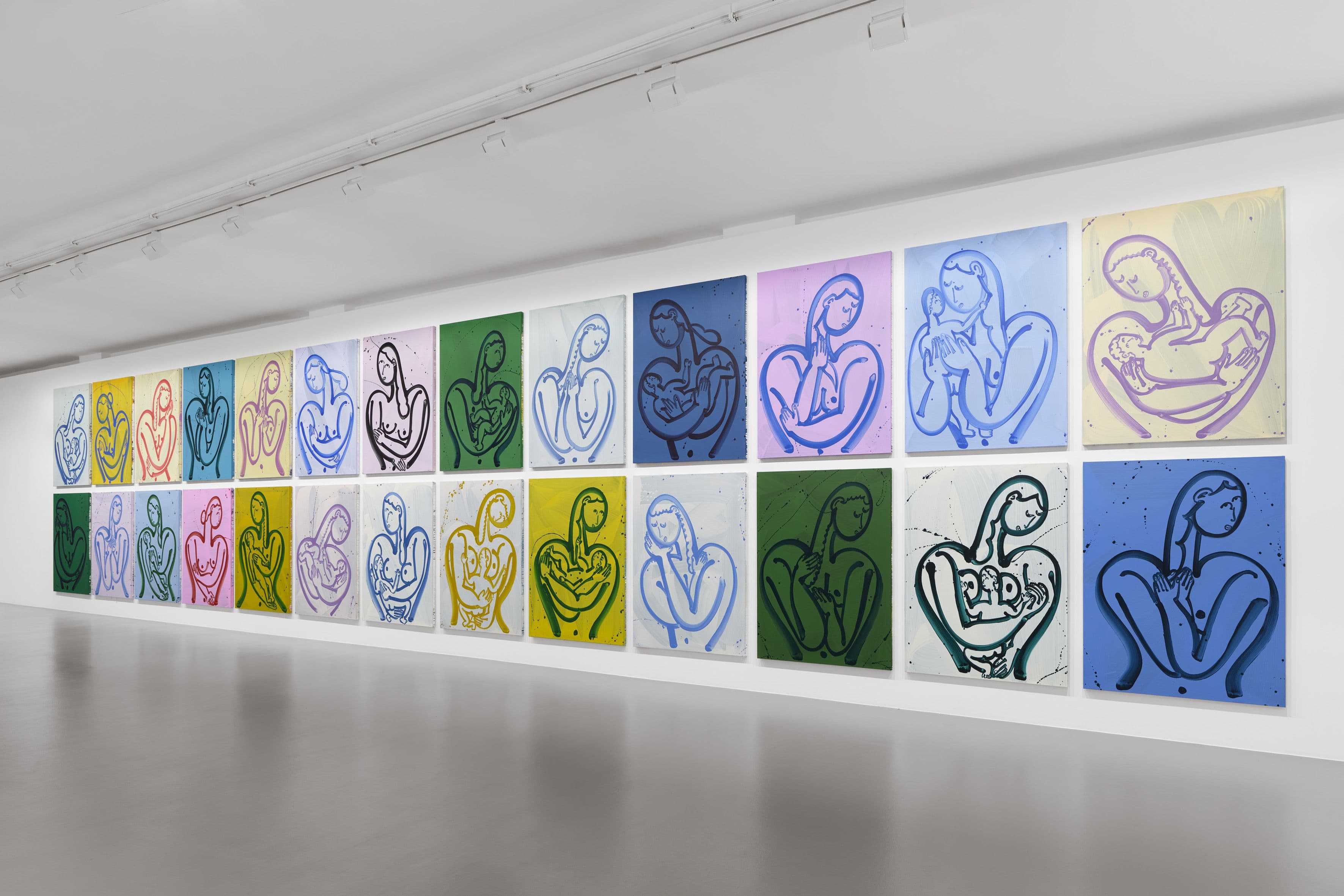
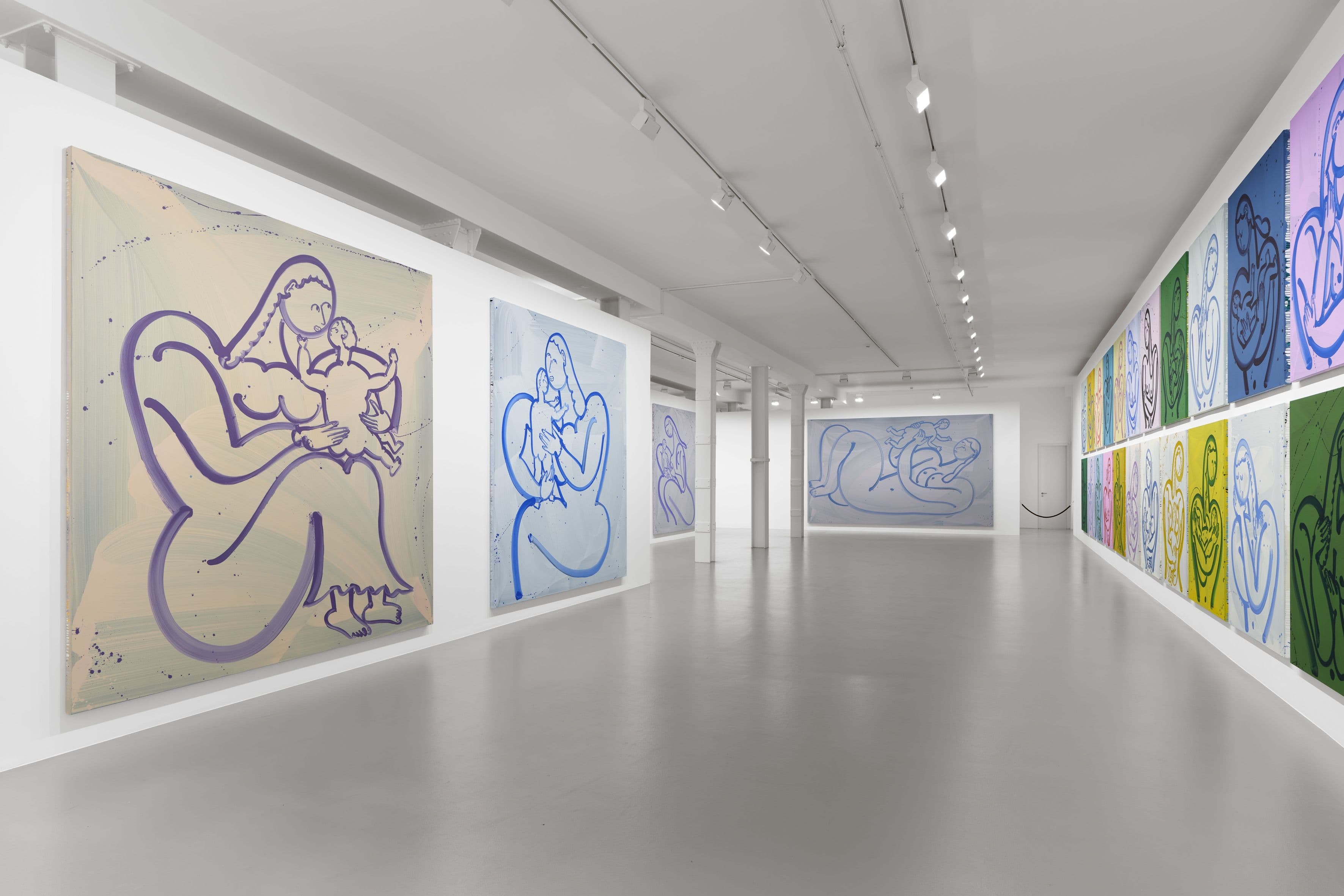
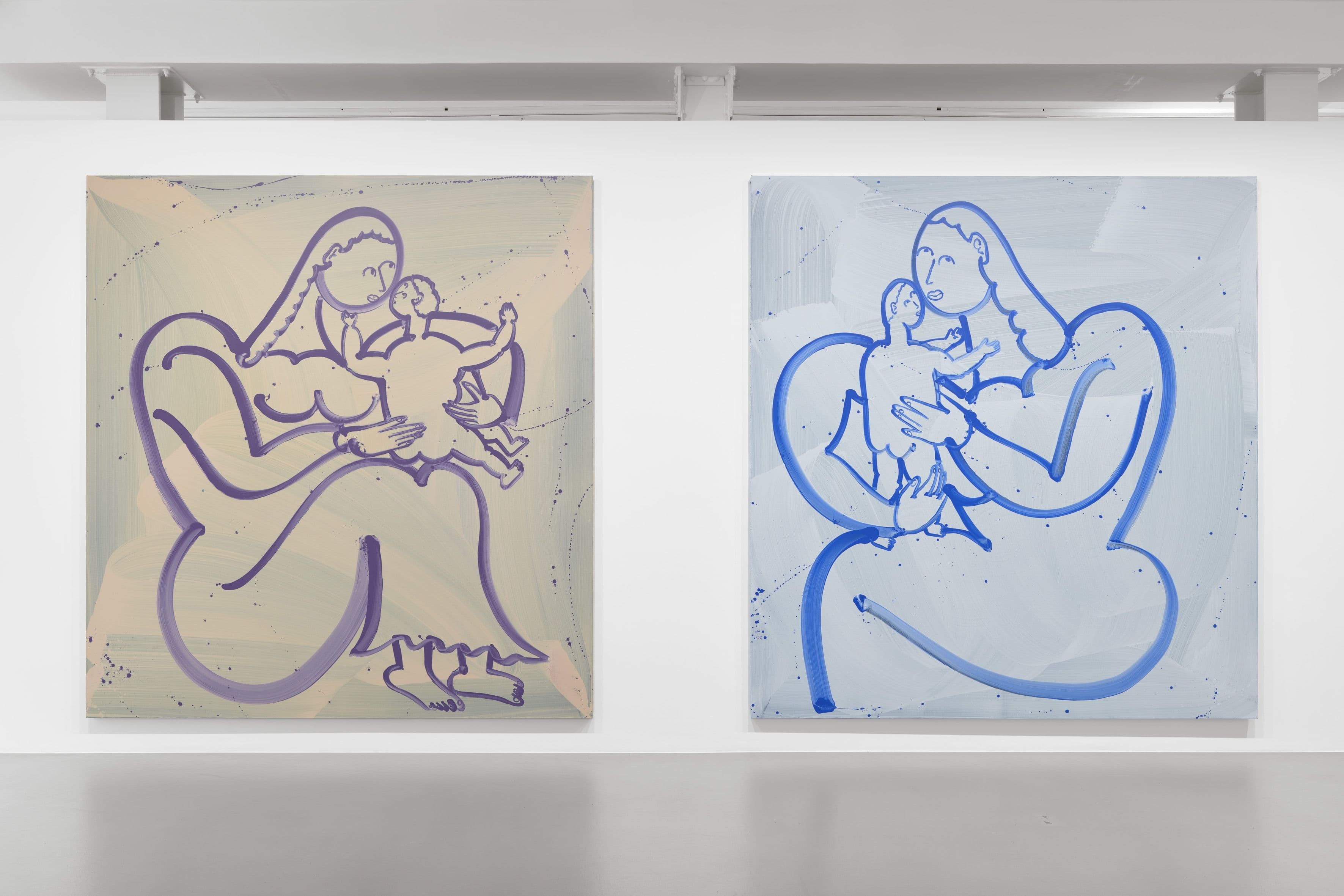
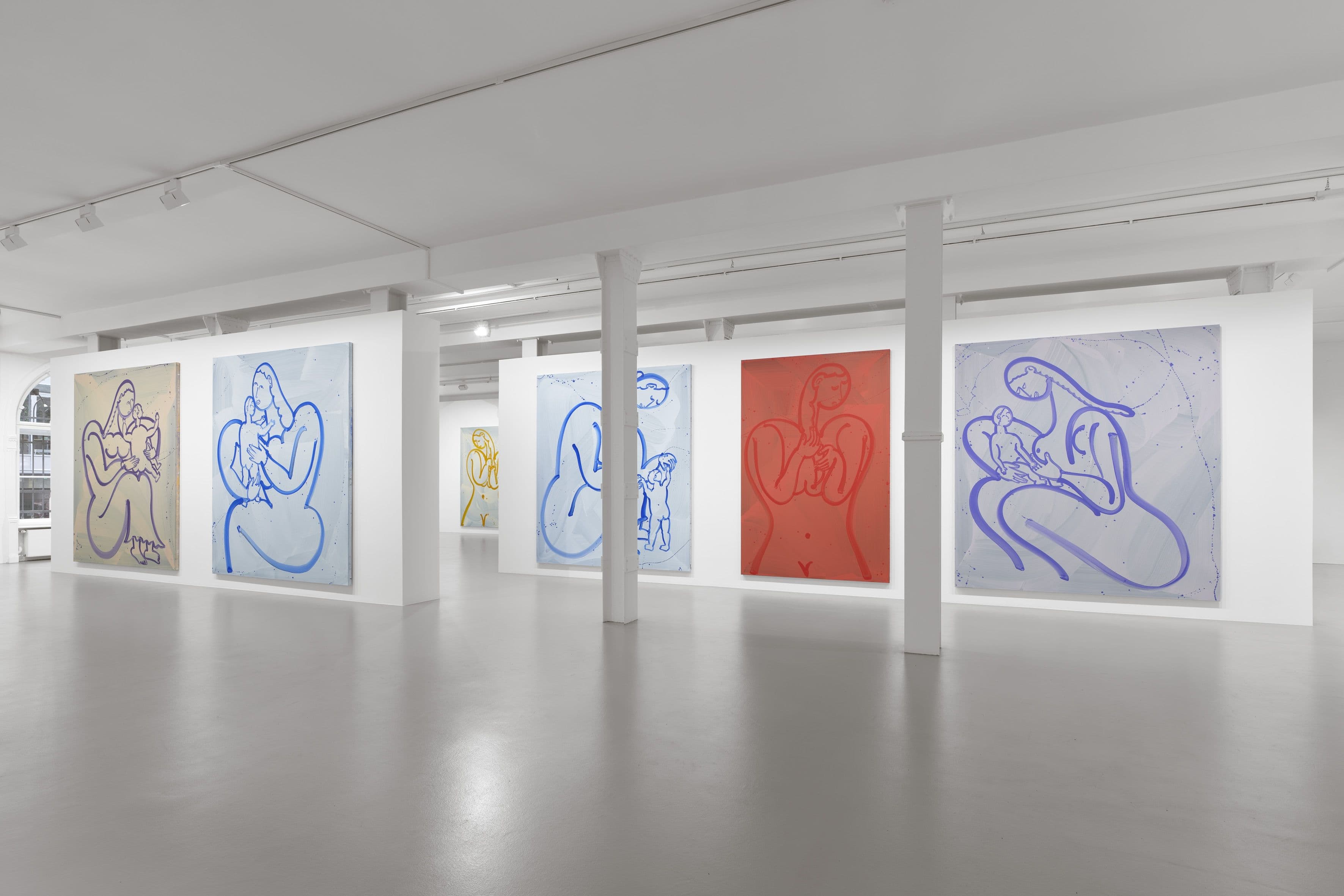
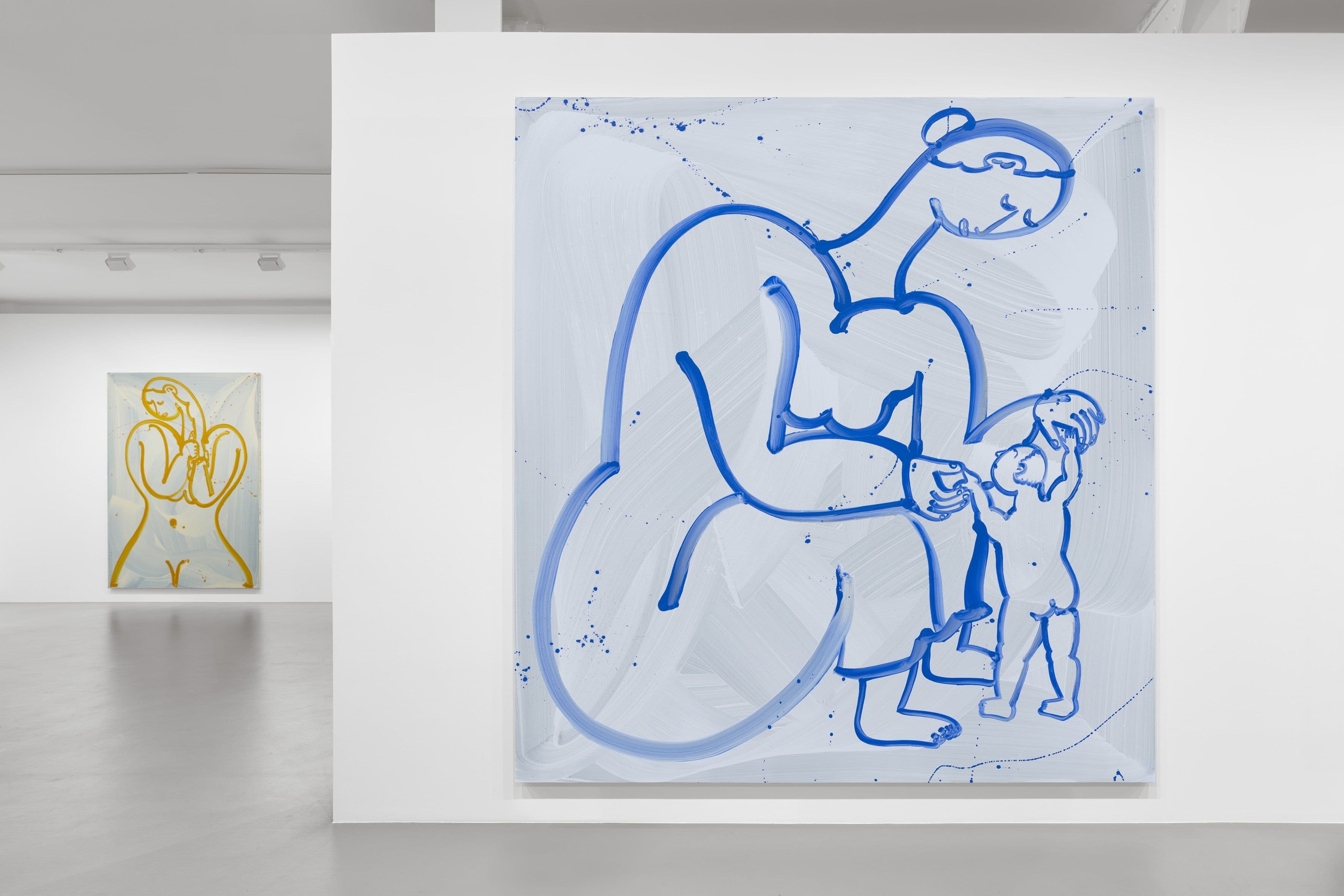
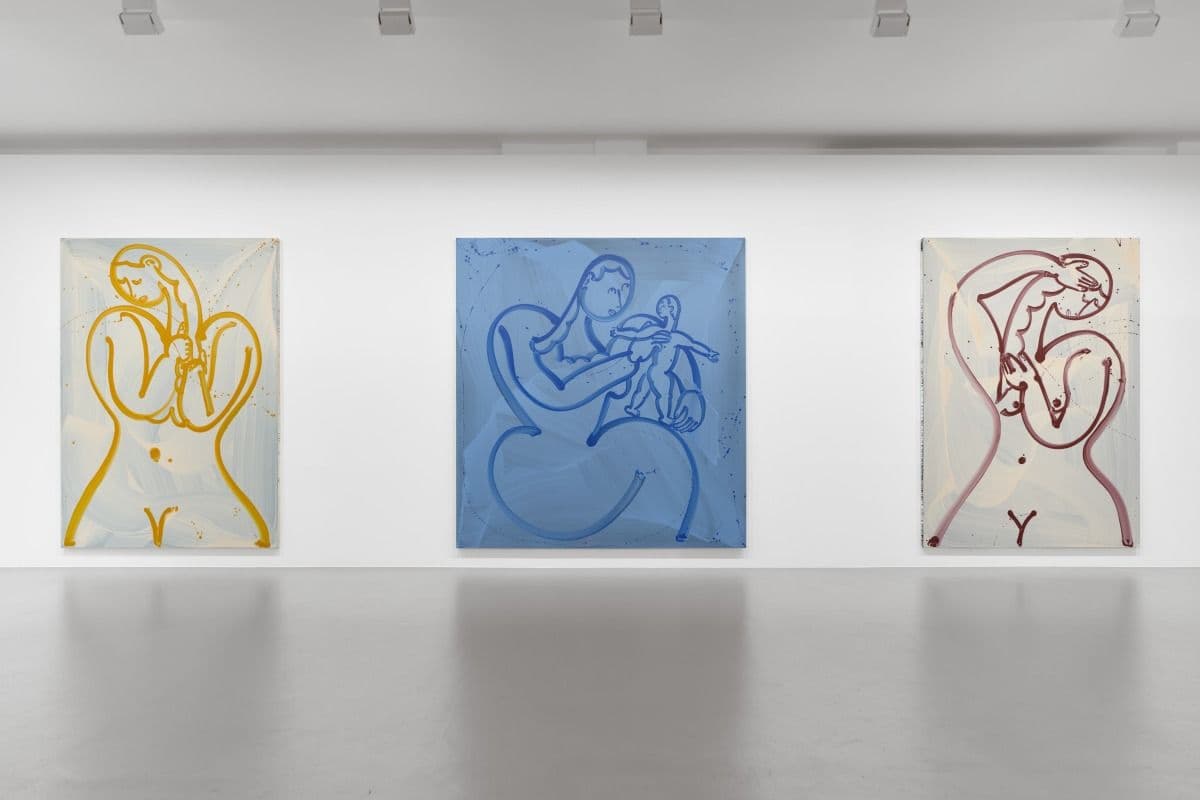
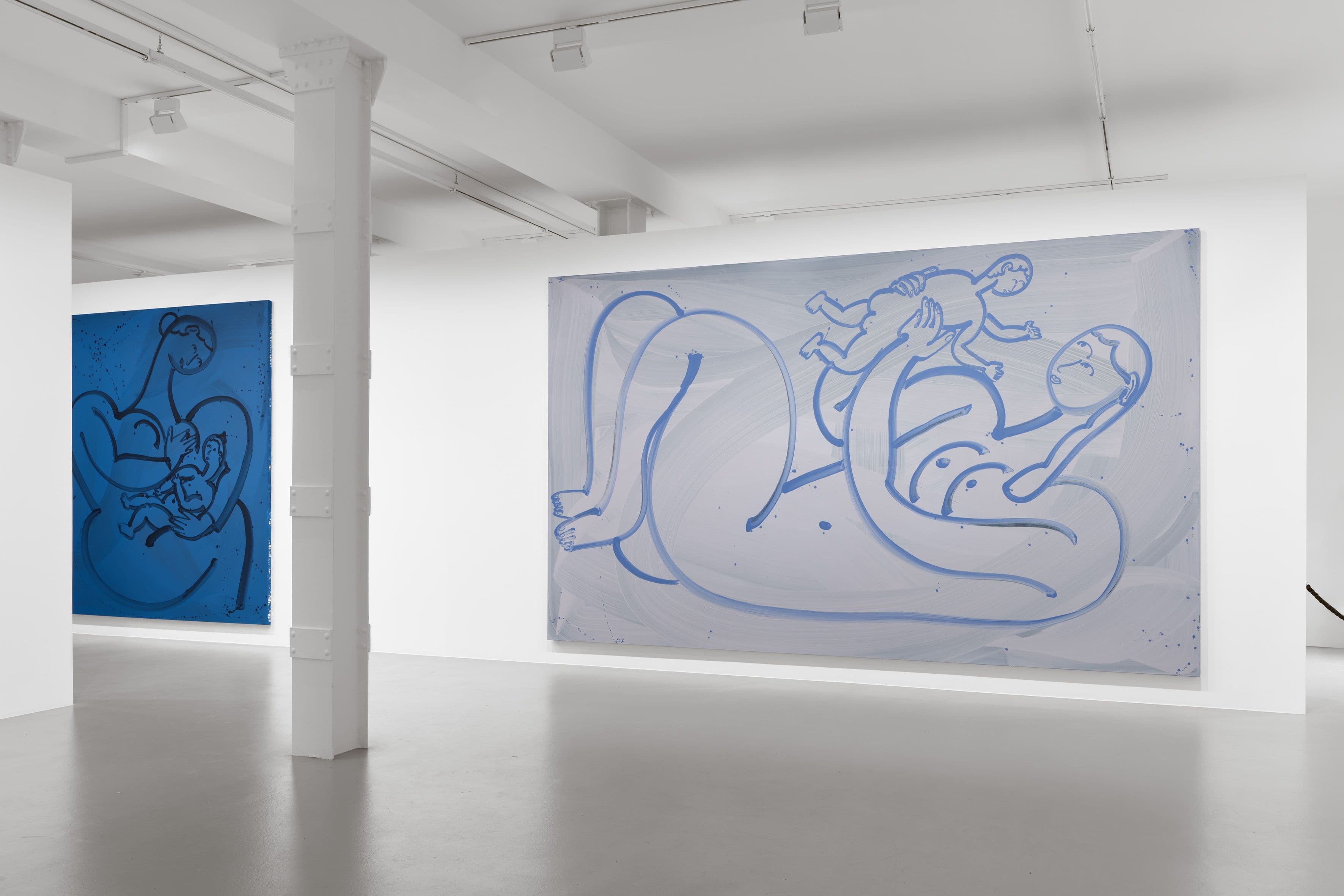
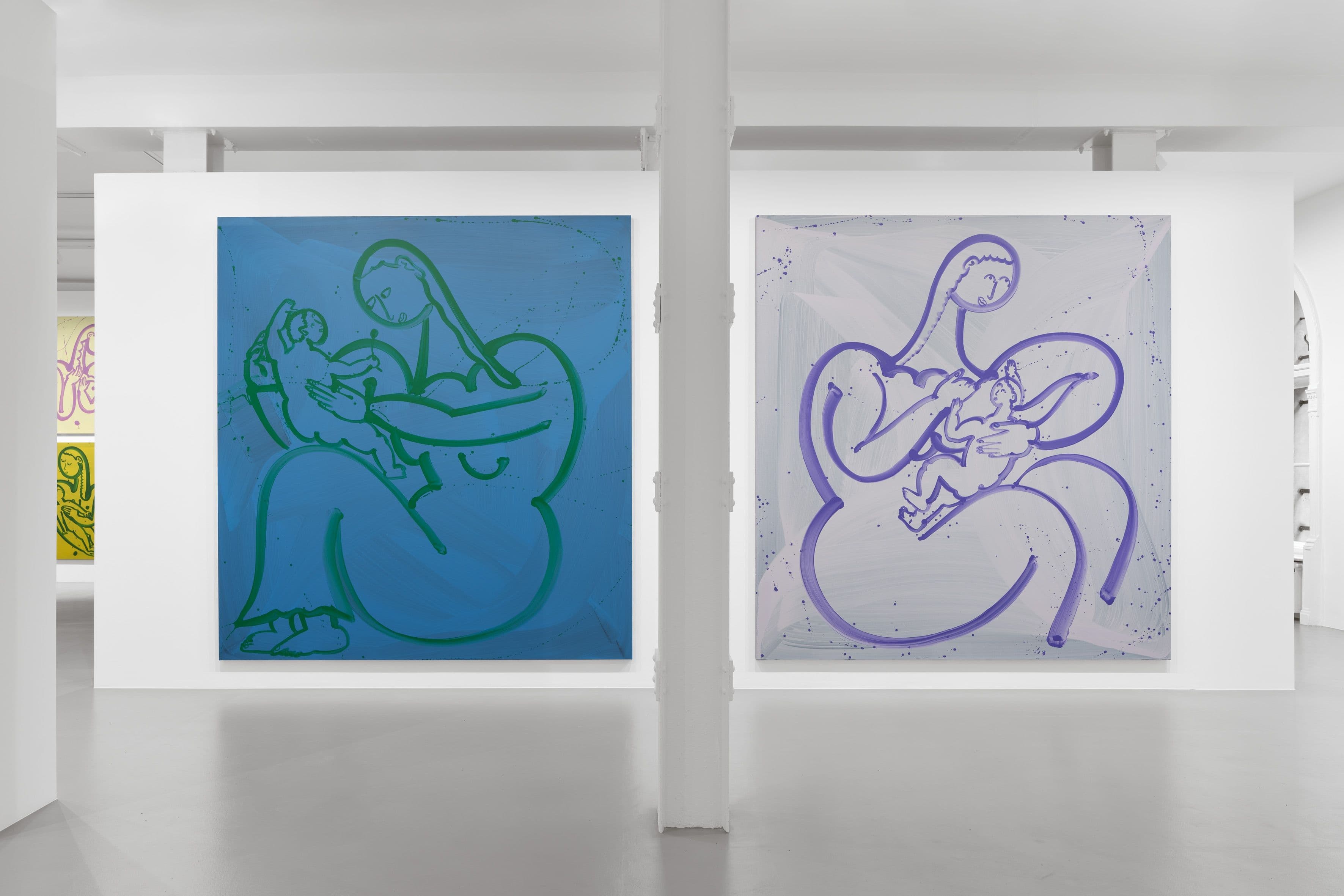
Max HetzlerGalerie Max Hetzler is pleased to present Mothers, an exhibition of new paintings by Grace Weaver. This marks the artist's fifth solo presentation with the gallery, and her first in one of our Berlin spaces. In her latest series, Grace Weaver turns to archetypal motifs, including the mother and child, and the female nude. For Weaver, the body is not just a subject but a site - a stage on which line is choreographed in lyrical gestures, and through which emotion comes to the fore. Despite their monumental scale, Weaver's new works disclose humble subjects and tender sentiments. Across a series of large square-format canvases, Weaver's mothers pose in enveloping embraces: swaying, kneeling, or cradling children in their laps. Alongside these, several paintings feature solitary female figures in bowing stances reminiscent of Eve or Aphrodite, attempting to shield their nude bodies from the viewer's gaze. By contrast, the mother and child paintings propose a triangularity of gazes: at times either mother or child stares outward, at others they remain locked in one another's gaze. Elongated, curving necks recall the postures of Weaver's Flowers series (2024). As in this earlier body of work, Weaver's central motif is recognisable, and yet drifts towards abstraction; limbs taper into space, and abbreviated lines merely suggest garments or contours. Whether in flowers or figures, Weaver's primary subject seems to be posture itself, used as a means to convey subtleties of mood. Weaver paints on the floor, using an all-over fresco-like process. Over a base of black, she applies watery matte washes of paint with over-sized brushes. Working wet-on-wet, the artist paints 'in the round', moving around the canvas as though executing a dance of deliberate, curving gestures. The saturated canvas becomes a responsive ground, absorbing each mark and resisting revision. Lines rhyme and harmonise. Surrounding the figure's arcing outlines, haptic drips from Weaver's overloaded brush register her movements, bringing the immediacy of drawing into painting. Weaver prepares for each painting in successive ballpoint pen sketches, reducing figures to a few essential lines, so that the final act of painting proceeds in a determined choreography. The painting's palettes - inky cobalts, pale pastels and papery cream tones - recall the materials of drawing. Weaver's investigation of the mother and child motif began in sketches of a diminutive fifth-century Boeotian terracotta figurine of a woman nursing a young child, inspired by its formal abstraction and emotive reality. As she developed the series, references multiplied, with subsequent works drawing from Cranach's Madonnas, with their crimped coiffure and rubbery anatomy. Throughout, Weaver cites poses from Cypriot sandstone figurines, Netherlandish altarpieces, Egyptian statuettes of Isis and Horus, Orthodox Marian icons, and countless ancient Greek 'kourotrophoi.' Despite the breadth of influences, in their immediacy, Weaver's paintings step outside of the specificities of time, space and allegory. Unadorned and close, they speak not of divine authority but of physical intimacy, vulnerability and a rare looseness of posture and presence. Grace Weaver (b. 1989, Vermont) lives and works between New York and Berlin. Solo exhibitions of the artist's work have been held in international institutions including Yuz Museum, Shanghai; Neues Museum, Nuremberg (both 2023); Oldenburger Kunstverein; Kunstpalais Erlangen (both 2019); Kunstverein Reutlingen (2017); and Dakshina Chitra, Chennai (2012). Weaver's work has also been exhibited in group exhibitions including Braunsfelder, Cologne; Wilhelm Hallen, Berlin; Miettinen Collection, Berlin; Neue Galerie, Gladbeck; Villa Merkel, Esslingen (all 2022); Kunstmuseum Ravensburg (2021); Galerie Wedding, Berlin (2018); ARoS Aarhus Art Museum (2016); University of Georgia (2015); Burlington City Arts (2013); Flynn Center for the Performing Arts, Burlington (2012); Colburn Gallery, University of Vermont, Burlington (2011); and Newcastle University, Newcastle upon Tyne (2010).