
Tribeca, New York
Group Exhibition
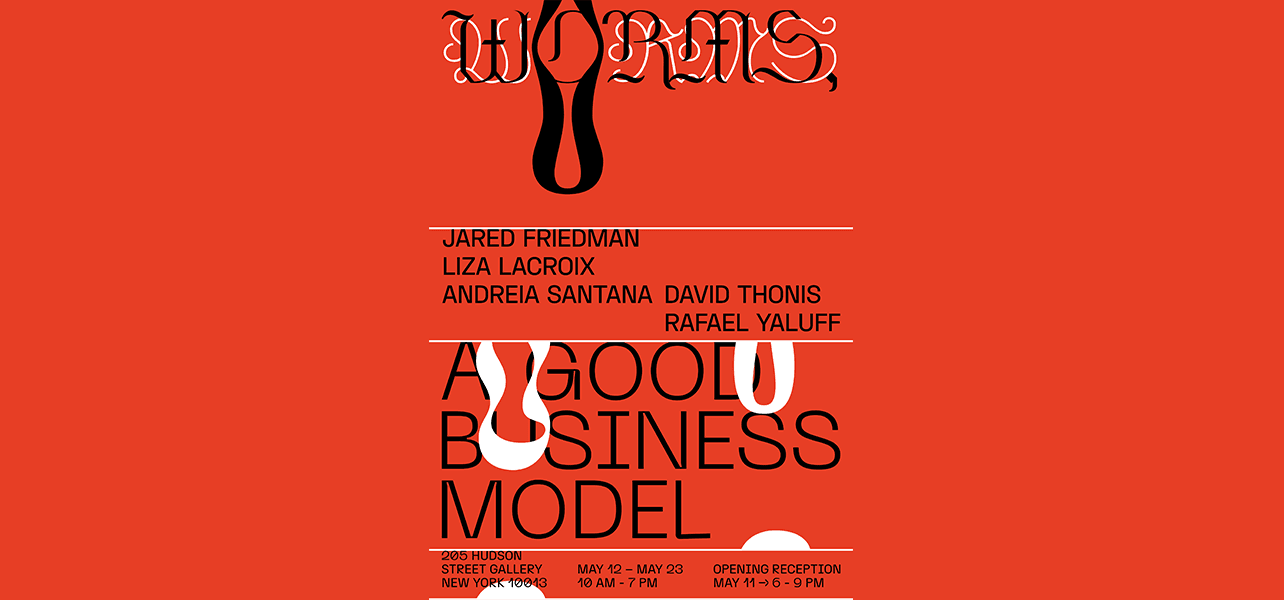
Worms: A Good Business Model
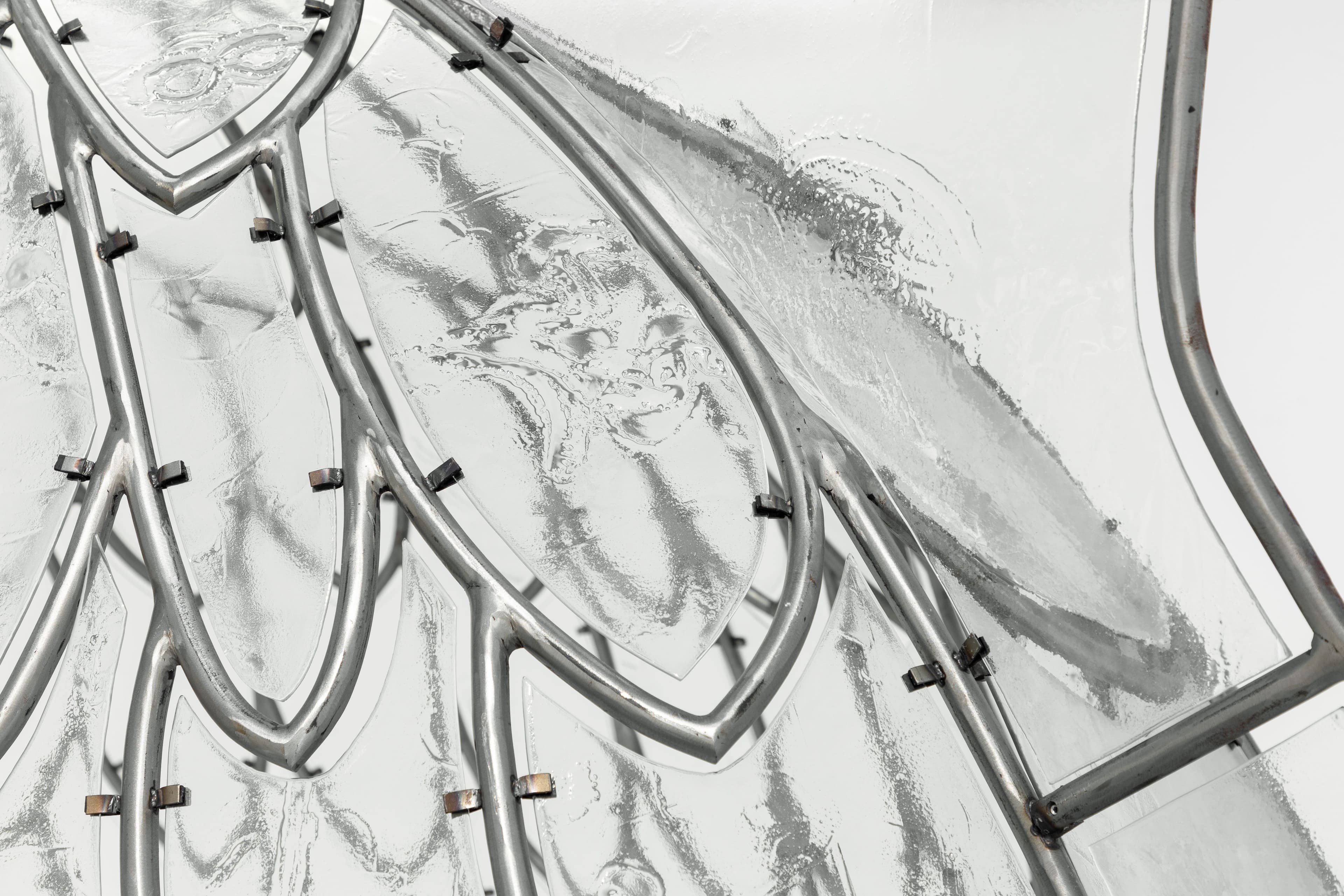
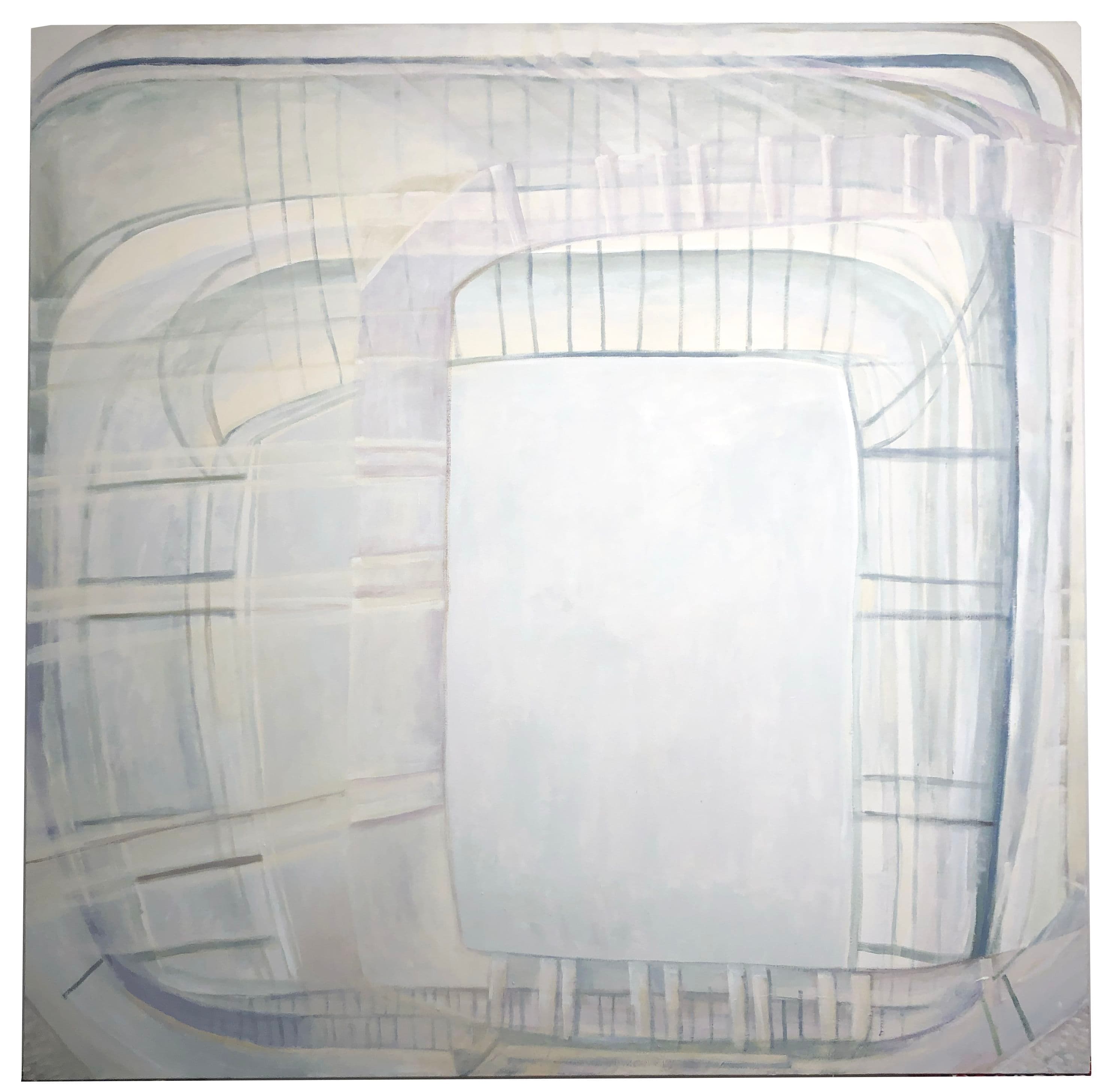
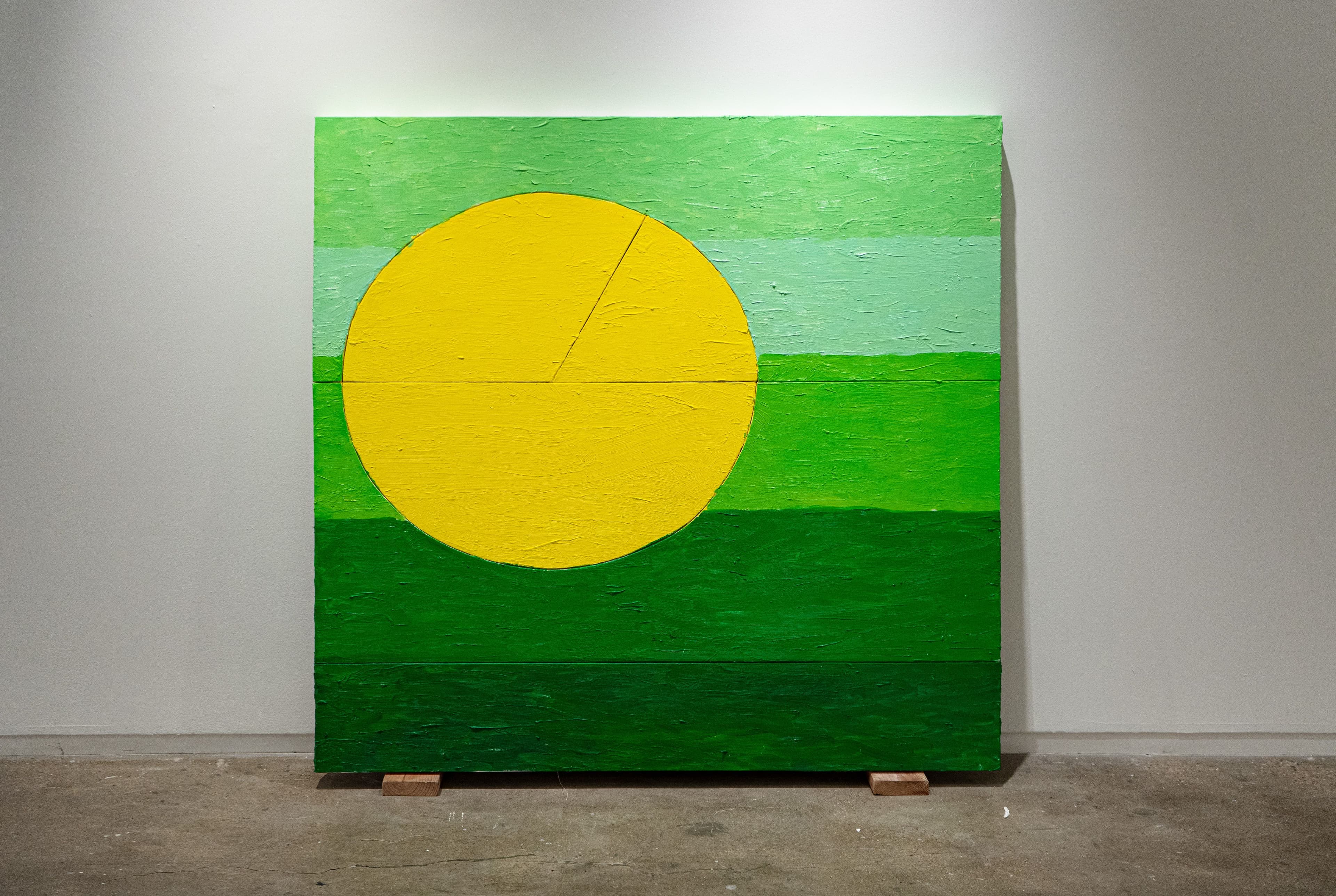
Hudson GalleryJared Friedman Liza Lacroix Andreia Santana David Thonis Rafael Yaluff Hunter College’s MFA program is pleased to present Worms: A Good Business Model, a thesis exhibition for artists Jared Friedman (b. 1988, New York, New York), Liza Lacroix (b. 1988, Montreal, Canada), Andreia Santana (b. 1991, Lisbon, Portugal), David Thonis (b. 1986, Boston, Massachusetts), and Rafael Yaluff (b. 1983, Santiago, Chile). The artists in this thesis exhibition all deeply consider how shapes and spaces are built and divided; the difference between indoor and outdoor life; and the manner in which the human body is a reaction or catalyst. It may seem ironic, then, that these five artists chose the nonsensical title, Worms: A Good Business Model, to encapsulate their critical capstones, but let us reevaluate: let us rethink the earthworm. Figures like Charles Darwin and Bruno Latour have studied the worm in its unparalleled contributions to the environment, and Jane Bennett has gone on to tackle worms as a political non-human force that contributes to ecosystems and aesthetics. In her 2010 book, Vibrant Matter: A Political Ecology of Things, Bennett ponders: “Even if a convincing case is made for worms as active members of, say, the ecosystem of a rainforest, can worms be considered members of a public?” [1] In this exhibition, the artists consider the boundaries of the public. And further, how worms can provide a model for productivity. The entrance to the gallery at 205 Hudson Street takes us from the street, the public, into a glass foyer. This translucent room is an apt prelude to Worms: A Good Business Model in that it is translucent, revealing, disorienting, and bridges the gap between interior and exterior. This entryway is the site of Liza Lacroix’s sound installation, Van Gogh Theme (Just Piano) lll Tatiana Lisovskaya November Max Richter Mr. Turner Gary Yershon Camille et Rodin Gabriel Yared History of Music Jorge Arriagada End Credits Danny Elfman ... I Love You More Than My Eyes Simon Fisher Turner Amen, And with thy spirit USSR Ministry of Culture Chamber Choir Preparations Jon Ekstrand NY Ryuichi Sakamoto, a compilation of instrumental music featured in bio-pics of canonical visual artists. This genre of film seeks to tell the story of artistic genius, adding to the mythos of the artist. Lacroix’s other works in the exhibition similarly expose invisible truths, rendering her work raw, intimate, vulnerable, and still darkly humorous. In her other audio work, Funeral song 1 to 6, she belts the song “Let it Loose” by The Rolling Stones, airing her pain through the tenor of her voice. Her ability to reveal her emotions is empowering because she submits to her own vulnerability. To counteract this vulnerability she acts with coy dominance, exposing the grotesque in recognize and respond to fear and pain (empathy) and However, creative fields can be enormously successful. Lacroix plays with the simultaneous feelings of helplessness and perseverance in the presence of emotional trauma. In a method of Speculative Design, David Thonis inserts biomorphic characteristics into his structures to analyze the body’s relationship to private and public space. Thonis’s sculptures sit and stand like buildings – fixtures of the outdoor environment – but their elegant craft renders them as objects at home indoors. Each work is anthropomorphized yet mechanized via an interior motor. Amorphous white discs spin on A Design for Lighting and Pillow Fort, appearing like battery-powered toys, and in his “houses” vibrating motors emit siren-like frequencies. These visual and sonic constants pump life into the sculptures yet accentuate their animacy as machines. Jared Friedman intimately analyzes the contours of pedestrian objects in a manner that decontextualizes them. Exhibited are paintings of concrete breeze blocks and plastic food containers, which are linked in their mundane reproducibility and spatial affordances. In his series of rosette-style blocks, Roses (Red), Roses (Blue), and Roses (White), Friedman paints the negative space in and around each petal, which eliminates the light and air that would normally flow through these voids. Similarly disorienting are the take-out containers magnified on Friedman’s canvases, Container (1- 4), which absurdly appear more as architectural renderings than commonplace refuse. Rafael Yaluff’s two series of paintings are made from unconventionally shaped stretchers, denying the normative parameters of paintings while playing games with geometry. Instead of building rectangular stretcher bars to hold his canvases, Yaluff has constructed stretchers to define the shapes he sees within his works. In his sunset series he has divided an image of a sunset into five sections, each section is its own physical component placed within the larger painting. Each section is like an individual piece or fraction of the whole. Below the sunsets are two figures, which are similarly constructed out of Yaluff’s stretchers. One is rendered a solid since it is stretched with canvas, but the other remains only an outline of a person, suggesting the former is fulfilled in his wholeness, while the latter is not. The angular figures are what the artist calls hieroglyphs: both language and image. Andreia Santana utilizes iron and glass to create a series of sculptures that are simultaneously bodily and industrial, fragile and tough. Each work titled Roof of Mouth features iron bars welded into the rectangular outlines of construction beams and hardware. These geometric panels function like window frames that divide panes of glass. Santana etches each piece of glass before it enters the kiln, creating an abstract design on its surface that evokes a contemporary stained-glass window. The use of glass and iron accentuates the difference between the fragility of life with the harsh parameters of exterior structure. The iron scaffolding structures are elegant systems of protection. Scaffolding protects the body of a building while it is under construction while protecting the bodies of the public from falling debris. Santana’s thin ironwork mirrors how skeletons provide the body with form and structure, while protecting the body’s precious interior organs. Our friend, the worm lacks a skeleton; but like us humans, it has an epidermis, the anatomical structure John Dewey characterized in Art as Experience (1934) as only “the most superficial... indication of where an organism ends and its environment begins.” [2] The works gathered in Worms: A Good Business Model offer ways of thinking through this contradictorily fleshy and rigid threshold between interior and exterior, public and private, self and other. —Leah Newman 1 - Jane Bennett, Vibrant Matter: A Political Ecology of Things (Durham: Duke University Press, 2010), 94. 2 - John Dewey, Art as Experience (New York: Minton, Balch, 1934), 59.