
Marais, Paris
Constantin Brancusi
Photographs
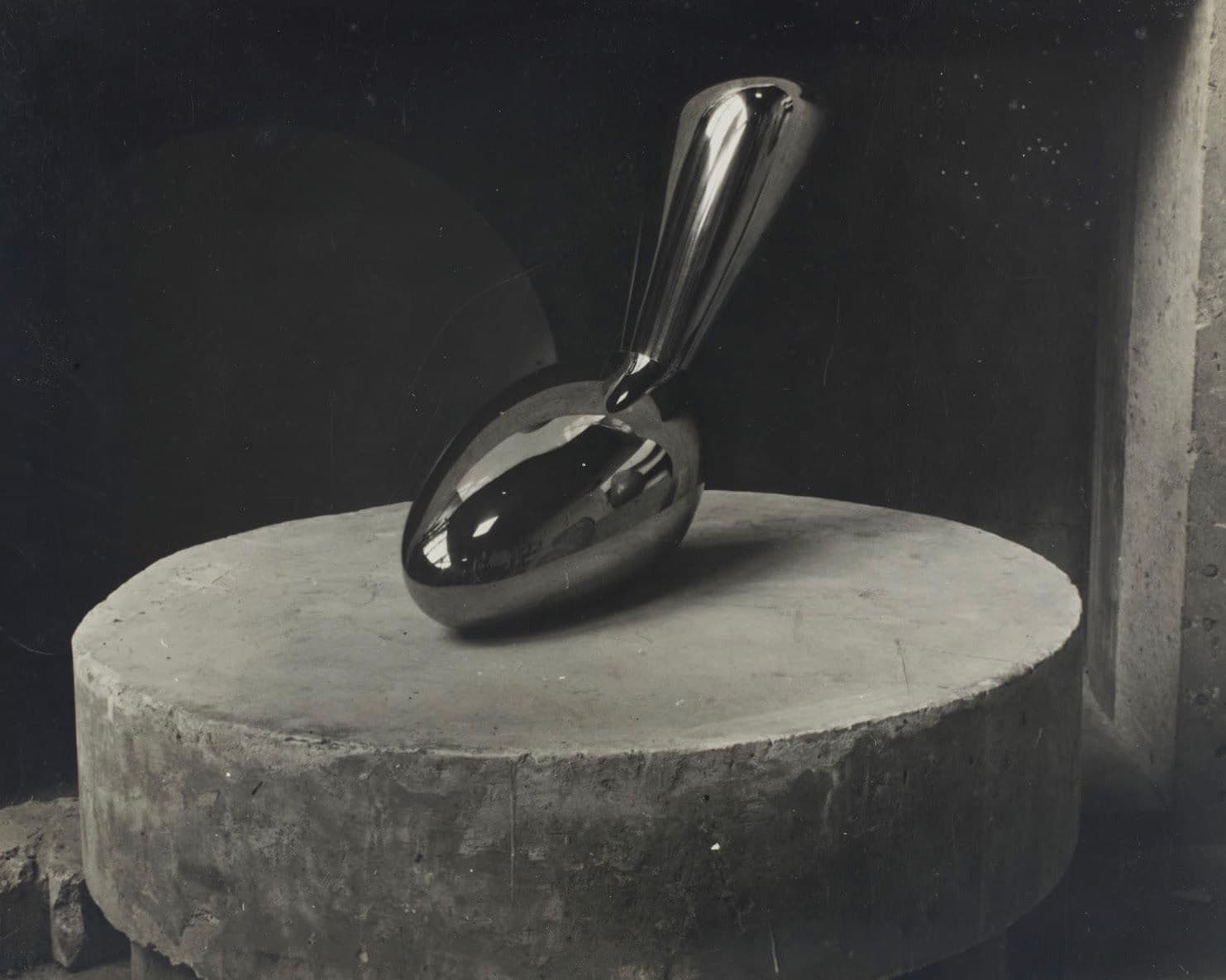
Thaddaeus Ropac[Scroll down for French version / Veuillez trouver ci-dessous la version française] "Why write about my sculptures? Why not simply show their photographs?" —Constantin Brancusi Following the major retrospective dedicated to Constantin Brancusi (1876–1957) at the Centre Pompidou, Paris last year, Thaddaeus Ropac Paris Marais presents a selection of the Romanian artist’s photographic work, spanning 1906 to 1938. Brancusi’s photography was an integral part of his artistic practice and evolved alongside his sculpture from early in his career. In 1956, he bequeathed his entire studio to the French State, including a number of his photographs, which were notably the subject of a focused exhibition running alongside the artist’s first retrospective in France, also held at the Centre Pompidou in 1995. Crystallising his artistic vision, photography was essential to Brancusi’s practice. The artist began experimenting with the medium following his arrival in Paris in 1904, whereupon he immersed himself in the contemporaneous photographic and cinematographic avant-gardes. He befriended numerous photographers including Edward Steichen, Alfred Stieglitz and Man Ray, who helped him set up a dark room in his studio. Brancusi notably accompanied Steichen to take nocturnal shots of Rodin’s Balzac sculpture – a formative event that fostered his experimental approach to photography. In 1917, Brancusi met John Quinn, who would become one of his most prominent collectors and, crucially, acquired most of his sculptures from photographs. This relationship initiated a shift in Brancusi’s photographic practice from a spontaneous to a more systematic creative endeavour, and he only allowed the reproduction and diffusion of his own photographs of his sculptural work during his lifetime. As curator Elizabeth A. Brown writes, Brancusi believed that solely those shots ‘could convey the artist’s emotional exchange with his creation.’ Brancusi used photography as a potent documentary tool that supported his sculpting practice. As such, the exhibition offers an invaluable insight into the remarkable development of his oeuvre, from a 1906 photograph of a naturalist bronze bust of a child – a central motif that would evince his radical purification of sculptural form – which he created whilst studying at the Beaux-Arts de Paris to outdoor shots of his monumental sculptural ensemble at Târgu Jiu in Romania (1937–38), which would become a UNESCO world heritage site. Some of his sculptures survive only as photographic likenesses, as epitomised by Woman Looking into a Mirror (1909/14), on view in the exhibition, which Brancusi would radically rework into the eminent sculpture Princesse X (1915–16; Centre Pompidou, Paris), his phallic portrait of psychoanalyst Marie Bonaparte. Photography allowed Brancusi to sculpt light, capturing the arresting interplay of reflections on the surface of his sculptures, particularly on his signature polished bronze works exemplified by Golden Bird (1919). As Man Ray wrote in his autobiography, ‘[Brancusi’s photographs] were out of focus, over or underexposed, scratched and spotty. This, he said, was how his work should be reproduced. Perhaps he was right – one of his golden birds had been caught with the sunrays striking it so that a sort of aurora radiated from it, giving the work an explosive character.’ Subverting photographic conventions, Brancusi generated bursts of light that lend his work a metamorphic quality and, as art critic Michel Gauthier sets forth, ‘allow the sculpture to escape its strict contours, to live in space beyond itself.’ Photography also played a pivotal role in Brancusi’s presentation of his sculptures, which was of utmost importance to the artist. Acutely aware of the spatiality of his sculptures as well as the synergies between them, he relentlessly staged his works in his atelier on impasse Ronsin in Paris, reconfiguring them into various ‘mobile groups’ that he immortalized in his photographs. In one work on view, Brancusi stages two versions of Mlle Pogany II in his studio – one in bronze and the other in marble – that bow to each other atop their sculptural pedestals, as if engaging in a reverent dialogue. The photographs on display turn the viewer into a voyeur in the environment of Brancusi’s workplace which becomes ‘a living space for his sculptures,’ as Brown writes. ‘Revisiting the myth of Pygmalion, the sculptor transforms his studio into a sanctified space, a sculptural microcosm.’ Brancusi’s photographs not only played a pivotal role in his sculptural oeuvre and its staging, but also constitute works of art per se. As Brown posits, ‘These photographs are true portraits of works of art. Just like the most striking portraits, they reveal the different facets of the sculpture’s personality and reveal its particular sensibility.’ This is evidenced by a photograph of Leda (1920; The Art Institute of Chicago, IL), in which Brancusi masterfully captures the sensuousness of the marble’s immaculate texture and seemingly transfiguring forms, breathing life into the stone through his camera. Each photograph distils the ineffable essence of its subject, down to Brancusi himself in the exhibited self-portraits. Constantin Brancusi is considered as one of the greatest sculptors of the 20th century. He was born in Pestisani, Romania in 1876. After attending the School of Arts and Crafts in Craiova (1894–1898) and the National School of Fine Arts in Bucharest (1898–1902), Brancusi left Romania in 1904, travelling across Europe before settling in Paris, where he pursued his studies at the École des beaux- arts until 1907. Brancusi’s work was noticed by Auguste Rodin at the Salon d’Automne of 1906, and the acclaimed sculptor offered him work in his studio. Their conception of sculpture would diverge; while Rodin modelled his sculptures in plaster or clay, seeking to impose form onto his material, Brancusi carved his works directly in wood or stone, striving to reveal ‘the cosmic essence of matter.’ In 1913, five of Brancusi’s sculptures were displayed in the Armory Show in New York and, the following year, Edward Steichen and Alfred Stieglitz organised his first solo show at the Photo-Secession Gallery in New York. In 1920, Brancusi’s suggestive sculpture Princesse X was refused from the Salon des indépendants, where his work L’Oiseau d’or took pride of place nonetheless. In 1926, his Colonne sans fin was installed in situ in Steichen’s garden in Voulangis. In 1928, Brancusi won a landmark case against American customs authorities, who had denied the status of L’Oiseau dans l’espace as a work of art – a verdict that fundamentally redefined the categories of sculpture and art more broadly. In 1935, he was commissioned to create the monumental sculptural ensemble at Târgu Jiu in Romania (1937–38), which is inscribed as a UNESCO world heritage site. Brancusi died in Paris in 1957, bequeathing his studio and the entirety of its contents to the French state. Brancusi has been the subject of numerous monographic exhibitions, notably at the Centre Pompidou, Paris (1995, 2011, 2024); Tate Modern, London (2004); and Solomon R. Guggenheim Museum, New York (2004). Exhibitions dedicated to his photographic work have been held at the Centre Pompidou in 1995 and 2011 and at the National Museum of Art of Romania in Bucharest in 2006. Brancusi’s work belongs to prestigious institutional collections such as The Museum of Modern Art, New York; The Metropolitan Museum of Art, New York; Solomon R. Guggenheim Museum, New York; Art Institute of Chicago, IL; Philadelphia Museum of Art, PA; Tate, London; and Centre Pompidou, Paris, which reconstructed Brancusi’s studio to house its impressive collection including more than 1600 negatives and original photographic prints by the artist. ***** "Pourquoi écrire sur mes sculptures ? Pourquoi ne pas tout simplement montrer leurs photos ?" —Constantin Brancusi Suivant la rétrospective majeure consacrée à Constantin Brancusi (1876–1957) au Centre Pompidou à Paris l’année dernière, Thaddaeus Ropac Paris Marais présente une sélection d’œuvres photographiques de l’artiste roumain, réalisées entre 1906 et 1938. La photographie faisait partie intégrante de la pratique artistique de Brancusi et a évolué parallèlement à sa sculpture dès le début de sa carrière. En 1956, il a légué à l’État français l’ensemble de son atelier, y compris de nombreuses photographies, qui ont notamment fait l’objet d’une exposition en parallèle à sa première rétrospective en France, également organisée au Centre Pompidou en 1995. Cristallisant sa vision artistique, la photographie était essentielle à la pratique de Brancusi. Il commence à expérimenter ce médium après son arrivée à Paris en 1904, où il se plonge dans les avant-gardes photographiques et cinématographiques contemporaines. Brancusi se lie d’amitié avec de nombreux photographes, dont Edward Steichen, Alfred Stieglitz et Man Ray, qui l’aide à installer une chambre noire dans son atelier. Brancusi accompagne notamment Steichen prendre des clichés nocturnes de la sculpture Balzac de Rodin – un événement formateur qui nourrit son approche expérimentale de la photographie. En 1917, Brancusi rencontre John Quinn, qui devient l’un de ses plus éminents collectionneurs et acquiert la plupart de ses sculptures par le biais de photographies. Cette relation marque un véritable tournant dans la pratique photographique de Brancusi, qui passe d’une démarche créative spontanée à une entreprise plus systématique. De son vivant, il n’autorise que la reproduction et la diffusion de ses propres photographies de son œuvre sculpturale. Comme l’écrit la conservatrice Elizabeth A. Brown, Brancusi estimait que seules ces photographies « pouvaient transmettre l’échange émotionnel de l’artiste avec sa création ». Brancusi emploie la photographie comme un puissant outil documentaire qui soutient sa pratique sculpturale. L’exposition offre ainsi un aperçu inestimable du développement de son œuvre, depuis une photographie de 1906 d’un buste en bronze naturaliste d’un enfant – un motif central qui élucide sa purification radicale de la forme – qu’il a créé lors de ses études aux Beaux-Arts de Paris, jusqu’aux clichés en extérieur de son ensemble sculptural monumental à Târgu Jiu en Roumanie (1937–38), qui sera classé au patrimoine mondial de l’UNESCO. Certaines de ses sculptures ne subsistent que sous forme de reproduction photographique, comme en témoigne Woman Looking into a Mirror (1909/14), présentée dans l’exposition, que Brancusi remanie radicalement pour créer la sculpture Princesse X (1915–16 ; Centre Pompidou, Paris), son célèbre portrait phallique de la psychanalyste Marie Bonaparte. La photographie permet à Brancusi de sculpter la lumière et ainsi saisir le jeu captivant de reflets à la surface de ses sculptures, en particulier sur ses œuvres emblématiques en bronze poli, telles que Golden Bird (1919). Comme l’écrit Man Ray dans son autobiographie, « [les photographies de Brancusi] étaient floues, sur-ou sous-exposées, rayées et tachées. Voilà, dit-il, comme il fallait reproduire ses œuvres. Il avait peut-être raison : un de ses oiseaux dorés avait été pris sous un rayon de soleil de sorte qu’il irradiait comme s’il avait une auréole, ce qui donnait à cette œuvre un caractère explosif. » Bouleversant les conventions photographiques, Brancusi génère des éclats de lumière qui confèrent à son œuvre une qualité métamorphique et, comme l’explique le critique d’art Michel Gauthier, « permettent à la sculpture d’échapper à ses contours stricts, de vivre dans l’espace au-delà d’elle-même ». La photographie joue également un rôle central dans la présentation de ses sculptures, qui revêt une importance capitale pour Brancusi. Conscient de la spatialité de ses sculptures ainsi que des synergies entre elles, il met incessamment en scène ses œuvres dans son atelier Impasse Ronsin, les reconfigurant en divers « groupes mobiles » qu’il immortalise dans ses photographies. Dans l’une des œuvres exposées, Brancusi met en scène deux versions de Mlle Pogany II dans son atelier – l’une en bronze et l’autre en marbre – qui s’inclinent l’une vers l’autre du sommet de leurs piédestaux sculpturaux, comme si elles communiquaient révérencieusement. Les photographies présentées transforment les spectateurs en de véritables voyeurs dans l’environnement de travail de Brancusi, qui devient « un espace de vie pour ses sculptures, » comme l’écrit Brown. « Revisitant le mythe de Pygmalion, le sculpteur transforme son studio en un espace sanctifié, un microcosme sculptural. » Les photographies de Brancusi ont non seulement joué un rôle clé dans son œuvre sculptée et sa mise en scène, mais constituent également des œuvres d’art à part entière. Comme l’affirme Brown, « ces photographies sont de vrais portraits d’œuvres d’art. À l’instar des portraits les plus saisissants, elles révèlent les différentes facettes de la personnalité de la sculpture et dévoilent sa sensibilité particulière ». En atteste une photographie de Leda (1920 ; The Art Institute of Chicago), dans laquelle Brancusi capture magistralement la sensualité de la texture immaculée du marbre ainsi que ses formes qui semblent se transfigurer, insufflant la vie à la pierre à travers son appareil photo. Chaque photographie distille l’essence ineffable de son sujet, jusqu’à Brancusi lui-même dans les autoportraits exposés. Constantin Brancusi est considéré comme l’un des sculpteurs les plus illustres du xxe siècle. Il est né à Pestisani, en Roumanie, en 1871. Après avoir fréquenté l’École des arts et métiers de Craiova (1894–1898) et l’École nationale des beaux-arts de Bucarest (1898–1902), Brancusi quitte son pays natal en 1904 et parcourt l’Europe avant de s’installer à Paris, où il poursuit ses études à l’École des beaux-arts jusqu’en 1907. Son travail est remarqué par Auguste Rodin au Salon d’Automne de 1906, et le célèbre sculpteur lui propose de travailler dans son atelier. Toute-fois, leurs conceptions de la sculpture divergent ; tandis que Rodin modèle ses sculptures dans du plâtre ou de l’argile, cherchant à imposer une forme à son matériau, Brancusi sculpte ses œuvres directement dans le bois ou la pierre, s’efforçant de révéler « l’essence cosmique de la matière ». En 1913, cinq sculptures de Brancusi sont exposées à l’Armory Show à New York et, l’année suivante, Edward Steichen et Alfred Stieglitz organisent sa première exposition personnelle à la Photo-Secession Gallery de New York. En 1920, sa sculpture suggestive Princesse X est refusée au Salon des indépendants, où son œuvre L’Oiseau d’or occupe néanmoins une place d’honneur. En 1926, sa Colonne sans fin est installée in situ dans le jardin de Steichen à Voulangis. En 1928, Brancusi remporte un procès historique contre les autorités douanières américaines, qui avaient refusé de reconnaître L’Oiseau dans l’espace comme une œuvre d’art – un verdict qui a radicalement redéfini les catégories de la sculpture et de l’art de manière plus générale. En 1937–38, Brancusi crée un ensemble sculptural monumental à Târgu Jiu en Roumanie, qui est inscrit au patrimoine mondial de l’UNESCO en 2024. Brancusi meurt à Paris en 1957, léguant son atelier ainsi que tout son contenu à l’État français. Brancusi a fait l’objet de nombreuses expositions monographiques, notamment au Centre Pompidou, à Paris (1995, 2011, 2024) ; à la Tate Modern, à Londres (2004) ; et au Solomon R. Guggenheim Museum, à New York (2004). Des expositions consacrées à sa pratique photographique ont été organisées au Centre Pompidou en 1995 et en 2011, ainsi qu’au Musée national d’art de Roumanie à Bucarest en 2006. Les œuvres de Brancusi font partie de prestigieuses collections institutionnelles telles que celles du Museum of Modern Art, à New York ; du Metropolitan Museum of Art, à New York ; du Solomon R. Guggenheim Museum, à New York ; de l’Art Institute of Chicago ; du Philadelphia Museum of Art ; de la Tate, à Londres ; et du Centre Pompidou, qui a reconstitué l’atelier de Brancusi afin d’y abriter son impressionnante collection comprenant plus de 1600 négatifs et tirages photographiques originaux de l’artiste.