
Chinatown, New York
Maximilian Schubert
Nocturnes
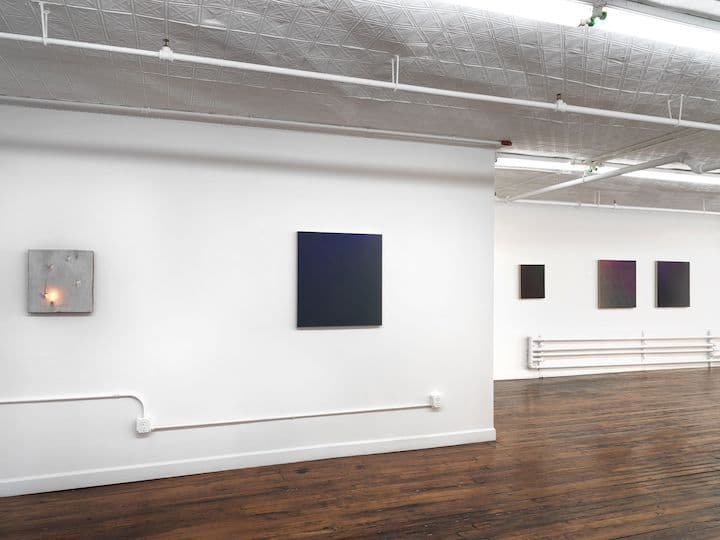
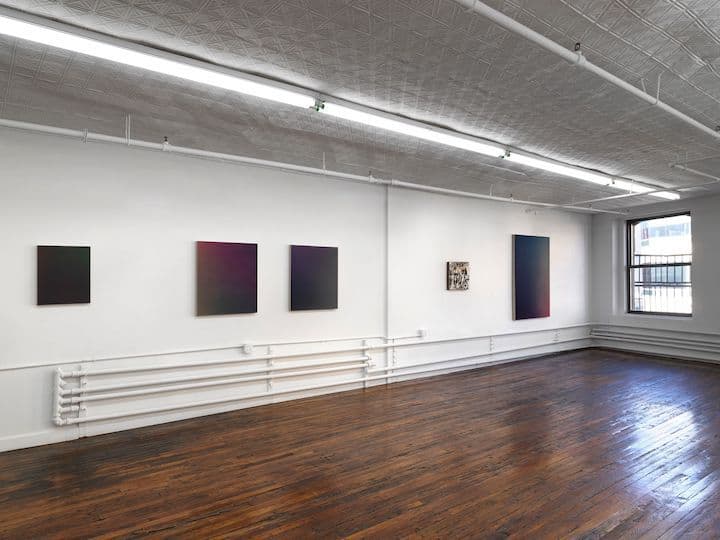
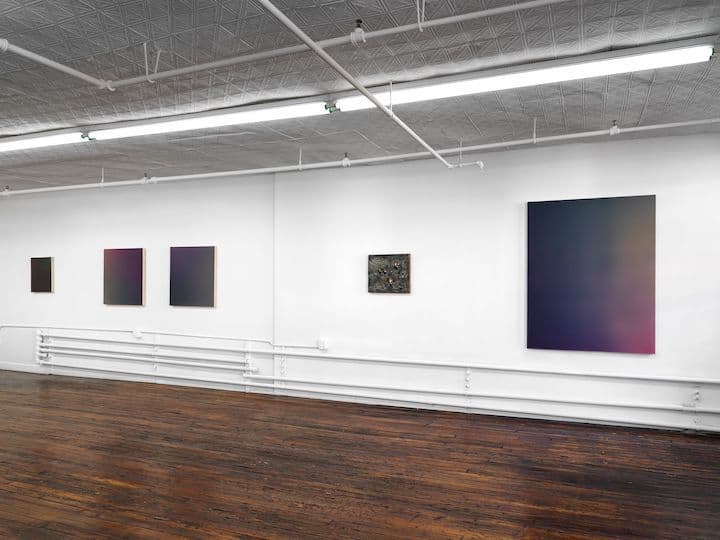
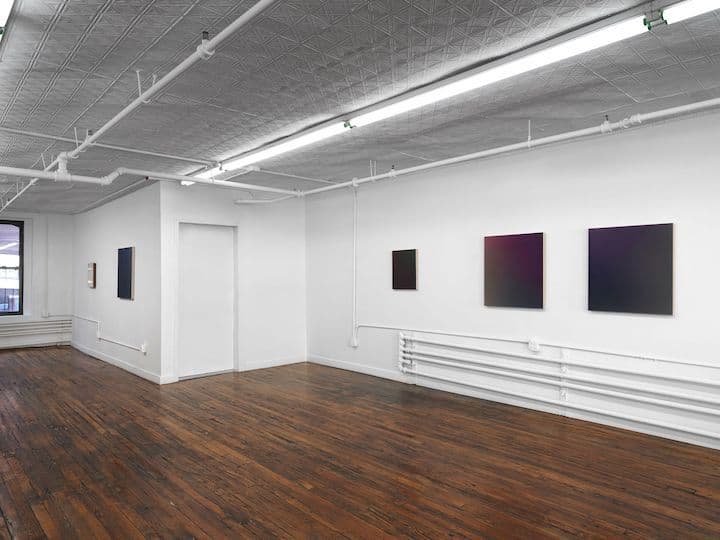
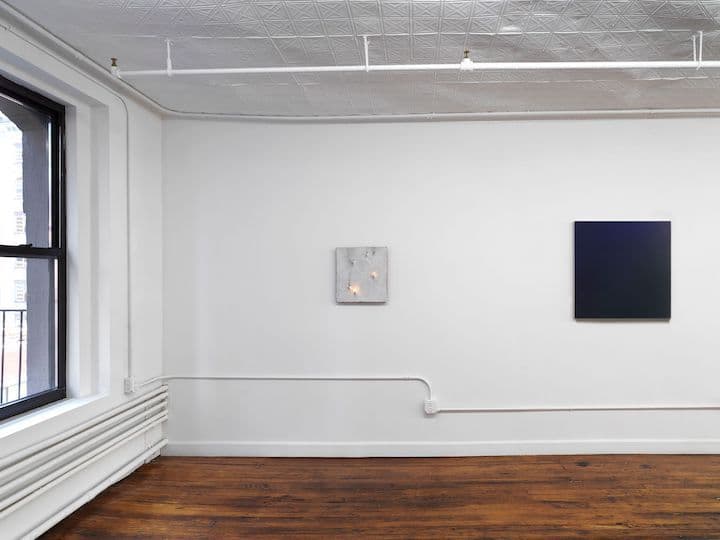
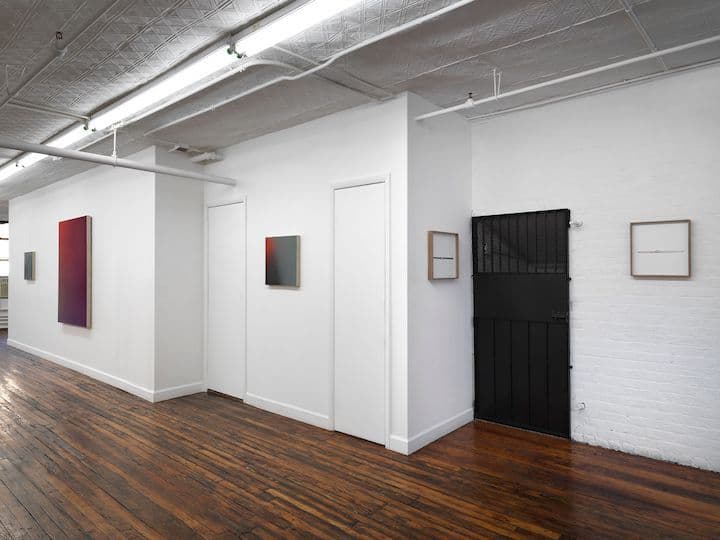
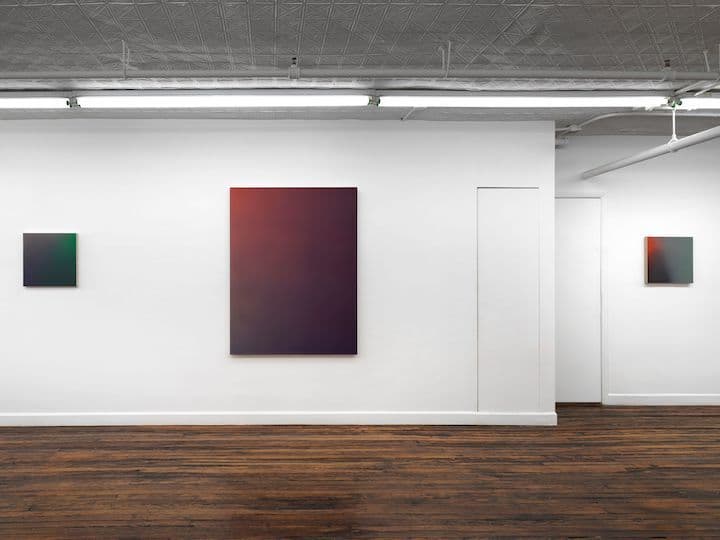
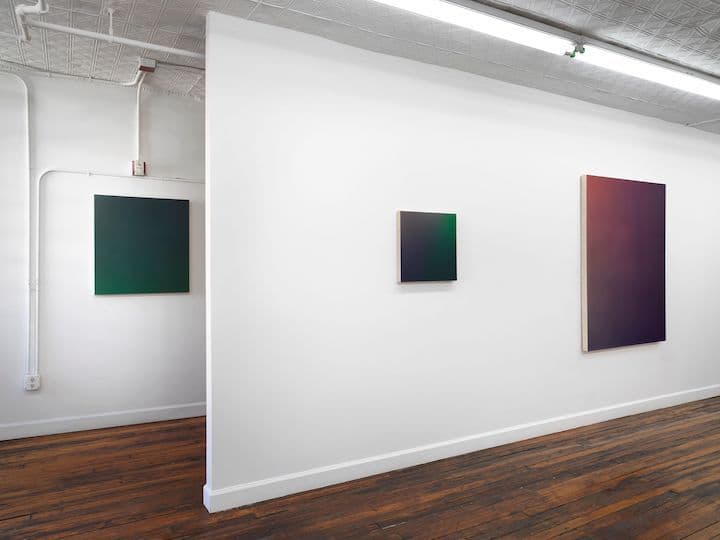
Off ParadiseOff Paradise is pleased to present Nocturnes, Maximilian Schubert’s second solo exhibition with the gallery. Straddling the boundary between painting and sculpture, Schubert’s newest body of work is cast from translucent urethane resin capturing the depth and palette of the city’s transient sky. Deep black and ultramarine coalesce with electric greys and magenta, forming atmospheric and crepuscular meditations on the night sky over New York. The Nocturnes series marks the first quasi-representational work by Schubert. The exhibition also debuts a new iteration of Stations—glazed terracotta reliefs with an open flame—a continuation of the series begun in 2017. On the subject of Schubert’s Nocturnes, Nancy Spector writes: The history of Western painting is replete with artists’ efforts to depict illumination, whether it be the divine emanations from an imagined heaven or the amber glow of a burning candle or the blazing sun of a summer day. The layering of oil paint from prepared ground to gleaming surface requires a kind of technical wizardry that, if done well, can produce a trompe l’oeil effect. The light that is rendered appears to radiate from within the image—as if captured rather than depicted. Maximillian Schubert acknowledges this tradition with his “Nocturnes,” but the trompe l’oeil is in the medium itself and not what it portrays. His luminous “canvases” are actually cast urethane resin objects—hybrids, really, of painting and sculpture that refuse to cohere into one or the other. Comprising layer upon translucent layer of poured, pigmented resin, Schubert’s “Nocturnes” evoke, with the most subtle of means, the ever-shifting palette of the sky over New York City. Conceived during the pandemic lockdown, when looking up was perhaps the only escape from the fear of death and the boredom of enforced isolation, these abstractions memorialize the light conditions of specific hours of specific days. They commemorate the ineffable moments of time’s passage when weeks and months melted into a blur of repetition and redundancy. While the palette of Schubert’s series shifts from the brilliant pinks and oranges of dawn to the dusky purples of twilight, its title—“Nocturnes”—situates the work decidedly in the evening hours, the waning of the day and the limits of visibility. Of course, references to Chopin’s compositions for solo piano—originally intended as nighttime entertainment—and Whistler’s muted color studies of crepuscular landscapes are relevant in that they share the same name. But the abstract invocations of time and place in Schubert’s “Nocturnes,” despite their ethereal beauty, tug at that sense of unease that surfaces as darkness shrouds the earth. It is in that liminal period—some call it cocktail hour—when anxiety manifests itself. In French, this time is known as being “entre chien et loup” (between a dog and a wolf) which, in literal terms, describes the creeping diminishment of light when it is no longer possible to tell the difference between a friendly animal and a dangerous one. With the radiant prism of sunset comes the promise of nightfall when the unseen world becomes that much more perceptible in all its splendor and terror. — Maximilian Schubert (b. 1983, Rockford, Illinois) received his BFA from The School of the Art Institute of Chicago in 2007. He has exhibited in the US and abroad, including Off Paradise, New York; And Now, Dallas; Lisson Gallery, London; the Power Station, Dallas, Texas; Bjorn/Gundorf, Aarhus, Denmark; Van Doren Waxter, New York; Kinman Gallery, London; Eli Ping/Frances Perkins, New York; Stephane Simoens, Knokke, Belgium; Bureau, New York; The Warehouse, Dallas; Chart, New York, and CCA, Andratx, Mallorca. Schubert lives and works in New York. Off Paradise is a gallery located on Walker Street founded by Natacha Polaert in the fall of 2019. The name evokes the old neighborhood of Five Points, at the center of which was a small, triangular park, full of hopes and grime, called Paradise Square. It also invokes Paradise Alley, the artists’ and poets’ colony on the then-godforsaken corner of Avenue A and East 11th Street that is referenced in Jack Kerouac’s novel The Subterraneans. Off Paradise is a fictional place, right off Paradise, adjacent to it, but not exactly it.