

Tribeca, New York
Marcia Schvartz
Power in Looking Back
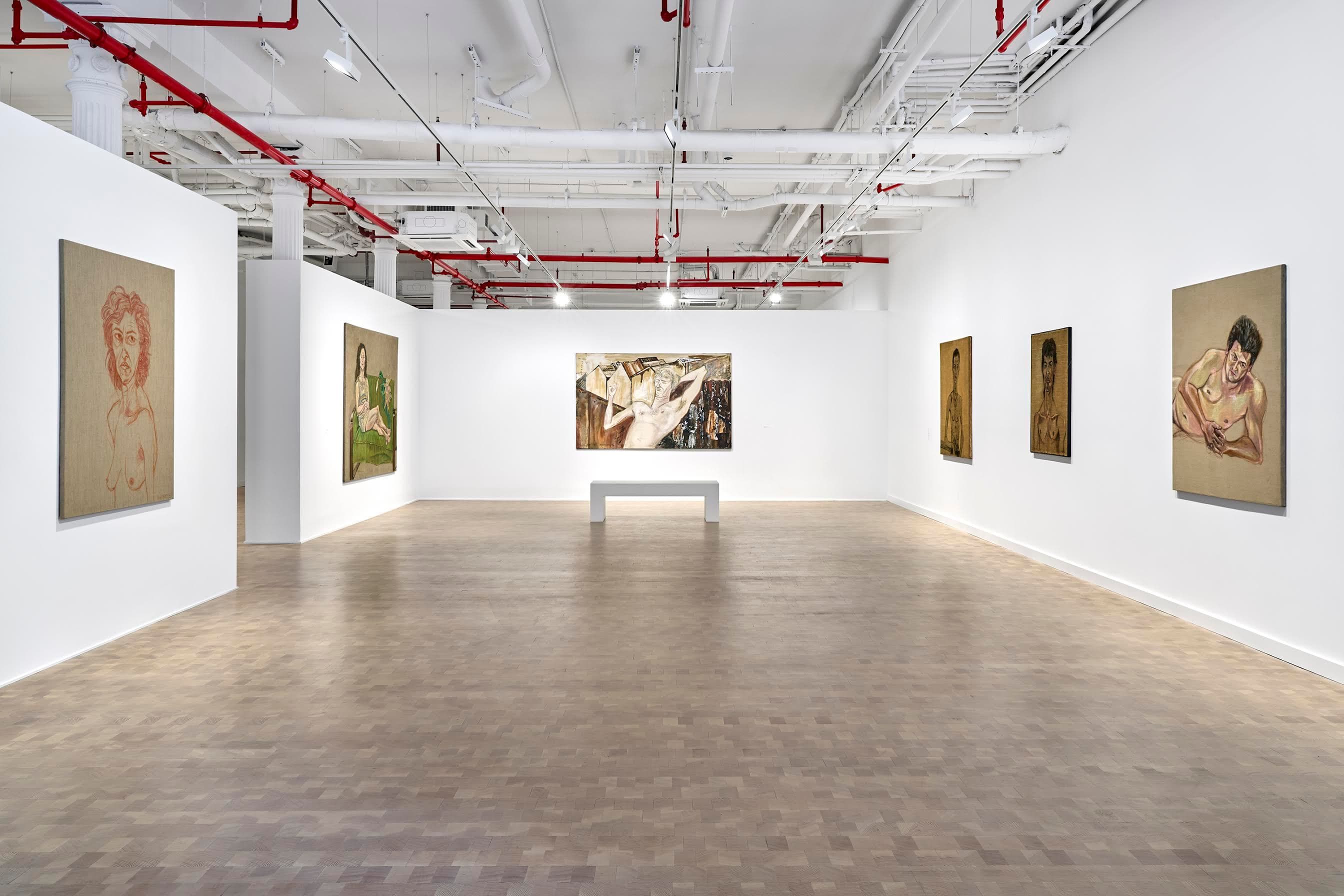
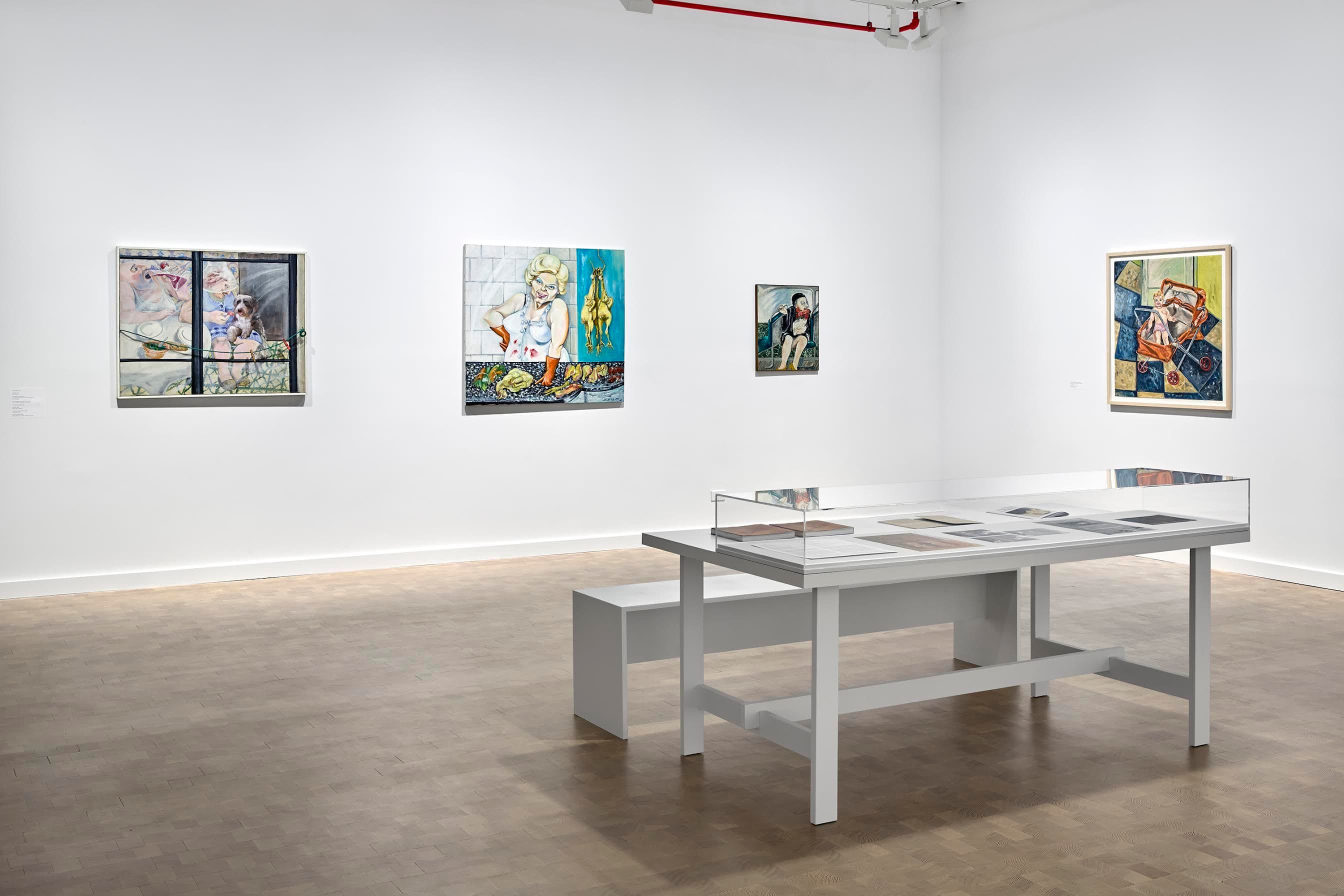
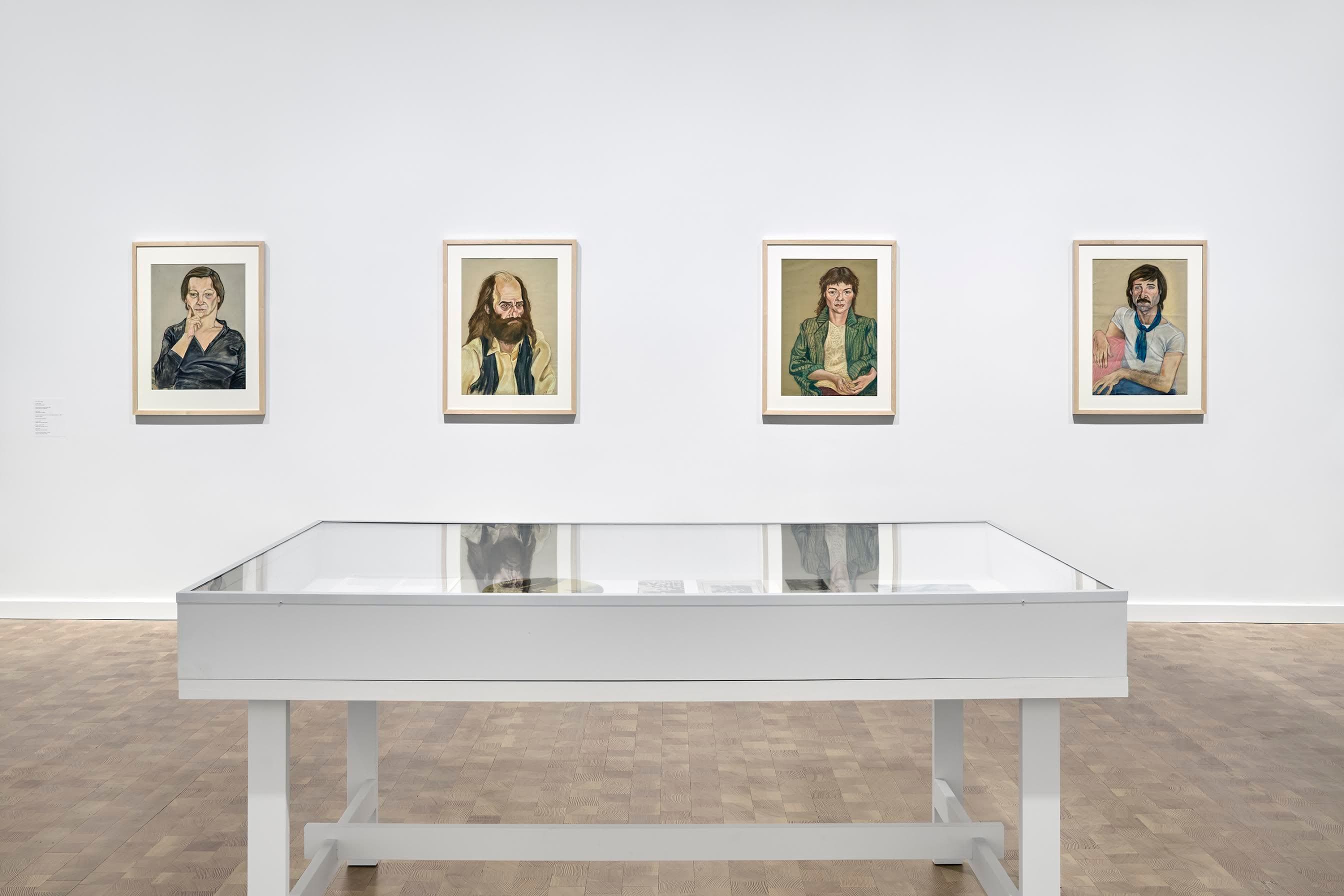
Institute for Studies on Latin American ArtThe Institute for Studies on Latin American Art (ISLAA) is pleased to present Marcia Schvartz: Power in Looking Back. This exhibition presents a focused survey of the influential Argentine artist Marcia Schvartz's portraits, across various media, from the 1970s to the 1990s. Over the past five decades, Marcia Schvartz (b. 1955) has painted people, subcultures, and social dynamics through a radically anti-patriarchal lens. Ranging from tender character studies to grotesque caricatures, her work offers an unflinching look at daily life that exposes its harsher realities, from the fragility of the aging body to the experience of exile. Bringing together paintings, pastel works on paper, archival documents, and photographs, this survey explores how Schvartz has brought visibility to individuals often pushed to the margins of society and overlooked by history. Created in the shadow of Argentina's military dictatorship (1976–83) and its return to democracy in the 1980s, the portraits on view center experiences of displacement and disenfranchisement, sensitively rendered through an expressionistic visual language. Responding to this context of political upheaval, Schvartz joined a lineage of artists who have embraced portraiture as a form of public testimony—guided by humanist principles—that foregrounds personal experience in the face of authoritarianism. The exhibition unfolds across three sections, each focusing on a distinct moment in Schvartz's artistic trajectory: her erotic portraits on burlap from the postdictatorship period, her pastel drawings made during her exile in Spain, and her vignettes of domestic workers and city life. Additional materials from the artist's archive, preserved in the ISLAA Library and Archives, illuminate her active role in the creative communities of Barcelona and Buenos Aires. For Schvartz, portraiture is a means of bearing witness and confronting dominant viewpoints—a practice of identification and remembrance in which traces of shared experience and histories of loss are brought to light. Marcia Schvartz: Power in Looking Back is curated by Olivia Casa, curator and senior manager of exhibition programs, with Clara Prat-Gay, curatorial assistant. Additional research support was provided by Agustín Díez Fischer, senior manager of research and archives. The exhibition is accompanied by an original booklet featuring an essay by María Laura Carrascal and designed by Luiza Dale. Marcia Schvartz (b. 1955, Buenos Aires) is a major figure in contemporary Argentine art whose practice spans painting, drawing, ceramics, and installation. A student of artist Aída Carballo and a graduate of the Escuela Nacional de Bellas Artes Prilidiano Pueyrredón, Schvartz began exhibiting her work in the 1970s. Her work gained increased visibility in the post-dictatorship art scene of the 1980s, when she was associated with the Nueva Imagen movement. Her early practice reflects a critical engagement with Argentine political violence and patriarchal structures, shaped in part by the disappearance of her close friends during the country's last military dictatorship. Known for her expressionist, often grotesque portraits of everyday subjects—including neighbors, bus drivers, and political activists—Schvartz developed a distinctive style that blends figuration with irony, empathy, and unapologetic realism. During the dictatorship (1976–83) she went into exile in Barcelona, where she deepened her engagement with portraiture. Soon after returning to Argentina in the 1980s, Schvartz became a central figure in the cultural revival of the early democratic period. In the 1990s, her work turned toward symbolic and regionalist imagery rooted in Latin American history and myth, often centering on female figures and the natural world. Since then, she has continued to challenge traditional canons of beauty and taste while addressing themes of feminism, class, marginality, and grief. Schvartz has exhibited widely in Argentina, including in solo exhibitions in Buenos Aires at the Museo de Artes Plásticas Eduardo Sívori (2006), the Espacio de Arte Fundación OSDE (2011), and the Colección de Arte Amalia Lacroze de Fortabat (2016). She has also participated in major international group exhibitions such as the Havana Biennial (1985), the Venice Biennale (2011), and Radical Women: Latin American Art, 1960–1985 (2017). Her work is held in the collections of the Bronx Museum of Art, New York; the Museo de Arte Latinoamericano de Buenos Aires; the Museo Nacional de Bellas Artes, Buenos Aires; the Museo Nacional Centro de Arte Reina Sofía, Madrid; and Tate Modern, London, among other institutions. She lives and works in Buenos Aires.