
Upper East Side, New York
Andy Warhol
The Late Paintings
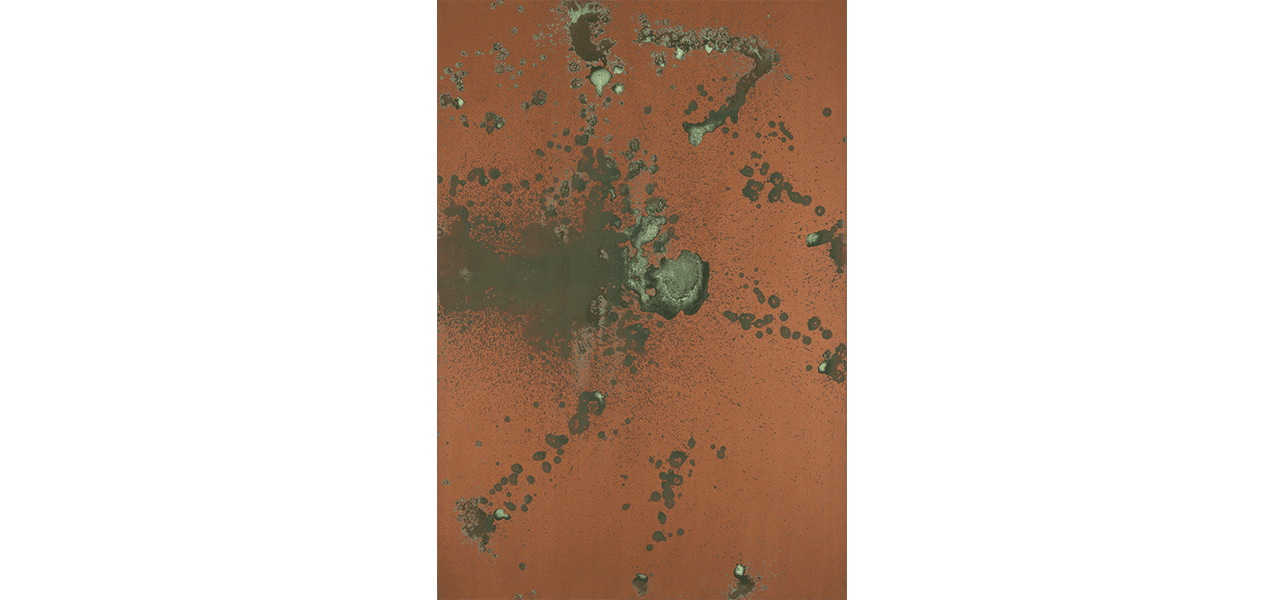
SkarstedtFollowing its successful run at the London gallery, Skarstedt is pleased to present Andy Warhol: The Late Paintings. Presenting 11 paintings executed between 1976 and 1986, the exhibition highlights iconic series which came to define the final and one of the most prolific decades of the artist’s oeuvre. The exhibition features large-scale works from The American Indian, Hammer and Sickle, Oxidation, Diamond Dust Shoes, Knives, Eggs, Zeitgeist, Camouflage, Dollar Sign, and Reversal series, revealing Warhol’s renewed interest in painting in the late 1970s and ‘80s, as well as his continued preoccupation with the notions of disappearance and ephemerality of human existence. Having announced his departure from painting in favor of movie-making in 1965, Warhol returned to the medium in the early 1970s, embarking on a period of experimentation with the subject matter and the process of painting itself. In The American Indian (Russell Means) (1976), the features of the sitter, a renowned leader of the American Indian Movement, are described with painterly strokes, which Warhol made with his fingers in a dramatic introduction of the artist’s hand into his artistic process. Deliberately conflating a painterly gesture and mechanical reproduction, Warhol engages in a dialogue with the history of expressionist painting, the approach also evident in the Hammer and Sickle executed in the same year. Begun in 1977, the Oxidation series also on view here marked a seismic shift in Warhol’s visual language, simultaneously heralding his exploration of abstraction in later works. With a network of patinated marks corroded by urine on copper paint, Oxidation (1977-78) makes an ironic reference to color field painting and Jackson Pollock’s paint drips, whilst presenting a surface of almost sublime complexity evocative of rugged landscapes or cosmic formations. Newly added to the New York iteration of the exhibition, Dollar Sign (1981) sees Warhol returning to one of his earliest and most iconic subjects—a sense of retrospection that pervaded his output during the 1980s. The painterly manner in which this ubiquitous symbol appears in later works, however, evinces his renewed interest in the medium and his musings on the shifting nature of American consumerism in a decade marked by excess. Joseph Beuys (Reversal) (1983), like the Oxidation painting, engages with art history as Warhol pays homage to an artist he greatly respected. Calling forth the celebrity portraits of the 1960s, the repetition of Beuys’s stern face elevates his already high status as one of the most preeminent European artists of his generation while continuing the use of seriality so crucial in Warhol’s earlier works. It furthermore underscores both artists’ positions as masterful craftsmen of their own personas and the ways in which they revealed themselves through explorations of the political and mystical—traits which Warhol no doubt admired in his contemporary. Fusing popular imagery with subtle existential enquiry, Warhol’s late works in the exhibition reveal the unwavering interrogation of the medium as well as previously concealed aspects of his private and spiritual life, highlighting the significance of the late period in the artist’s oeuvre. Andy Warhol was born in Pittsburgh, Pennsylvania in 1928. He graduated from the Carnegie Institute of Technology in Pittsburgh in 1949. Early in his career he worked as a commercial artist and illustrator, and towards the 1960s he began consolidating his well-known style of large-scale, colorful prints of popular consumer goods and other advertising related images that were prevalent in mass media. Warhol eventually became the main exponent of Pop Art, which introduced images of consumer culture into works of art that were manufactured with mass production techniques and blurred the boundaries between high and commercial art. His diverse oeuvre includes paintings, prints, sculptures and films that are often grouped in series that focus on different issues such as consumerism, violence, celebrity culture and even include socio-political commentary. At the same time, Warhol’s works commented on the fundamentals of the medium by highlighting the conflict between medium and subject matter. He frequently transformed banal objects into items meant for adoration; and in other occasions his endless repetition of dramatic images stripped them of all meaning. Warhol’s intriguing works are imbued with a poignant, powerful commentary and challenge to the status quo. Andy Warhol became one of the most influential figures in contemporary art and culture at large. Warhol’s works have been exhibited extensively throughout the United States and Europe. Important solo exhibitions were held at the Whitney Museum of American Art in New York in 2018, Neue Nationalgalerie in Berlin in 2001, the Wilhelm-Hack-Museum in Ludwigshafen, Germany in 1996, the Museum of Modern Art in New York, and the Centre Georges Pompidou in Paris in 1989. His works have also been exhibited in major institutions such as the National Museum of American Art, Smithsonian Institution in Washington, the Museum Haus Lange in Krefeld, Germany and the Moderna Museet in Stockholm. The Andy Warhol Museum opened in Pittsburgh, Pennsylvania in May of 1994. His work has been featured in multiple publications. Andy Warhol died in 1987 in New York.