
Mitte, Berlin
Ho Tzu Nyen
2 Stories: Voids & Times
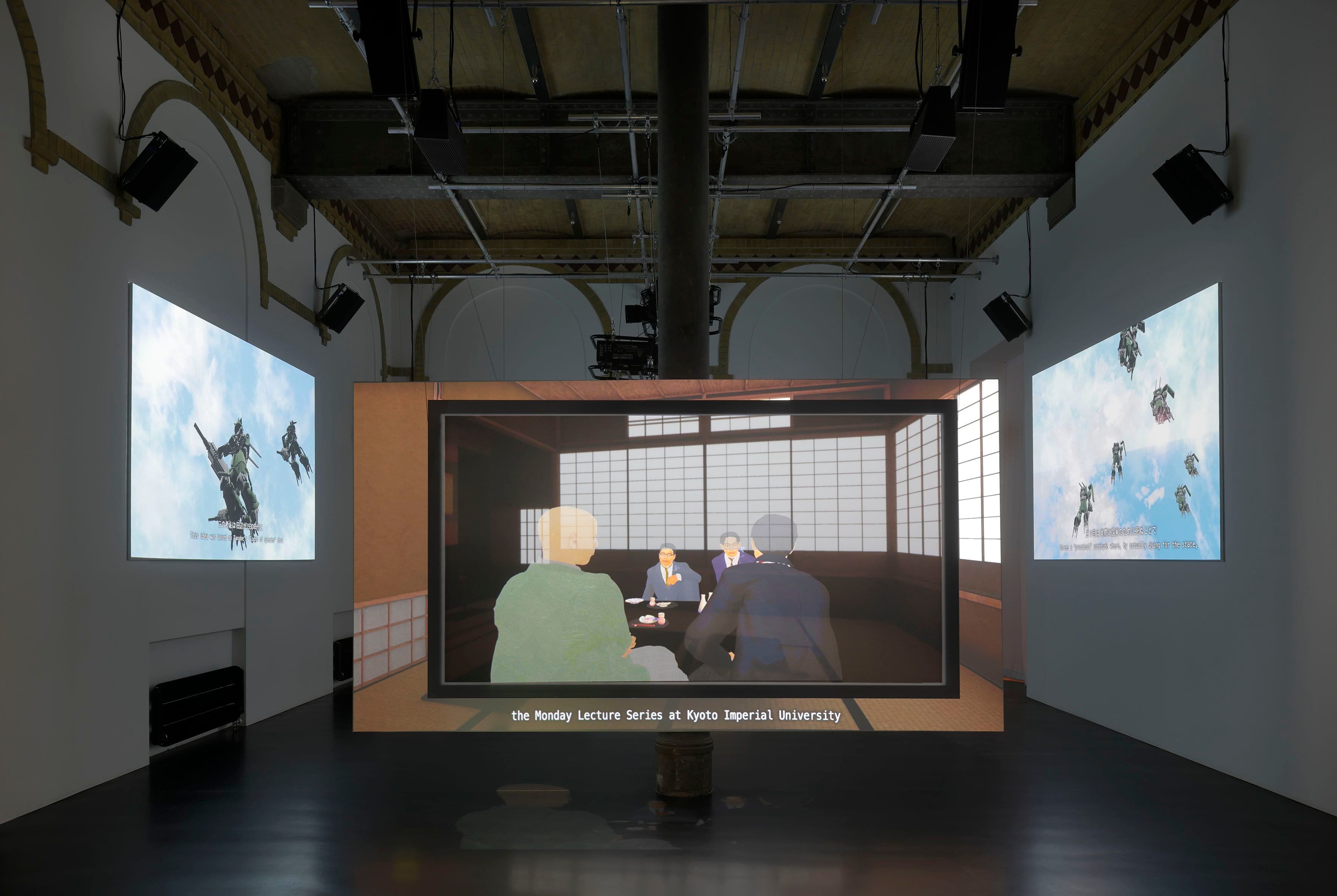
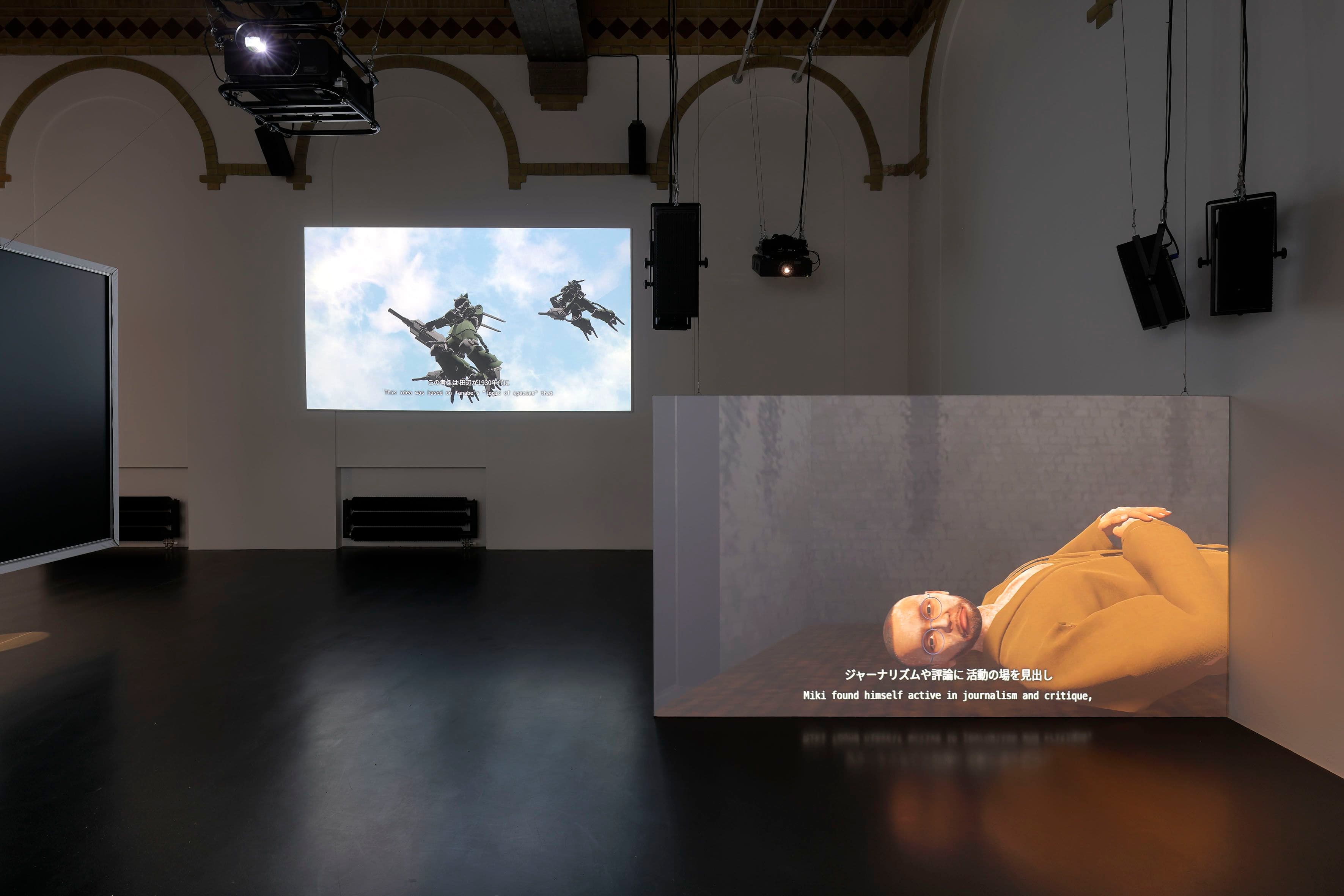
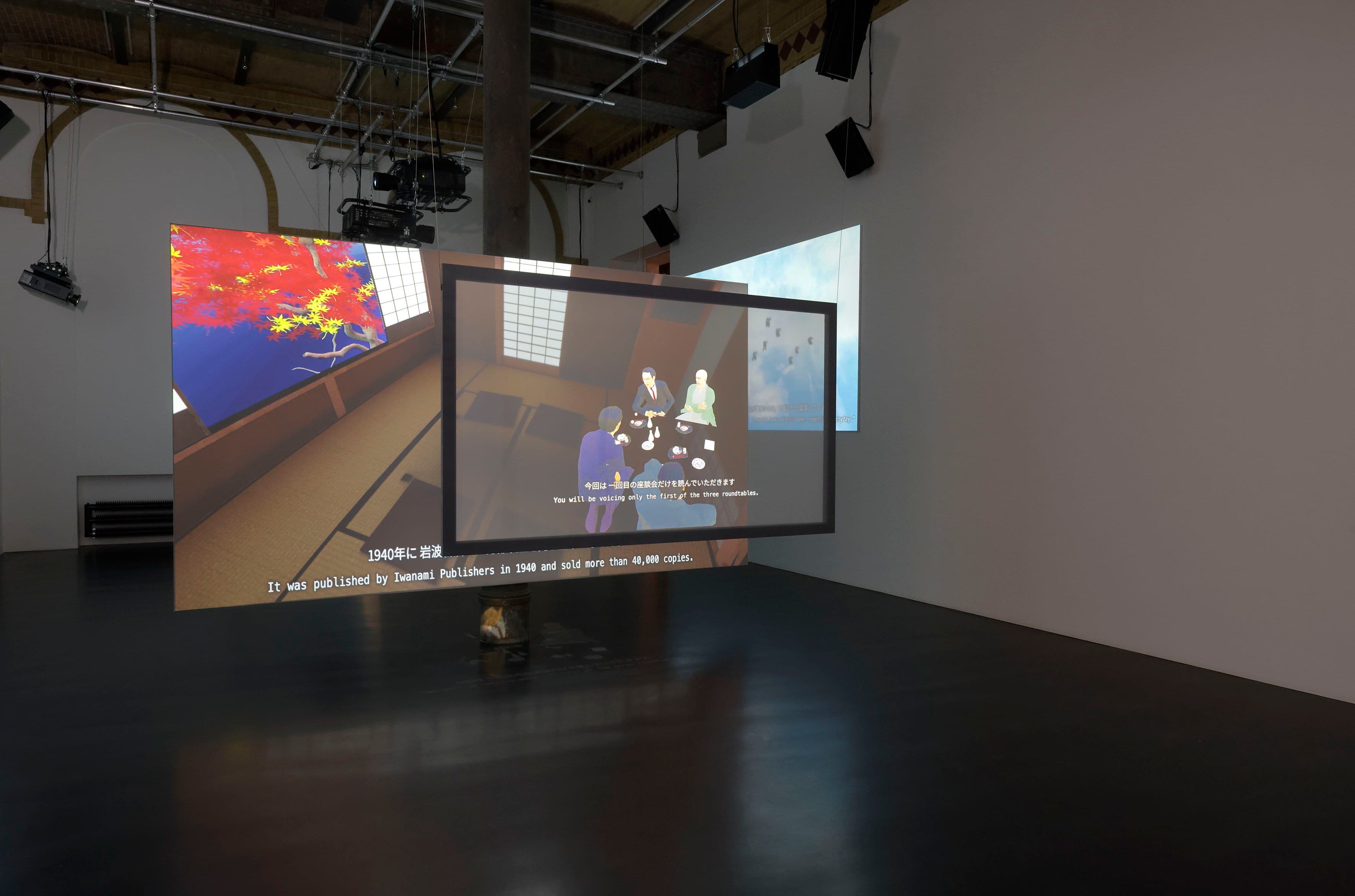
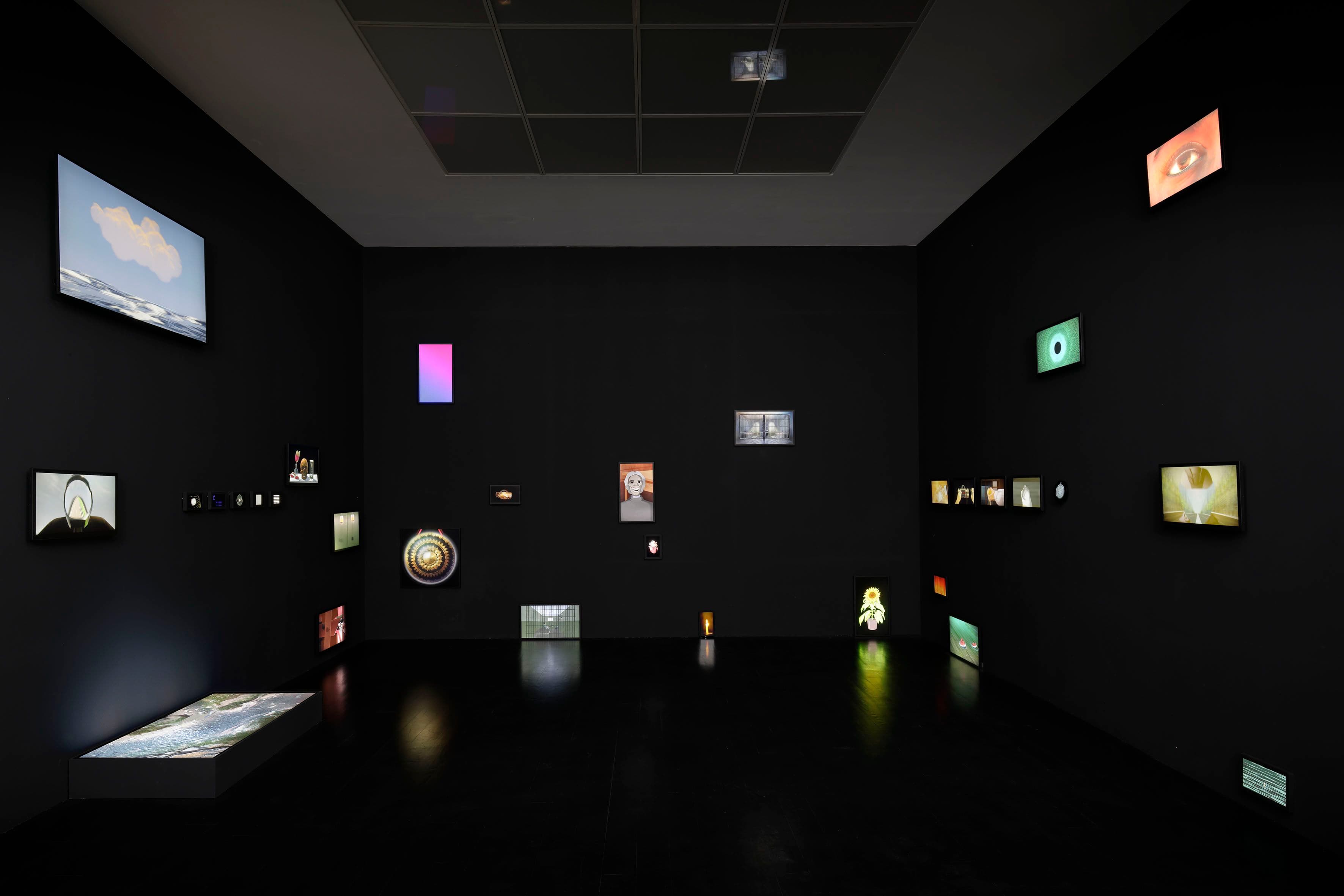
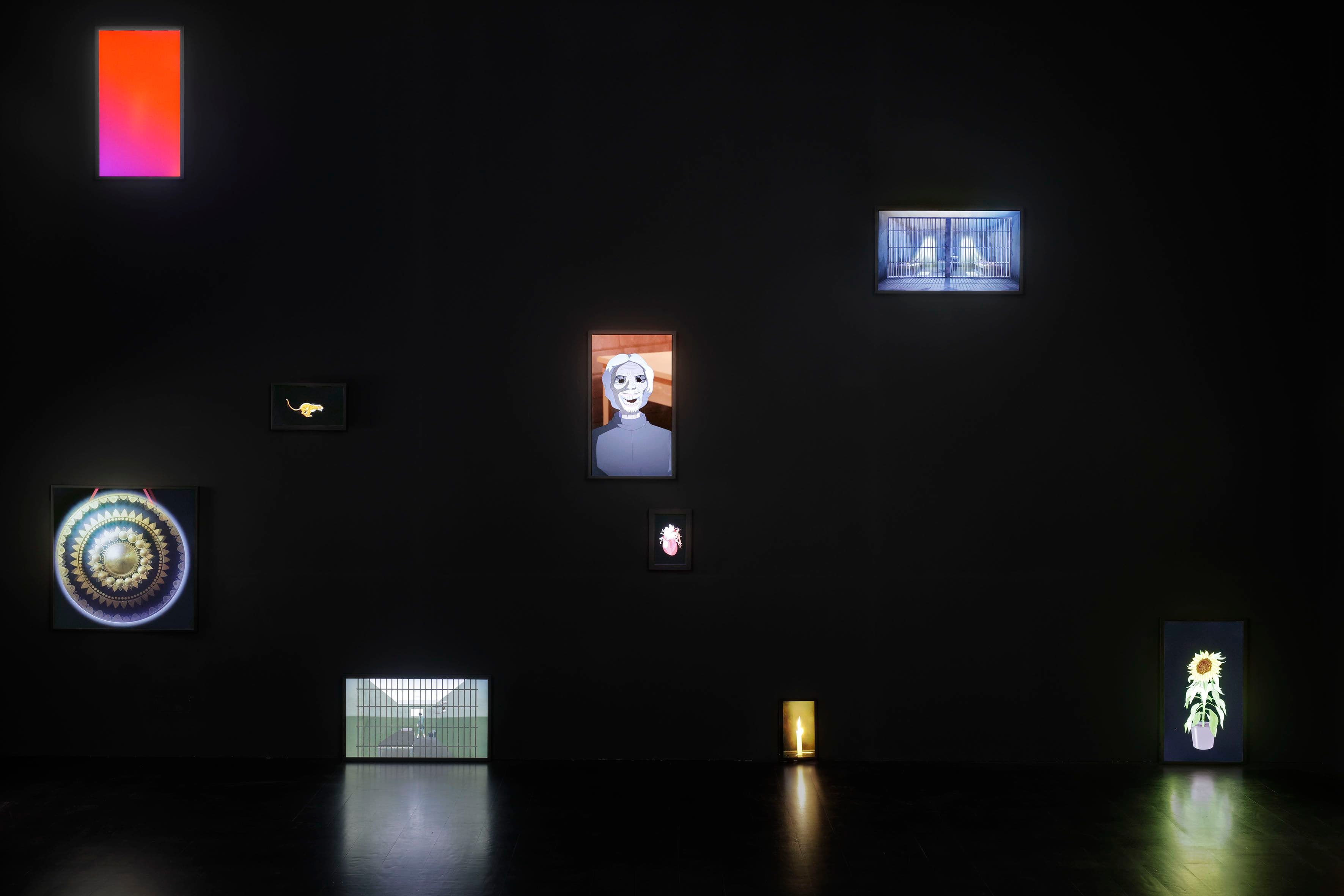
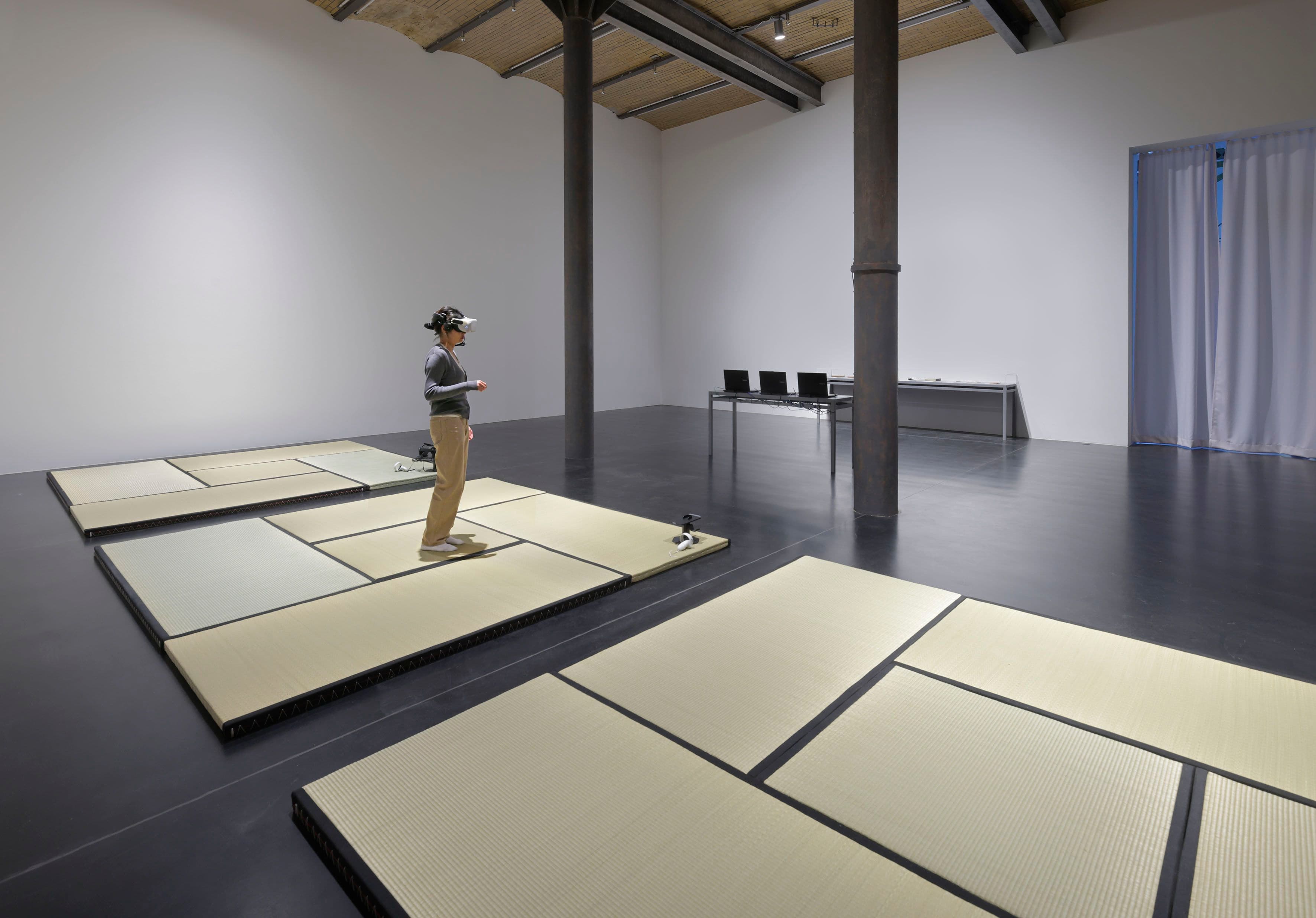
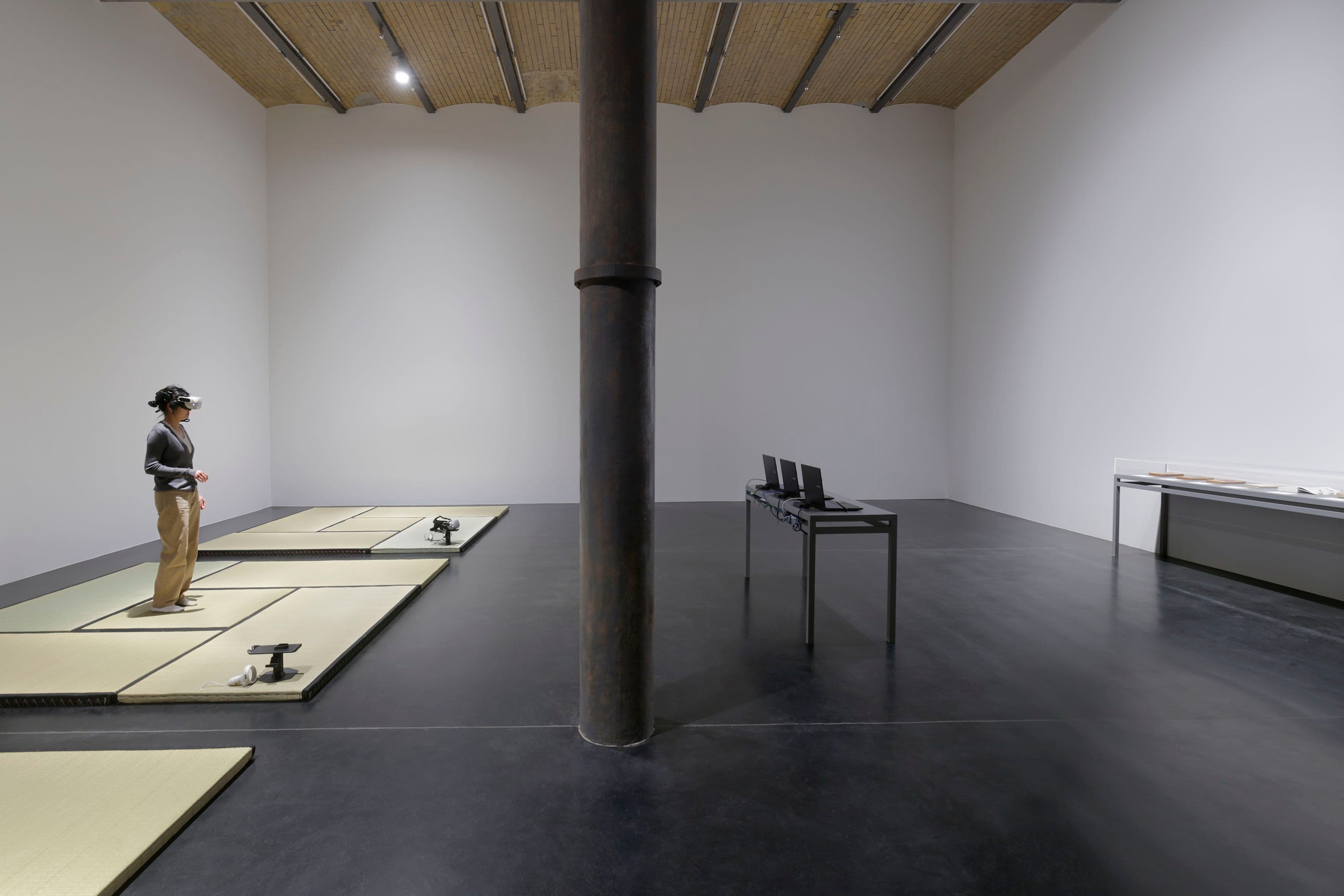
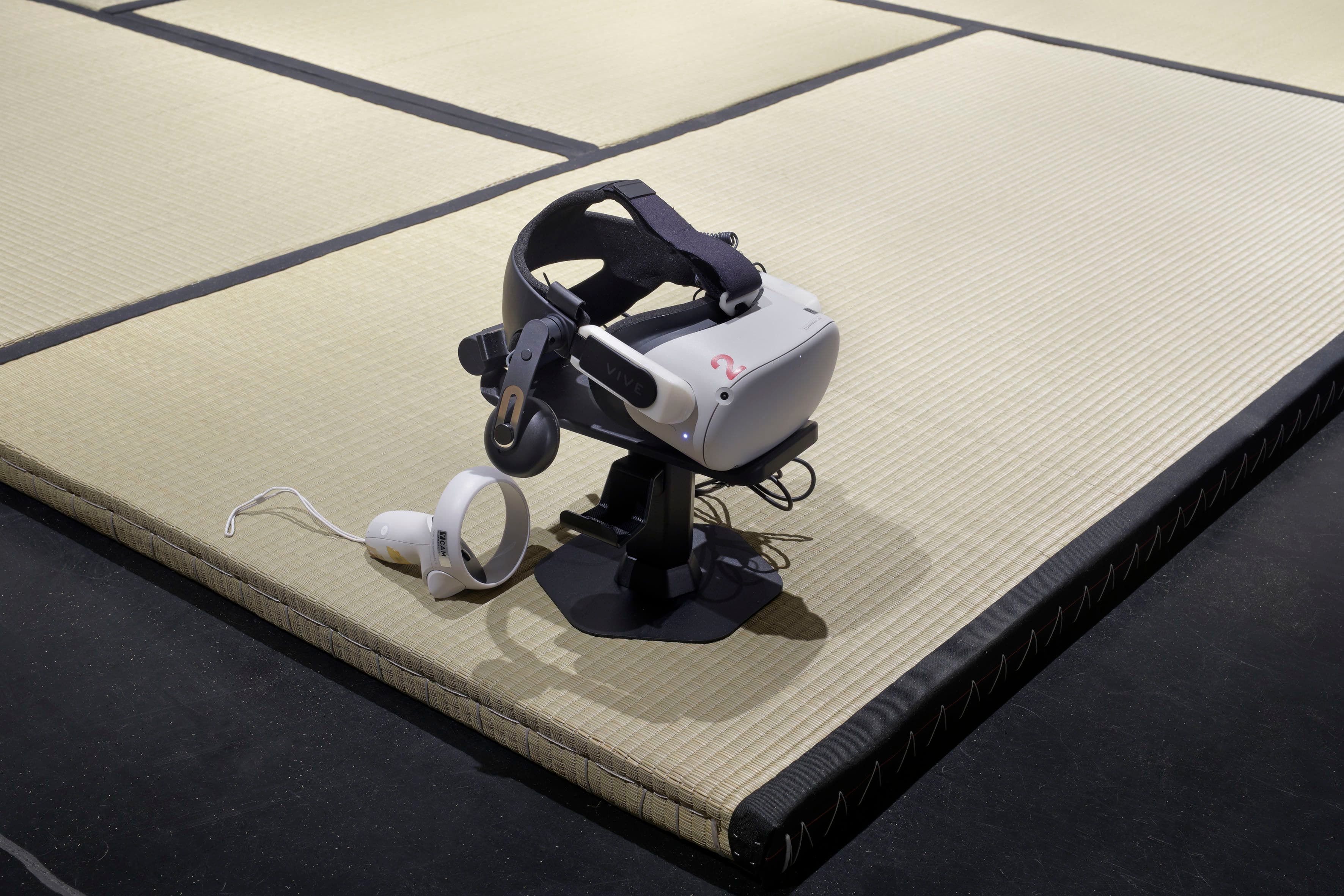
Neugerriemschneider[Please scroll down for German version / Für Deutsch bitte scrollen Sie nach unten] Ho Tzu Nyen's first solo exhibition with Neugerriemschneider, 2 Stories: Voids & Times, features two recent multisensory spatial installations by the artist in an ensemble building upon his latest wide-ranging institutional exhibitions in Asia and Europe, bringing into focus his extended engagement with legends and fictions, unresolved societal questions and contradictory ideals. Key to this investigation is Ho's use of video - a medium that he developed an affinity for in the Singapore of his formative years - and his inquisitive expansion of this technique into the fields of its emerging technologies. Here, with a unique pairing of ambitious audiovisual environments, Ho facilitates experiential embodiments of intercultural phenomena and presumed truths as they are unraveled and reconfigured. Ho leads a practice steeped in and based upon fused histories, including those of fine art, theater, cinema, music and philosophy, creating works that nonhierarchically draw on mythical narratives and verifiable fact in equal measure. New understandings of storytelling, its underpinnings, and of the ways in which anecdotes are written, transmitted and received, come to light as Ho mines the plurality of cultural, linguistic and religious identities of Southeast Asia and the myriad complexities that lie beyond. In filmic ensembles and installations, all of which are as technologically intricate as they are conceptually rigorous, observatory investigation takes physical form, weaving a tapestry of knowledge where documentary meets fantasy, and the archival becomes animated. Ho's work comes to channel dimensional legacies, giving voice to spirits of resistance and revealing their masked ambiguities. Voice of Void (2021), Ho's virtual reality-assisted video projection, transforms two of the exhibition's spaces into sites of the secretive November 1941 roundtable "The World-Historical Standpoint and Japan," still controversial to this day for its philosophical reckoning with military action. Conducted by philosophers Keiji Nishitani, Masaaki Kosaka, Iwao Koyama and Shigetaka Suzuki, the conversation attempted to devise a theory of world history against the backdrop of Japan's involvement in the Second World War. The concepts expressed here grew from the Kyoto School of the early 20th century - a movement that sought to supplant prevailing Eurocentric modes of thought with a philosophy born and cultivated in Asia. The discussions of the past and visions for the future of the symposium at the origin of Ho's work were often splintered and dissonant, and raised more questions than they answered as the global community spiraled into war. The theories and lives of Ho's protagonists play out in layered projections showing computer-generated models of science-fiction mecha robots in flight, a prison structure as seen from both inside and in disembodied wide angle, and the roundtable meeting itself. Voiceover provides whispered introductions to the School's approaches, while virtual-reality headsets, placed at the ready on tatami mats, invite a viewer to enter the work, acting as a participant in various scenes beginning with a tea-room rendezvous, allowing them to shift between characters, scenarios, perspectives, stories and timelines. This search for multiplicity takes a different form in his 43-channel video installation T for Time: Timepieces (2023 - 2024). Here the historical and geopolitical specificity of Ho's Voice of Void shifts, widening to collected moments centered upon the notion of time itself. A simultaneous matrix of interactive applications and animated images such as those of an apple being peeled, a calendar seen as it flips, a bomb in the process of neutralization, a burning candle, Felix Gonzalez-Torres' "Untitled" (Perfect Lovers) (1987 - 1990 and 1991) or soaring arrows illuminate the diverse ways in which a force of nature has been corralled, defined, enumerated and made to a worldview. In this work, time as apprehended under a structured set of criteria is dissolved, its colonial impulses unfolded and analyzed. Across the multiscreen work, individual scenes ranging from seconds to hours or years in length function as their own variably scaled "timepieces" - modules that cast temporality as personal, biological or sociological, setting it within a non-linear narrative. A singularly malleable time takes hold as Ho introduces subjectivities and cultural pluralities, generating visual worlds linked by their concrete visualizations of an immaterial drive, and reshaping the clock's forward march. Ho Tzu Nyen is currently the subject of solo exhibitions at Mudam Luxembourg (until August 24, 2025) and LUMA Arles (until January 11, 2026). In November of this year, this institutional presence continues at Hamburger Kunsthalle with a broad survey of his most central works (November 21, 2025 - April 12, 2026). Ho has been the subject of solo exhibitions at international museums and institutions including Musée d'Art Moderne Grand-Duc Jean, Luxembourg (2025); Hessel Museum of Art, Annandale-on-Hudson (2024); Art Sonje Center, Seoul (2024); Museum of Contemporary Art Tokyo, Tokyo (2024); Singapore Art Museum, Singapore (2023); Hammer Museum, Los Angeles (2022); Toyota Municipal Museum of Art, Toyota (2021); Crow Museum of Asian Art of The University of Texas at Dallas, Dallas (2021); Yamaguchi Center for Arts and Media, Yamaguchi (2021); Edith-Russ-Haus for Media Art, Oldenburg (2019); Kunstverein in Hamburg, Hamburg (2018); Ming Contemporary Art Museum, Shanghai (2018); Asia Art Archive, Hong Kong (2017); Guggenheim Museum Bilbao, Bilbao (2015); Mori Art Museum, Tokyo (2012); and The Substation, Singapore (2003). His work has been featured Venice Biennale (2011, Singapore Pavilion). He is currently serving as the Artistic Director of the Gwangju Biennale (2026). Ho lives and works in Singapore. ***** Für seine erste Einzelausstellung bei neugerriemschneider, 2 stories: voids & times, vereint Ho Tzu Nyen zwei audiovisuelle Rauminstallationen zu einem Ensemble, das an die jüngsten Museumspräsentationen des Künstlers in Asien und Europa anknüpft und seine langjährige Auseinandersetzung mit Legenden und Fiktionen, ungelösten gesellschaftspolitischen Fragen und widersprüchlichen Idealen vertieft. Von zentraler Bedeutung für Hos künstlerischen Ansatz ist der experimentelle Umgang mit bewegten Bildern - ein Interesse, das er früh in Singapur entwickelte und durch den Einsatz neuer Technologien kontinuierlich erweitert. Die beiden Arbeiten ermöglichen eine aktive, multisensorische Erfahrung interkultureller Phänomene und vermeintlicher Wahrheiten, während diese entschlüsselt und neu konfiguriert werden. In seiner Praxis verbindet Ho historische und formale Elemente aus bildender Kunst, Theater, Kino, Musik und Philosophie zu Werken, die sich gleichermaßen auf Mythen und Tatsachen stützen. Ausgehend von der Beschäftigung mit den vielfältigen kulturellen, sprachlichen und religiösen Identitäten Südostasiens entwickelt er ein neues Verständnis narrativer Formen, das er auch auf andere Regionen ausweitet. Hos diskursiver Ansatz verschmilzt Dokumentation und Fiktion in technisch komplexen und konzeptionell dichten filmischen Ensembles und Installationen, die neue Zusammenhänge generieren und das Archivalische lebendig werden lassen. Hos Voice of Void (2021) besteht aus Virtual-Reality-gestützten Videoprojektionen, die zwei Räume der Ausstellung in Schauplätze der geheim gehaltenen und bis heute umstrittenen Round-Table-Konferenz „Der weltgeschichtliche Standpunkt und Japan“ im November 1941 verwandeln. Vor dem Hintergrund von Japans Beteiligung am Zweiten Weltkrieg wurden unter der Leitung der Philosophen Keiji Nishitani, Masaaki Kosaka, Iwao Koyama und Shigetaka Suzuki militärische und weltgeschichtliche Fragen verknüpft. Die dabei zum Ausdruck gebrachten Gedanken haben ihren Ursprung in den Konzepten der Kyōto-Schule des frühen 20. Jahrhunderts, welche die vorherrschende eurozentrische Denkweise durch eine asiatische Philosophie ersetzen wollte. Die auf der Round-Table-Konferenz geführten Diskussionen über die Vergangenheit und mögliche Zukunftsvisionen warfen jedoch mehr Fragen auf, als sie beantworteten, während die Welt immer weiter im Krieg versank. Voice of Void besteht aus mehreren Projektionen computer- generierter Bilder, die neben dem Gespräch der Philosophen fliegende Mech-Roboter und einen Gefängniskomplex sowohl von innen als auch von außen zeigen und von einer flüsternden, Ansätze der Kyōto-Schule erläuternden Stimme begleitet werden. Auf Tatami- Matten liegen VR-Headsets, mit denen die Betrachtenden zu Teilnehmenden werden können, beginnend mit einem Teeraum-Treffen. Die verschiedenen Medien der Arbeit ermöglichen einen kontinuierlichen Wechsel zwischen Charakteren, Szenen, Perspektiven, Handlungssträngen und Zeitachsen. Eine ähnliche Komplexität zeichnet Hos 43-Kanal-Videoinstallation T for Time: Timepieces (2023 - 2024) aus, in der sich die historische und geopolitische Spezifität von Voice of Void zugunsten einer Sammlung von Momenten erweitert, die den abstrakten Begriff der Zeit zum Ausgangspunkt haben. Eine simultane Matrix aus interaktiven Anwendungen und animierten Bildern - darunter das Schälen eines Apfels, die wechselnden Tage eines Kalenders, das Entschärfen einer Bombe, eine abbrennende Kerze, eine Animation von Felix Gonzalez-Torres’ Arbeit “Untitled” (Perfect Lovers) (1987 - 1990 und 1991) oder fliegende Pfeile - beleuchtet, wie die Kräfte der Natur eingedämmt, definiert und numerisch geordnet werden, um die Welt verständlich zu machen. In seiner Installation hinterfragt Ho die strukturierte Zeit, um ihre kolonialen Spuren bloßzulegen und zu analysieren. Die einzelnen „Zeitstücke“ reichen von Sekunden über Stunden bis hin zu Jahren, stellen Zeitlichkeit unter persönlichen, biologischen oder soziologischen Aspekten dar und betten sie in eine nichtlineare Erzählung ein. Durch die Verschränkung von Subjektivität und kulturellem Pluralismus verändern sie die Perspektive auf die immaterielle Kontinuität und machen so ihre Formbarkeit sichtbar. Das Werk von Ho Tzu Nyen (geb. 1976) ist derzeit Gegenstand institutioneller Einzelausstellungen im Mudam in Luxemburg (bis 24. August 2025) und im LUMA Arles (bis 11. Januar 2026). Im November folgt in der Hamburger Kunsthalle eine weitere umfangreiche Präsentation mit zentralen Arbeiten des Künstlers (21. November 2025 - 12. April 2026). Darüber hinaus wurden Werke von Ho in Einzelausstellungen internationaler Museen und Institutionen gezeigt, darunter Hessel Museum of Art, Annandale-on-Hudson (2024); Art Sonje Center, Seoul (2024); Museum of Contemporary Art Tokyo, Tokio (2024); Singapore Art Museum, Singapur (2023); Hammer Museum, Los Angeles (2022); Toyota Municipal Museum of Art, Toyota (2021); Crow Museum of Asian Art of The University of Texas at Dallas, Dallas (2021); Yamaguchi Center for Arts and Media, Yamaguchi (2021); Edith-Russ-Haus für Medienkunst, Oldenburg (2019); Kunstverein in Hamburg, Hamburg (2018); Ming Contemporary Art Museum, Shanghai (2018); Asia Art Archive, Hongkong (2017); Guggenheim Museum Bilbao, Bilbao (2015); Mori Art Museum, Tokio (2012), und The Substation, Singapur (2003). Ho bespielte den Pavillon von Singapur auf der Venedig-Biennale 2011 und ist künstlerischer Leiter der Gwangju-Biennale 2026. Er lebt und arbeitet in Singapur.