
Institutions, Venice
Eva & Franco Mattes
Rage Bait
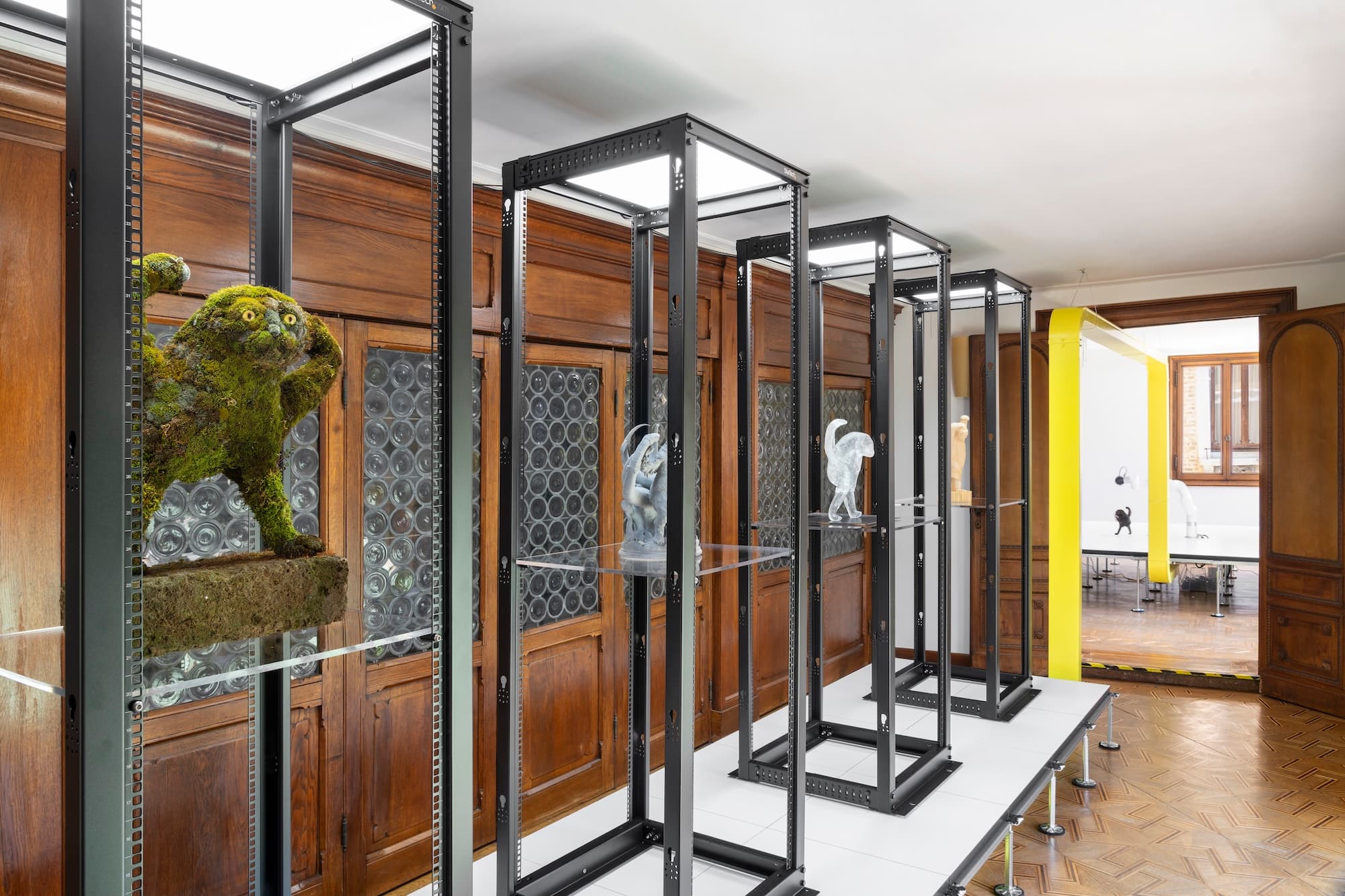
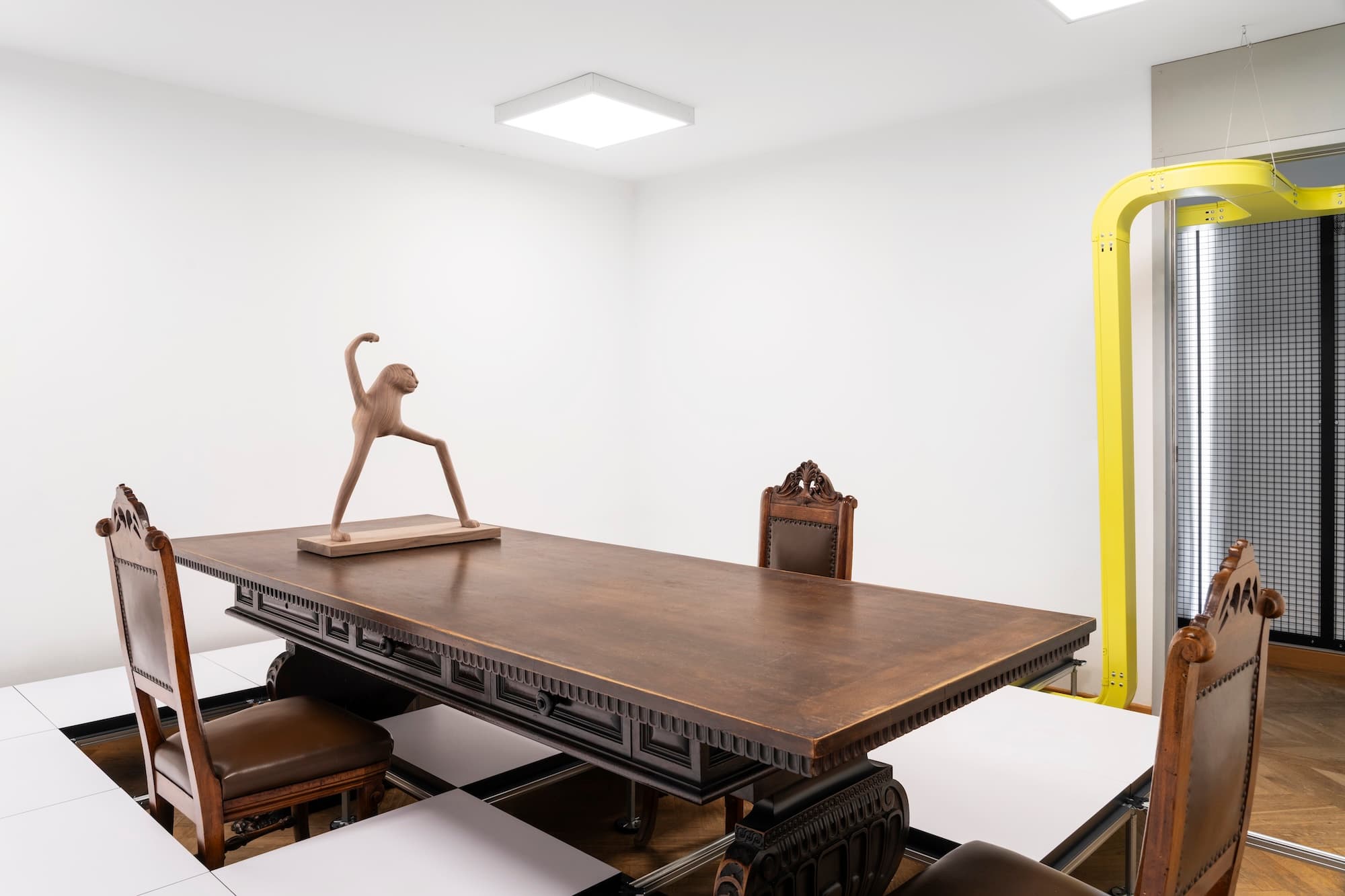
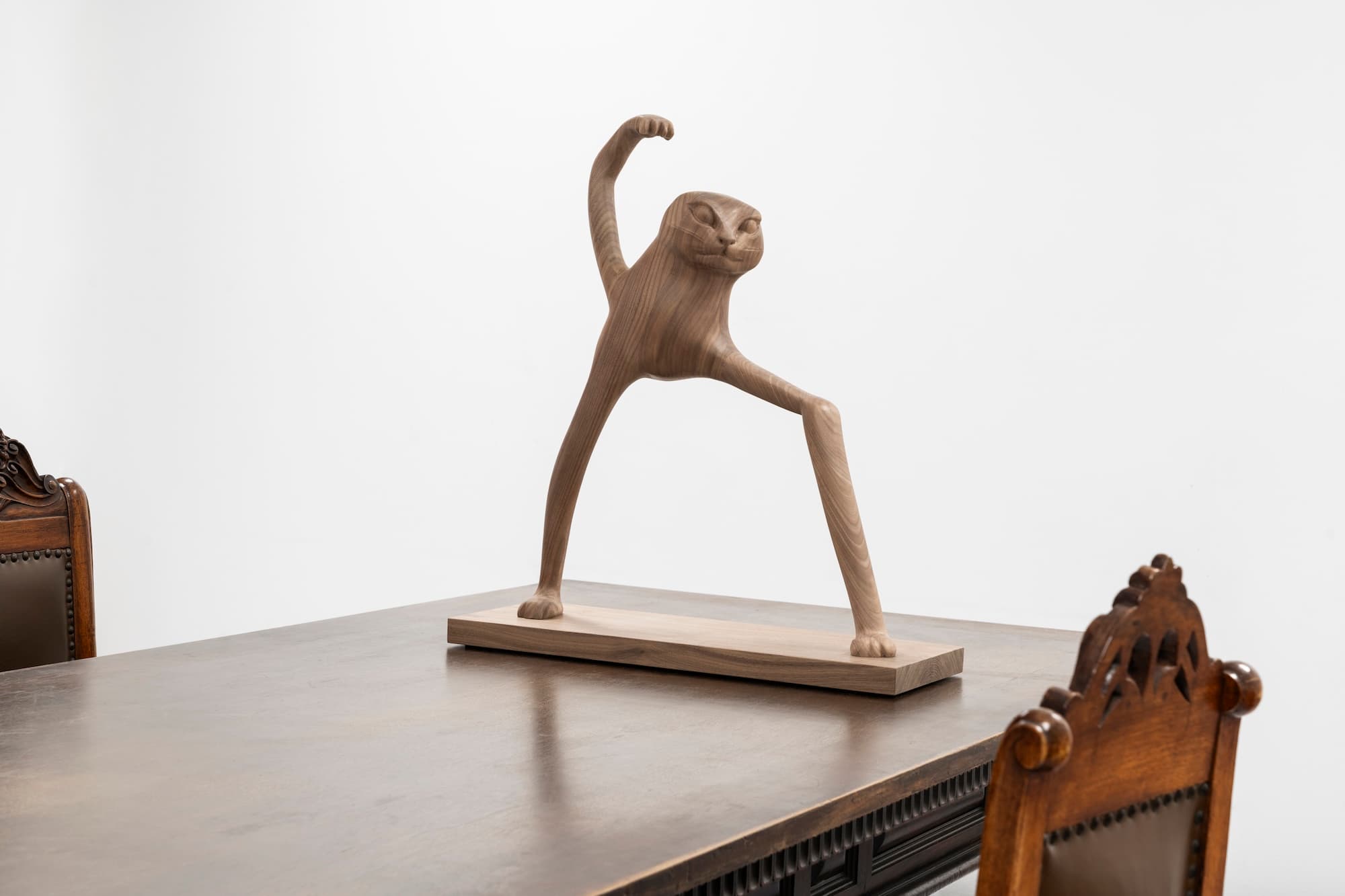
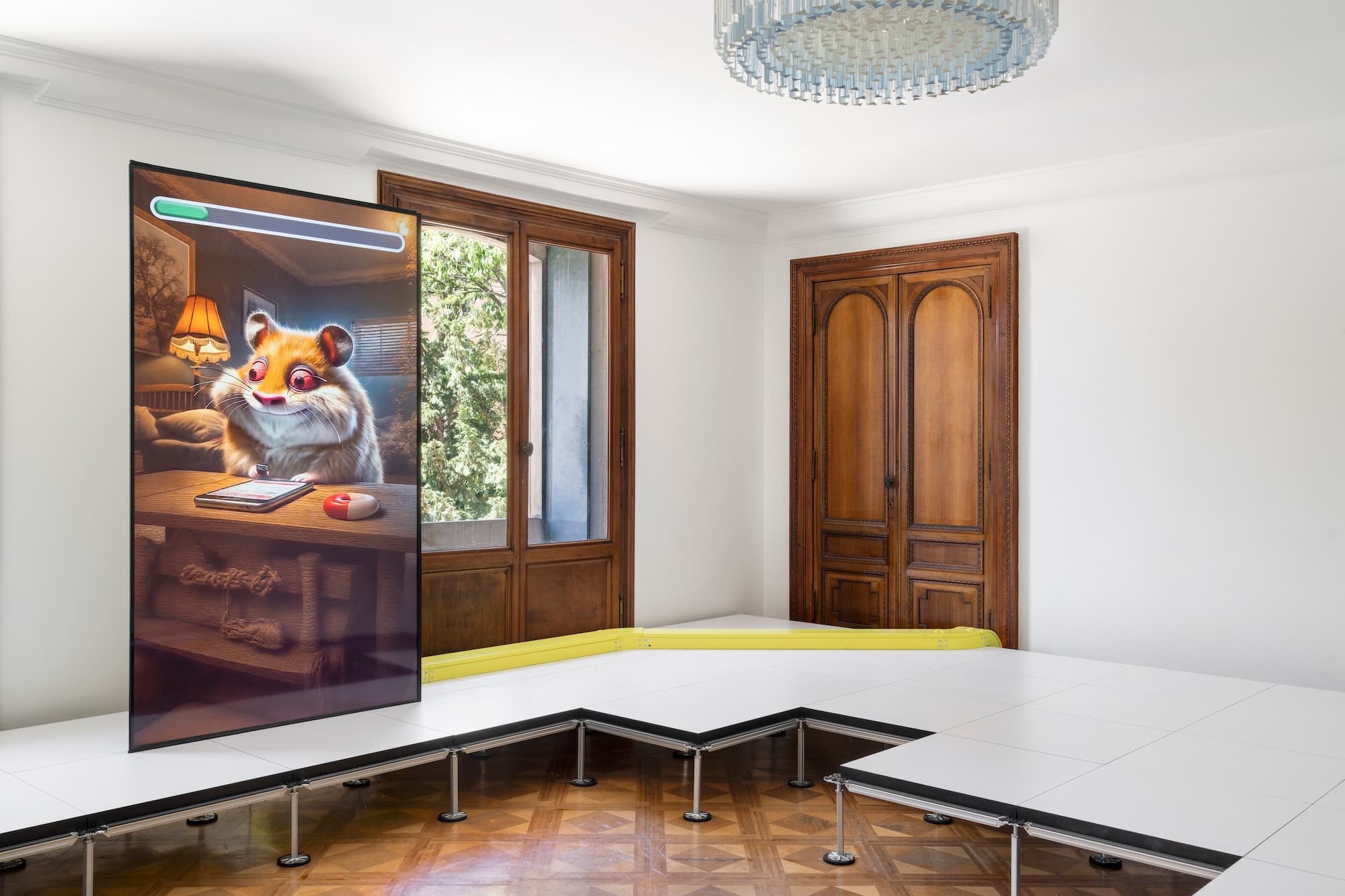
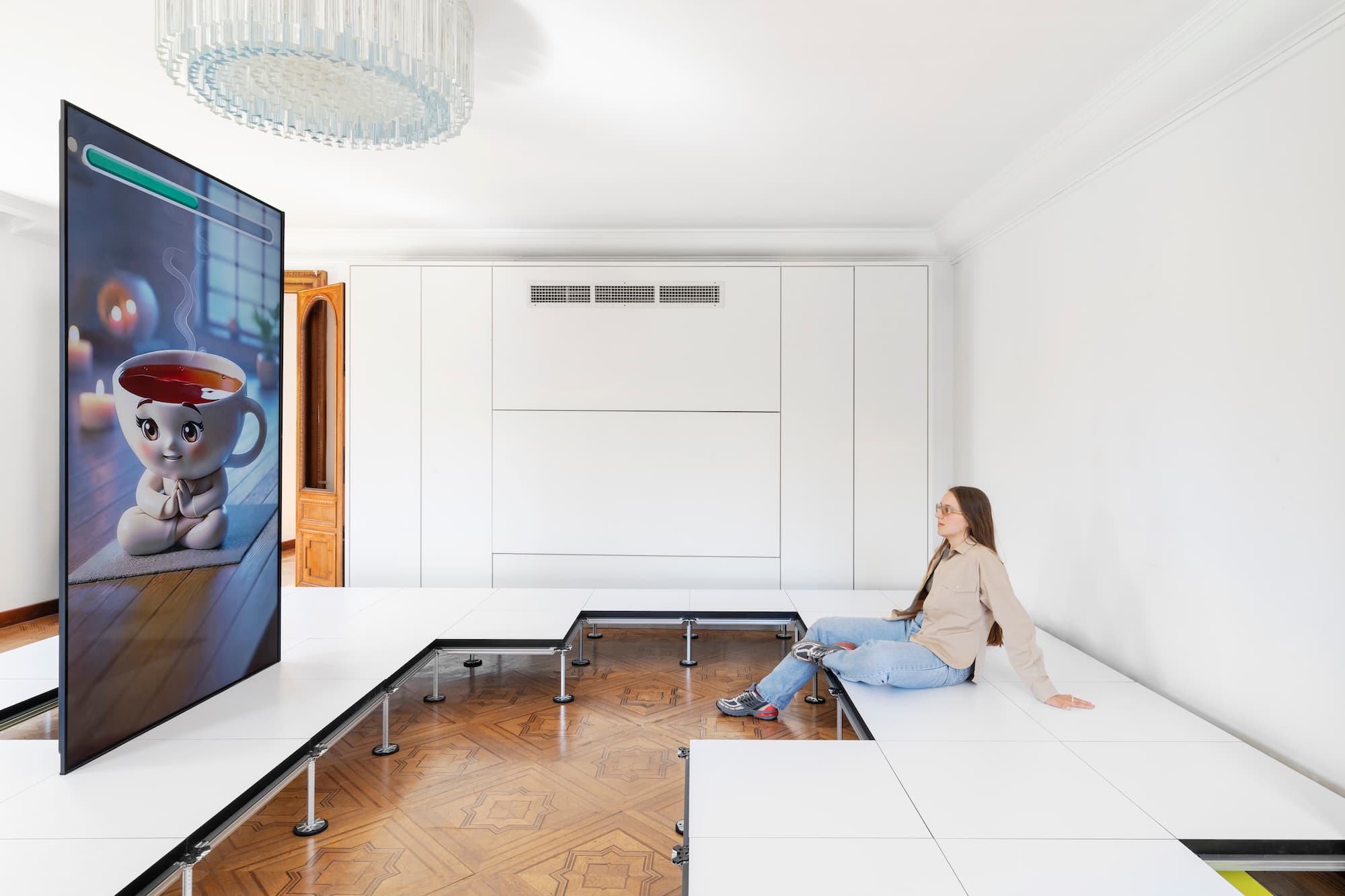
Palazzo FranchettiOpens Wednesday, May 6 Autotelic Foundation is pleased to present Rage Bait, an exhibition of new works by the Italian artist duo Eva & Franco Mattes. Staged across two iconic venues in Venice, Rage Bait is on view at the Palazzo Franchetti overlooking the Grand Canal, and Le Cabanon—a private swimming pool on Giudecca. The exhibition title is derived from the internet slang term ‘rage bait': content engineered to provoke outrage, hijack attention, or extract a visceral emotional response before reason can intervene. Spanning installation, video, and generative AI, the show explores how rage bait is the logical—often inevitable—endpoint of platforms optimized for user engagement. Eva & Franco Mattes have spent over twenty years tracking the lacunae of networked life and have been influential on two successive generations of artists exploring the cultural impacts of digital change in Europe and the US. This exhibition extends their focus on tensions between the polished surface of online content and its murky ethical depths. At Palazzo Franchetti the artists subject a suite of 16th century rooms to architectural banalization. A scenography of prefabricated components including raised flooring, cages, and cable trays (most commonly fitted in datacentres and crypto mining facilities) ‘support' two new bodies of work. The first of these, Cursed Cat (in the Dataset) (2025), involves a computer running a Large Language Model trained exclusively on images of a single sculpture: a black, earless, stuffed cat, its expression frozen somewhere between triumph and rage—a physical incarnation of the well-known internet meme ‘Cursed Cat.' Visitors encounter this uncanny figure upon entering the space, where it poses for a moving camera mounted on a robotic arm, that also captures them in the background. The ever-evolving AI model is a generative system that constantly spews out novel iterations of ‘Cursed Cat,' distributing them on the internet where they can be absorbed into future AI training datasets. The artists intend "to inject a new mythological figure into generative image streams." In other words, "to corrupt or alter the imagination of AI," so that the ‘Cursed Cat' becomes a ghost in the machine—liable to appear periodically no matter what a user's prompt may be. Nearby, other AI-generated ‘cursed cats' are made physical in a series of sculptures: using materials such as wood-carved from the Dolomites, glass forged in Murano, and plastic food replica from Japan. As visitors proceed through Palazzo Franchetti, they next encounter Are You Still There? (2025), a series of AI-generated videos in which ‘Italian Brainrot' characters restage real conversations from a suicide prevention hotline. The conversations come from a publicly available dataset whose origins remain murky. These verbal exchanges predate AI but have been used to train the very chatbots people now treat as substitutes for a psychoanalyst. The artwork probes the "Eliza effect"—Joseph Weizenbaum's 1966 discovery that people readily attribute empathy to digital systems that merely rephrase inputs or questions—to ask what is at stake when this tendency meets genuine vulnerability. At the second venue presenting Rage Bait—a private swimming pool located next to Palladio's famous Il Redentore church—the pair stage a monumental site-specific video installation titled But I Love Human (2025). Here, the pool water ripples with the reflection of moving images generated by a massive LED screen suspended over the water. The work's staging creates a contemporary reflection akin to that of the Greek myth of Narcissus, who vainly fell in love with his own reflection in a pool of water. But I Love Human (2025) comprises a ten-minute supercut featuring performers who mimic videogames ‘non-player characters' (NPCs) during live streams—repeating mechanical gestures and scripted dialogue for online audiences, often for pay. There is an eerie fascination in watching them enact these repetitive routines, as if trapped in an endless loop. The work frames this as a symptom of a culture increasingly shaped by algorithmic demand. This strange loop was first made explicit by Kraftwerk: humans impersonating machines that impersonate humans, but its cultural lineage runs back to Charlie Chaplin's factory worker in Modern Times—whose entire body appears consumed by a turning screw. As But I Love Human makes clear, today's assembly lines include TikTok and other platforms where the focus of automation is not just labour, but one's own self. Rage Bait arrives at a moment when provocation is no longer fringe but is instead native to digital infrastructures. Under these conditions, the strange is the new normal—a feedback loop in which platforms, users, and algorithms train one another into ever more reactive configurations. Eva & Franco Mattes (b. 1976, IT) are an artist duo based in New York and Milan. Through videos, installations, sculptures, and online interventions, their practice responds to and dissects our contemporary networked condition. Their works can be found in the collections of the SFMOMA, San Francisco; Whitney Museum, New York; Fotomuseum Winterthur; and X Museum, Beijing. Solo exhibitions include Frankfurter Kunstverein (2023); Fotomuseum Winterthur (2021); and Fondation Phi, Montréal (2019). They participated in exhibitions and events including the Sharjah Art Foundation (2020); 6th Athens Biennale (2018); Mori Art Museum, Tokyo (2018); MCA, Chicago (2018); Biennale für aktuelle Fotografie, Mannheim (2017); Biennale of Sydney (2016); Whitechapel Gallery, London (2016); and MoMA PS1, New York (2009). Eva & Franco Mattes are part of the curatorial collective Don’t Follow the Wind which organized an inaccessible exhibition in the Fukushima Exclusion Zone (2015–present). Curated by Nadim Samman & Luisa Haustein Nadim Samman curated the 4th Marrakech Biennale (with Carson Chan, 2012), and the 5th Moscow Biennale for Young Art (2016). He co-founded and curated the 1st Antarctic Biennale (2017) and the Antarctic Pavilion (Venice, 2014-2017). He was inaugural Curator for the Digital Sphere at KW Institute for Contemporary Art, Berlin. Widely published, in 2019 he was First Prize recipient of the International Award for Art Criticism (IAAC). His book Criptopoetica was published by Luiss University Press (Rome, 2025). Since 2024 he is Director of Autotelic Foundation. Luisa Haustein studied Art History at Freie Universität Berlin and Roma Tre University, and is currently a guest student in Philosophy and Artificial Intelligence at La Sapienza, Rome. She contributed to the last three editions of the Berlin Biennale for Contemporary Art, working across research and production at venues including KW Institute for Contemporary Art and Martin-Gropius Bau. At KW she was producer for the digital commission series Open Secret (2021), and Poetics of Encryption across exhibition, live and virtual space (2023).
Visit
San Marco 2847