
Chinatown, New York
Mitchell Charbonneau
Foundations
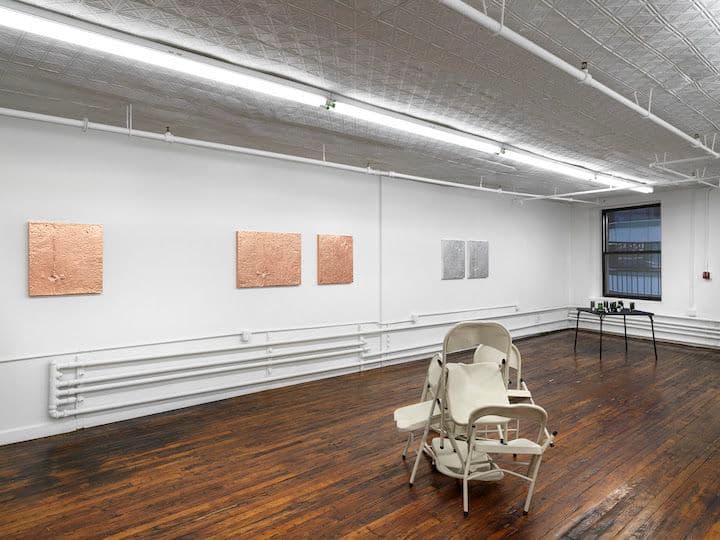
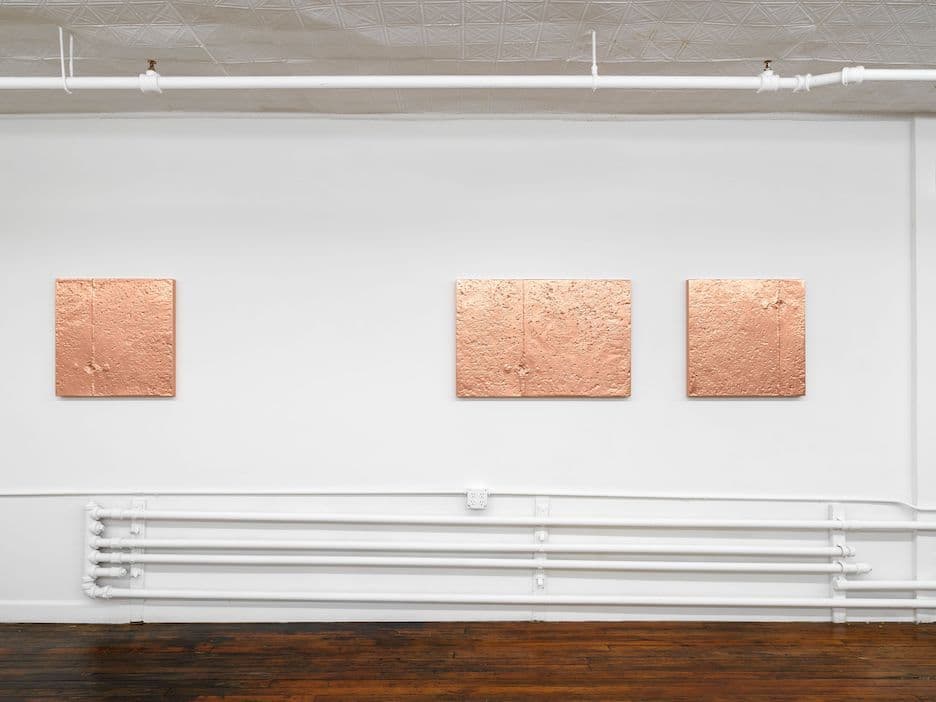
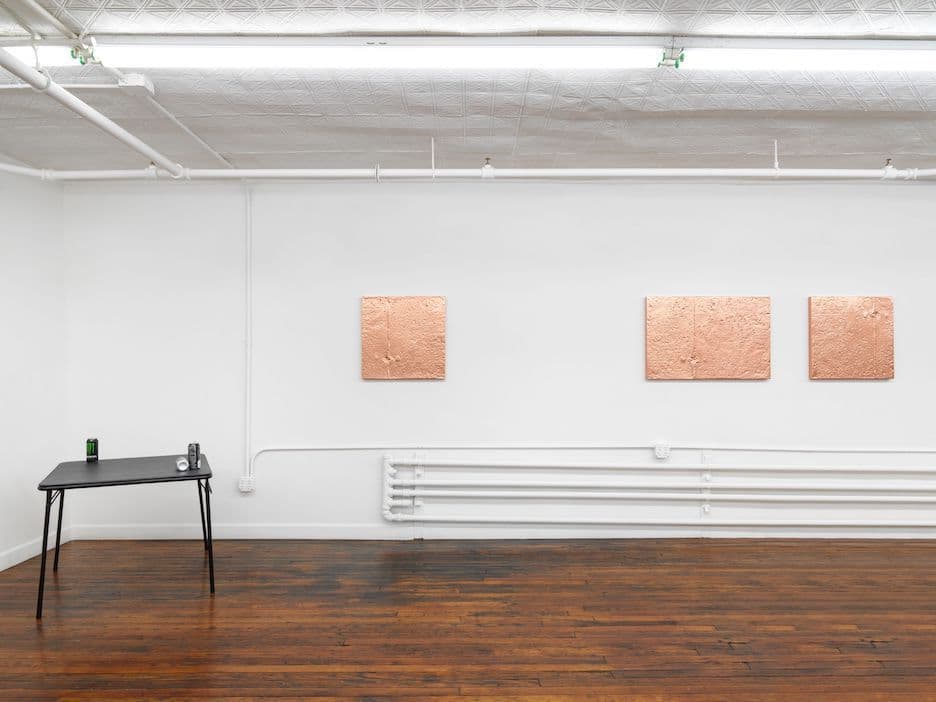
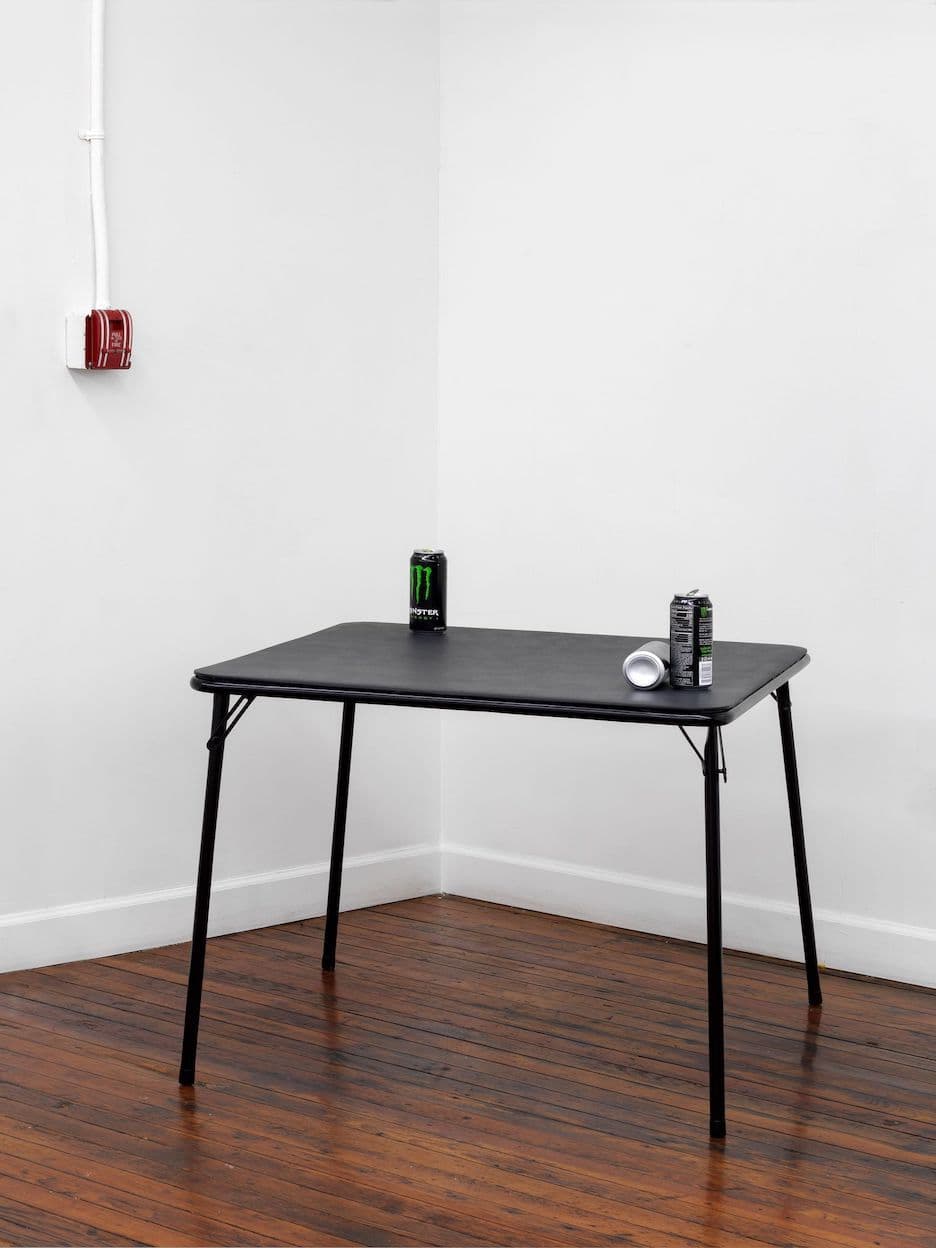
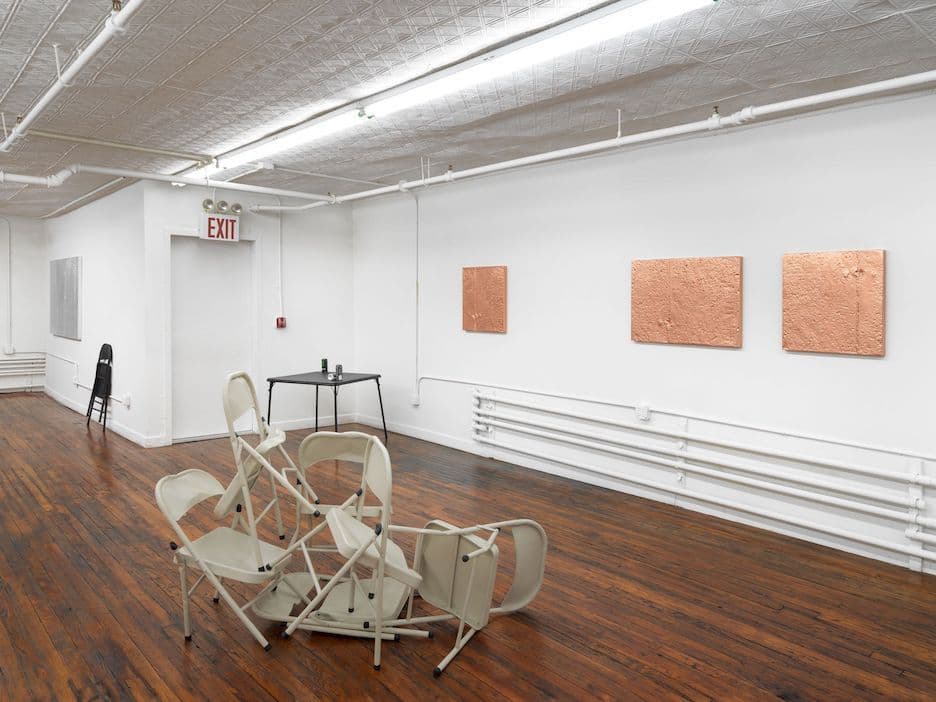
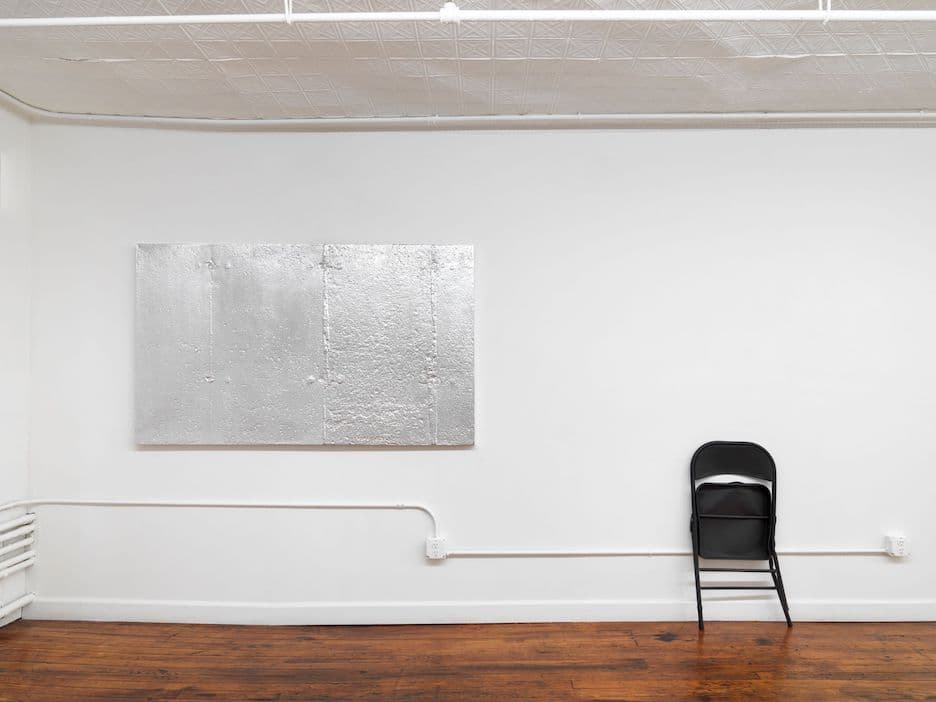
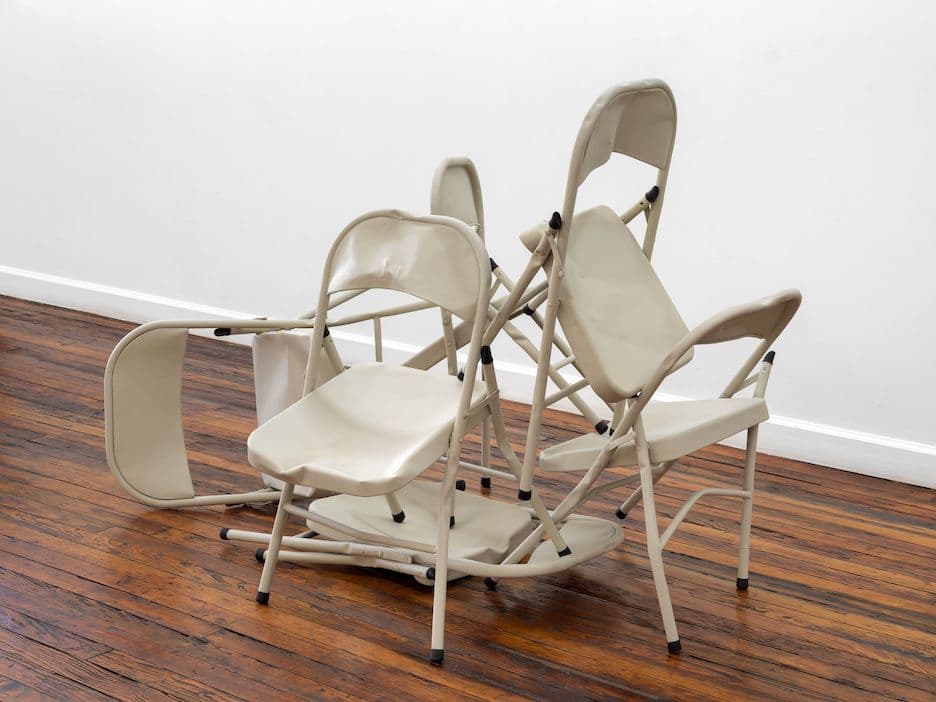
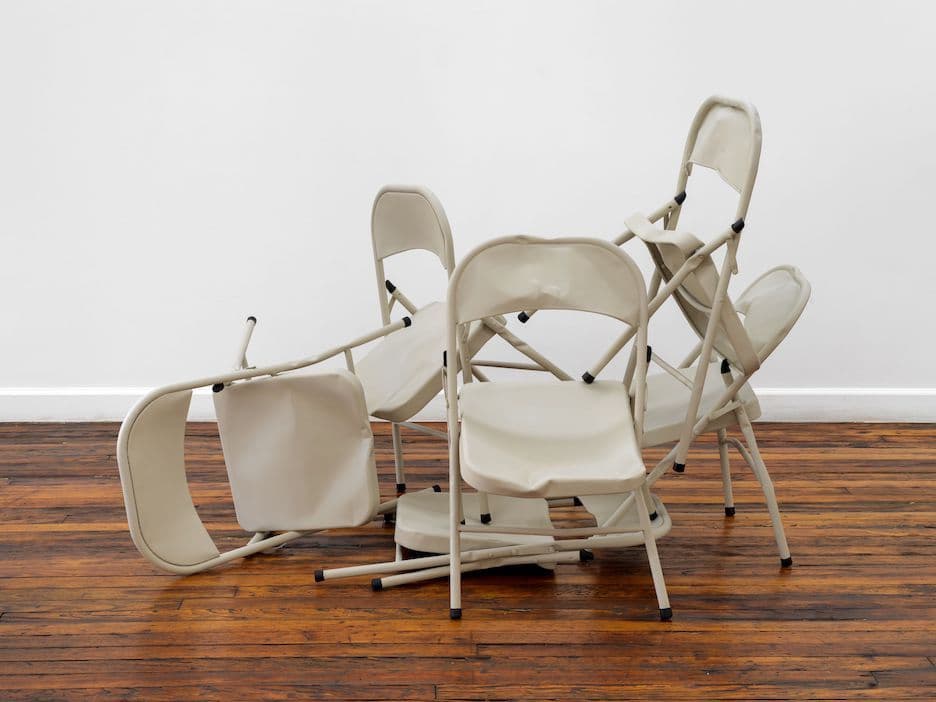
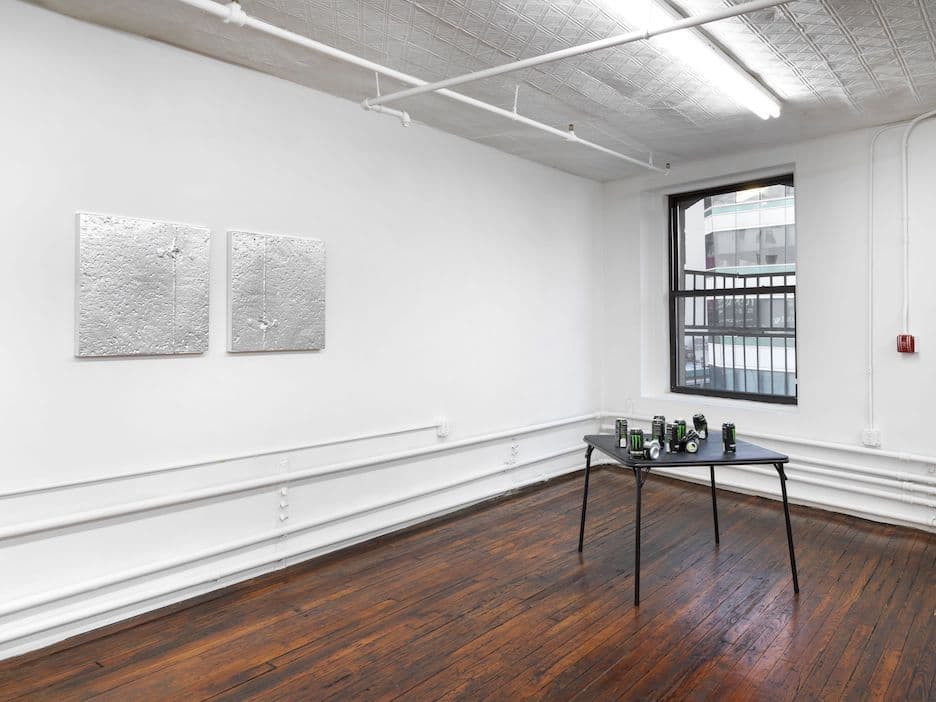
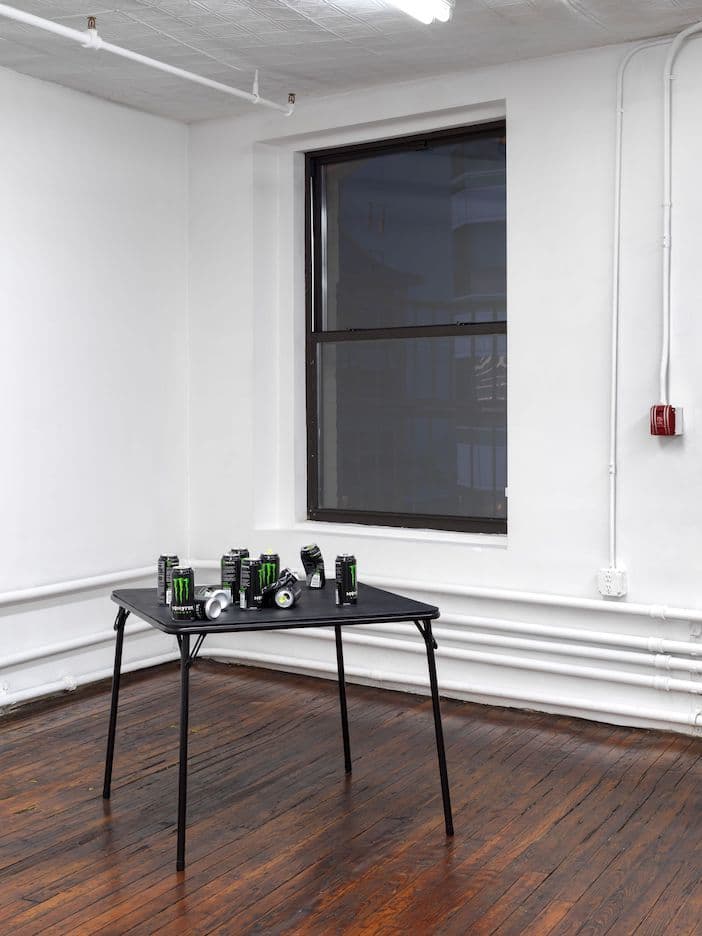
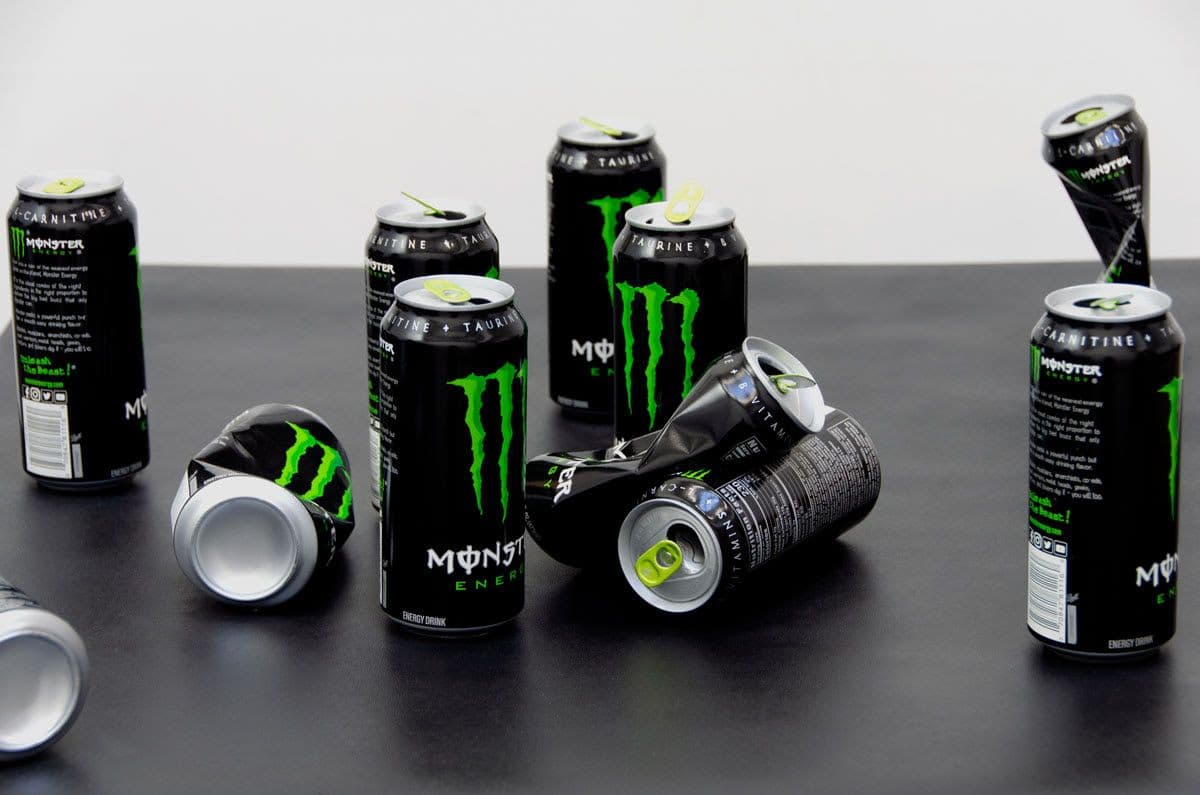
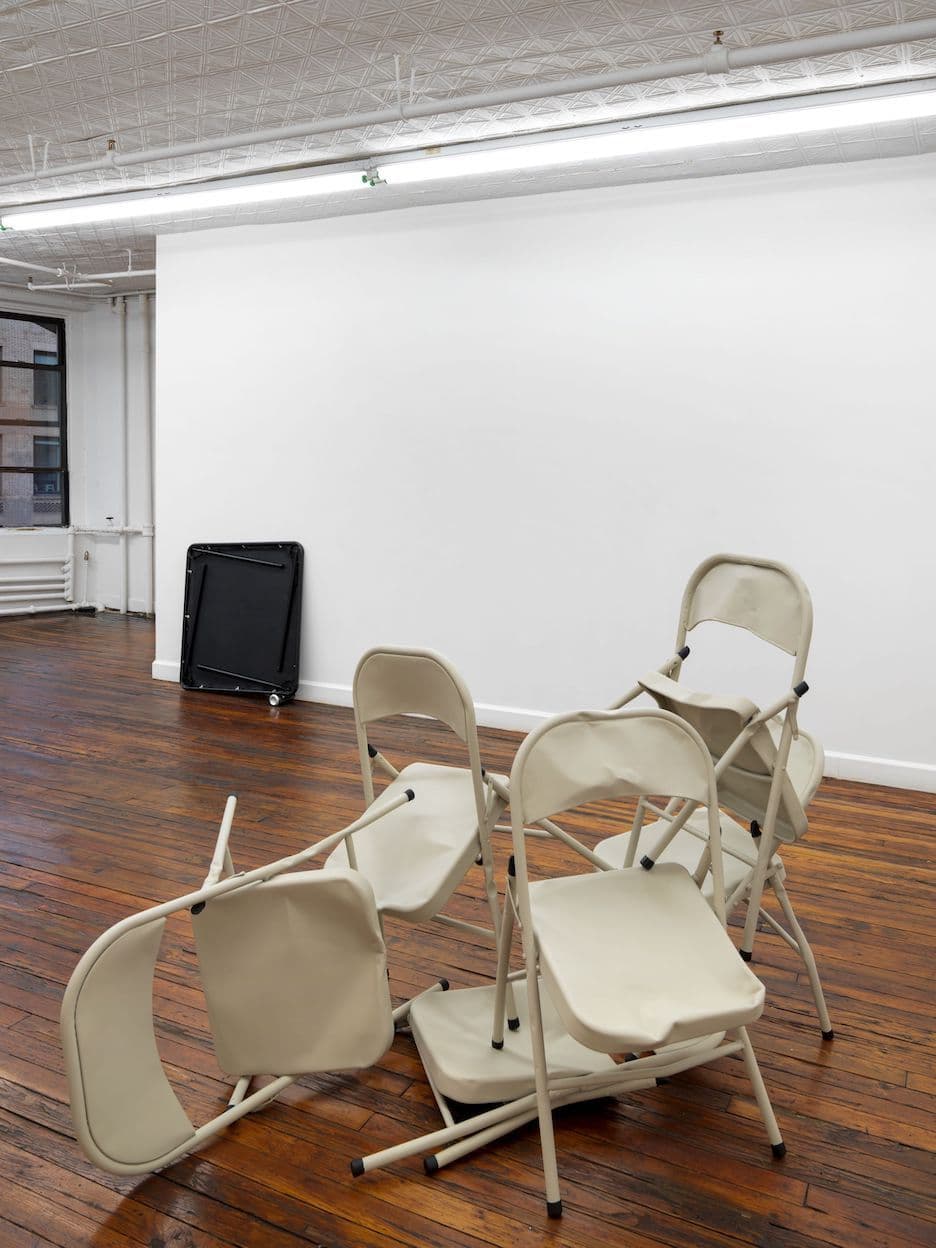
Off ParadiseOff Paradise is delighted to present Mitchell Charbonneau's Foundations, the artist's second solo exhibition with the gallery. Mitchell Charbonneau’s meticulously crafted sculptures draw our attention to ordinary objects that rarely warrant much consideration at all: folding chairs, step ladders, modular shelving units, and air fresheners. On entering this installation of recent sculptures, one could be forgiven for thinking they’ve happened upon the aftermath of some kind of disturbance. Crumpled chairs are precariously heaped in a pile, constellations of Monster Energy drink cans have been abandoned on otherwise empty card tables. The trademarked slogan on the black and Hulk-green cans urge the consumer to “Unleash the Beast!,” and it does appear that someone, or something, has been let loose. Contradicting this undercurrent of violence, or amped up masculinity, Charbonneau reconstructs his factory-made subjects by hand, with a level of care and attentiveness that elevates them beyond mere utility. He could easily use ready-made items (Cady Noland’s frequent use of Budweiser cans comes to mind), but he chooses instead to reproduce them in cast and painted polyurethane resin or bronze. Charbonneau’s labor-intensive process, which achieves a high degree of verisimilitude, requires the artist to conduct an intimate examination of his subjects, a level of attention and scrutiny that extends to the viewers experience as well. When was the last time you studied a folding chair? Or questioned its very chair-ness? Have you ever considered the aesthetic merits of energy drink packaging? The process of transmuting commonplace, utilitarian objects into art converts their value from one type of commodity to another. By taking a sledgehammer to the original chairs before casting their constituent parts, Charbonneau retains some of their lowness and undercuts, in part, the process of reification set forth by their re-making. The artist’s bludgeoning deformations are also a form of modeling, albeit a crass one, that draws expression from the chair’s rigid steel and unburdens them of their utility. By the time Charbonneau reconstructs them in the more fragile resin, he has so thoroughly divorced the chairs from their functional duties that they cannot suddenly return to use in church basements or school auditoriums. Battered and bruised, Charbonneau’s Senseless (2021–) sculptures are unexpectedly affecting. It’s not surprising that the chairs are anthropomorphic—they were designed to cradle and support human bodies after all. What is surprising is just how evocative they are of persons. A lone chair leans against a wall in an aloof contrapposto. Nearby, six tangled beige chairs—his largest configuration of Senseless yet—achieve a dynamic yet haphazard equilibrium. Like the shipwrecked figures in Théodore Géricault’s The Raft of the Medusa (1818), the chairs choreograph a chaotic codependence: some appear weary and beleaguered; others seem to cling desperately; and one rises, hardly triumphant, from the pack. The cans in Table with Monsters (2023–) interact in similar ways, resembling a group of people milling about; one, emptied and crushed, leans heavily on a companion. Foundations (2023–), a new series of copper and aluminum reliefs of raw concrete walls, suggest a setting for this loosely theatrical mise-en-scène: an unfinished basement. To produce the metal reliefs, Charbonneau makes molds from the foundation walls of his childhood home, then hammers the sheet metal (far more precisely than his work with a sledgehammer) over the molds. Subterranean, darkened, and secluded, cellars are interstitial spaces that allow our imagination to bloom. Comfortably situated within the family home, but concealed from watchful eyes, they can be sites of play but also of transgression, mystery, and fear that loom large in our memories. By converting a base substance into metal, the Foundations also underscore the alchemical aspect of Charbonneau’s entire project. Unlike his tables, chairs, and cans, they are more obviously transformed from one material to another. Not only does the lustrous metal elevate the status of the aesthetically unrefined wall, it also activates the scarred surface by reflecting ambient light to glimmering effect. While still rooted in casting and mold-making, these wall-mounted sculptures indicate a new, painterly direction for the artist. Each composition hinges on a seam in the concrete, which vertically divides the plane and anchors what is otherwise a formless muddle of splotchy crevices. As with all of Charbonneau’s works, the humble subject matter and damaged surfaces belie the painstaking work that went into recreating something most people never think twice about. The Foundations series demonstrates that Charbonneau’s real interest may lie with metamorphoses— transformations triggered by the shift from one material to another; from manufactured product to handmade artwork; from low to high commodity; from useful object to one for contemplation. His sculptures only have to deceive enough to arouse doubt and spark a reconsideration of these quotidian objects. And if these aren’t the real deal, what else is fronting as something else? Herein lies the real violence of Charbonneau’s sculptures: their destabilizing force. By undermining our trust in what we see, they compel viewers not only to reckon with the objects at hand, but everything around them. They shake our very foundations. —Chris Murtha — Mitchell Charbonneau (b. 1994, Bedford, New Hampshire) received his BFA from The Pratt Institute, Brooklyn, New York in 2016. His debut solo show, “Gone in 60 Seconds,” opened at team (gallery, inc.), New York in early 2020. That same year, Charbonneau was included in “Ascensions,” a group exhibition at Off Paradise in the fall of 2020, followed by “Senseless,” his first solo presentation with the gallery in 2021. “Two Minutes to Midnight,” a two-person exhibition, opened at Independent New York in the spring of 2023, and is now expanded upon in Foundations. Off Paradise is a gallery located on Walker Street founded by Natacha Polaert in the fall of 2019. The name evokes the old neighborhood of Five Points, at the center of which was a small, triangular park, full of hopes and grime, called Paradise Square. It also invokes Paradise Alley, the artists’ and poets’ colony on the then-godforsaken corner of Avenue A and East 11th Street that is referenced in Jack Kerouac’s novel The Subterraneans. Off Paradise is a fictional place, right off Paradise, adjacent to it, but not exactly it.