
Belleville, Paris
Anselm Kiefer
Nymphäum
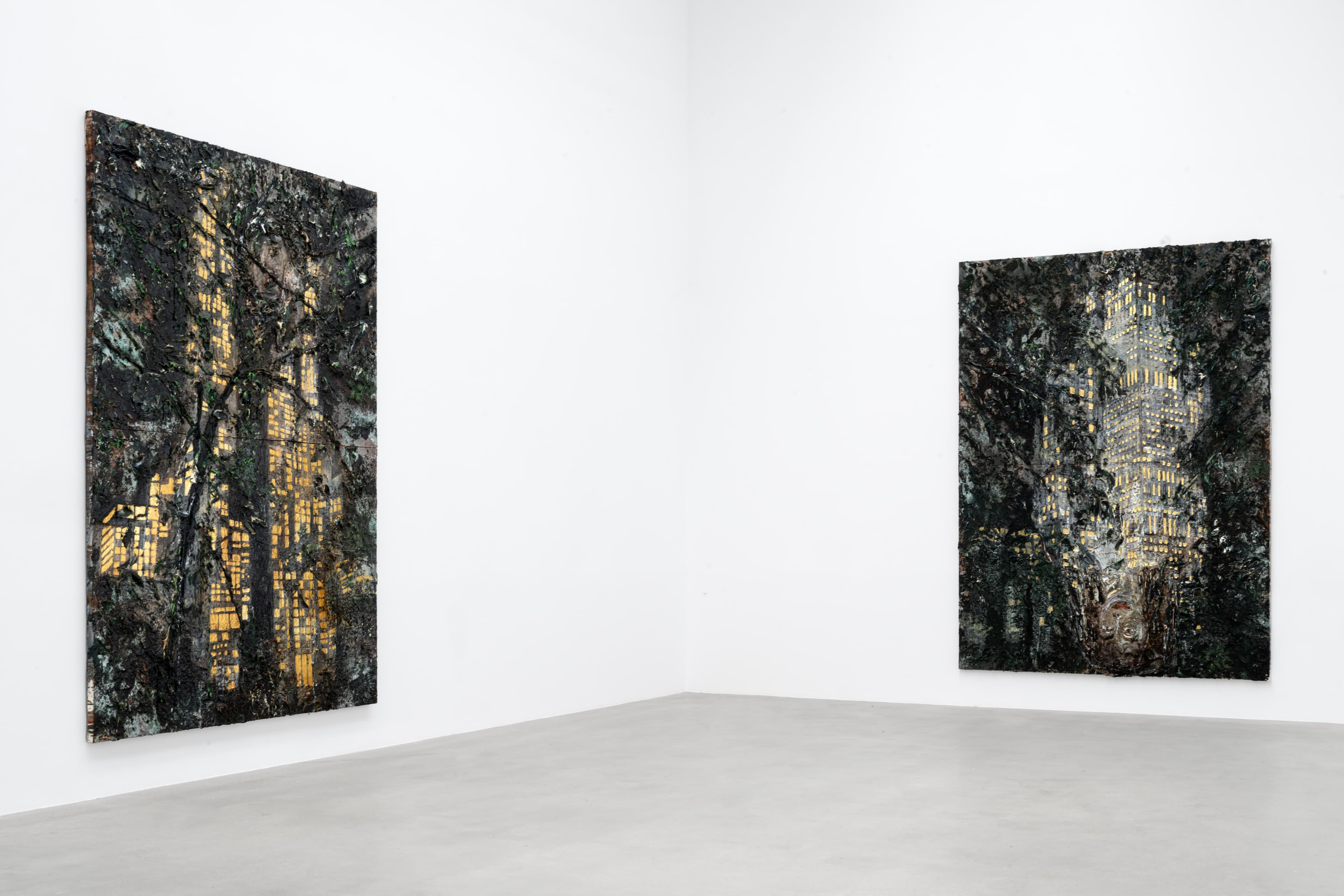
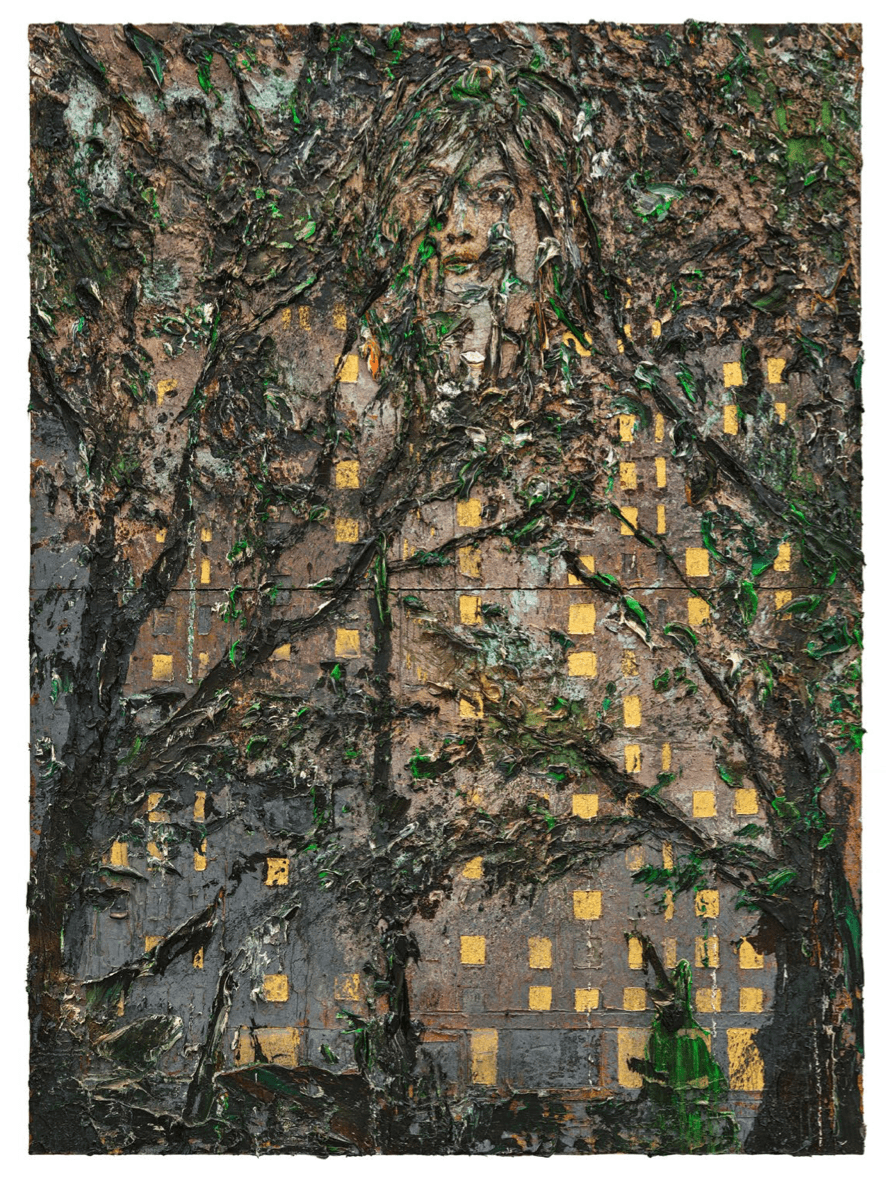
Thaddaeus RopacThaddaeus Ropac Paris Pantin presents Nymphäum, an exhibition of new works by Anselm Kiefer. Across more than 20 monumental paintings, the artist orchestrates richly layered paint and collaged elements to reimagine narratives sourced from classical mythology. The title of the exhibition translates as 'nymphaeum', referring to sanctuaries consecrated to the nymphs in ancient Greece and Rome. Kiefer transforms the gallery into his own painterly nymphaeum: a new chapter in the interweaving of myth and matter that has defined his practice for more than five decades. Kiefer amasses and continually reworks motifs as tools to excavate the depths of human history. In this new body of work, he turns his attention to nymphs: embodiments of nature rooted in classical mythology and yet urgently contemporary. These figures become conduits for an idea at the heart of Kiefer's artmaking: humanity's profound entanglement with the cycles of the natural world. Some of Kiefer’s nymphs occupy bucolic settings reminiscent of their classical origins, while others inhabit distinctly modern worlds. In a group of vertiginous cityscapes, Kiefer replaces his signature desolate landscapes with welcoming façades, their glowing windows rendered with meticulous gold leaf in grid-like arrangements, which curator Corinna Thierolf compares in the catalogue ac- companying the exhibition to both Byzantine mosaics and Gustav Klimt’s The Kiss (1907–8). Inspired by the light falling through the trees of New York’s Central Park, the artist identified in the most urban of settings a space for the otherworldly. Vine-like profusions scar the foregrounds of these paintings, rendered so texturally that they appear to pierce the canvas, sprouting through it as if reclaiming the man-made world. Across Kiefer’s work, nature battles to take back ravaged terrains in a metaphor for the inevitability of cyclical destruction and rebirth against the backdrop of the scarred landscape of post-war, post-industrial Europe. The sweeping lineup of mountain nymphs in the monumental Die Oreaden (2025), standing at almost eight metres in width, translates the idyllic twilight scene of William Bouguereau’s Les Oréades (1902) into bleak, shadowy mountains below a burnished sky. While Kiefer’s concrete highrises and hostile landscapes appear inhospitable to spirits of nature, his dense, impasto surfaces seem to offer them fleeting shelter. Also on view in the exhibition are two painted triptych screens, described by Thierolf as ‘providing protection for the nymphs – as if the painter wanted to offer the ephemeral beings refuge for a short while, albeit fully aware that even the slightest breath of air would be enough to drive them away again.’ Rivers have long run through Kiefer’s practice as a foundational motif, carrying, as Min Jung Kim, curator of the artist’s 2025–26 exhibition at Saint Louis Art Museum, writes, ‘historical, mythological, and symbolic weight’. Several of the works on view retrace the myths of Naiaids, Nereids and Oceanids. In Thetis (2022–25), Nikaia (2025) and Actaea (2021–25), the titular nymphs bathe in dark waters or dissolve into their aquatic surroundings. Kiefer renders these scenes through sumptuous layers of paint and collaged canvas, making the works themselves appear as if they had been physically submerged in the very silt and history of the waters he depicts. The language of material plays an essential role in Kiefer’s work, and across the exhibition, highly symbolic connections emerge from shellac and chalk, collaged straw and charcoal. Kiefer also employs sediment of electrolysis – the jade-coloured residue left behind when metal is exposed to an electrical current – like paint, applying it generously to his canvases to denote foliage or water. Like the opulent gold leaf that Kiefer uses to represent the sky or light, this sediment recalls alchemical processes for the transmutation of matter into gold, a recurring influence in the artist’s work. In Kiefer’s words: ‘Alchemy is a symbol for the artist… you have to destroy and then recreate.’ In Nymphäum, such transformation finds expression in subject as well as in material. The artist depicts nymphs in metamorphosis, a key theme in classical literature. In Daphne (2025), the eponymous river nymph materialises from the laurel tree into which she was transformed in Ovid’s account. In Carya (2025), the bloom-like face of the titular nymph emerges from the leaves of the walnut tree that bears her transfigured form. Almost camouflaged among the textural surfaces, they appear as if born directly from dynamic material reactions on the canvases. The disembodied faces recall the portraits that Kiefer suspended in his landscapes of the late 1960s and early 1970s, a compositional strategy through which, as art historian Sabine Schütz wrote, ‘landscape turns into a soulscape’. Watching over the natural world, the nymphs weave a connection between figure and nature, and interior and exterior realms, softening the frontiers between landscape and portraiture. This collapse of figure and ground animates the works’ stratified ‘earth’, which becomes, as Thierolf writes, ‘a place of remembrance: overgrown, closed, but not silent’. Anselm Kiefer was born in 1945 in Donaueschingen, Germany. In 1992, he moved to France, where he lives and works between Paris and Barjac near Avignon. The artist studied law, literature and linguistics before attending the Academy of Fine Arts in Karlsruhe, and later in Düsseldorf, where he was a student of Joseph Beuys. He was selected for the West German Pavilion at the 39th Venice Biennale in 1980. He was presented the Praemium Imperiale Award by Japan in 1999, and in 2008 he received the Peace Prize of the German Book Trade. In 2007 he was the first artist since Georges Braque to have a permanent installation commissioned for the Louvre in Paris, and in 2018 his site-specific sculpture Uraeus was exhibited in front of the Rockefeller Center, New York. In 2020, he was the first artist to make permanent works for the Pantheon in Paris. In 2022, concurrently with the 59th Venice Biennale, he also presented a major installation in the Palazzo Ducale, Venice. Kiefer’s works have been shown in prominent solo exhibitions internationally, including at the Städtische Kunsthalle Düsseldorf (1984); Art Institute of Chicago (1987); Nationalgalerie, Berlin (1991); Metropolitan Museum of Art, New York (1998); Fondation Beyeler, Basel (2001); Guggenheim Bilbao (2007); Royal Academy of Arts, London (2014); Centre Pompidou, Paris (2015); Bibliothèque nationale de France (2015); Albertina, Vienna (2016); State Hermitage Museum, St. Petersburg (2017); Rodin Museum, Paris (2017); Met Breuer, New York (2018); Astrup Fearnley Museet, Oslo (2019); Grand Palais Éphémère, Paris (2021); Museum Voorlinden, Wassenaar (2023); Fondazione Palazzo Strozzi, Florence (2024); Stedelijk Museum and Van Gogh Museum, Amsterdam (2025); Ashmolean Museum, Oxford (2025); Royal Academy of Arts, London (2025); Saint Louis Art Museum (2025); and Palazzo Reale, Milan (2026).