
Hollywood, Los Angeles
Andrés Monzón-Aguirre
Égida
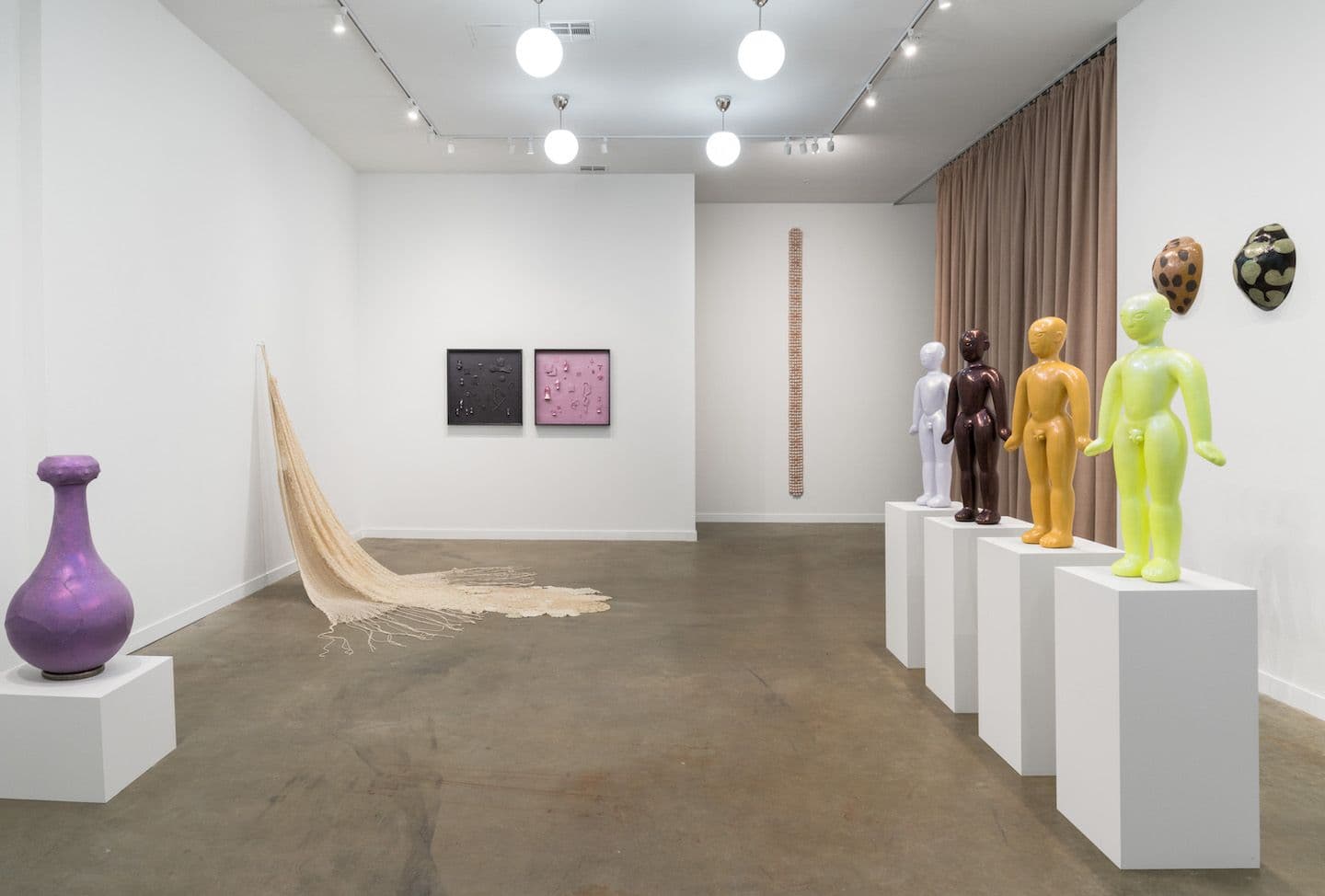
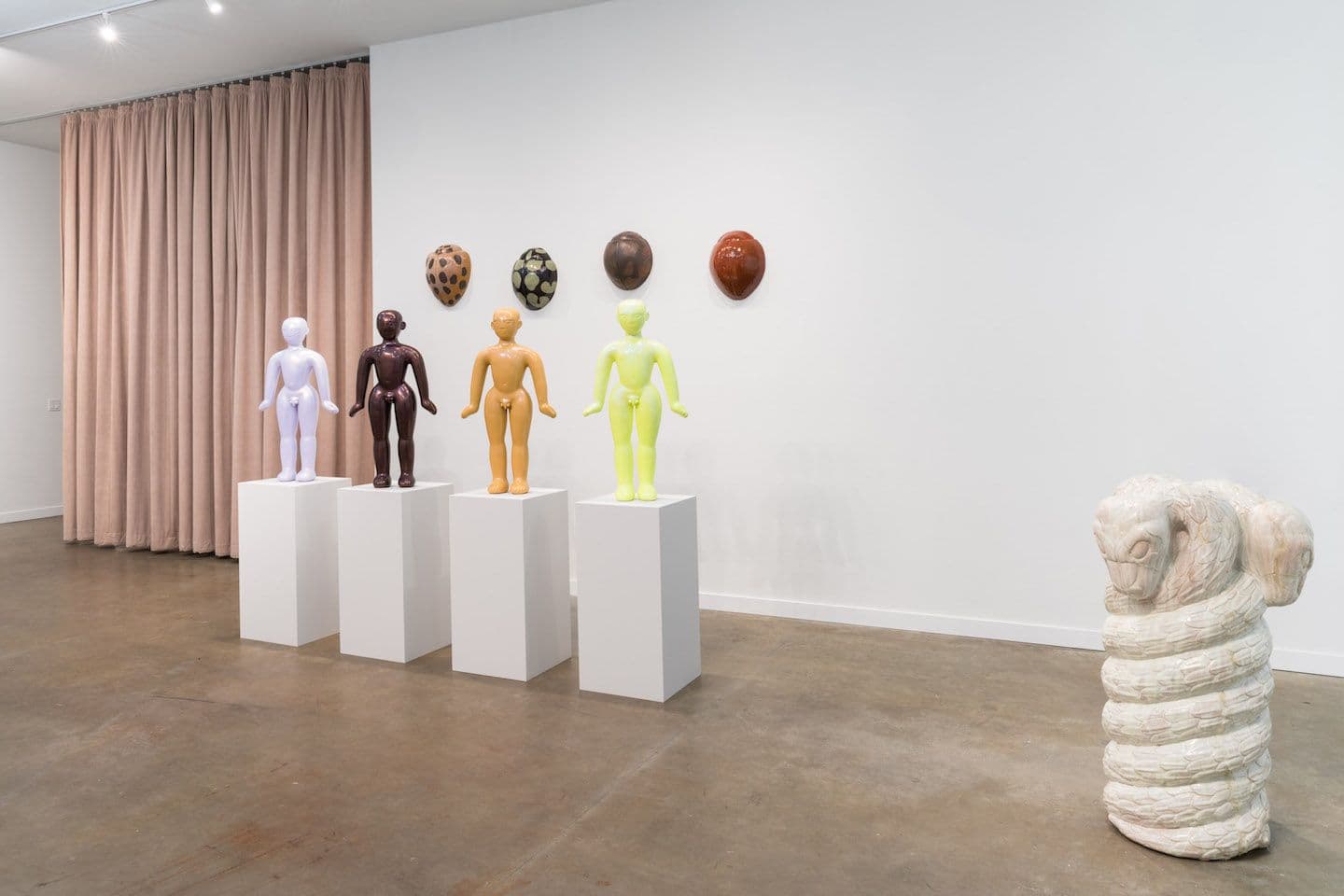
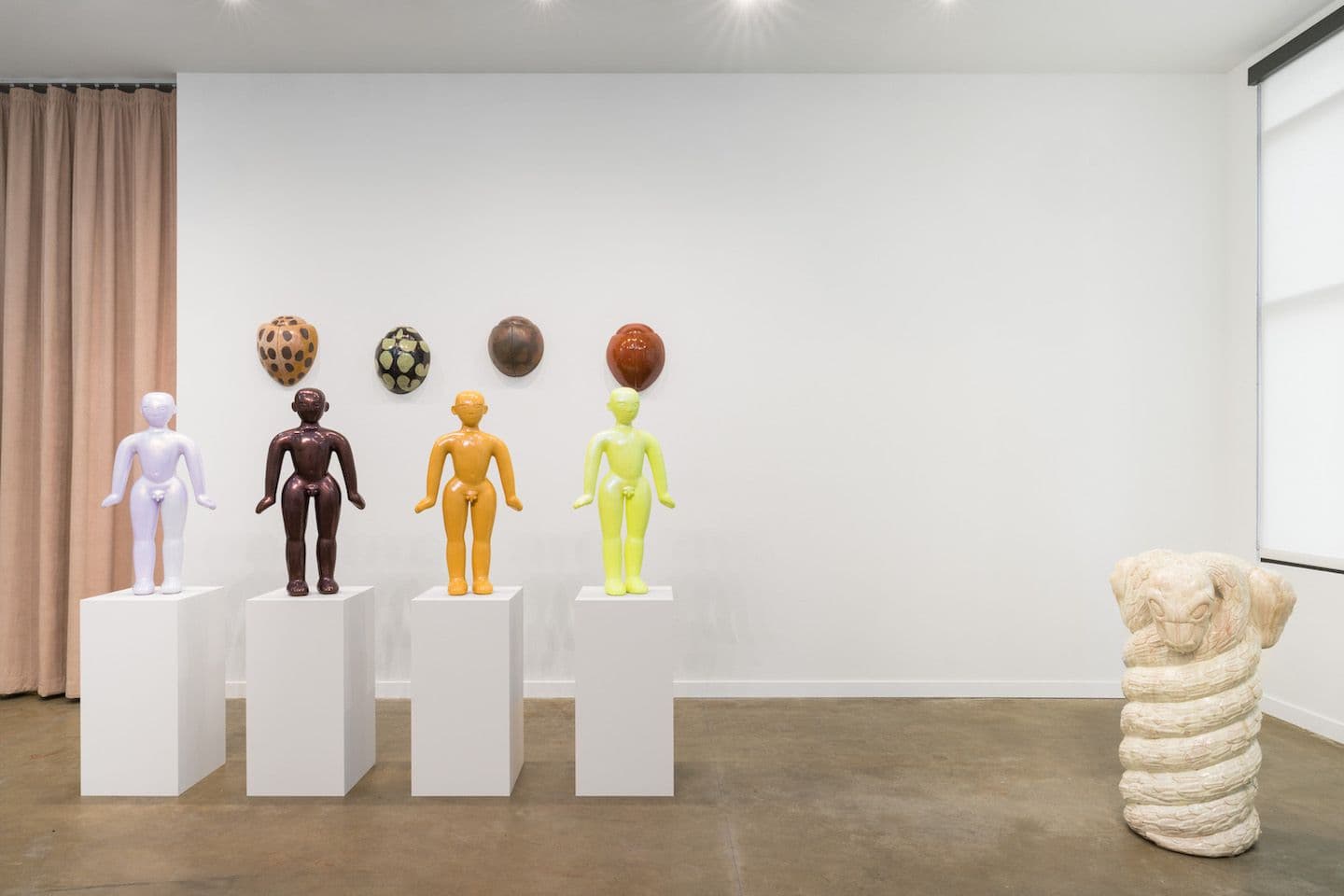
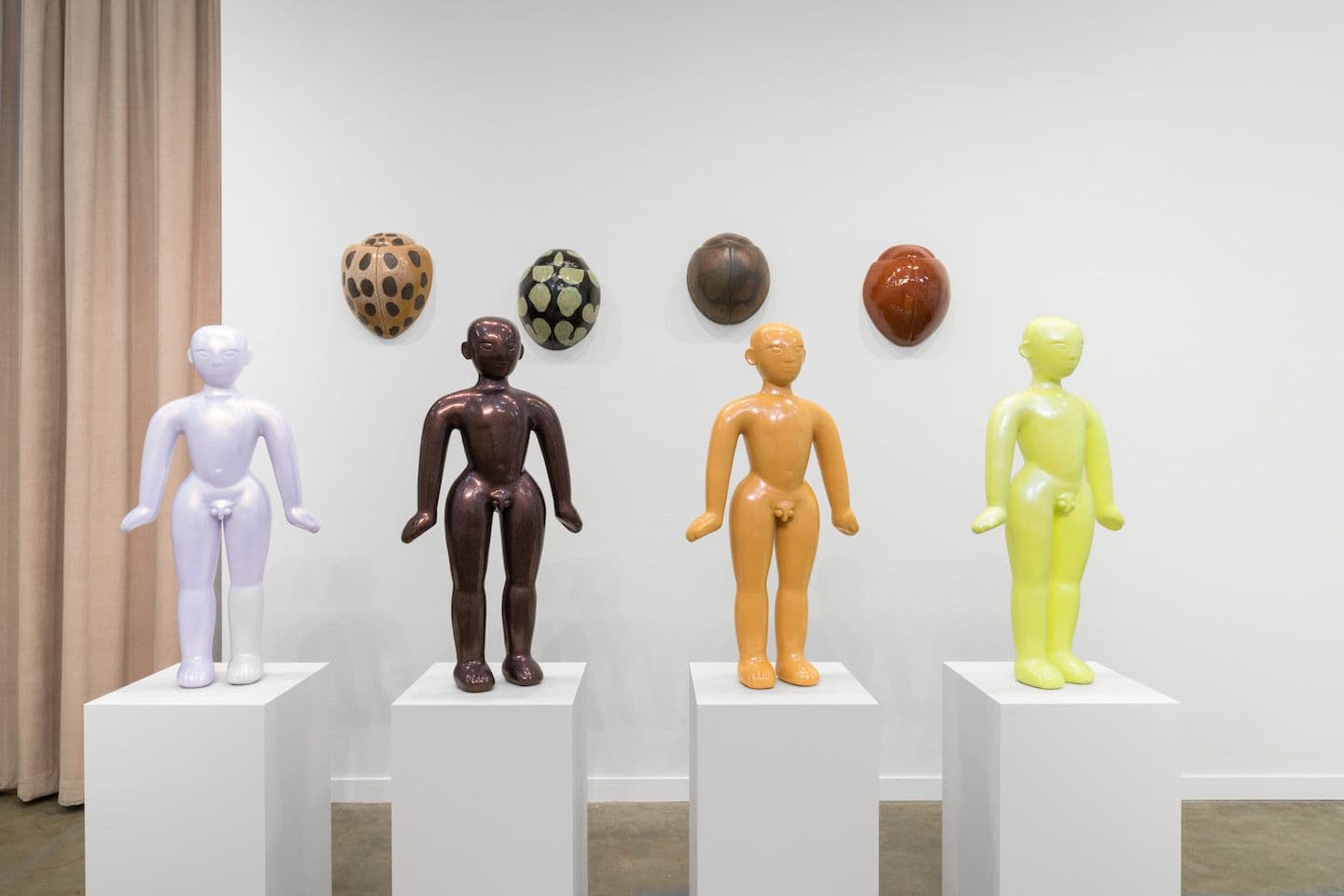
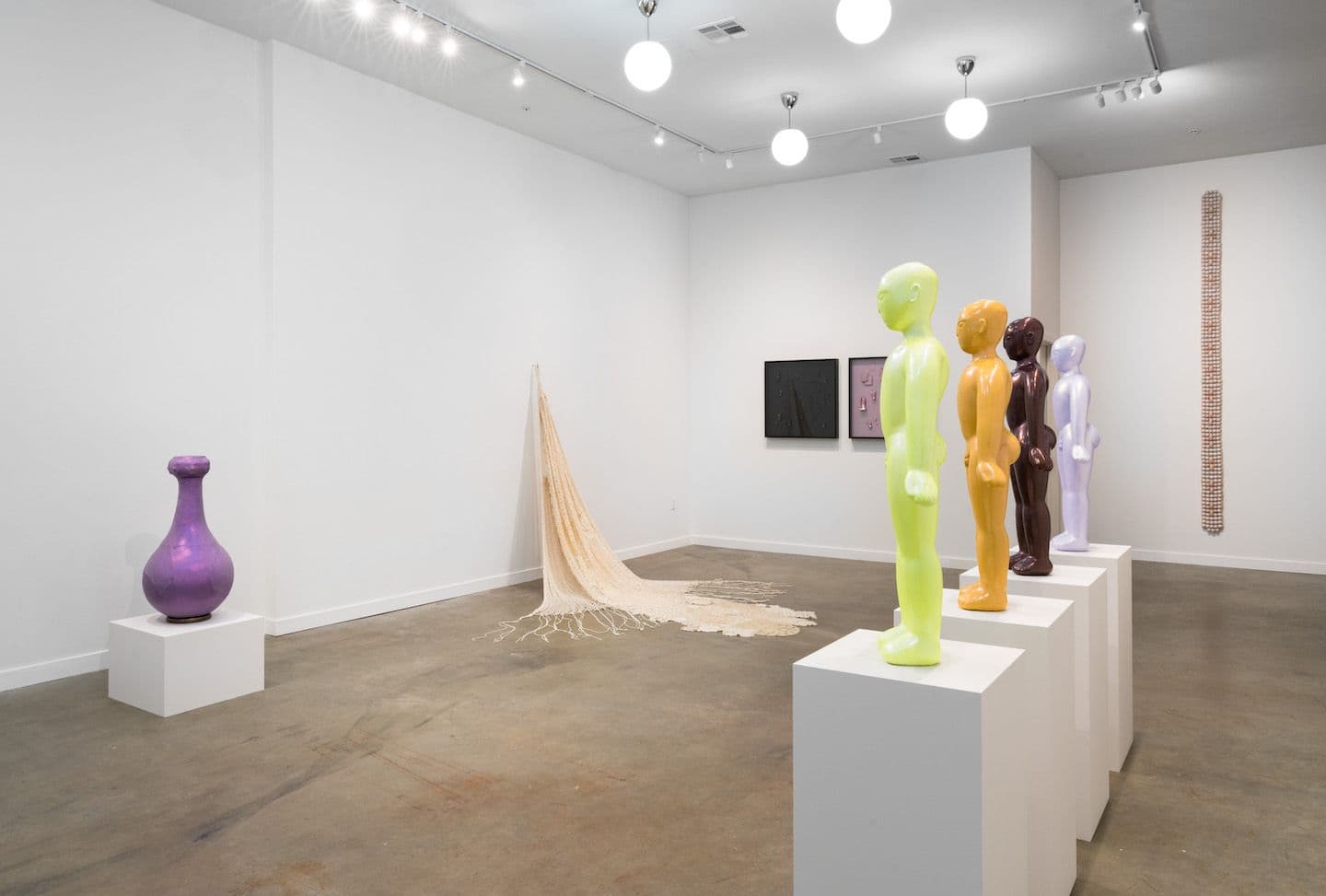
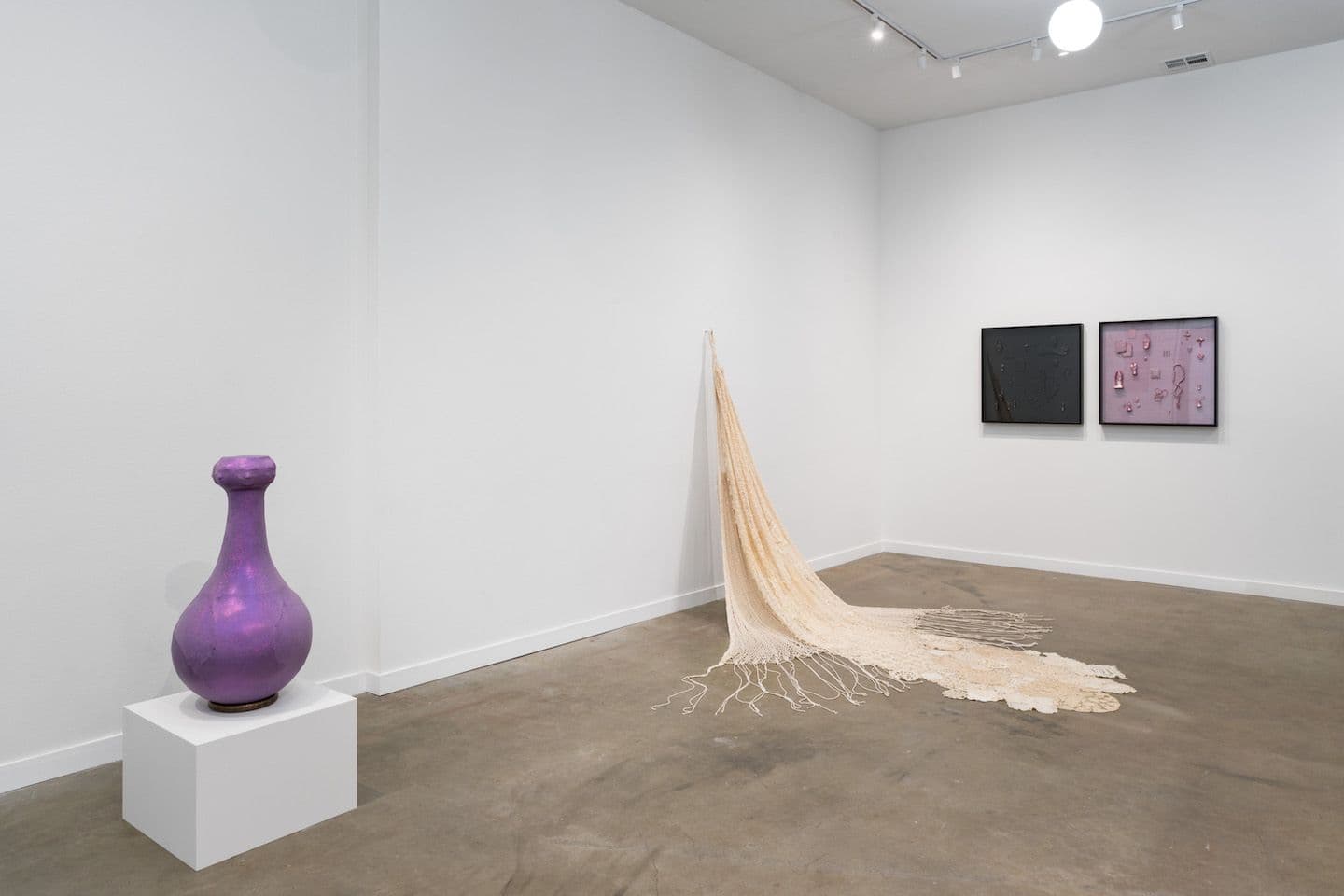
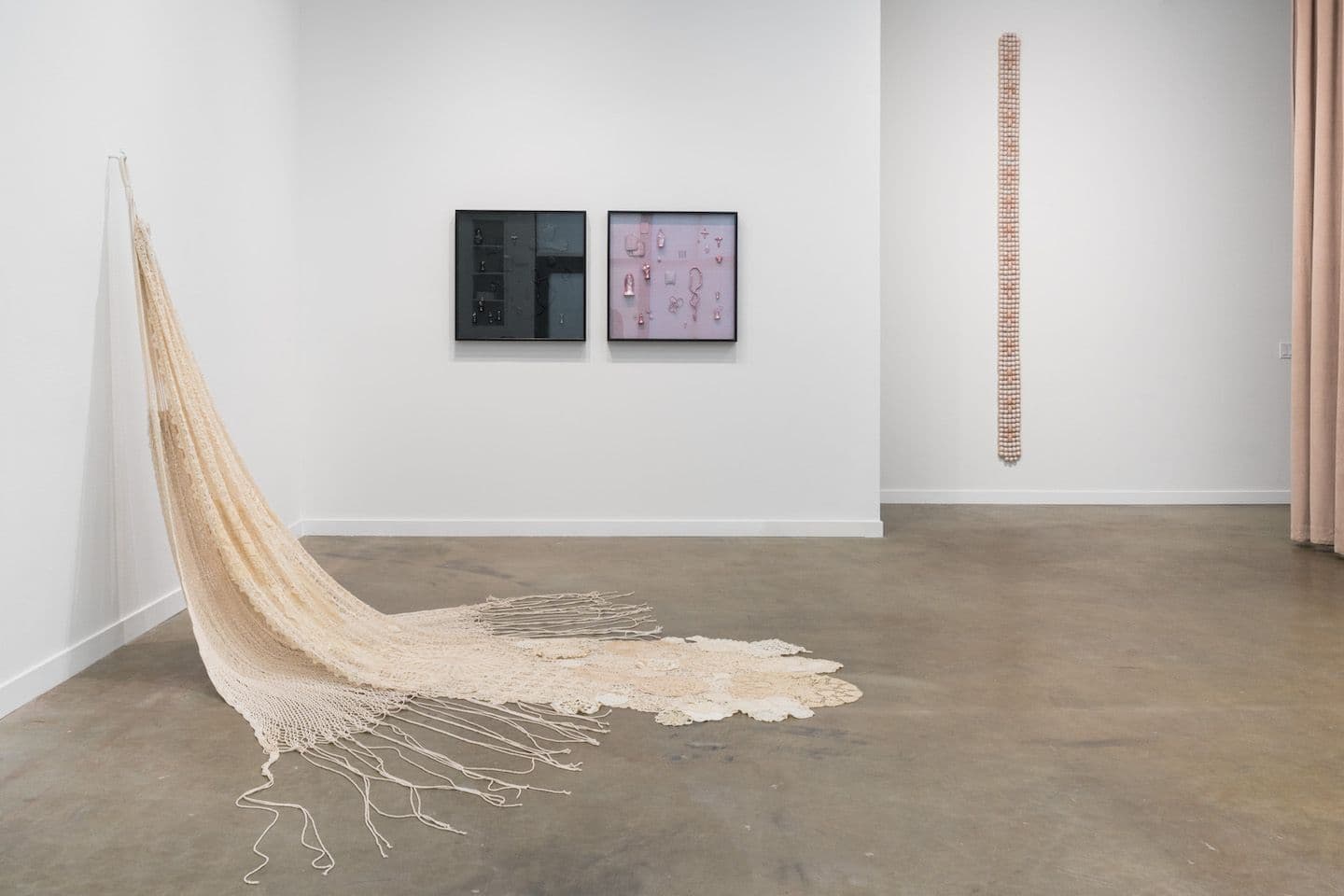
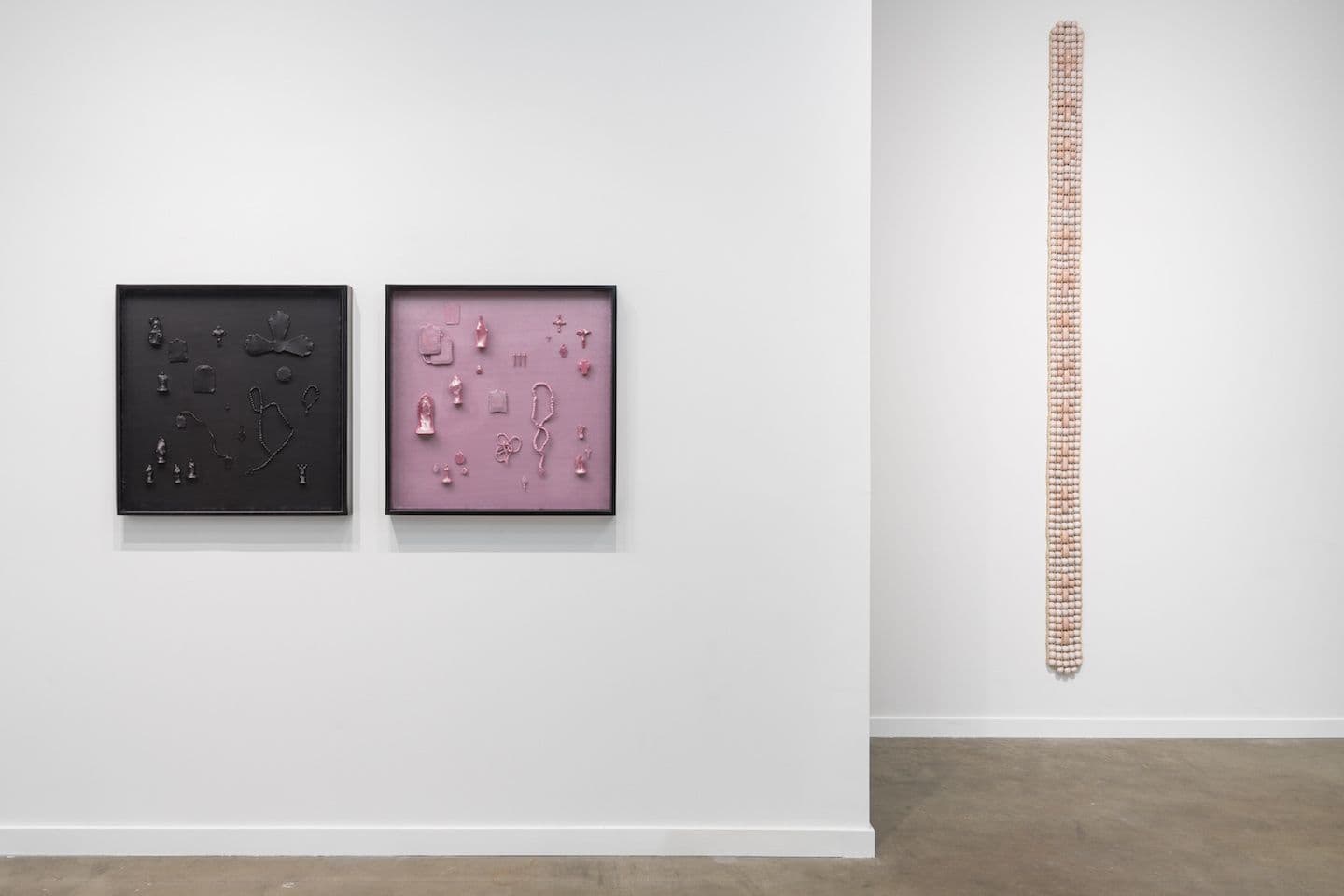
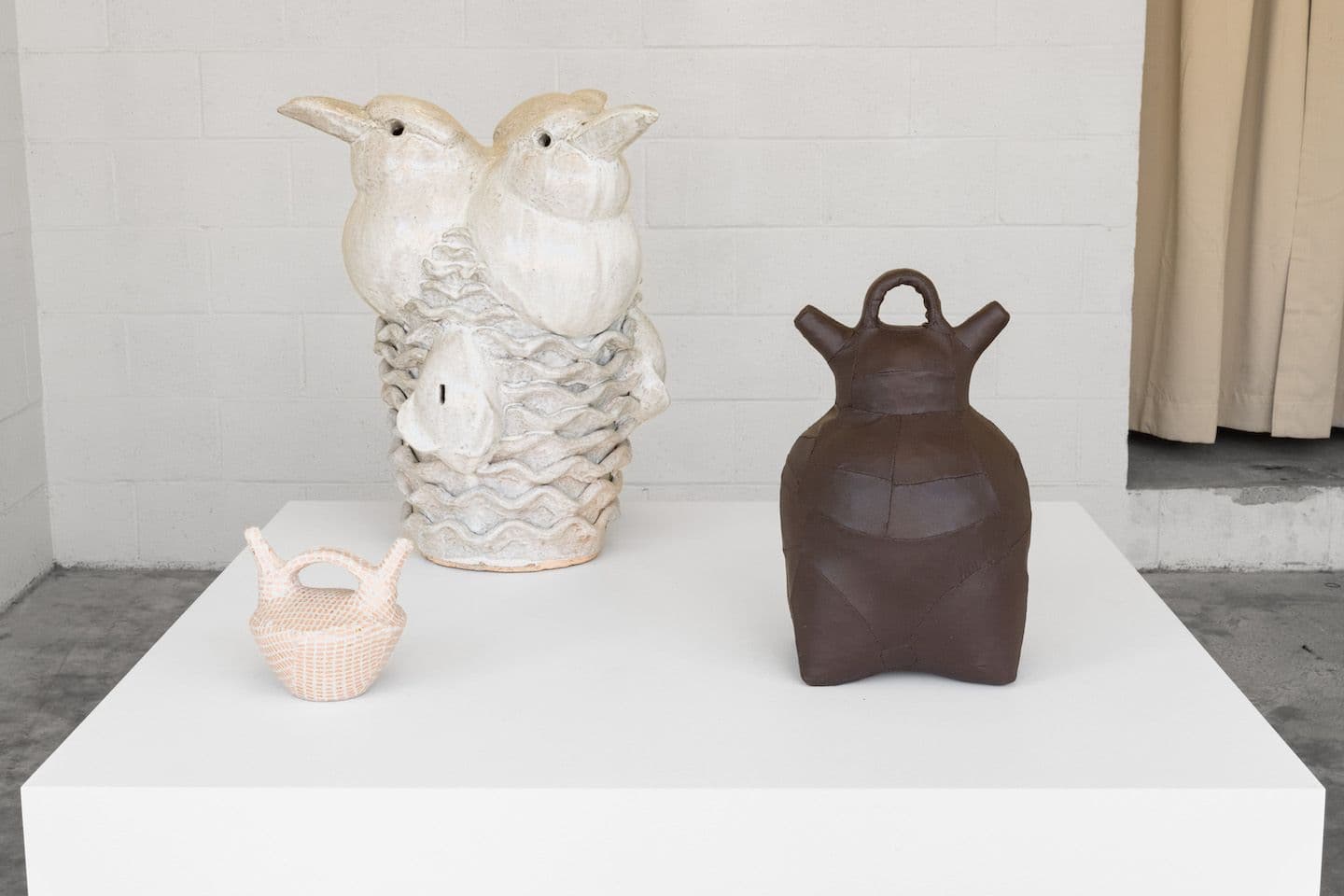
StarsÉgida, Brooklyn- and Medellín-based Andrés Monzón-Aguirre’s first solo presentation with Stars, unites interlocking bodies of work exploring the artist’s personal and familial narratives through ruptures and displacements. Monzón-Aguirre accrues and reimagines culturally-specific images from across time, creating a personal archaeology of the present, a material genealogy of objects and symbols. Referencing historical depictions of male standing figures, their ceramic Jovenes, or Youths, appear as almost archaeological finds. However, instead of finishing them with a standard glaze or leaving their earthenware bare, Monzón-Aguirre coats them with nail polish. With this gesture, the artist refers back to their training as a painter while toying with the artifice of gender and the unstable boundaries between the modern and the ancient, the original and the reproduction. Each Joven is paired with a larger-than-life ceramic ladybug that takes its title, Mariquita, from the insect’s common Spanish name, which is also a diminutive form of a queerphobic slur. Paired with the Jovenes, the term is turned to object and reclaimed. Monzón-Aguirre’s alternative history—which traverses the patriarchal and racialized distinctions of craft, decoration, and fine art—is likewise asserted in the Velo hamaca, or hammock veil. Made in collaboration with the artist’s uncle, who for years has crocheted doilies for use in the home, the hanging textile manifests an intergenerational connection that allows for a transhistorical restructuring of gendered norms. Monzón-Aguirre gives form to the indeterminate boundaries between cultural reclamation and “ownership” contrived by states and sciences alike. In Leyenda I and Leyenda II, the artist wraps rosaries, statuettes of saints, and other objects of worship in textiles, setting them in wall-mounted entomological boxes. The titles refer to 16th- and 17th-century propaganda campaigns (called the Leyenda negra or Black Legend) by Dutch and English colonists to portray their Spanish rivals as uniquely violent. Spain retorted with their own Leyenda rosa, their rose-tinted take on their purportedly divinely mandated colonial activities. Exemplifying Monzón-Aguirre’s interest in multifarious readings of past and present, their Leyendas might be interpreted simultaneously as critiques of the broad hispanophobia in the US as well as the glossing over of the impacts of proselytization and settlerism. Throughout Égida, surface finishes obscure found objects and reconstructed “originals.” Glittery nail polish, as on the Jovenes, or shimmery textiles, as with the wrapped Poporos or Alcarraza Envueltas, entice. But in their attractiveness they also point to a cultural impulse to sugar-coat challenging histories; the finishes both cosmetically enhance and erase. Syncretizing pre-Incan and contemporary forms, Monzón-Aguirre uses sculpture as a mode of autoethnography. While many of Égida’s works replicate traditional forms, Monzón-Aguirre’s titular zoomorphic Égida sculptures have no direct referents. Pseudo-mythological, gargoyle-like vessels with 360º vision—imbued with deeply personal artistic and protective characteristics—they materialize the artist’s research. The Égidas—and Égida—are propositions for the power of rescuing and rewriting one’s own past that display the instability and constructedness of the objects and images used to tell dominant histories.