
Bushwick, New York
Aminah Al Huqail & Terumi Saito
Palimpsests of the Palm
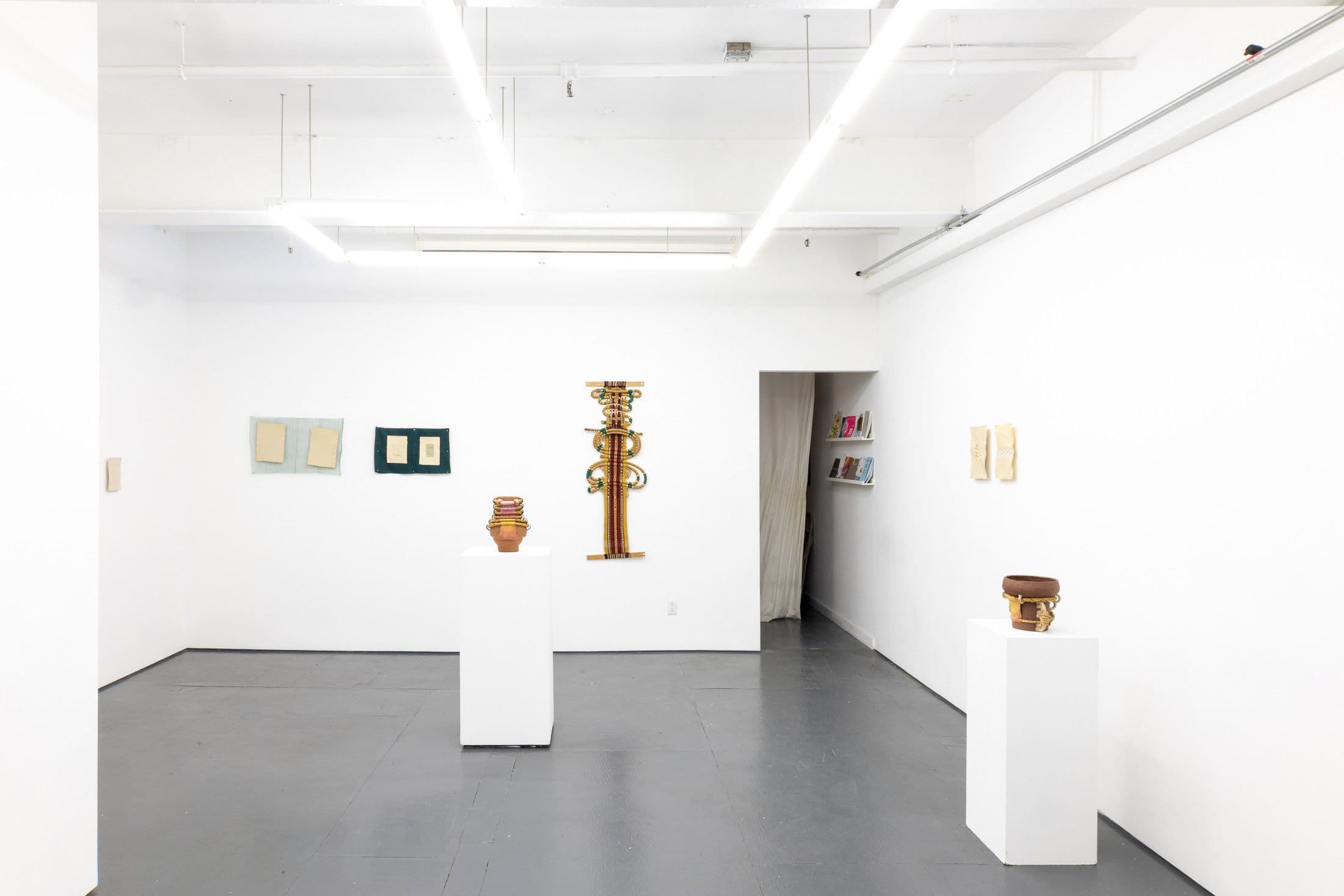
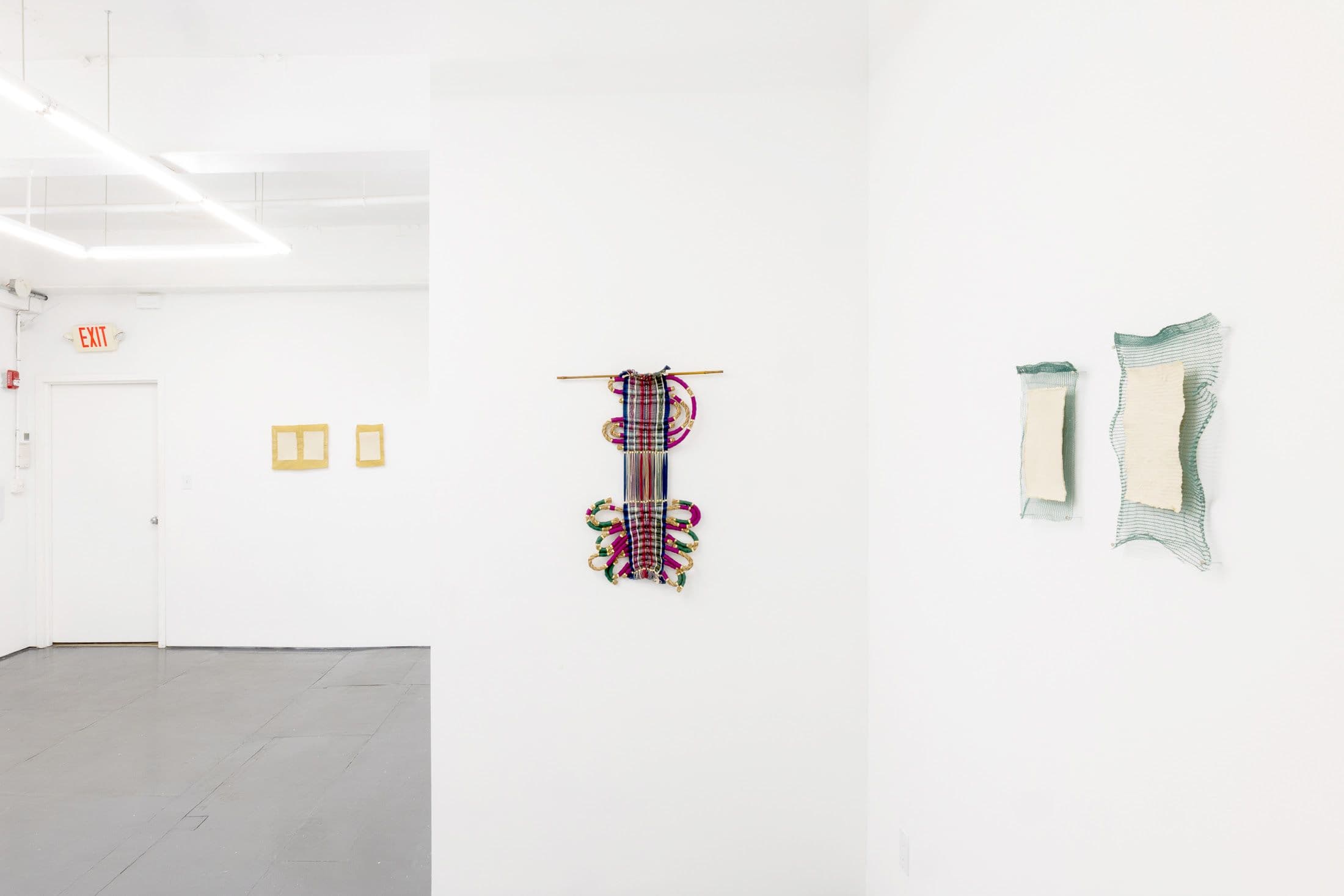
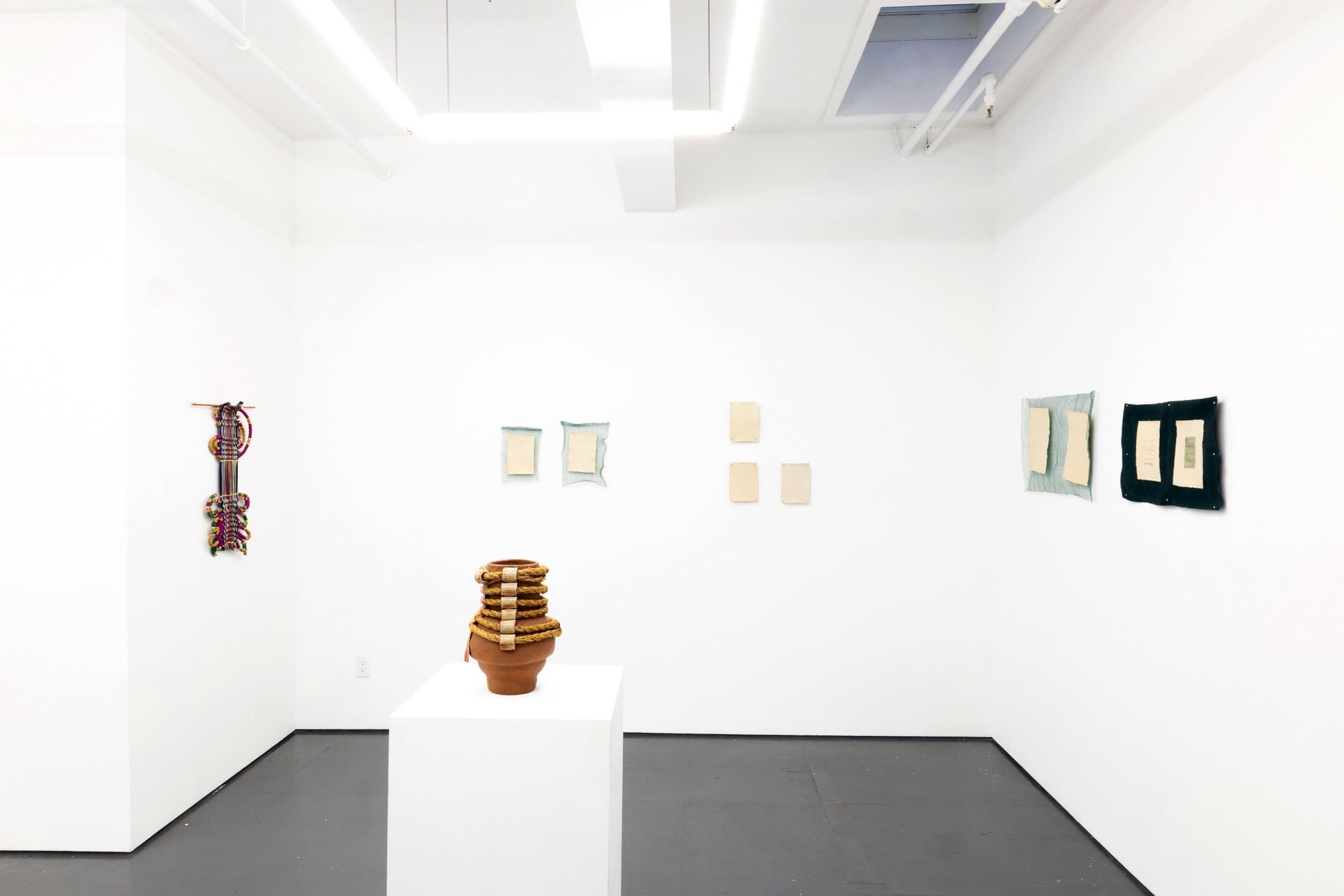
TransmitterTransmitter is thrilled to present Palimpsests of the Palm, a two-person exhibition of Aminah Al Huqail and Terumi Saito, curated by Lila Nazemian, featuring works on paper, textile and ceramic sculptures. Both artists’ practice and use of mediums are linked to traditional craft forms such as paper making and backstrap weaving, nevertheless, each engages in innovative approaches to tradition that reflect their own personal and artistic journeys. Al Huqail’s works of handmade paper primarily emerge from the byproducts of food, such as chickpea skins and olive or date pits that were consumed during gatherings. Using paper making techniques, she creates the paper pulp by blending these fibrous remnants along with dyes made from the same natural materials, such as pistachios. Al Huqail then makes paper that is pressed together to house pistachios shells or dates pits. Some works are made with her Greek grandmother’s last olive harvest; two pieces of adjoined paper contain the olive pits between them. Even the green netting that acts as a frame in various pieces is akin to the nets that her family in Greece have used for generations to gather each year’s olive harvest. Other works are created out of the food waste from Subhiya gatherings that took place every Sunday in New York, where artists and friends who were struggling to cope with the horrific aftermath of Oct 7th, would gather and engage in a calming, repetitive act, such as peeling chickpea skin to make hummus. The works are archives of a dark period of collective gathering where a space was made for a community to hold itself and feel safe. Saito’s hanging sculptures are created using the backstrap weaving technique, prevalent across Asia as well as Central and South America and are inspired by the sacred ropes and ornaments (shime-nawa and shime-kazari) in Shinto shrines created for deities and that act as a protective barriers against affliction and harbingers of good fortune, respectively. The pieces in this show were created with Peruvian wool, using Andean weaving and natural dyeing techniques. Through this labor intensive process, interweaving tradition and belief, Saito summons the sacred. In her latest works that combine textile, rope and ceramics, the handles and, at times, the interiors of her vessels are assiduously glazed, encapsulating the spirit of guardianship and protection as objects that are to hold and be held. Combining the knowledge she has gathered from master weavers in Japan, Peru, and Guatemala, Saito’s work is a reflection of a shared global heritage rooted in the most ancient of art forms: weaving and ceramics. In her essay, The Carrier Bag Theory of Fiction, Ursula K Le Guin proposes that “The first cultural device was probably a recipient .... Many theorizers feel that the earliest cultural inventions must have been a container to hold gathered products and some kind of sling or net carrier.”[1] If objects to hold and carry were among the first human creations, then their continued prevalence in our societies affirms that while new forms and aesthetics of the containers are continually introduced, the primary purpose remains: we need things to carry, contain and gather other things. In essence, everything in our surroundings is a form of vessel, from our bottles which hold liquid, to buildings which contain apartments and evidently, people. Al Huqail and Saito’s works, with their use of nets, paper, thread, rope, and ceramic, embody this primal and utilitarian need to contain. Yet, perhaps the very first holder of things was none other than the palms of our hands. The works in the show act like palimpsests, which not only reveal the traces of their makers, but also contain the evolution of materials as they transform under the direction of each artist's hand. 1 - Ursula K. Le Guin, “The Carrier Bag Theory of Fiction,” Still Moving, accessed April 17, 2025, https://stillmoving.org/resources/the-carrier-bag-theory-of-fiction.