
Mitte, Berlin
Manfred Pernice
Estrel-docx
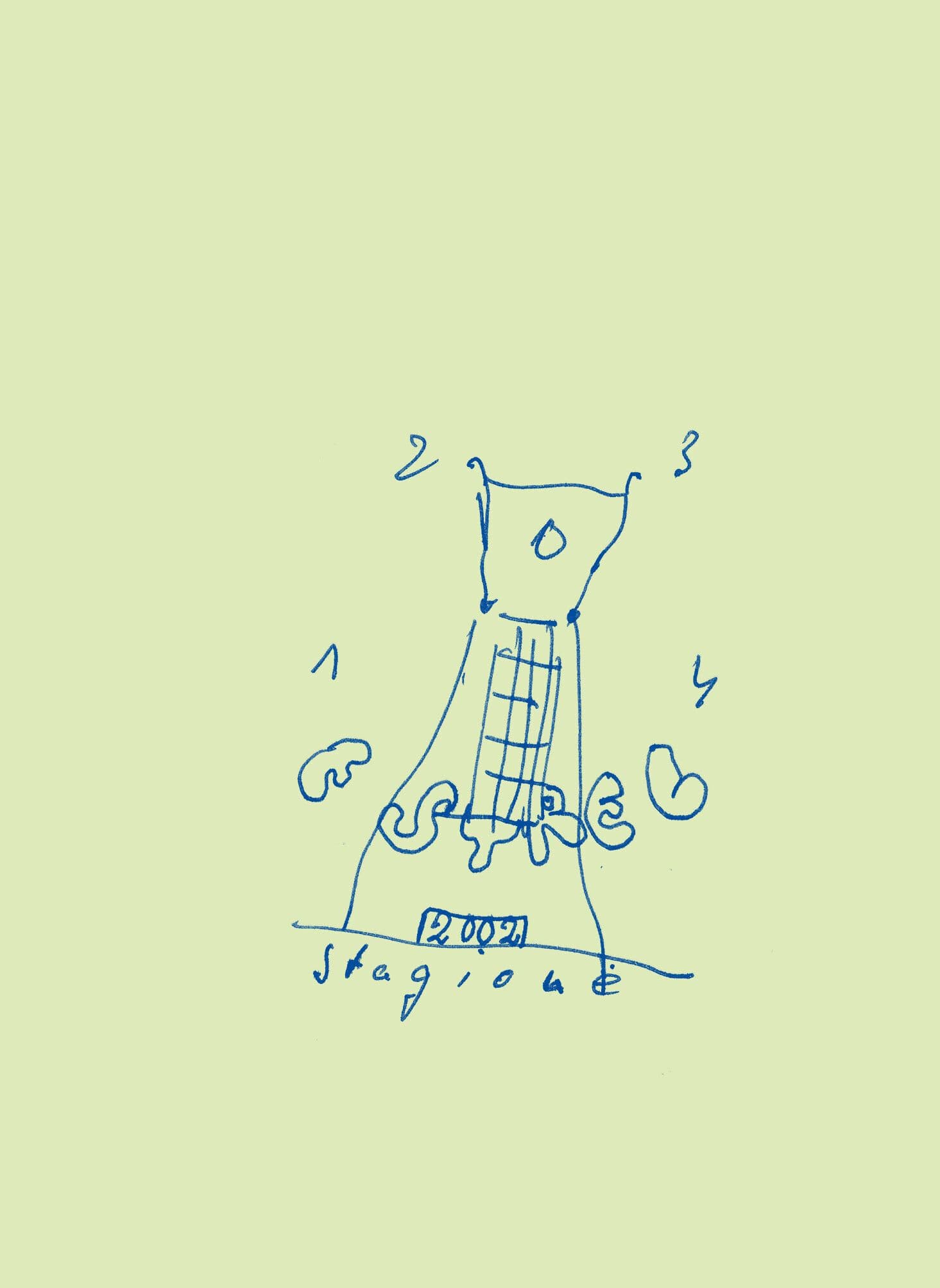
Galerie Neu[Please scroll down for German version / Für Deutsch bitte scrollen Sie nach unten] Estrel-docx is a solo presentation by Manfred Pernice at Galerie Neu, taking this year’s milestone anniversary of the documenta as its occasion. The work Estrel; quattro stagioni from 2002 was conceived for documenta 11 in Kassel and was later shown at the Kunstmuseum Wolfsburg. The frontal side of the construction – which initially appears monolithic – appositely reflects the title as a form of the standardised international hotel architecture of turn-of-the- millennium globalization. In contrast, the four seasons also invoked in the title are understood as an “emerging + fading”, as a process of gradual decay, and as a “glimpse behind the scenes”. The sculpture is made up of nested truncated pyramids which are conceived as solid structures, yet in their sequence they remain porous, brittle, and seemingly incomplete. —Olafur Panoni The “Estrel Berlin” is Europe’s largest hotel, entertainment and convention complex, and thus a significant example of the event architecture and consumption-oriented urbanity of the aughts. The geometry of the construction (as well as a video fragment of the original version) simultaneously references “Die Pyramide” in Berlin-Marzahn (a district that, during the GDR era, was regarded as an archetype of socialist urban planning). Financed through early post- unification investment funds, this nineties office building, with its distinctly illuminated facade, was once celebrated as Europe’s largest digital clock. Through this interplay of industrial and postmodern references, Pernice reflects on the carefully orchestrated systems that shape our patterns of consumption. Since the early 1990s, Pernice has developed a distinctive artistic language oriented towards architecture, civil engineering, packaging and transport systems. His structures made of particleboard, metal, concrete or cardboard combine references to urban infrastructure with a special interest on how objects can be presented, organised and stored within spaces – operating for instance as modular components of broader infrastructure. ***** Estrel-docx ist eine Einzelpräsentation von Manfred Pernice in der Galerie Neu, die den „runden Geburtstag“ der documenta zum Anlass nimmt. Die Arbeit Estrel; quattro stagioni von 2002 wurde für die documenta 11 in Kassel konzipiert und folgend erneut im Kunstmuseum Wolfsburg gezeigt. Die frontale Seite der zunächst monolithisch erscheinenden Konstruktion verhält sich zum Titel scheinbar passgenau als „Allerwelts-(international)-Hotel-Architektur“ einer Millenniums- Globalisierung. Gegenläufig werden die im Titel ebenfalls genannten vier Jahreszeiten als „Werden + Vergehen“ überhaupt und als schrittweises Zerfallen sowie „Blick hinter die Kulissen“ aufgefasst. Die Skulptur besteht aus ineinander gestellten Pyramidenstümpfen, die als solide Baukörper angelegt sind, jedoch in der Abfolge auch durchlässig, brüchig und scheinbar unvollständig bleiben. —Olafur Panoni Das “Estrel Berlin” ist Europas größter Hotel-, Entertainment- und Kongresskomplex und somit ein bedeutendes Beispiel für Eventarchitektur und konsumorientierte Urbanität der Nullerjahre. Die Geometrie der Konstruktion (sowie ein Video-Fragment der Originalversion) verweist zugleich auf “Die Pyramide” in Berlin-Marzahn. Finanziert durch frühe Investitionsfonds der Nachwendezeit war dieses Bürogebäude aus den Neunzigerjahren mit seiner markant beleuchteten Fassade einst als Europas größte digitale Uhr bekannt. Durch dieses Zusammenspiel industrieller und postmoderner Bezüge reflektiert Pernice über die sorgfältig orchestrierten Systeme, die unseren Konsum prägen. Seit den frühen 1990er Jahren entwickelt Pernice eine eigenständige Sprache, die sich an Architektur, Bauwesen, Verpackung und Transportsystemen orientiert. Seine Gebilde aus Span- Schichtholz, Metall, Beton oder Karton kombinieren Bezüge zu urbaner Infrastruktur mit einer Konzentration darauf, wie Objekte in Räumen präsentiert, organisiert und gelagert werden können – auch als modulare Bausteine einer allgemeinen Infrastruktur.