
Mitte, Berlin
Sven Johne
Eternal 20th Century
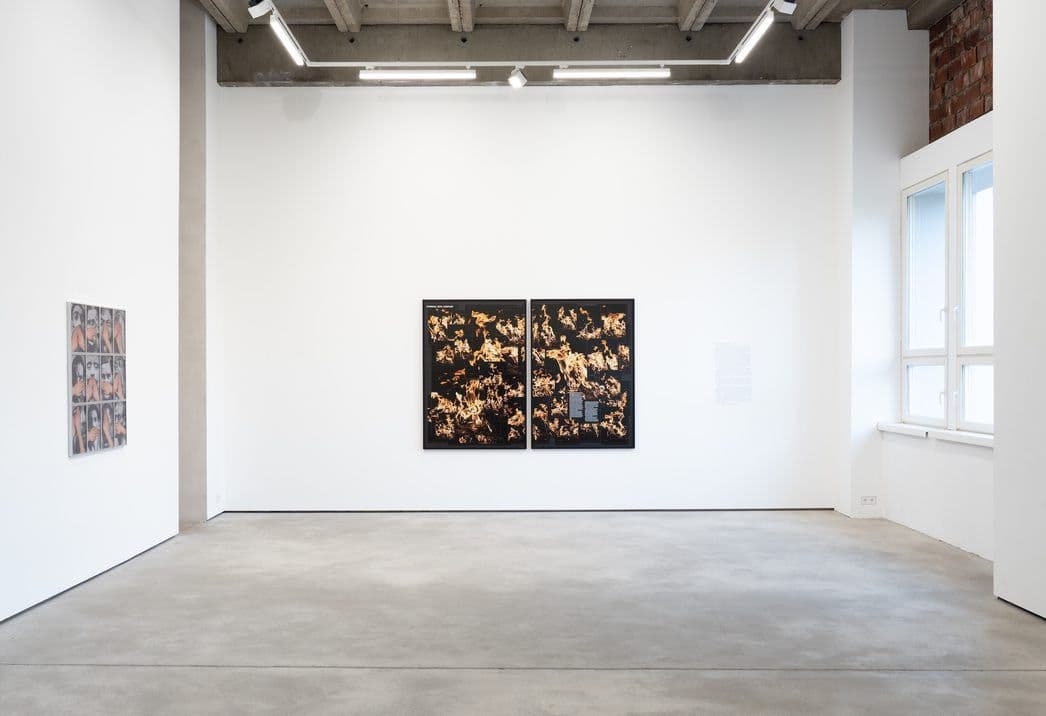
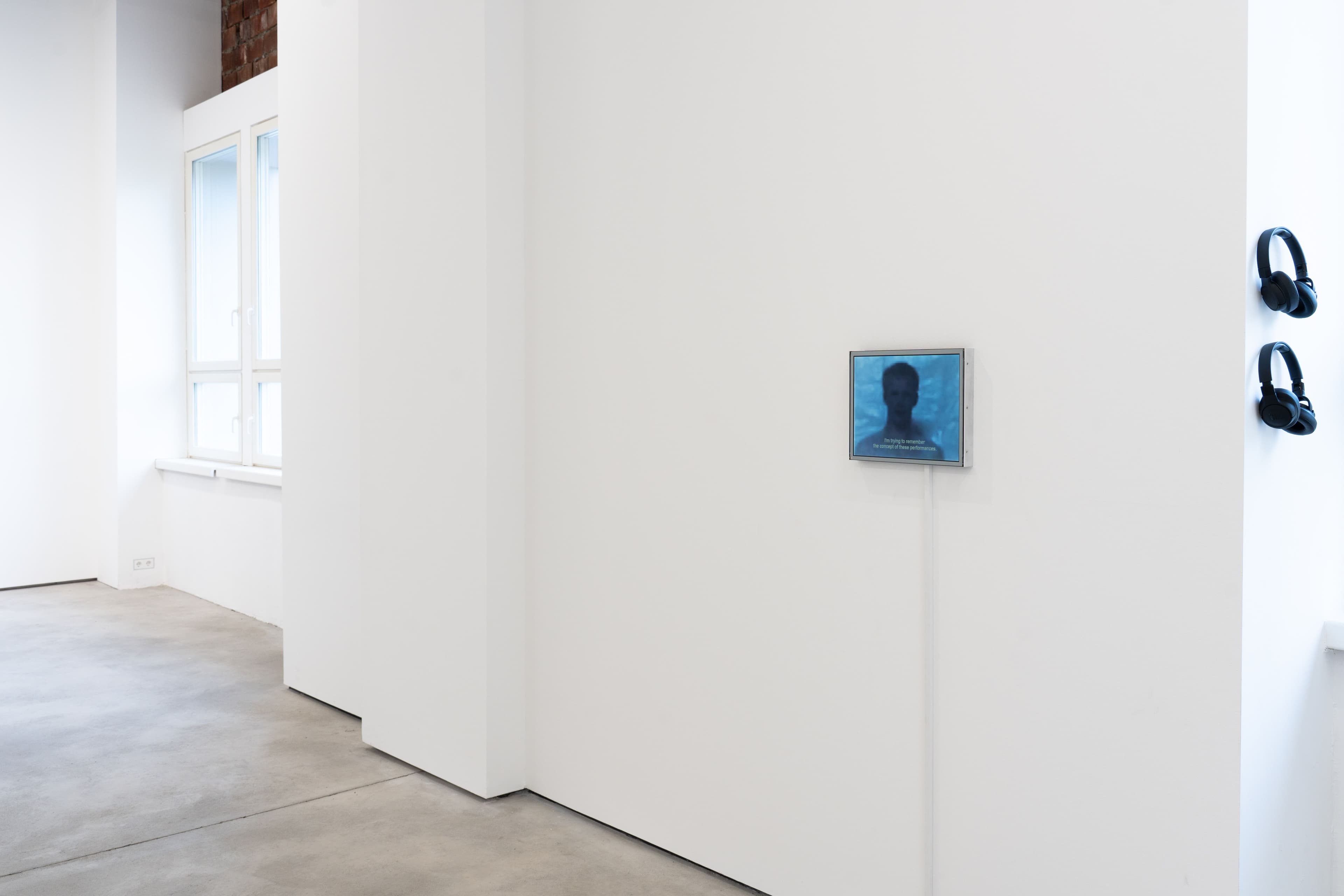
Klemm's“The war-torn, gruesome 20th century began on June 28, 1914, at the Latin Bridge in Sarajevo, and we thought it had ended on November 9, 1989, at the Böse Bridge in Prenzlauer Berg, Berlin. We thought the end of history had been reached, but now we see that the 20th century never ended. I spent a summer driving along the Oder and Neisse rivers, through the destroyed inner cities of the last war. These are still traumatized places: Forst, Küstrin, Gartz, and Schwedt. The bridges there are still destroyed; no one has ever rebuilt them, as if it were pointless anyway.” —Sven Johne on "Eternal 20th Century“, 2025 In Eternal 20th Century, Johne stages a delicate choreography of images and gestures that retrace the landscapes of history through the body, pointing at the threshold of presence and erasure. In times of war, the exhibition speculates on a century of conflict that refuses to end, insisting that history, under the crushing weight of its repetition, remains inscribed in the body and psyche like an after-image—fragile, exposed, yet enduring. Johne opens up space for associations that are crucial to the realization of its claim: to create metaphors of being and to conceive alternative myths in times when violence and its effects permeate every aspect of public and private life. “When I saw Sven Johne's “Hochdruckversuch/Tiefbohrung” (High Pressure Experiment/Deep Drilling) for the first time, I was reminded of Elaine Scarry's book. The body in pain, here it is. The artist turns the body visible, placing it at the center of his work. In the video, you see a man standing in a room completely lined with foil. His body is young, strong, he has the urge to be on stage and at the same time wants to hide away, as if he were afraid of his own courage. What better way to hide than behind being naked? The man has shed all individuality, clothes, adornments, hats. From the off, there is the artist’s voice narrating – Johne tells how he rediscovered this recording of his from 25 years ago. Encountering his younger self triggers a monologue, a chain of associations, a journey into the past. He recalls his physical examination for the military service when he was 18. “Passed,” was the verdict. He could have joined any unit he wanted. In 1993 high school graduates in East Germany basically had to choose between “Go West” or “Join the Army.” To this day, East Germans are disproportionately represented within the German army.” —Sabine Rennefanz Sven Johne is one of the most important representatives of engaged, conceptual photography—his work spans text-image as well as spatial and cinematic works. Often based on travels and location-specific research, his works systematically explore the relationship between the experiential and the familiar, and the representability of their historical, emotional, and psychological dimensions. His visual worlds deliberately seek a state of uncertainty, a shift in the status of the images that opens towards opacity in order to make use of their possibilities and productions of meaning. In the process, it becomes clear that documentary images are not exclusively an element of the visible but that a fundamental dependence on words and knowledge is inscribed upon them. Sven Johne was born in Bergen auf Rügen (GDR) in 1976. His work has received numerous awards, including the 2016 Art Prize of the Berlin Academy of Arts. Johne’s work has been exhibited nationally and internationally, including at the Berlin Biennale (2022), the Karachi Biennale in Pakistan (2019), Riga Biennale in Latvia (2018), and OFF-Biennale Budapest in Hungary (2017). His works are currently on display at the Pinakothek der Moderne in Munich, the Goethe-Institut gallery in Sofia, Bulgaria, the Kunstmuseum Wolfsburg, and the Hygiene Museum in Dresden. Next year, Johne will be a resident at the Tarabya Cultural Academy of the German Foreign Office in Istanbul, Turkey.