
Chelsea, New York
Group Exhibition
Group Show
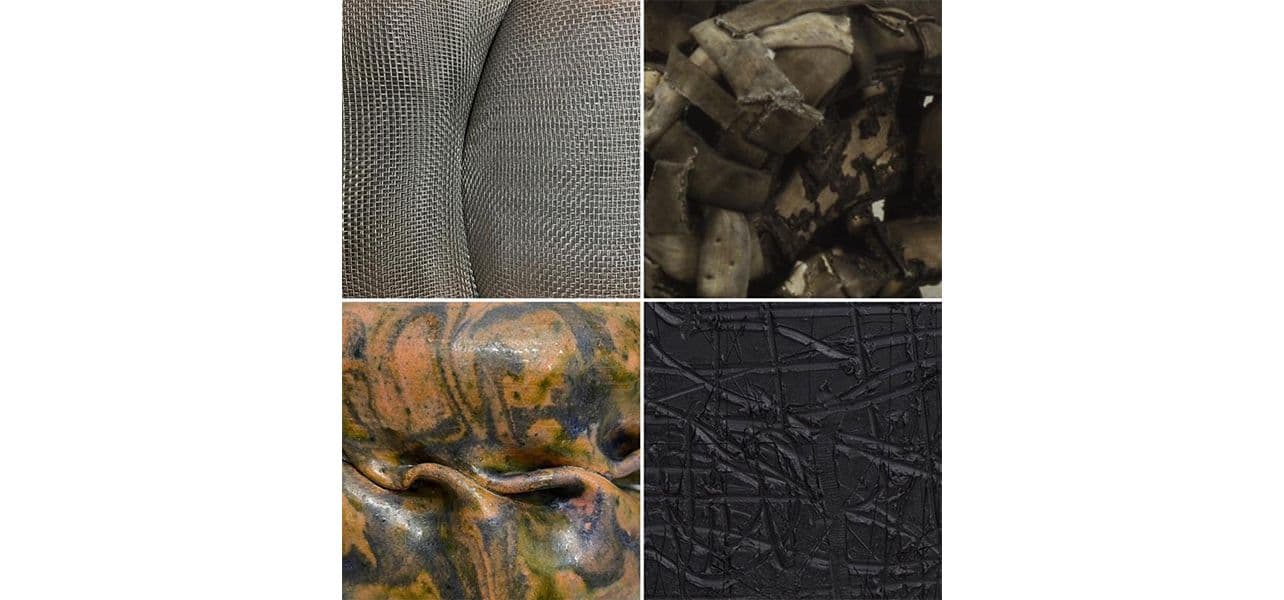
Nicole KlagsbrunRashid Johnson George Ohr Keith Sonnier Nari Ward Nicole Klagsbrun is pleased to present an intergenerational exhibition featuring works by four American artists: Rashid Johnson (Chicago, Illinois, 1977), George Ohr (Biloxi, Mississippi, 1857-1918), Keith Sonnier (Mamou, Louisiana, 1941-2020), and Nari Ward (St. Andrew, Jamaica, 1963). The show brings to the fore themes of process, materiality, abstraction, and metaphor through works created at several different moments in time. Ohr is represented by four ceramic pieces made in the late 1800s. He is best known for his manipulations of clay, formed by folding, indenting, and ruffling. The exhibition features a work that was severely burned in the fire that destroyed his studio in 1894, one of his “burned babies.” After the fire, Ohr doubled down on his new approach to form, producing his renowned thin walled, crushed, folded, and dented vessels. Ohr’s practice serves as an important predecessor to later movements, including postminimalism. For example, one can find resonances of Ohr’s material folds in Sonnier’s wall-based Curtain Study, 1964/1968, a double stainless steel mesh sculpture, which exemplifies the artist’s use of materials previously restricted to the hardware store. In the 1960s, Sonnier was “investigating the kinds of techniques that were common to everyday experience, like wrapping, stuffing, mixing or even upholstering,” as he has said. His use of transparent and translucent materials emphasizes his interest in a layered but still polished approach to postminimalism. Constructed of discarded fire hoses and tires, Ward’s Anon; Three Boxes Two Tires, 1993, explores processes of memorialization through a sensitive approach to materials and form. Ward is well known for his sculptural works created from objects he finds in and around Harlem, his longtime neighborhood. By combining these materials, he re-contextualizes their original meanings, and in turn provides powerful symbols related to community, history, and the passage of time. Johnson exercises a range of material techniques—such as scoring, scraping, engraving, and branding—often with self-made tools. His Prayer Song, 2011, is made of black soap and wax and features an all-over composition of marks that recalls both Abstract Expressionism and postminimalism. “I’ve always considered the artist as almost a magician-like character who grants agency to materials to allow them to be elevated into objects that we admire,” he has noted. This perennial idea permeates through all the works on view, which elevate common objects through a deeply material investigation.