
Tribeca, New York
Isa Genzken
Vacation
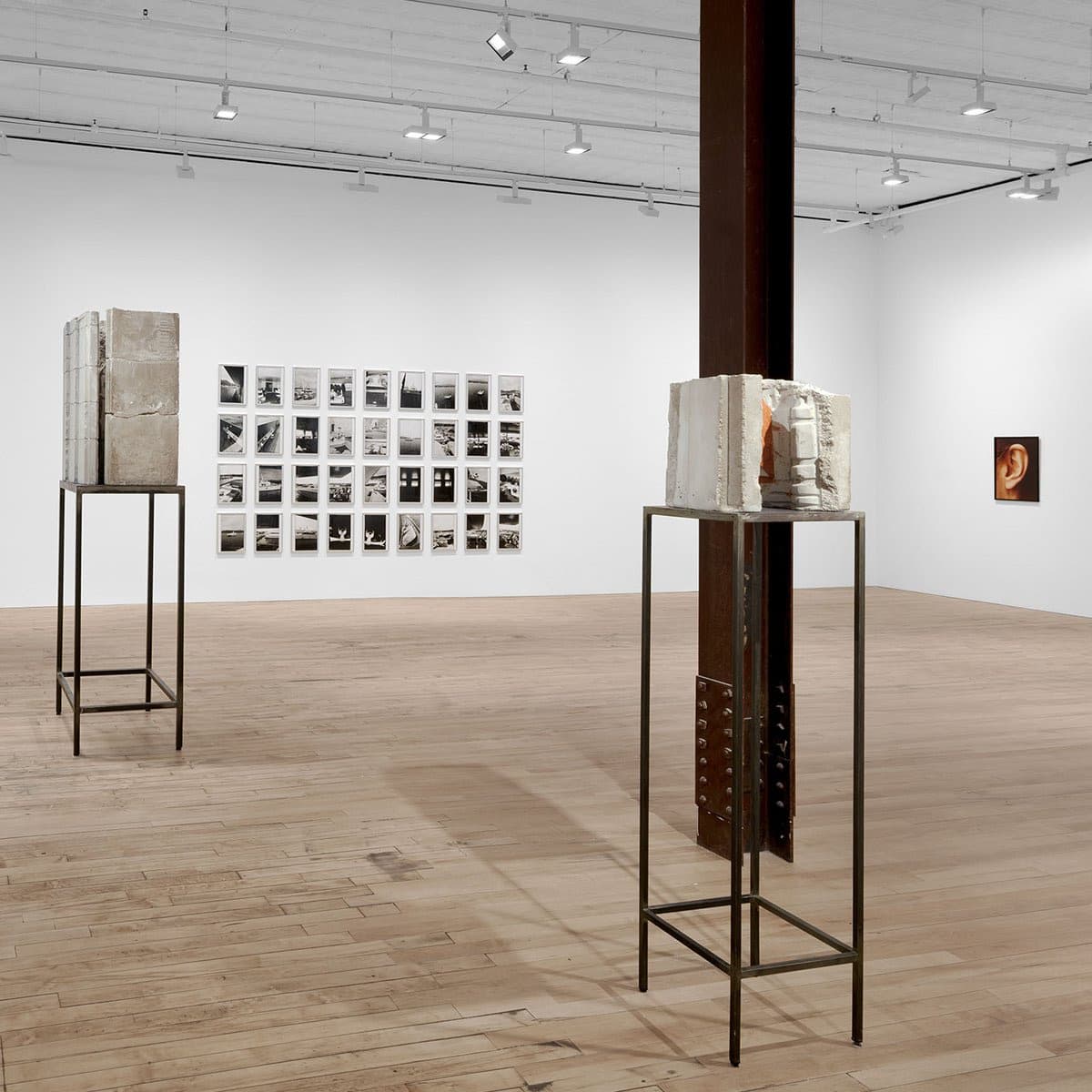
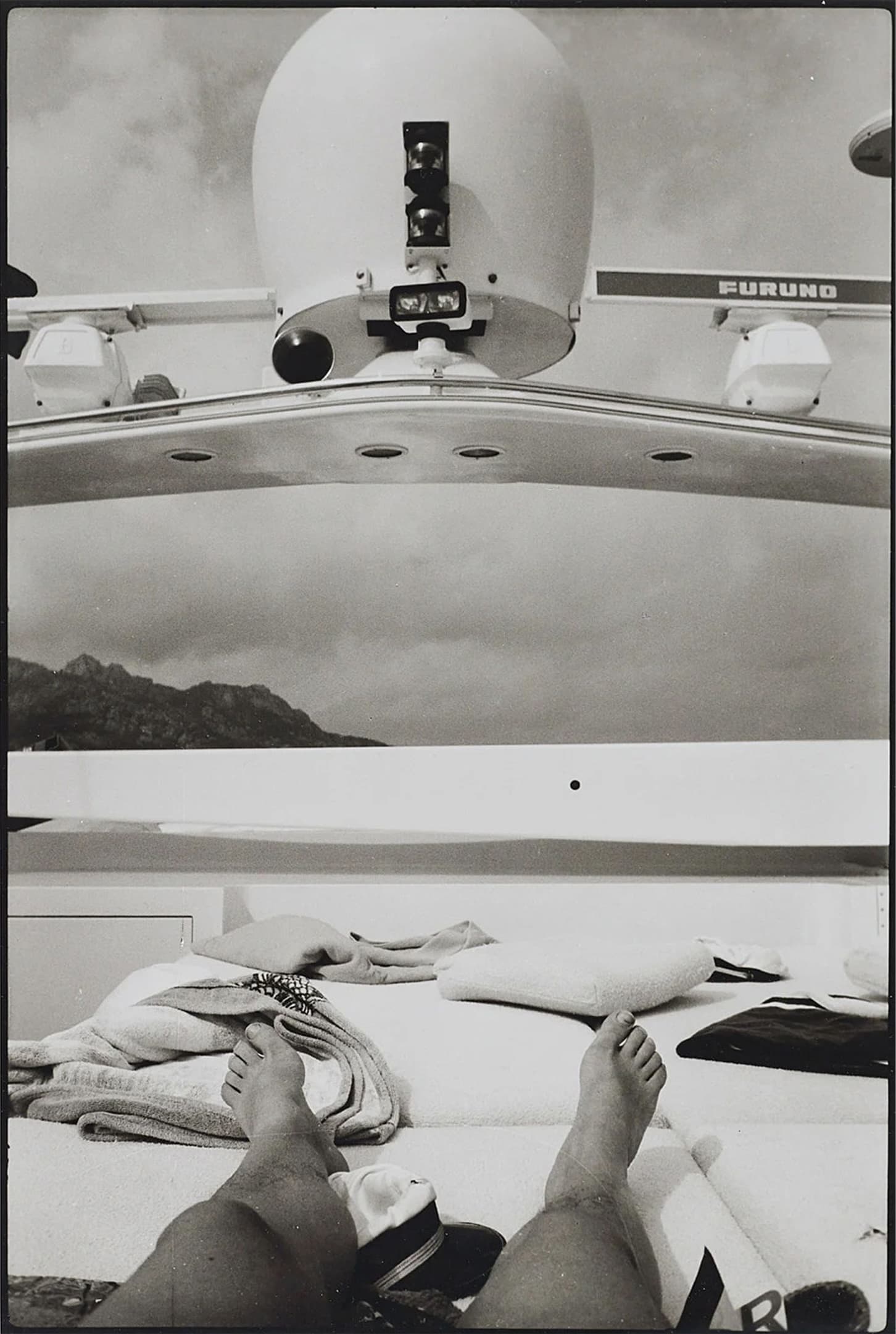
David ZwirnerDavid Zwirner is pleased to present Vacation, a solo exhibition of work by Berlin-based artist Isa Genzken, curated by Ebony L. Haynes. Shown at the gallery's downtown location in Tribeca, Vacation features a selection of work spanning the late 1970s to the 2010s, including little-seen film, painting, photography, and sculpture such as significant concrete forms from the 1980s and a grouping of her Weltempfänger (World Receivers). With a career spanning over five decades, Genzken has pursued a multidisciplinary practice that considers the shifting boundaries between art, design, architecture, media, technology, and subjectivity. Attuned to both the legacies of the twentieth-century avant-garde and the materials and forms of twenty-first-century global society, Genzken's work viscerally interrogates the impact of an increasingly commodified and interconnected culture on our everyday lives. The show title revisits a solo exhibition of the artist's work, Urlaub, which took place at the Frankfurter Kunstverein in 2000. The term translates from German to English as "vacation" or "holiday," and for the exhibition at David Zwirner, delves into Genzken's proclamation that "the entire art system urgently needs a vacation," offering a respite and moment of reflection. The installation of Vacation embraces this time of interlude as well as the artist's long-standing engagement with architecture and the materials of the built environment. Genzken's work examines how travel can be intertwined with comfort and extravagance, bridging our everyday reality with fantasy. Yachturlaub (Yacht Holiday), photographed in 1993, is at the center of the exhibition and comprises thirty-six prints documenting the interior of German publisher and art collector Frieder Burda's yacht. Presenting a temporally bound notion of elsewhere embodied by luxurious modes of travel and far-flung vacation locales, Yachturlaub, like many of Genzken's photographs, provides a glimpse into the socioeconomic contexts in which art, architecture, and design—as well as artist and collector—operate. Flugzeugfenster (2015), which translates to "airplane window," is composed of a segment of an actual airplane—a recurring theme in Genzken's work since the 1990s. Suspended from the wall by metal rods, the sculptural composition follows the curvilinear shape of the fuselage, with two oval windows; photographs and found imagery are adhered to the panels, including a reproduction of Johannes Vermeer's Girl with the Red Hat (c. 1665–66; National Gallery of Art, Washington, DC) and a nude photograph of the artist. Another work on view, Untitled (2016), also features collage elements including self-portraits of the artist with a lover and a promotional advertisement for the 1996 film Marvin's Room, starring Meryl Streep and Leonardo DiCaprio. Here, Genzken positions herself within the production of a work of art—the artist never quite at rest. The artist's Tri-Star (1979), a phonograph recording of noises made by the motor of the eponymous airplane, is displayed, and the audio is piped throughout speakers in the gallery. In the sculptures on view, such as Waabe and Kapelle (both 1989), Genzken references raw architecture and building fragments in a lineage of work executed in concrete that she began in the mid-1980s. The works are reminiscent of churches, ruins, or bombed-out buildings that recall specific events in German history like the destruction of the Second World War and the rise and fall of the Berlin Wall, in addition to broader notions of collapse and the emblematic weight of the industrial materials of everyday life. These are complemented by Genzken's Basic Research paintings, created between 1988 and 1992, which are in close dialogue with her contemporaneous sculptural investigations, particularly the inversion of exterior and interior forms found in her concrete works, and materialize their lustrous surfaces. Genzken first presented a multiband radio receiver as a readymade sculpture in 1982 titled Weltempfänger, the German term for shortwave radios. She began her series of rough concrete sculptures with non-functional embedded antennae later in the 1980s and continued to revisit the form in her work. The Weltempfänger simultaneously point toward and confound notions of receptivity, communication, and openness—concepts Genzken has explored throughout her career. Likewise, these "world receivers," as they are known in English, nod to the artist's acute sensitivity to our collective conditions and the undercurrent of urgency that has been perpetually relevant to her work. In Vacation, these sculptures are paired with an X-ray of Genzken's own head from 1991, which shows her drinking, and a photograph from her Ohr (Ear) series, begun in 1980, picturing close-ups of the ears of women she approached on New York City streets. The Weltempfänger and Ohr works have been shown together since the 1980s, highlighting the modes of alert transmission and reception that these images convey. Also included in Vacation are collaborations that highlight Genzken's long-standing interest in friendship, compassion, and play. Die Kleine Bushaltestelle (Gerüstbau) (Little Bus Stop [Scaffolding], 2012) is a rarely shown video work by Genzken featuring the German artist Kai Althoff. In the film, Genzken and Althoff perform short skits in drag that uproariously parody the anxious sociopolitical relations of the art world and satirize popular culture more broadly. Atelier (1993), a photographic suite made with Wolfgang Tillmans, captures Genzken in the Cologne Cathedral. The images date from the first years of her enduring friendship with Tillmans, while picturing a prominent site of architectural and sculptural inspiration for the artist as a kind of "studio." Isa Genzken: Vacation coincides with a solo exhibition of works by the artist at Galerie Buchholz, Projects for Outside - ISA USA, which inaugurates its new space at 31 West 54th Street in New York. Galerie Buchholz's presentation spotlights Genzken's projects for outdoor sculptures—those that were proposed, realized, and imagined—and the significance of modernist architecture and public space in her practice. Accompanying the maquettes that were commissioned at the time of her contribution to the Venice Biennale in 2015, curated by the late Okwui Enwezor, are a selection of related works, such as her 1992 film Chicago Drive and original collage books from I Love New York, Crazy City (1995–1996), which expand understanding of Genzken's persistent engagement with the built environment, especially the imposing towers of midtown Manhattan and the environs of New York City. Isa Genzken (b. 1948, Bad Oldesloe, Germany) studied fine arts, art history, and philosophy in Hamburg, Berlin, and Cologne before completing her studies at Kunstakademie Düsseldorf in 1977. Her first institutional solo exhibition was held in 1978 at the Kabinett für aktuelle Kunst in Bremerhaven, Germany. Genzken's work has been the subject of many major museum exhibitions, including traveling surveys organized by the Rheinisches Landesmuseum, Bonn, Germany (1988; traveled to Kunstmuseum Winterthur, Switzerland; Museum Boijmans Van Beuningen, Rotterdam, both 1989); The Renaissance Society at the University of Chicago (1992; traveled to Portikus, Frankfurt; Palais des Beaux-Arts, Brussels; Städtisches Galerie im Lenbachhaus, Munich, all 1993); Museum Abteiberg, Mönchengladbach, Germany (2002; traveled to Kunsthalle Zürich, 2003); and Whitechapel Gallery, London (2009; traveled to Museum Ludwig, Cologne). Other venues which have hosted important solo exhibitions include the Kunstverein Braunschweig, Germany (2000); Museum Ludwig, Cologne (2002; organized by the Gesellschaft für Moderne Kunst on the occasion of the artist receiving the Wolfgang Hahn Prize); Camden Arts Centre, London; Galerie im Taxispalais, Innsbruck; Secession, Vienna (all 2006); and Museion, Bolzano, Italy (2010). In 2013, The Museum of Modern Art, New York, organized Genzken's first American museum survey, Isa Genzken: Retrospective, making it the most comprehensive presentation of her work to date, encompassing all media from the past forty years. The show traveled to the Museum of Contemporary Art Chicago and the Dallas Museum of Art in 2014. Also in 2014, Isa Genzken: New Works was presented at the Museum der Moderne Salzburg, Austria, and subsequently traveled to the Museum für Moderne Kunst, Frankfurt. In 2015, an extensive survey of Genzken's work was presented by the Stedelijk Museum, Amsterdam. The show traveled to Martin-Gropius-Bau, Berlin in 2016. In 2019, Kunsthalle Bern in Switzerland presented a solo exhibition of the artist's work. In 2020–2021, Kunstmuseum Basel | Gegenwart presented the exhibition Isa Genzken: Works 1973–1983, which traveled to Kunstsammlung Nordrhein-Westfalen, Düsseldorf. Also at Kunstsammlung Nordrhein-Westfalen, Isa Genzken: Here and Now was on view in 2021. In 2023, Neue Nationalgalerie, Berlin, presented the solo exhibition Isa Genzken: 75/75 and, in 2026, Isa Genzken: World Receiver opened at Den Frie in Copenhagen. In 2017, Genzken received the Goslarer Kaiserring (or the "Emperor's Ring") award from the city of Goslar, Germany. An accompanying solo exhibition was on view at the Mönchehaus Museum Goslar. The artist was also the recipient of the 2019 Nasher Prize, awarded every April by the Nasher Sculpture Center, Dallas. Her work has been prominently featured in international biennials and group exhibitions such as documenta (1982, 1992, and 2002); Skulptur Projekte Münster (1987, 1997, and 2007); and the Venice Biennale (1982, 1993, 2003, 2007, and 2015), where she represented Germany in 2007. Since 2004, her work has been represented by David Zwirner. In 2021 the artist had a solo exhibition at the gallery's Hong Kong location, and in 2020 a solo exhibition at the gallery's Paris location. Previous solo exhibitions have been held at the gallery in New York in 2005, 2007, 2015, and 2018. Work by the artist is represented in museum and public collections worldwide, including the Dallas Museum of Art; Gemeentemuseum, The Hague; Hirshhorn Museum and Sculpture Garden, Washington, DC; Museum Boijmans Van Beuningen, Rotterdam; Museum of Contemporary Art Chicago; Museum of Contemporary Art, Los Angeles; The Museum of Modern Art, New York; Museum Ludwig, Cologne; Städtische Galerie im Lenbachhaus, Munich; Stedelijk Museum, Amsterdam; and the Van Abbemuseum, Eindhoven. Genzken lives and works in Berlin.