
Chelsea, New York
Petrit Halilaj
Abetare (Noisy Classroom)
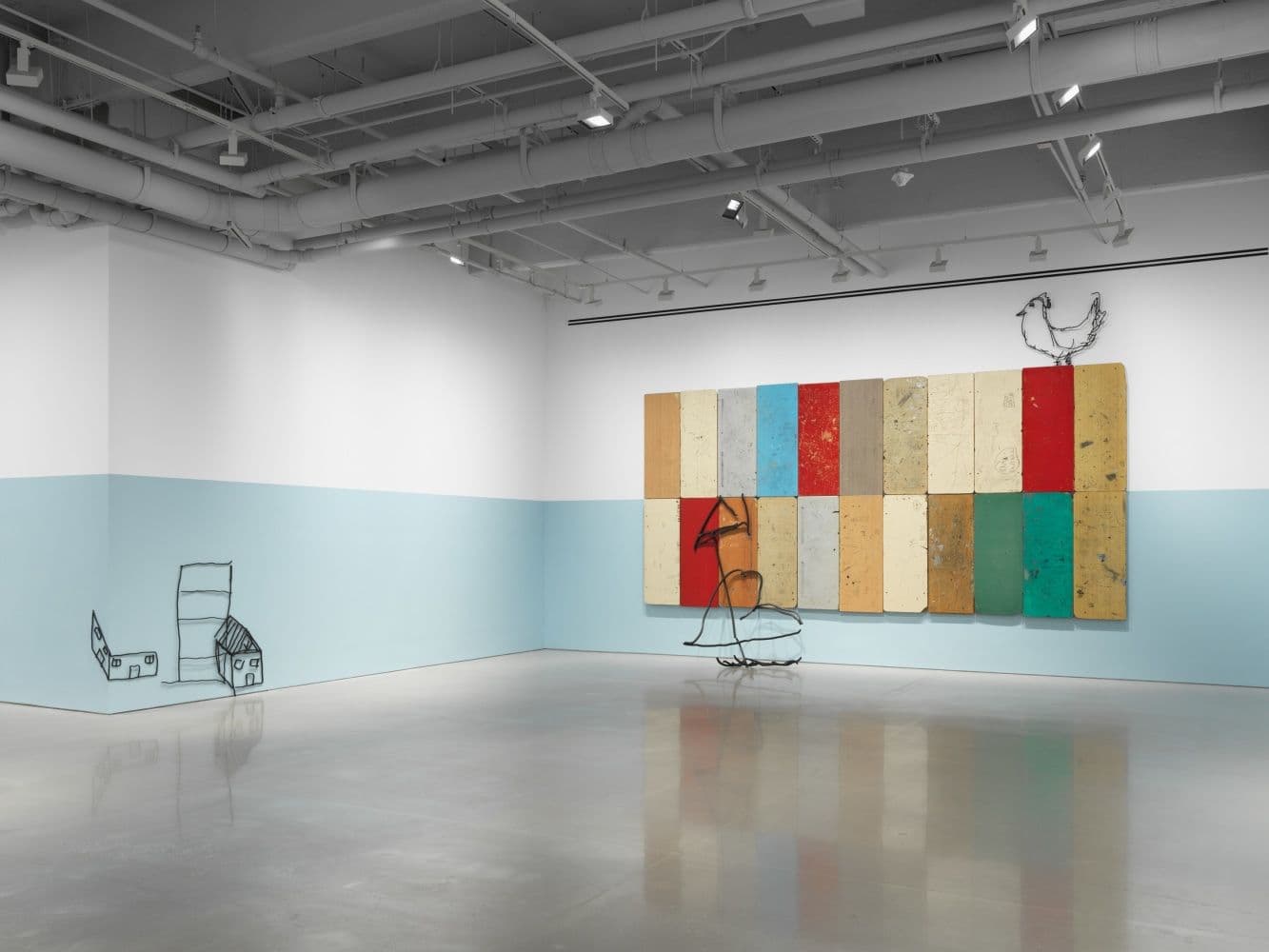
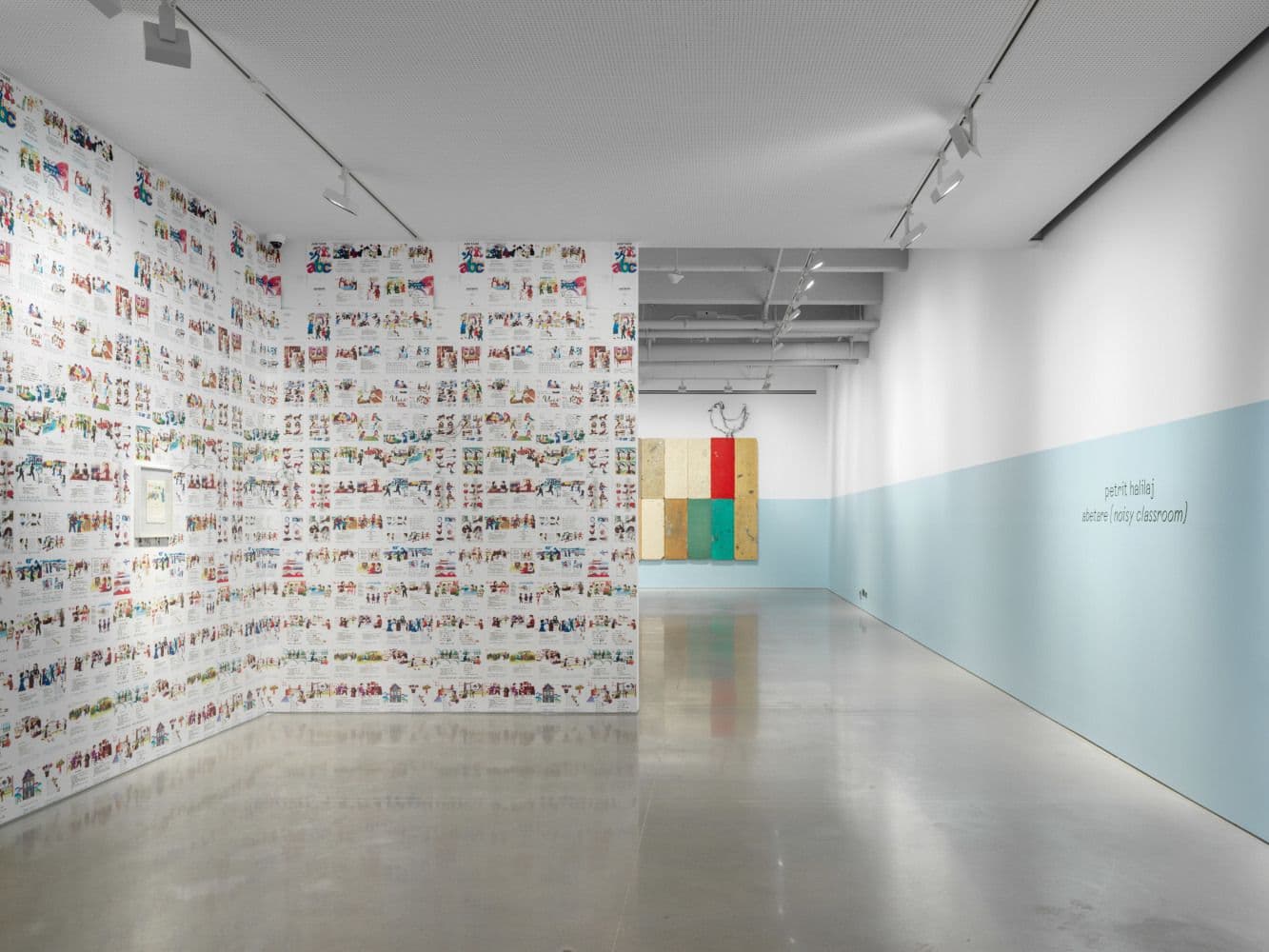
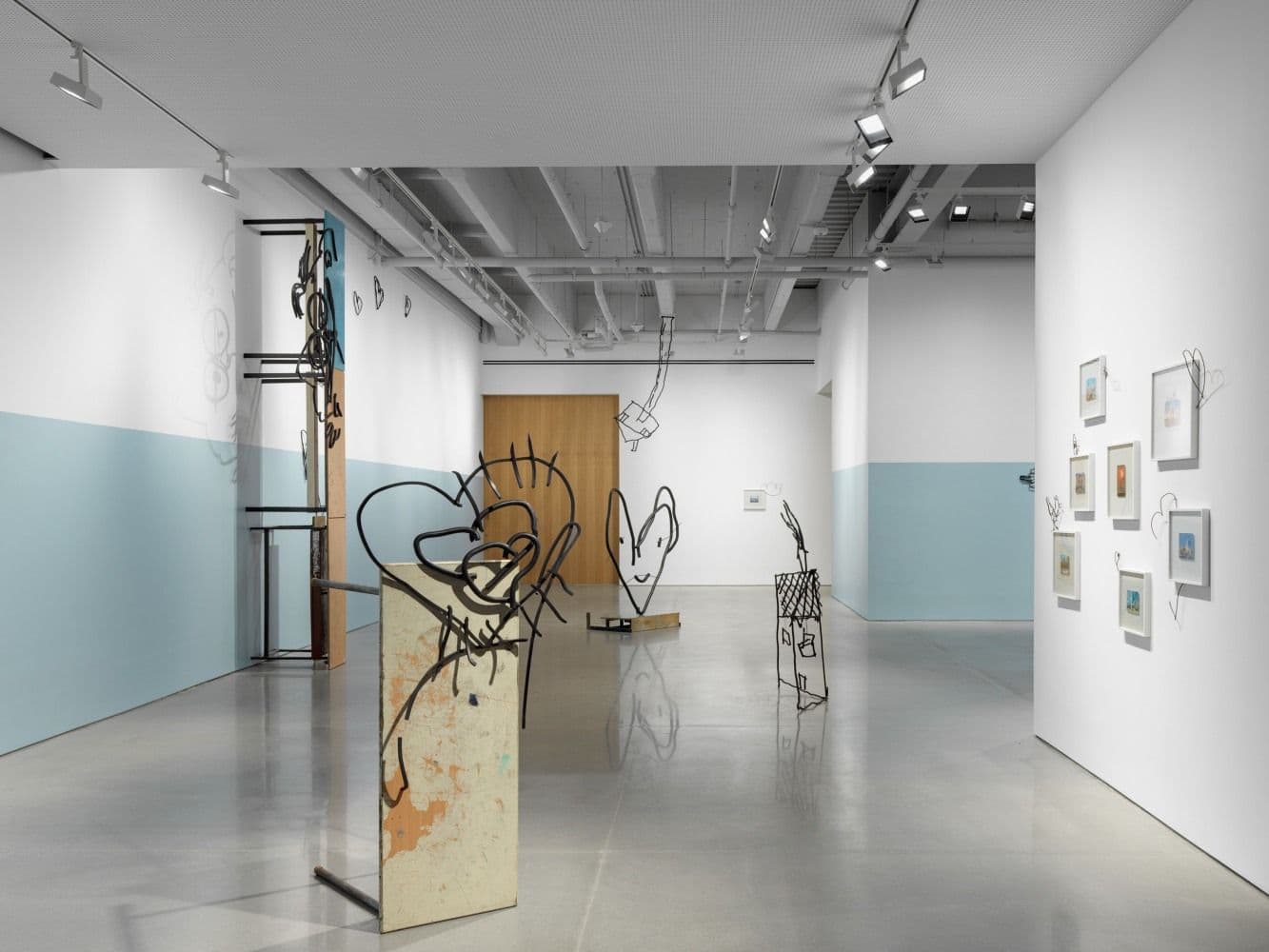
KurimanzuttoKurimanzutto is pleased to present Kosovar artist Petrit Halilaj’s first solo exhibition with Kurimanzutto at its New York gallery: Abetare (Noisy Classroom). Halilaj exhibits disused desks covered in the scratches and doodles of children that he found in Kosovar schools following extensive research through the country to acquire them and then bring them to his Berlin studio. In Berlin he re-elaborated and assembled the old desks into sculptural objects, whose accreted doodles are the inspiration for the artist’s well-known series of bronze and steel sculptures titled Abetare. Alongside and even incorporated into this new body of work are bronze sculptures from Abetare, which transform children’s casual drawings on their desks into three-dimensional forms. Halilaj reimagines kurimanzutto as a classroom where sculptures reflect upon language, youth, and community in the context of Kosovo’s recent history as well as the power of fantasy to overcome, whether it be a banal school lesson or the menace of war, and ultimately vitalize. This playful exhibition extends Halilaj’s ongoing series Abetare, which borrows its name from the textbook Albanian speakers, including Halilaj, used to learn the alphabet in school. Abetare takes its varied and lively forms from drawings and sketches of schoolchildren carved into their desks; Halilaj turns these daydreams and small acts of rebellion into tridimensional, expansive spatial creations. Noisy Classroom marks a major artistic undertaking for Halilaj. It is the first time that the desks make their appearance as wall-mounted, sculptural objects. Previously, the desks have been elements integrated into larger installations, but never have they been integrated, combined and modified to become standalone artworks. For Noisy Classroom, Halilaj explains, “I have taken this project back to its roots: the classroom,” and this is reflected in the gallery space itself, which has been transformed into a traditional classroom inspired by the artist’s own memories and experiences. Unlike the standard classroom, Halilaj fills the walls with doodled-on school desks hued in vivid colors. The desks’ inclusion as an element in conversation with the sculptures is new, realized specifically for this iteration of Abetare. From afar, they appear as minimalist paintings, but upon closer inspection, the viewer can see children’s doodles and sketches decorating the wooden surfaces. Accompanying these desks are Halilaj’s recognizable bronze sculptures from the series Abetare, rendering recurring motifs - hearts, homes, stars, among others– in three dimensions, and in Halilaj’s words, these are presented “in various states of wishfulness and brokenness.” Together, the sculptures and desks create their own spatial logic: they play across the walls, the floors and the ceiling of the gallery, reimagining the classroom as a dreamscape. To accompany the exhibition, Halilaj has invited Albanian curator Eriola Pira to program a series of three workshops during the run of the exhibition (September 14, September 28, and October 19, each starting at 3:30 pm), activating the classroom as an experiential space for engaging with and embodying the Albanian language. Through aural, oral, and movement-based activities, participants of all ages are invited to recreate and experience a formative learning memory from Halilaj and Pira's childhoods in Kosovo and Albania. Both living in the diaspora, this collaboration pays respect to the role Albanian intellectuals and artists in the diaspora have played in the establishment, practice, and resilience. Petrit Halilaj (b. 1986, Kostërrc, Kosovo) understands exhibitions as a way to alter the course of personal and collective histories, creating complex worlds that claim space for freedom, desire, intimacy, and identity. His work is deeply connected to the recent history of his native country Kosovo and the consequences of cultural and political tensions in the region, which he often takes as a starting point for igniting countercurrent poetics for the future. Rooted in his biography, the projects encompass a variety of media, including sculpture, drawing, text, and performance. Often incorporating materials from Kosovo and manifesting as ambitious spatial installations, his work transposes personal relationships, places and people into sculptural forms. Halilaj’s work can be seen as a playful and, at times, irreverent attempt to resist oppressive politics and social norms towards an untamed celebration of all forms of connectedness and freedom. In 2013, Halilaj represented Kosovo for the country’s first appearance at the Venice Biennale. In 2017, he was invited to participate in the 57th Venice Biennale by the curator Christine Macel, where he was awarded Special Mention by the Jury. That same year, he was awarded the Mario Merz Prize, which resulted in a major commissioned project he presented in 2018 at the Zentrum Paul Klee, Bern and at Fondazione Merz, Turin, Italy. He also received the Kunstpreis Berlin granted by the Akademie der Künste, Berlin (2023). He is member of the Akademie der Künste der Welt from Cologne, Germany. He is currently a professor at the Ecole Nationale Supérieure des Beaux Arts de Paris, France, where he shares his class with Alvaro Urbano. Petrit Halilaj lives and works between Germany, Kosovo and Italy.