
Upper East Side, New York
Peter Halley
Peter Halley
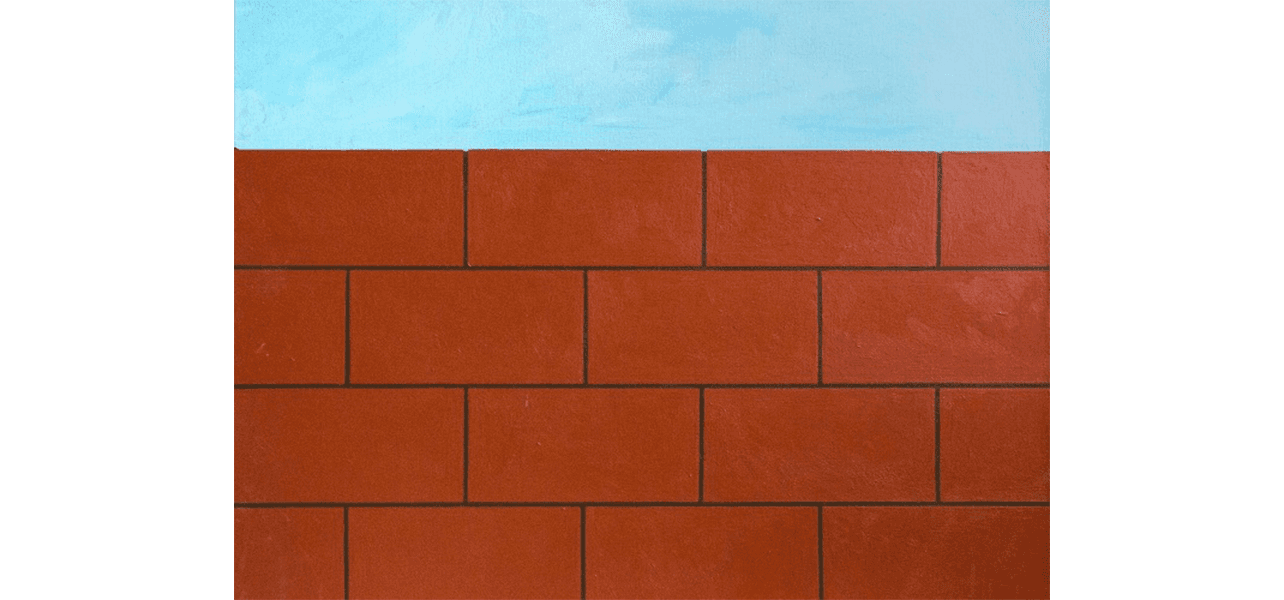
Craig Starr GalleryKarma and Craig Starr Gallery are pleased to present Peter Halley: Paintings and Drawings 1980–81. The two-gallery exhibition is curated by Chris Byrne and runs concurrently at Craig Starr and at Karma. This exhibition complements the current museum survey of Peter Halley’s work from the first decade of his career, Conduits: Paintings from the 1980s at Mudam Luxembourg — Musée d’Art Moderne Grand-Duc Jean, open until October 15, 2023. Peter Halley: Paintings and Drawings 1980–81 brings together, for the first time, an extensive group of Halley’s works from his formative years, 1980 to 1981. This period of rapid development began when Halley returned to his native New York following five years in New Orleans. It was during this time that he began to articulate the visual and critical language that would define his mature work. Alongside paintings, the exhibition includes a selection of previously unexhibited ink-on-graph-paper drawings and studies from the same period. These preparatory works give still greater insight to the artist’s process and the early development of his visual language. Returning to the city of his childhood in early 1980, Halley moved into a loft studio in the East Village. He initially experienced a sense of alienation and isolation that many felt in the early 1980s as Ronald Reagan’s conservative agenda dominated national politics and New York struggled to emerge from the fiscal crises of the 1970s. His first paintings from this period, such as Mausoleum, Monet’s Dream, and Red Wall (all 1980), on view at Craig Starr, depict walled spaces in somber hues. Several works, such as Lamentation and The Death of Socrates (both 1980), feature a tall, ghostly gray triangle pressed against the bottom edge of the canvas, an austere remembrance of the artist’s grandmother who had died at the beginning of the year. Halley describes these dark, sardonic works as influenced by the then-much-discussed late paintings of Phillip Guston, as well as by the dry existentialist humor of playwright Samuel Beckett. As 1981 began, this series culminated in the large-scale painting The Imagination of Disaster, on view at Karma. In this work, the artist painted a dark-gray cinder block wall on the bottom edge of the canvas, framing it on the other three sides with an even darker background, which he created by staining paint directly into the canvas. The Imagination of Disaster was followed by another similarly executed work, The Prison of History (1981), also on view at Karma. In this painting, we see Halley’s first prison image—the freestanding, rectangular cinder block wall from the preceding work is cropped into a square, with a barred window carved into its center. Little Spanish Prison (1981), at Craig Starr, and the subsequent The Big Jail (1981), at Karma, mark Halley’s first experimentations with Roll-a-Tex, a commercial paint additive that produces a ready-made imitation stucco. In Little Spanish Prison, the artist applied Roll-a-Tex roughly by hand, while in The Big Jail, he used a roller to spread the material evenly across the entire canvas. The latter work is the first example in which the square of the canvas itself becomes a prison. In the years to come, Roll-a-Tex would become Halley’s signature texture. In 1981, Halley also made a group of paintings, including Casa Cézanne and Apartment House, representing apartment houses as grids of square windows. With this series, the unrelenting gloom of 1980 yielded to an exploration of the structure of urban space; the prison and apartment house emerged as the focus of his imagery. This year culminated with his first use of red, fluorescent Day-Glo acrylic, as seen in the gridded painting Untitled from that year, on view at Craig Starr. Peter Halley is an American artist who came to prominence as a central figure of the Neo-Conceptualist movement of the 1980s. His paintings redeploy the language of geometric abstraction to explore the organization of social space in the digital era. In the mid 1990s Halley pioneered the use of wall-sized digital prints in his site-specific installations. He has executed installations at Museo Nivola, Orani, Sardinia (2021); Greene Naftali, New York (2019); Venice Biennale (2019); Lever House, New York (2018); Schirn Kunsthalle, Frankfurt (2016); Disjecta, Portland (2012); the Gallatin School, New York University, (2008, 2017); the Museum of Modern Art, New York (1997); and the Dallas Museum of Art (1995). In 2005, Halley was also commissioned to create a monumental painting for Terminal D at the Dallas/Fort Worth International Airport, Texas. Halley served as professor and director of the MFA painting program at the Yale School of Art from 2002 to 2011. From 1996 to 2005, Halley published Index Magazine, which featured interviews with figures working in a variety of creative fields. Halley is also known for his essays on art and culture, written in the 1980s and 1990s, in which he explores themes from French critical theory and the impact of burgeoning digital technology. His Selected Essays, 1981 – 2001, was published by Edgewise Press, New York, in 2013. Halley’s writings have been translated into Spanish, French, and Italian. Halley’s work can be found in the collections of the Museum of Modern Art, New York, New York; Whitney Museum of American Art, New York, New York; Solomon R. Guggenheim Museum, New York, New York; Broad Art Foundation, Los Angeles, California; Museum of Contemporary Art, Los Angeles, California; San Francisco Museum of Modern Art, San Francisco, California; Boston Museum of Fine Arts, Boston, Massachusetts; Dallas Museum of Art, Dallas, Texas; Albright-Knox Art Gallery, Buffalo, New York; Tate Modern, London, United Kingdom; Stedelijk Museum, Amsterdam, The Netherlands; Sammlung Marx, Berlin, Germany; Museo Nacional Centro de Arte Reina Sofia, Madrid, Spain; Museum of Contemporary Art, Tokyo, Japan; and the Seoul Museum of Art, Seoul, South Korea, among others. Chris Byrne is the author of the graphic novel The Magician (Marquand Books, 2013), which is included in the Rare Book and Special Collections Division of the Library of Congress, in Washington, DC. Byrne is the owner and founder of the Elaine de Kooning House in East Hampton, NY, which is listed on the National Register of Historic Places. He was the former chair of the American Visionary Art Museum.