
Chelsea, New York
Group Exhibition
Conceptual Matters: Photo-Documents of Performance Art & Other Conceptual Explorations of the 1960s & 1970s
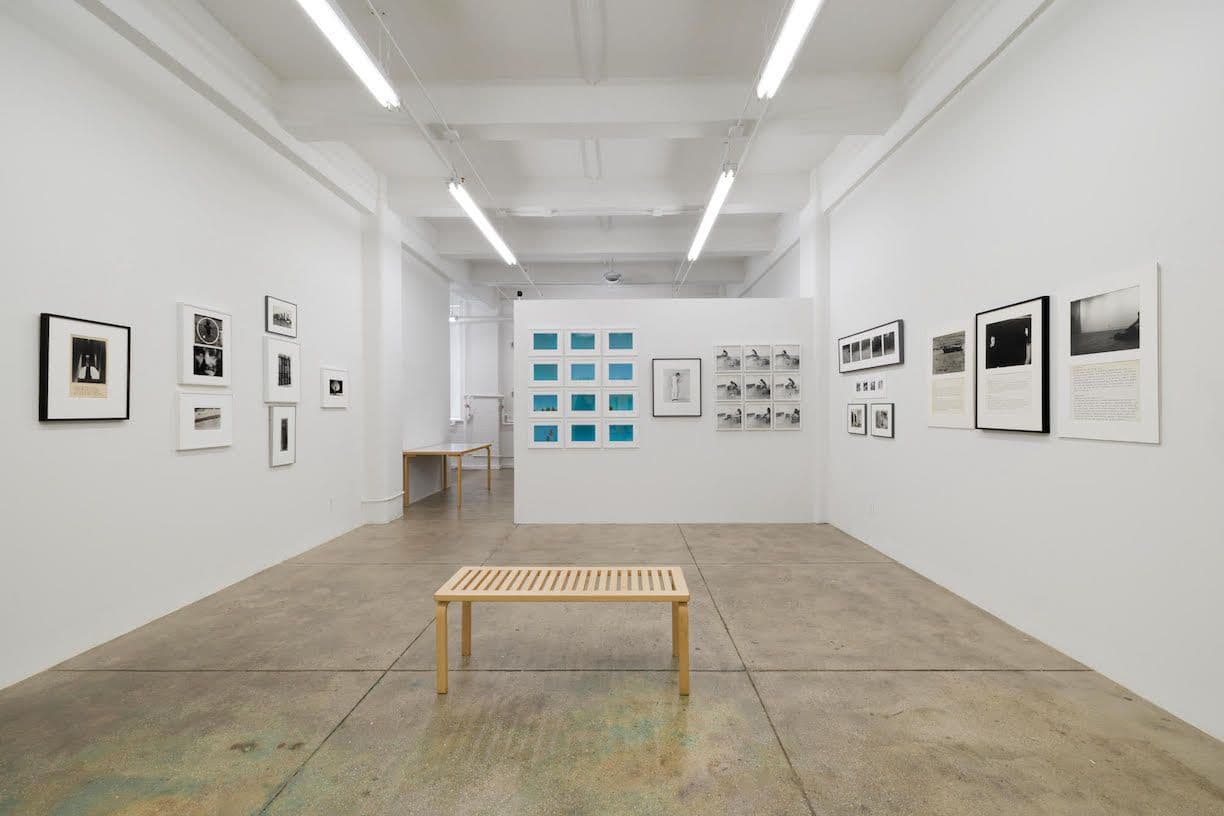
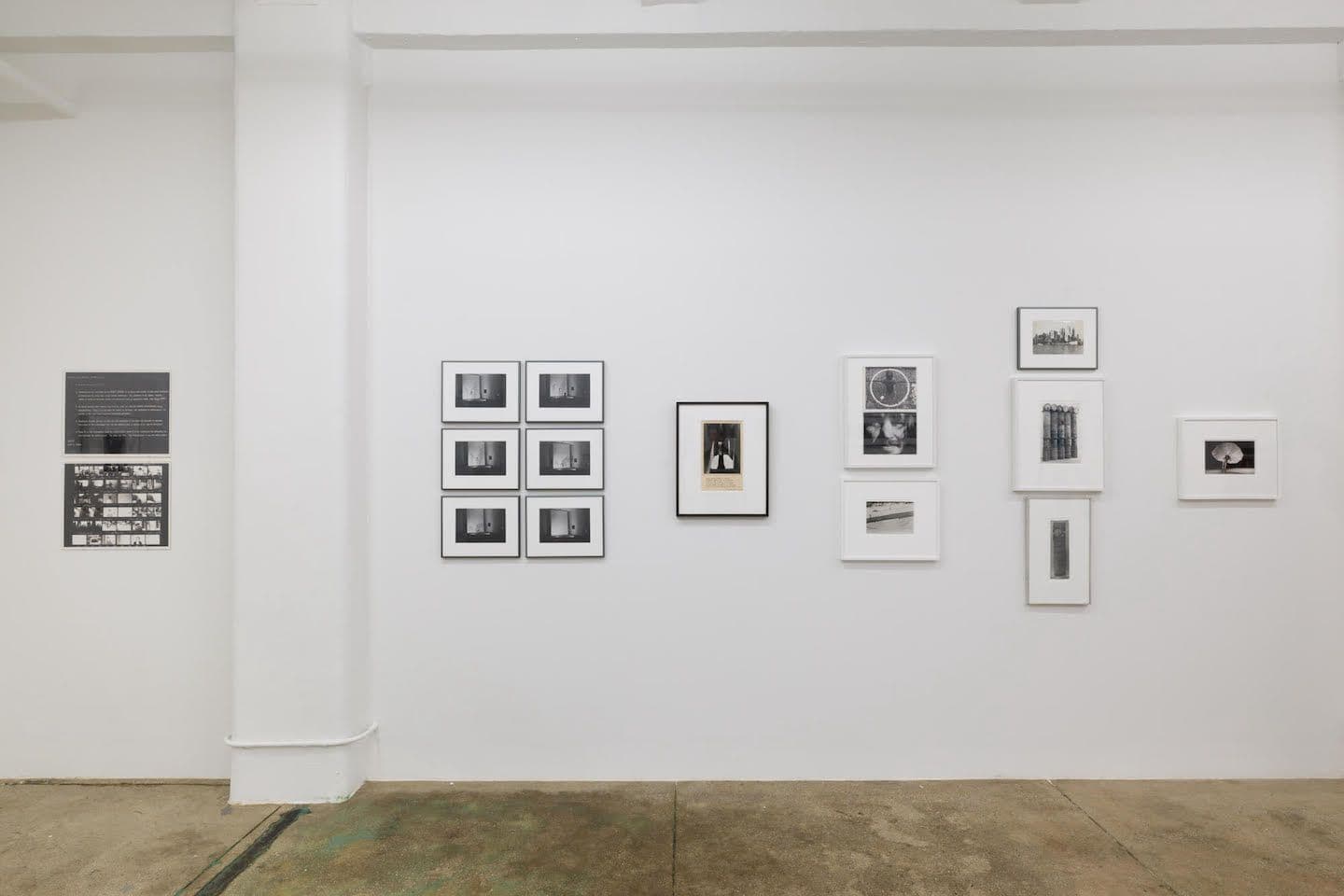
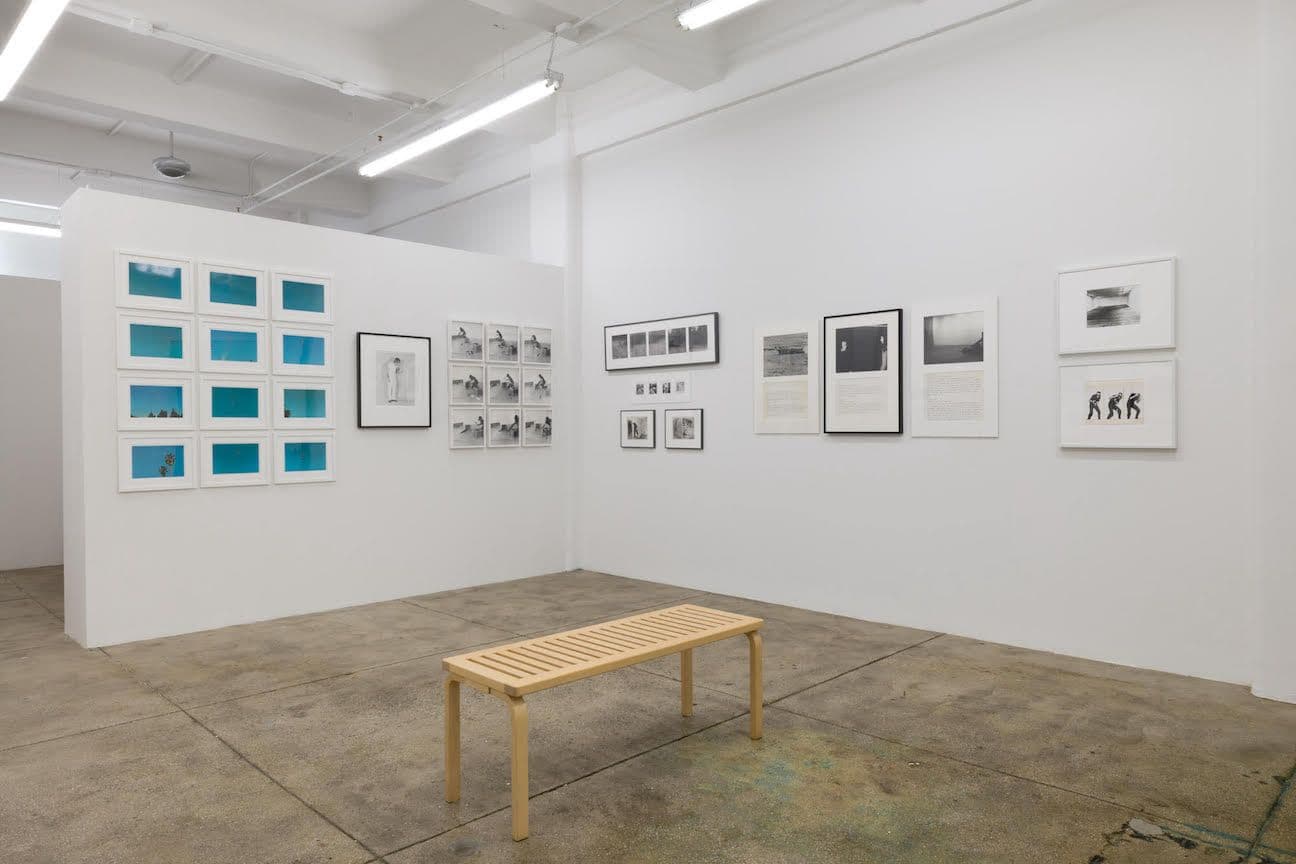
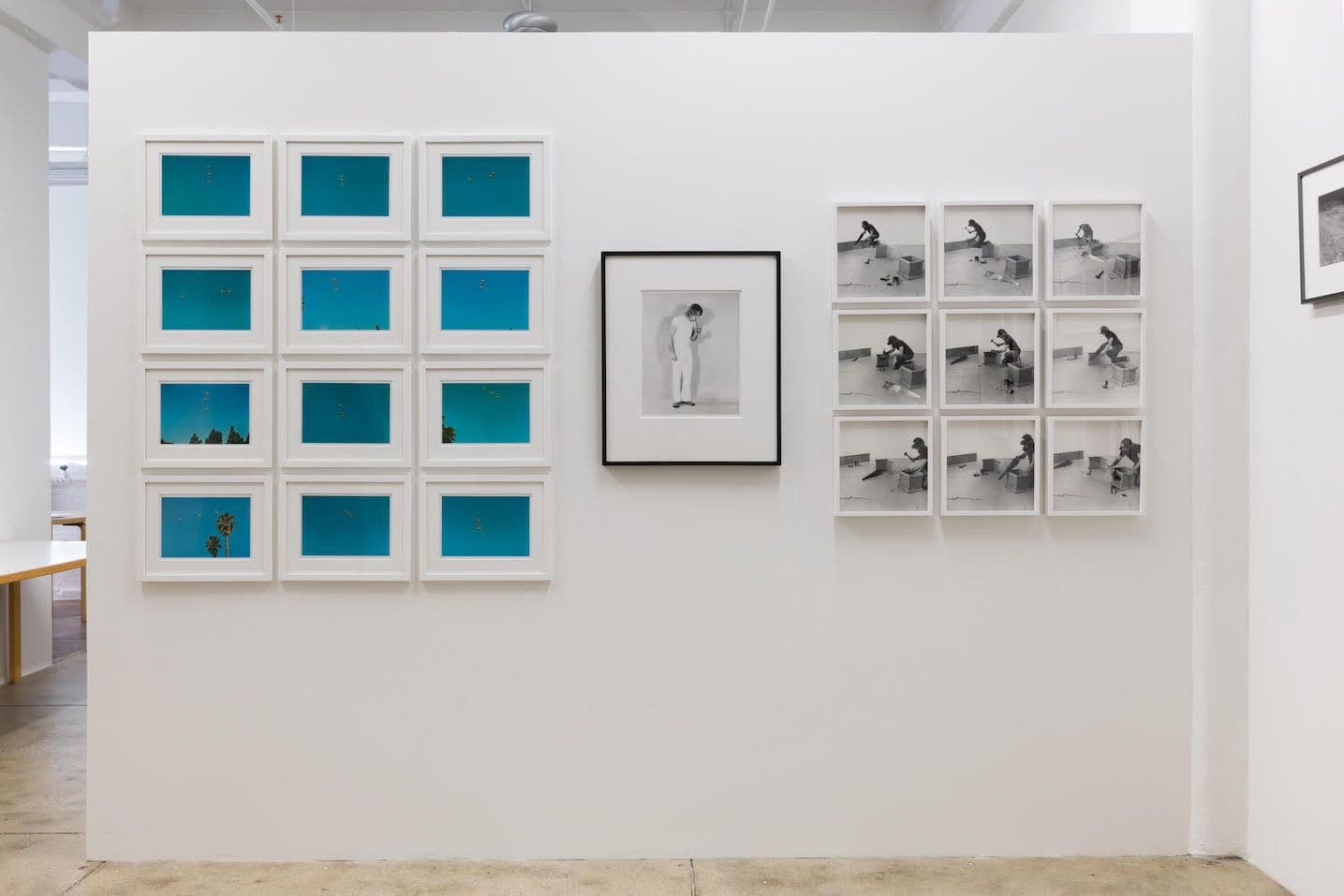
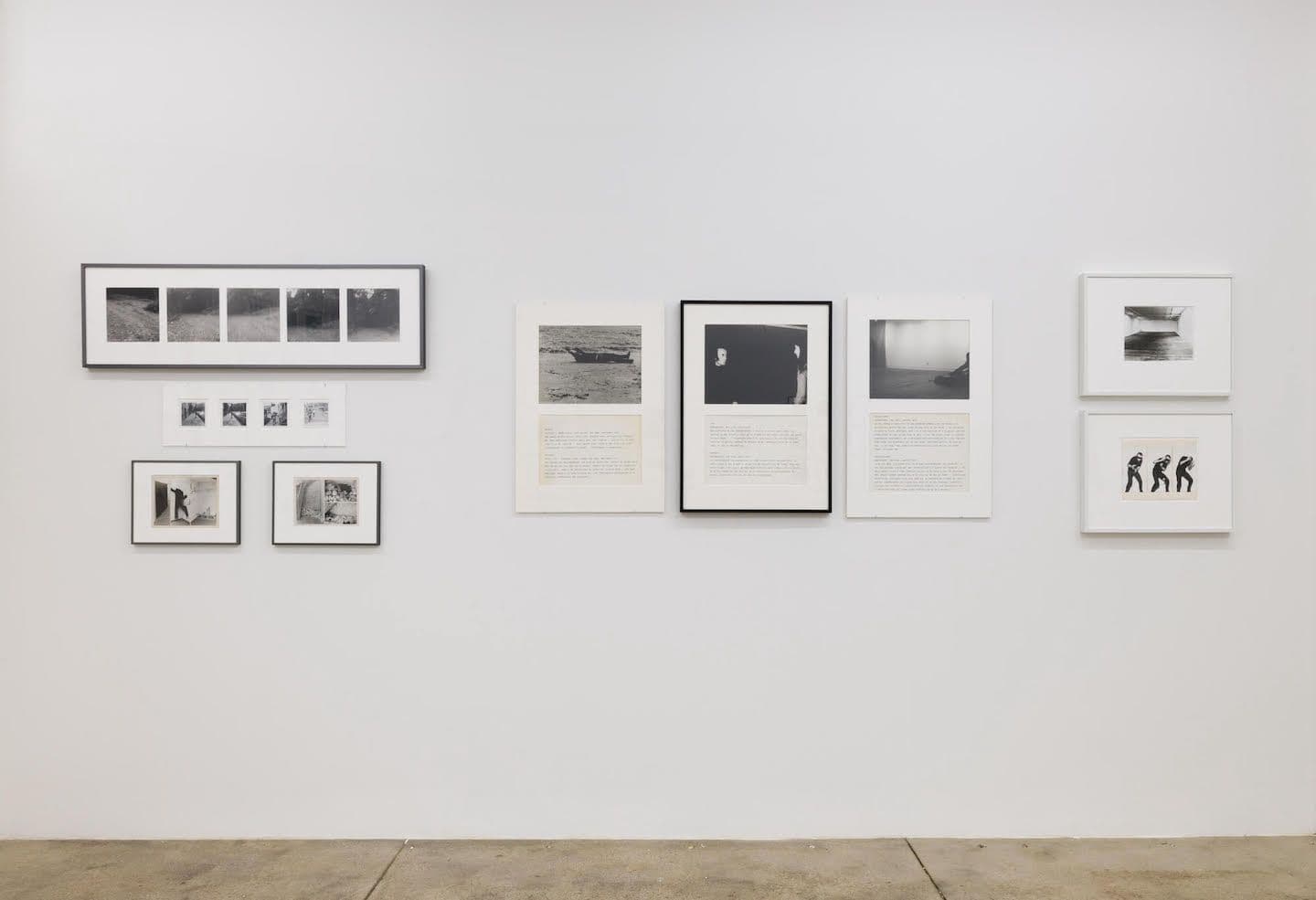
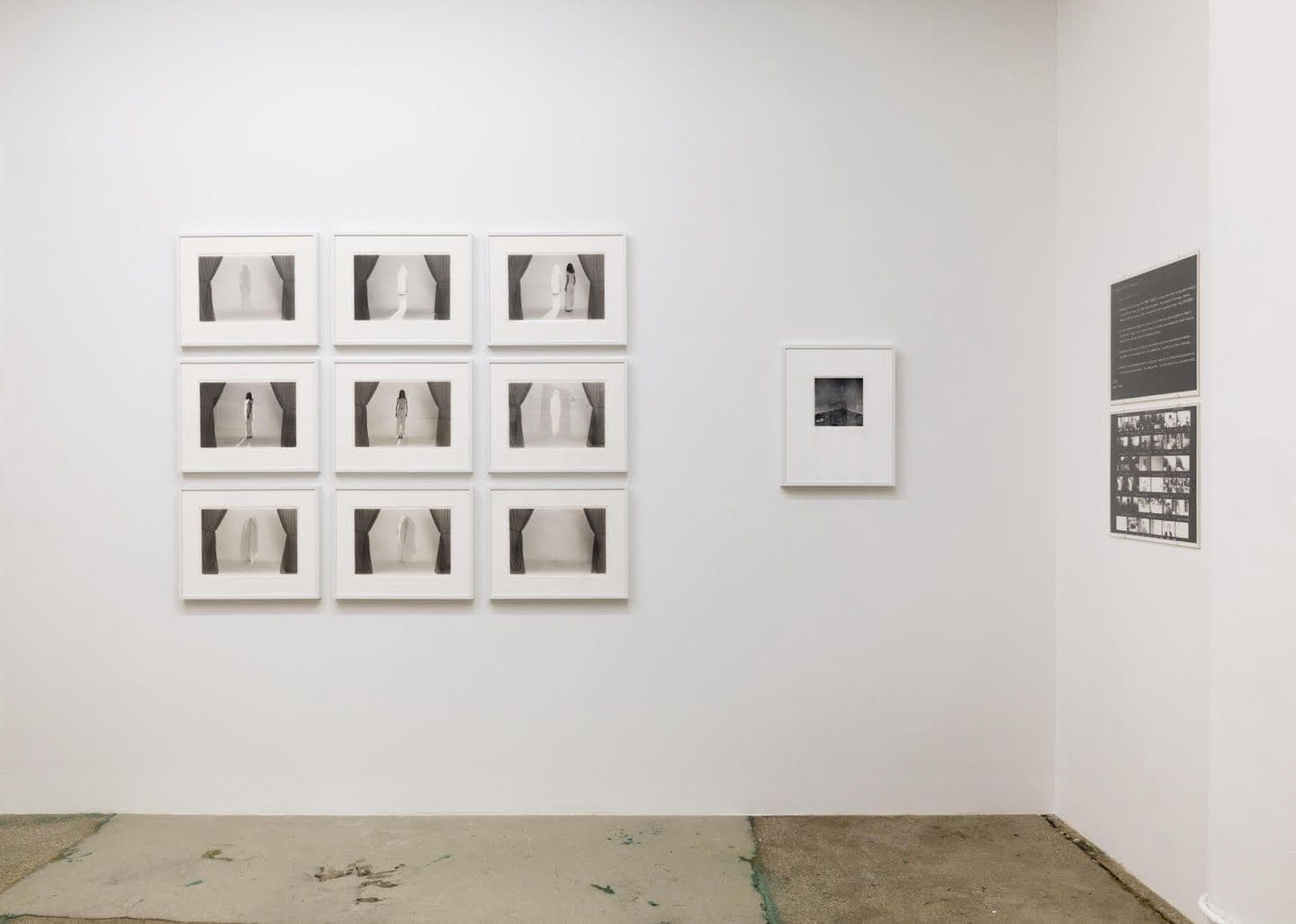
Deborah Bell PhotographsVito Acconci, John Baldessari, Donald Dennis Celender, Christo & Jeanne-Claude, John Divola, Joan Jonas, Dennis Oppenheim, Marcia Resnick, Lewis Thomas, Bill Viola, William Wegman Deborah Bell Photographs is pleased to present Conceptual Matters, an exhibition of photographs depicting artworks by artists of the late 1960s-1970s who pushed the boundaries of visual perception in performance, land art, conceptually-based body art, and photography. The 1960s introduced after Pop Art several non-narrative movements in the plastic arts including Minimalism, color-field painting, and a renewed appreciation of Assemblage. "Happenings" of the late 1950s, and the interest in dance as a form of sculptural art in space and time, evolved in the 1970s into performance art, in which artists used themselves as the carrier of the idea. Feminist content entered these artistic discussions, and artists began to use photography in order to illustrate ideas or to record an ephemeral event, thus melding photography with the fine arts. "Conceptual" and "Environmental" art challenged the dominance of painting and upended traditional sculpture-making by its use of materials such as dust and soil, or deriving its subject matter from literature and theater. Intellectual explorations in land art and body art displaced the permanent sculptural object. The photograph -- whether the product of a still, video, or film camera -- was often the only evidence remaining since many of the artworks were temporary structures or momentary actions. The authors of the renowned textbook, American Art (Abrams, 1979), astutely suggest reasons for this confluence of artistic practices and mediums, and the turn toward the conceptual approach in art: "The change came (to some extent) in reaction to the commercialism of the art scene in the 1960s. The accelerated pace of innovation may have reflected the widespread sense of social despair and of governmental incapacity to halt wars or assure human survival in the poisoned atmosphere of planet earth. This new mood of global pessimism probably contributed to artistic innovation and the uninhibited risk-taking apparent on all sides. By the 1970s,...with the termination of the Vietnam conflict, the zeitgeist in America began to change. The sense of commitment of the 1960s turned to the post-Watergate disenchantment with the political process. A new kind of narcissistic and "loner" mentality began to permeate all areas of culture, and in the visual arts it dominated solitary video and performance art events, where analogies could be drawn to popular forms of meditation, withdrawal, and self-realization. [As solitary performers] they seemed almost indifferent to the public audience, willfully cut off from it." Michael Kirby also observed in his book The Art of Time (1972) that "the 'thing' has moved inside the body...." Vito Acconci, who began his artistic career in art as a poet, classified his conceptually-based body art and performance works by category: Activities, Performances, Performance Situations, Performance Spaces, Photograph Pieces, Films, Audiotapes, and Videotapes. The photographs that result were intended to record the actions of his body, such as bending, throwing, or jumping in a landscape. As Kate Linker explains in her 1994 monograph on Acconci, "The photoworks...were a way for the artist to literally throw himself into his environment. Significantly, they were not conceived as individual works but rather as a photographic project, whose aim was to record the body's 'occupancy' of space. Throughout his photoworks the body is described in a nominalistic manner, as a composite of measurements and motions -- a collage of length, width, and muscular capacities, all of them intransitive and factual." In Following Piece, October 1969, for example, Acconci followed a different person's activity every day until the person entered a private space. In the three-minute film Adaptation Study (Blindfolded Catching), June 1970, we see the artist repeatedly trying to catch a rubber ball that is thrown at him, anticipating the moment when the next ball would be thrown. In the catalogue for her retrospective exhibition at The Museum of Modern Art, Joan Jonas: Good Night/Good Morning, Jennifer Allora explains: "Joan Jonas was one of the first artists to experiment with a portable video camera, to play around with how her body related to this technology and how to frame herself within this technology. Nowadays we're all Zooming, using our cellphones to record ourselves and talk in front of a video camera." One of Jonas's best-known works featuring her alter-ego, Organic Honey, Organic Honey's Vertical Roll was performed internationally 12 times between 1972 and 1980, but recorded on video only at the Castelli Gallery in 1973. Six photographs in this exhibition were made during the 1973 performance at the Galleria Toselli in Milan. Dennis Oppenheim made photo-documents of his Earthworks such from the late 1960s and body art of the early 1970s. A diptych of press-prints made from his 1971 videotape performance, Rocked Circle -- Fear are included in the present exhibition. A superb draftsman of the Jean Tinguely-inspired machine-sculptures Oppenheim later made in the 1980s-90s, he has been referred to as a "shaman" because of the psychic intensity of his work. Christo and Jeanne-Claude challenged traditional sculpture by extending it far beyond its immediate space. As explained in American Art, "[with the] ambitious packaging, whether of buildings or of a landscape, the point of the temporary monument was to widen public consciousness of the nature of art outside the museum context," which had a "direct effect on the life of landowners, engineers, public officials, students, and casual observers." In the territory of fine-art photography, the move into conceptual subject matter was recognized in an illuminating and ground-breaking exhibition at the George Eastman House in 1975. Organized by the curator William Jenkins, The Extended Document featured works by three artists included in the present gallery exhibition: John Baldessari, Marcia Resnick, and William Wegman. The new "photographic authority," as described by Jenkins, challenged that of the traditional, straight photograph and its final product, the beautiful, pristine print as art object. Around the same time, "an artist using photography" became a term applied to those who did not describe themselves as photographers. John Baldessari began as a painter. Influenced by the conceptual ironies of Marcel Duchamp, he turned to making narrative sign-paintings with verbal texts in 1966. As William Jenkins reveals in Baldessari's photographic "game" from 1972-73, Throwing Four Balls in the Air to Get a Straight Line (Best of 36 Tries), "The red balls, hovering against a blue sky do, more or less, fall into a line though one is clearly behind the other three.... Even the parenthetical suffix serves to delineate the photographic process by using a standard length of film as a yardstick." Baldessari's work has been called "Story Art," a term coined in the 1970s by the art dealer John Gibson to describe an offshoot of Conceptual Art which mixes verbal and visual elements. William Wegman creates comical, even slapstick, narratives of his domestic environment, often including himself as a subject. His perceptual investigations use body and performance art in their spatial and situational scenarios. As Jenkins explains, Wegman's photographs are evidence that a given theatrical event occurred. A former student of John Baldessari's, Marcia Resnick also began as a painter. She examined the nature of landscape photography and photographic "reality" in her series Landscape (1975), in which she melds an "incredible elaboration of nothing...my statement about Minimalist art" with a sardonic take on the cliché of the beautifully photographed landscape. As Lisa Hostetler writes about Anoriexia, Resnick's nine-print work from 1975, "Anorexia is also a riddle about photographic seeing. As she stands beside, within, and behind the scrim, she and her shadow change positions until she disappears behind her shadow, which occupies the hole and then disappears. The result is a dreamlike visual narrative about looking at photographs, seeing oneself in photographs, and the dissociative experience inherent to photographic representation." John Divola's 1974 photograph from his series Vandalism plays with a similarly mesmerizing trompe l'oeil view of violated space.