
East, London
Group Exhibition
Face Value
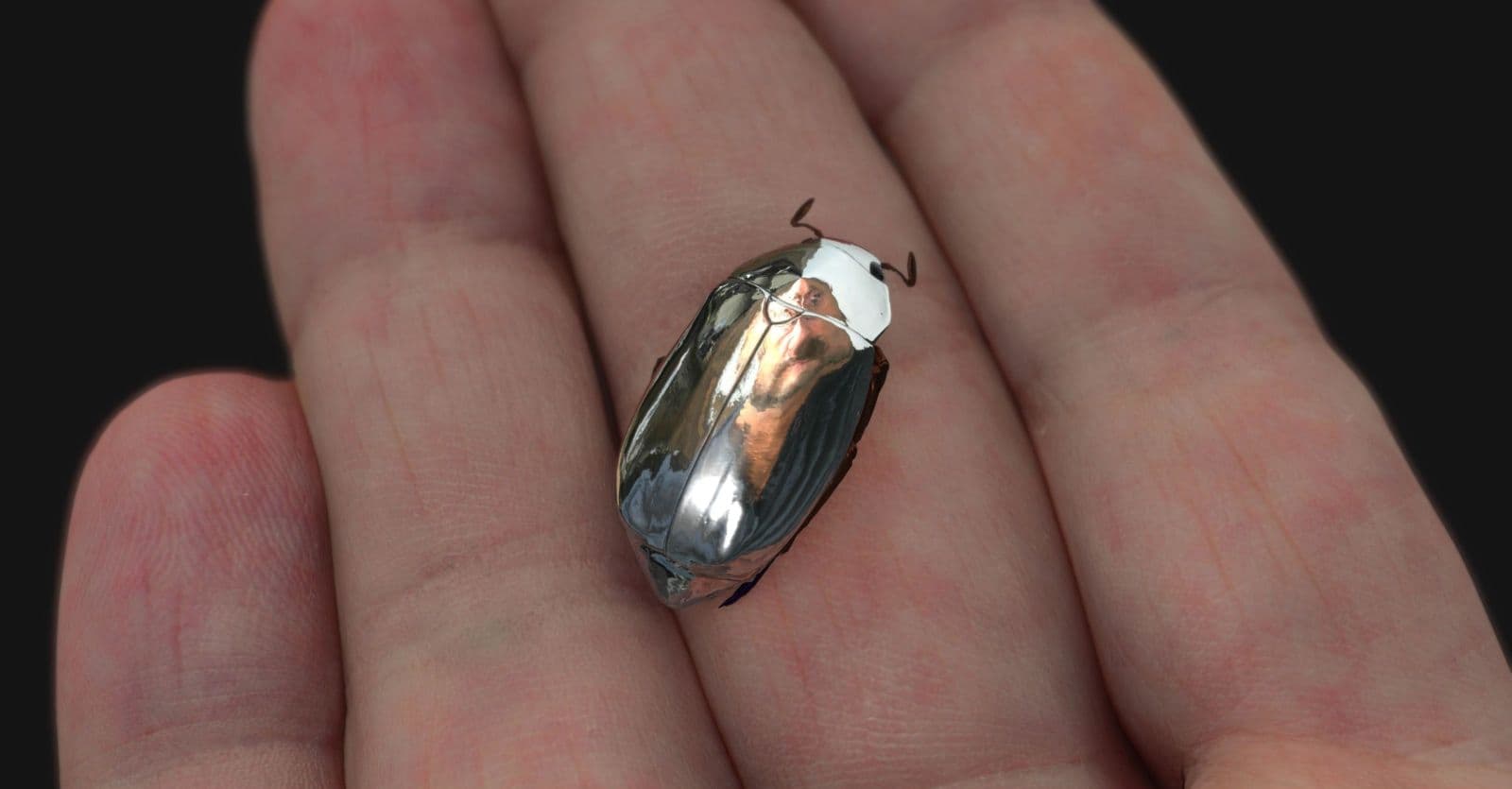
Nguyen WahedFrancisco Alarcón, Harm van den Dorpel with Jonas Lund, John Gerrard, Rachel Maclean, Anna Ridler, Addie Wagenknecht The exhibition brings together artists investigating how identity operates as currency through technological, biological, and economic frameworks. John Gerrard's Mirror series reconfigures the scarab beetle, that ancient Egyptian symbol of transformation and rebirth as a reflection of a natural world gripped by accelerating extinctions. Through digital cameras linked to iridescent carapaces, these creatures become involuntary reflective shells, held up to viewers who encounter their own image. The work operates as a vivid technological memento mori for an age of perpetual self-documentation, where AI-inflected virtual worlds collapse distinctions between observer and observed, technological and entomological. From Anna Ridler comes selected pieces from The Shell Record: Breathings of the Moon, where machine-generated molluscs appear and vanish with Thames tidal patterns. These neural-networks-based visions of shells, humanity's ur-currency, remain visible and tradeable only during low tide, binding market liquidity to lunar pull. The work introduces temporal friction into systems designed for instantaneous exchange, proposing patience as a form of resistance. Addie Wagenknecht's Untitled (Forgotten) from recent series Neutralized Memories transforms Rorschach-like compositions, filtered through digital interpretation, to the very substance designed to obliterate monetary value as vehicle for exploring cognitive dissolution. These paintings are created using security ink as a base from intelligent banknote neutralization systems. The pigments are designed to render stolen banknotes unusable, and serve as a poignant metaphor for the gradual erosion of memory and identity that characterizes Alzheimer's. Rachel Maclean presents MAMA, where bespoke AI models generate hallucinatory imagery conflating maternal and infant bodies into single, pulsing entities. The work leverages AI's inability to respect physical boundaries as formal strategy, capturing the psychedelic dissolution of self that marks early motherhood. Gendered expectations, pink ribbons and blue bows, mutate into grotesque spectacle, revealing violence embedded in idealised maternal imagery. FAR (Francisco Alarcón), whose practice bridges digital culture and visual arts, debuts with Tender Paradise. Previously pursuing doctoral research in Film and Visual Studies and Critical Media Practice at Harvard University, where he co-founded the Harvard Blockchain Group at the Graduate School of Design, Alarcón presents this artwork as part of Offshore, a study of the visual language of wealth, escape, and abstraction shaped by finance, fantasy, and desire. Harm van den Dorpel and Jonas Lund present Wishing Well (2013), an early work that presciently anticipated our current condition of monetised desire. This browser-based wishing well transforms the ancient ritual of coin-tossing into PayPal transaction. Created over a decade ago, the piece reads differently in 2025: what began as net art provocation now feels like documentary evidence of how thoroughly transactional logic has penetrated even our most private aspirations. These artists collectively propose that face value, worth printed on the digital or presented in social interaction, has become the primary site of contemporary social malaise. Whether through digital self-documentation or tidal data, maternal dissolution or monetary destruction, the exhibition tracks how systems of valuation perpetually reconstitute themselves at the intersection of the biological, technological, and economic.