
West, London
Alexander Calder
Extreme Cantilever
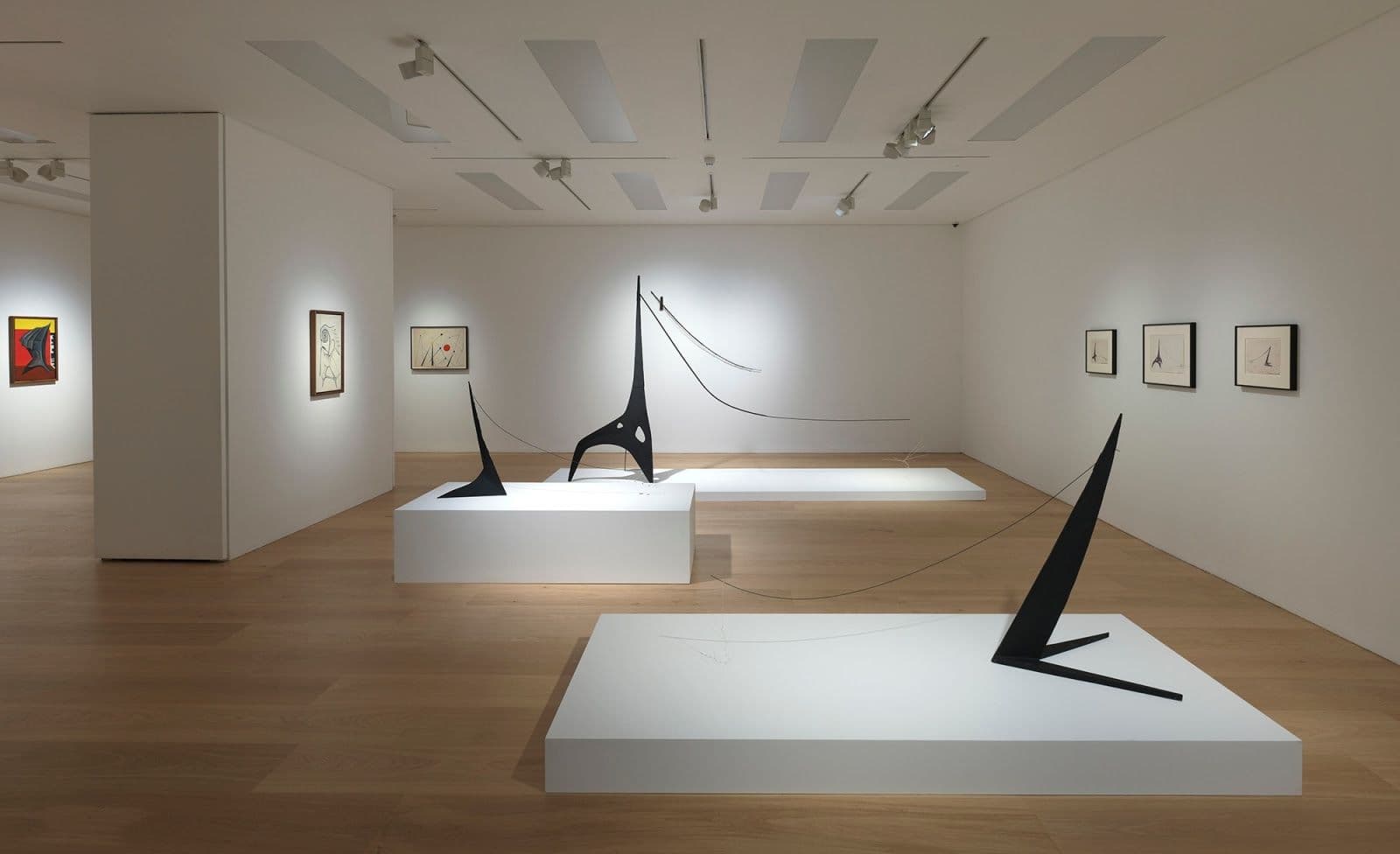
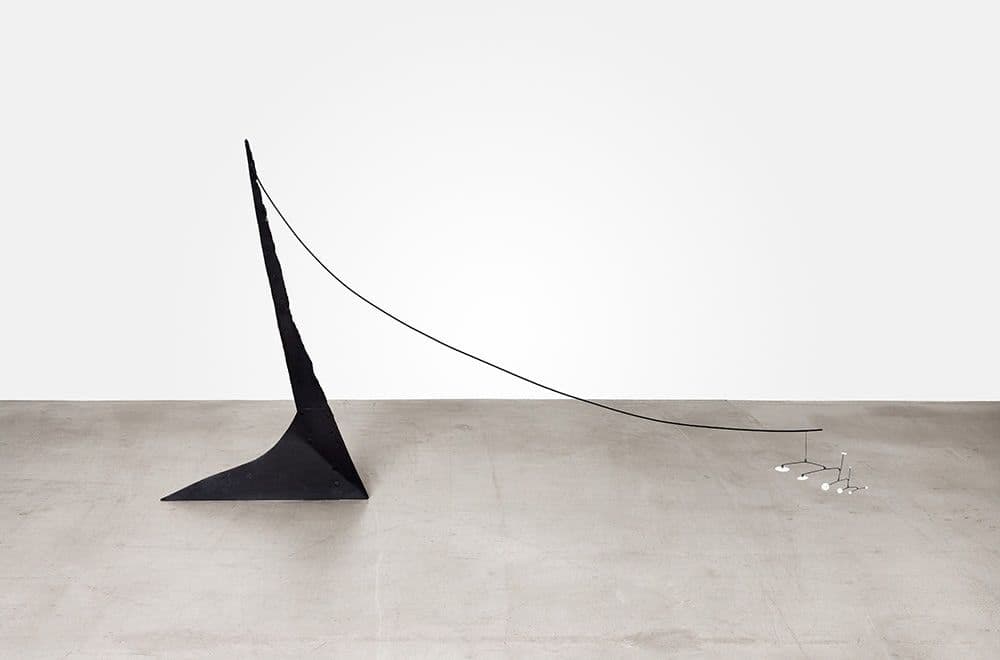
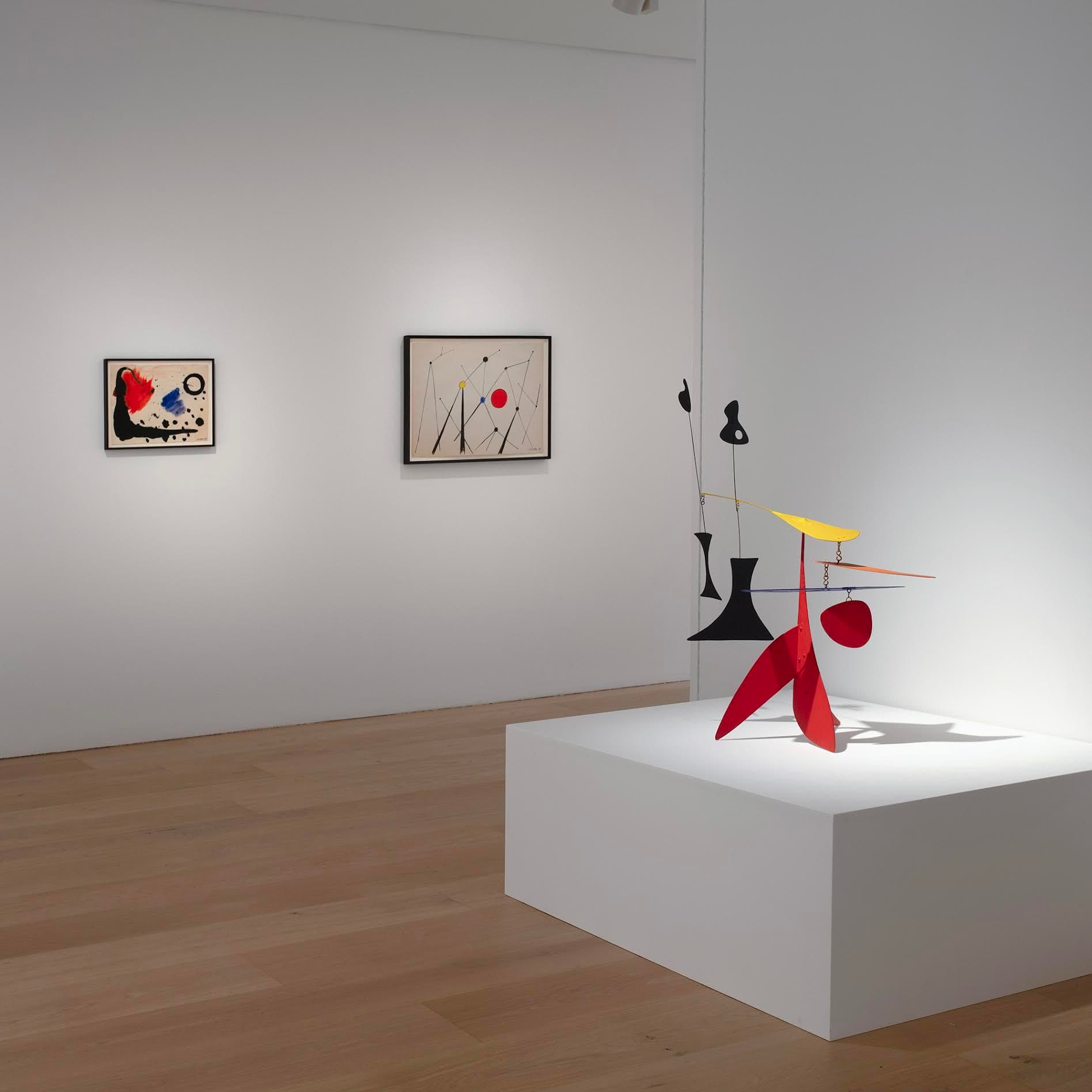
Ben Brown Fine ArtsBen Brown Fine Arts is delighted to present Calder: Extreme Cantilever, an unprecedented exhibition that brings together for the first time Alexander Calder’s three cantilever sculptures, alongside a curated selection of oil paintings, works on paper, and historically significant artifacts. This exhibition illustrates a pivotal shift in Calder’s formal and conceptual approach to spatial abstraction amid the global upheaval of the Second World War. On loan from the Calder Foundation and esteemed private collections, Calder’s three standing mobiles – Extreme Cantilever, More Extreme Cantilever, and Extrême porte à faux III – showcase the artist’s unbridled imagination and intuitive genius that cement him as one of the 20th century’s foremost innovators. Born in Lawnton, Pennsylvania, Calder revolutionised modern art by commandeering motion, form, and space in ways that fundamentally altered its course. His innovative massless wire sculptures, in which he manipulated wire to “draw in space,” introduced the traditionally two-dimensional qualities of drawing – the line and plane – into the three-dimensional realm. A pivotal moment in Calder’s artistic evolution occurred in October 1930 when an experience of the all-encompassing environment of Piet Mondrian’s Paris studio ‘shocked’ him toward total abstraction. This transition climaxed in 1931 with his invention of the ‘mobile,’ a term coined by Marcel Duchamp evoking both ‘motive’ and ‘motion’ in French. These revolutionary kinetic objects capture the dynamism and unpredictability of the 20th century, and transform sculpture from a static art form into a fluid, changeable medium, thereby establishing Calder as a pioneering figure in modern art. In the aftermath of World War II, as the world confronted a collective reckoning with the trauma it had endured, Calder embarked on the creation of strikingly evocative sculptures featuring increasingly complex forms. While these works are entirely abstract, they resonate with the political upheaval of the period. “In many of his new objects, Calder was rejecting the idea of a work of art as a single unified image, in favor of a pileup or visual cacophony of elements and movements,” writes Calder biographer Jed Perl. “He was responding, in his own unique way, to the tangled emotions of the war years.” While the three sculptures on view in Calder: Extreme Cantilever feature an economy of form, the contrast between the long, cantilevered wires and the delicate mobiles that hang from them creates a powerful and dramatic tension. Extreme Cantilever (1949) is the first of the three cantilevers, a striking and unexpected new direction in Calder’s sculptural practice. It is composed of three planes of sheet metal painted black and riveted together to create a pyramidal base, from which a serrated, angular protrusion rises skyward. A long, horizontal wire extends downward from its apex, acting as a lever arm to support a white kinetic mobile element delicately suspended from its tip. The sculpture appears to defy the laws of gravity, with the slender wire seemingly too insubstantial to bear the weight of the mobile. Calder’s exploration of tensile strength and stability in Extreme Cantilever draws parallels with the cantilevers used in modern architecture, which were rapidly transforming the landscape of the postwar world. The sculpture’s serrated edges imbue it with a menacing presence, which contrasts with the fragile appearance of the mobile element that hangs tenuously in space; the mobile itself, painted a luminous white, contrasts starkly with the black stabile. As Calder said in 1943, “To me the most important thing in composition is disparity.” This juxtaposition of mass and fragility, harmony and tension, is central to Extreme Cantilever, reflecting the underlying anxieties of the interwar and postwar periods. More Extreme Cantilever (1949), standing over two meters high, features a tripod base anchoring the construction to the ground, with a spire rising upwards to support a wire that descends, once again bearing a mobile, similar to Extreme Cantilever. The two punctured holes in the base create a contrast of visual lightness and heavy mass. The work’s sharp, jutting edges, dramatic vertical projections, and sense of precarious balance convey an impression of imminent danger, as if poised to launch or strike. In Extrême porte à faux III (1969), Calder reprised his sculptures from twenty years earlier. Created for his major retrospective at the Fondation Maeght in Saint-Paul-de-Vence, France, at a time when his sculptures had become a defining feature of the urban landscape, Extrême porte à faux III clarifies the importance of the cantilevers in Calder’s artistic development. Displayed alongside his earlier sculptures, it offers a rare opportunity to trace the aesthetic and material evolution of an idea over two decades. The exhibition also showcases a selection of important works presented alongside Extreme Cantilever and More Extreme Cantilever when they debuted at Buchholz Gallery/Curt Valentin, New York, in November 1949. Black I I (1949), a standing mobile that epitomises Calder's extraordinary ability to merge sculptural grace with kinetic energy, embodies a delicate equilibrium of opposing forces, where the tension between the robust red arcs and the fragile mobile elements exists in a state of tenuous harmony. The space between “I I” in the title – as written by Calder in drawing of the work – also reflects the two mobile “I” elements. The vibrant, coruscating oil paintings Pipe (1948), Starfish on Pink (1949), Cockscomb (1949), and Helmet (1949) are suffused with otherworldly forms, each imbued with a distinctly Surrealist quality. Pipe features a broad range of vibrant colours, rendered in a mixture of loose and exacting brushwork – a study in contrasts. Meanwhile, Helmet evokes the materiality of war, with industrial grooves, dents, and corrugated surfaces suspended in space. Cockscomb features biomorphic forms that echo early abstract ink and gouache paintings from the 1930s. The show also includes nine works on paper, many made in the same year as Extreme Cantilever and More Extreme Cantilever. Untitled (1949) offers a glimpse into the primacy of drawing within Calder’s practice, despite his renown for spatial abstraction. The imposing black void on the left side of the paper, reminiscent of Extreme Cantilever, unfurls as if conjured by chance, swirling into existence with an effervescent, spontaneous energy. These pieces underscore how the fluidity and immediacy of drawing resonates with his revolutionary sculptural innovations. Calder: Extreme Cantilever offers a unique opportunity to experience the work of a transformative period of Calder's oeuvre. Through these three seminal sculptures and accompanying paintings and drawings, the exhibition explores Calder's profound engagement with the burgeoning anxieties that defined the mid-20th century. These works not only demonstrate Calder's groundbreaking use of industrial materials and cantilevered forms but also resonate with the enduring tension between the fragility of humanity and the formidable power of modern technology, which Calder masterfully transcends through his art. Alexander Calder (1898–1976) utilised his innovative genius to profoundly change the course of modern art. He began by developing a new method of sculpting: by bending and twisting wire, he essentially “drew” three-dimensional figures in space. He is renowned for the invention of the mobile, whose suspended, abstract elements move and balance in changing harmony. Coined by Marcel Duchamp in 1931, the word mobile refers to both “motion” and “motive” in French. Some of the earliest mobiles moved by a system of motors, although these mechanics were virtually abandoned as Calder developed mobiles that responded to air currents, light, humidity, and human interaction. He also created stationary abstract works that Jean Arp dubbed stabiles. From the 1950s onward, Calder turned his attention to international commissions and increasingly devoted himself to making outdoor sculpture on a grand scale from bolted steel plate. Some of these major commissions include .125, for the New York Port Authority in John F. Kennedy Airport (1957); Spirale, for UNESCO in Paris (1958); Teodelapio, for the city of Spoleto, Italy (1962); Trois disques, for the Expo in Montreal (1967); El Sol Rojo, for the Olympic Games in Mexico City (1968); La Grande vitesse, which was the first public artwork to be funded by the National Endowment for the Arts (NEA), for the city of Grand Rapids, Michigan (1969); and Flamingo, for the General Services Administration in Chicago (1973). Major retrospectives of Calder’s work during his lifetime were held at the George Walter Vincent Smith Gallery, Springfield, Massachusetts (1938); The Museum of Modern Art, New York (1943–44); Solomon R. Guggenheim Museum, New York (1964–65); The Museum of Fine Arts, Houston (1964); Musée National d’Art Moderne, Paris (1965); Fondation Maeght, Saint-Paul-de-Vence, France (1969); and the Whitney Museum of American Art, New York (1976–77). Calder died in New York in 1976 at the age of seventy-eight.