
Matignon, Paris
Dhewadi Hadjab
Acte II: Fragmenter
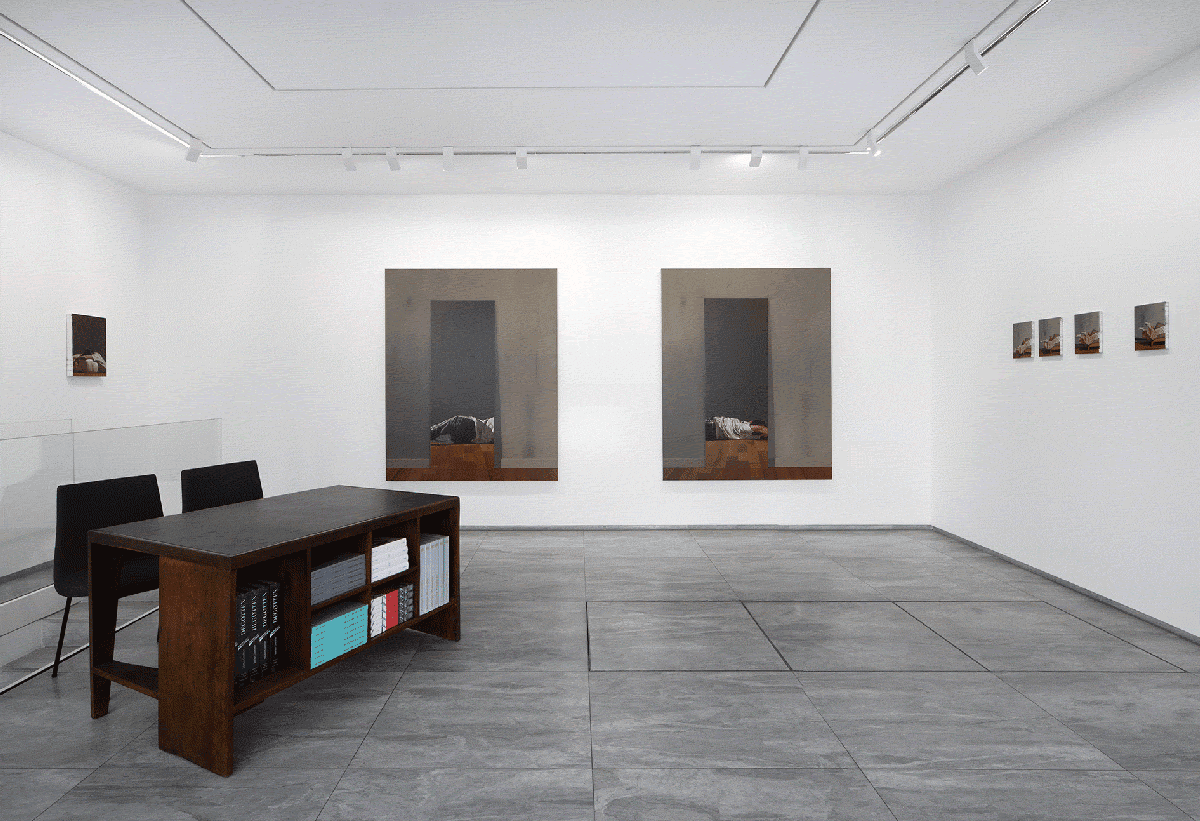
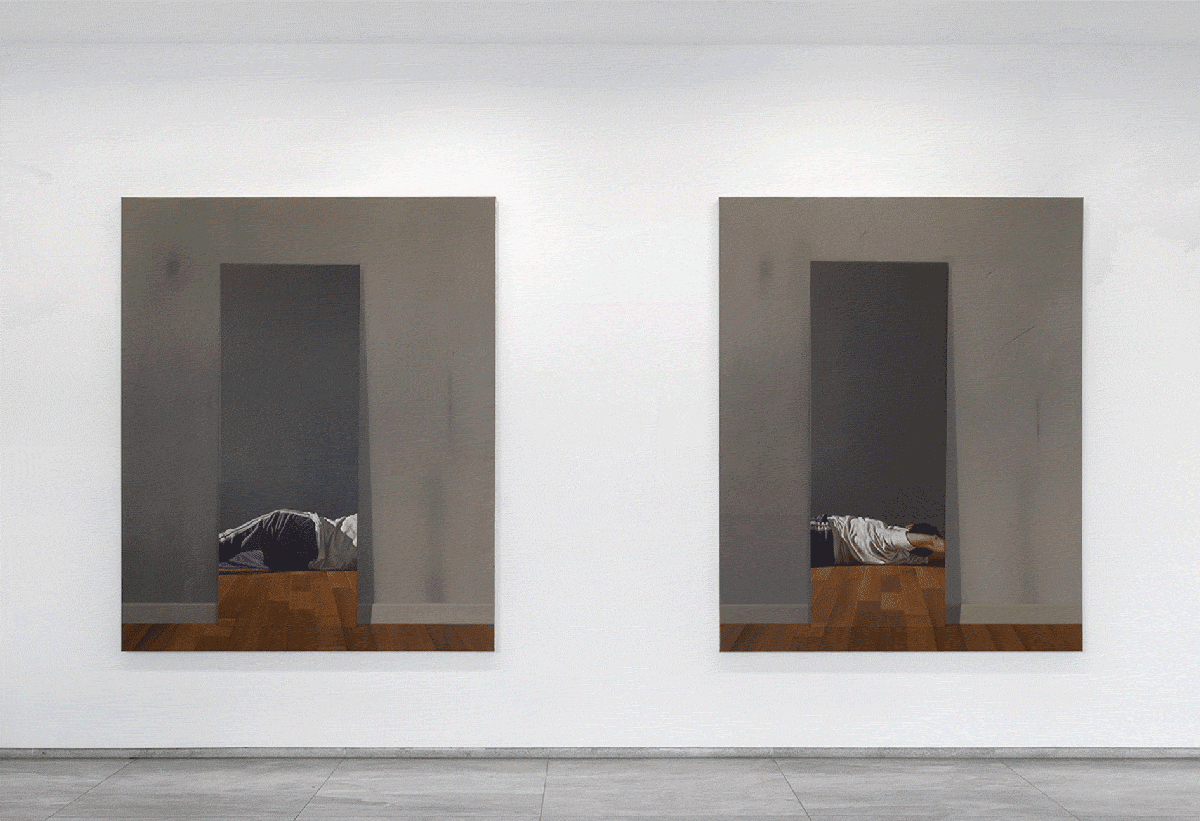
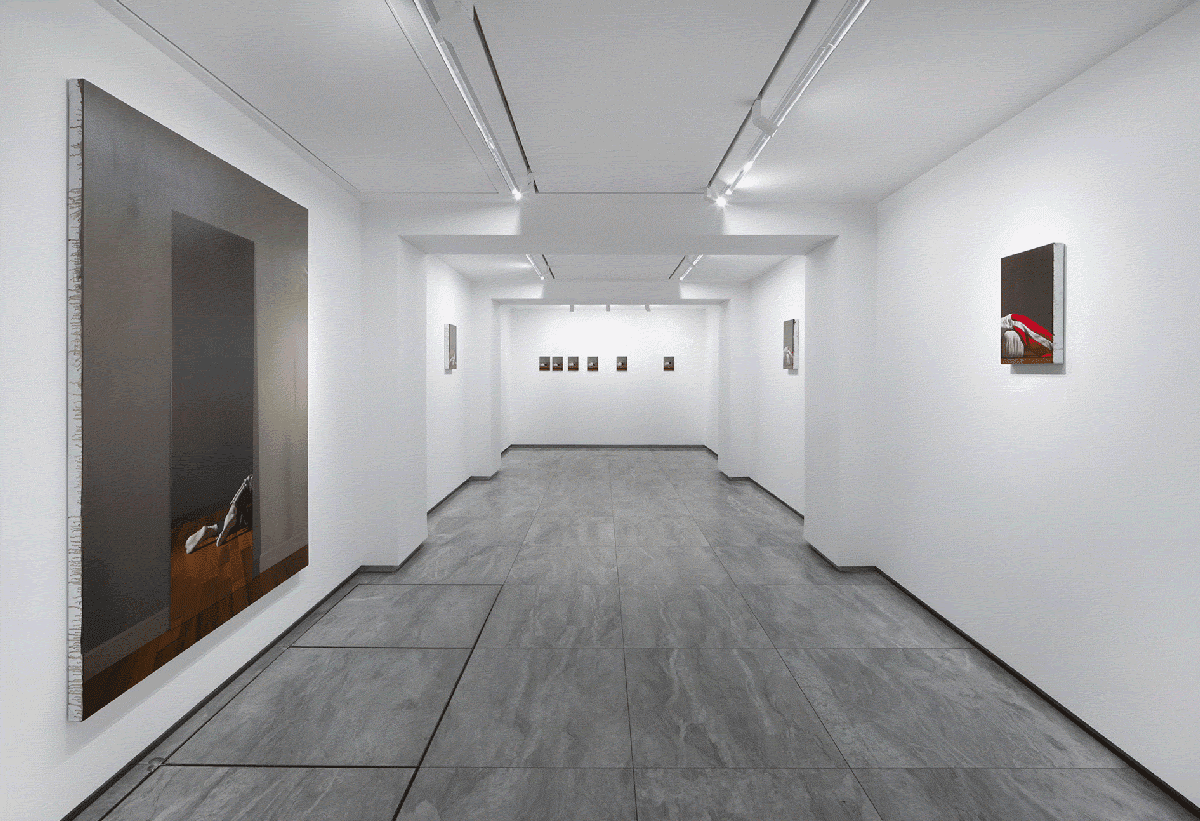
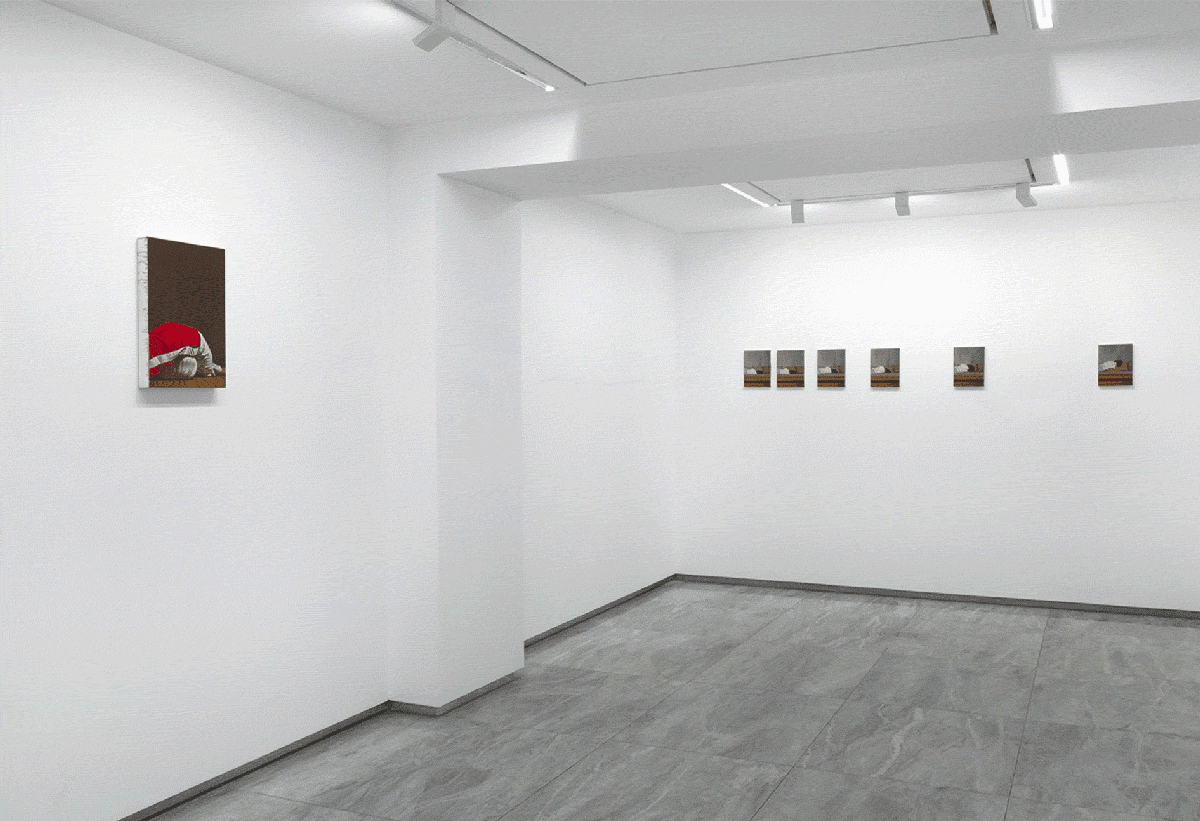
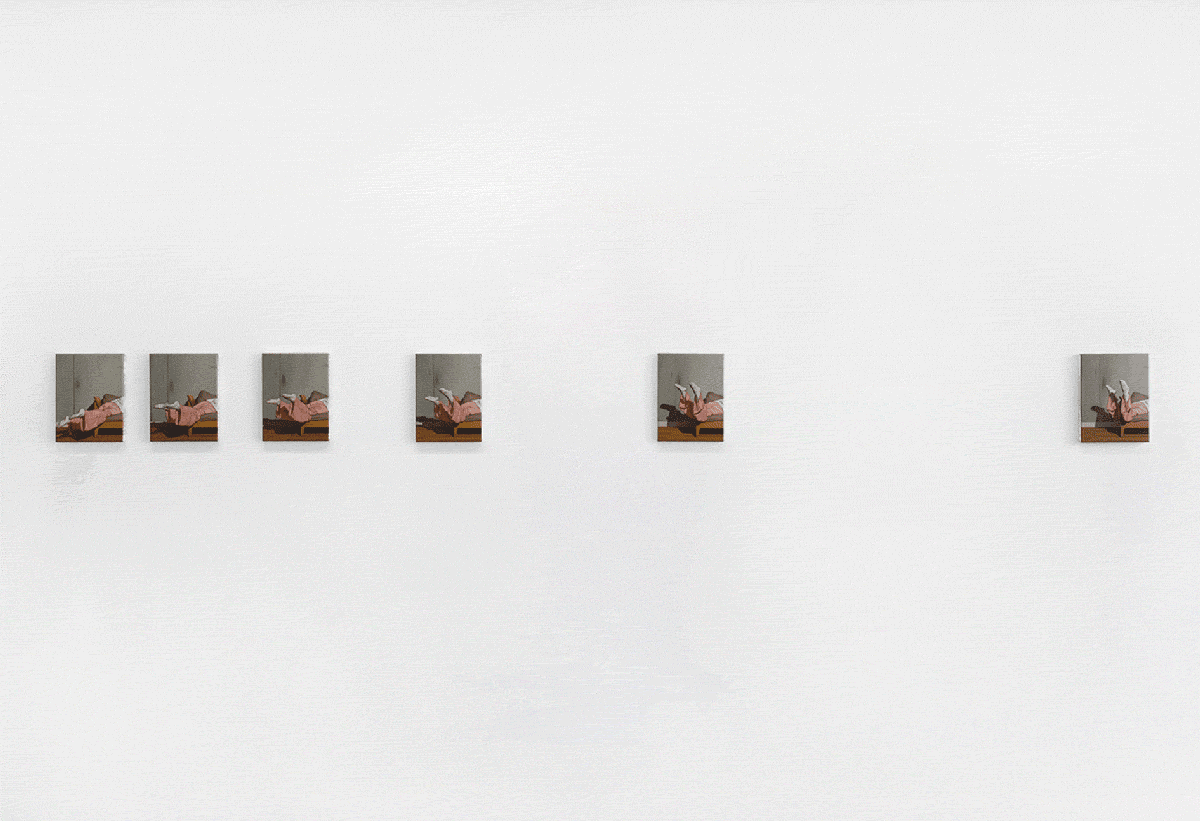
Mennour[Scroll down for French version / Veuillez trouver ci-dessous la version française] Mennour is pleased to present Dhewadi Hadjab’s second solo exhibition at the gallery: Acte II: Fragmenter. It’s a new page of research, written in fragments, in decomposed movements, in plays on hanging which suggest tension and relaxation, the spectacle of an energy released. In his new series of paintings, those in small formats in particular, Dhewadi Hadjab is no longer only interested in the moment before the fall. He shows unreal images of positions impossible to maintain: several times in one single time and several bodies in one single body, beings about whom we don’t realise for a while that their identity eludes us. By choosing photography as a tool serving painting, in the same capacity as the paintbrush or the paint, the artist organises shooting sessions with models of his inner circle and a whole gathering of costumes. At the moment of painting, the tones transmute into purple, bright red and fuchsia. And for the first time, the bodies displayed are cut. The framings of Caravaggio could be mentioned, but those of Dhewadi Hadjab are tighter, more enigmatic, evoking dance, the precisely composed movements of Pina Bausch, whose performances he has been watching intensely for many years. Feet go up from a body stretched on a sofa, making a pair of powdered pink wide trousers flap in the motion, a garment made of a fluid material giving the spectator the desire to touch it. A few strokes in pencil remain visible between the preparation of the canvas and the layer of paint. Another body is trying to sit up to hug the cushion on the same sofa: an absurd position, a motion caught during a rehearsal, in a lapse of concentration on the effort, outside all rules. The variations between one painting and another are more negligible, one has to examine all the differences in the locks of hair, the curving of the back, the folds of a white t-shirt creased in the effort. A feeling of fragility emanates from those images, as well as an intimate relationship with those characters whose taut, tense muscles we are able to guess: a body pushed to its limits. In those fragmented bodies, in those faces looking away, Dhewadi Hadjab plays with the disappearance of images. His photographic montages of images that don’t exist are the perfect vehicle for the sudden appearance of the invisible. His painting shows little and states nothing. His politically engaged work is never directly political, he paints dereliction and the social outcasts. He even has the spectator disappear at times, for he makes him free. There is no real melancholy in those images, no past, only the present, made of life and death. In another series of large formats, he paints the fragment of a body reflected in a mirror, a surface he paints for the first time in order to expand still the space and its depth. To come close to his painting, he encourages us to step over his subject, that body lying down which should be in front of us, which is made both absent and present by the image. Stepping over the subject and paying no heed to it so as to concentrate on a reflection. —Anaël Pigeat Born in 1992 in M’Sila, Algeria, Dhewadi Hadjab lives and works in Paris. Surprising and disconcerting, the paintings of Dhewadi Hadjab are of intriguing beauty. Photography and pictorial practice are both at the center of his work. All of the artist’s canvases begin with photographs of models that he places in positions of extreme discomfort, constraint, in danger. It is then, in the extremely meticulous execution of the painted surface and in the development of a powerful realism that he accentuates the smallest details of the bodies and gives them a strong sculptural intensity. These vibrant, intense and unique paintings, between gravity and grace, are an invitation to transcend the sensitive and the fragility of uncertainty. Graduated from the École supérieure des beaux-Arts d’Alger, the École Nationale Supérieure d’Art de Bourges and the Beaux- Arts de Paris, he was awarded several international prizes such as the Prix des Amis des Beaux-arts “Prix du portrait Bertrand de Demandolx-Dedons” in 2020. In 2021, he was the laureate of the Rubis Mécénat production grant. In 2024 he participated in “Le jour des peintres” event at the Musée d’Orsay. At the invitation of The Church of St. Eustache, Dhewadi Hadjab created two monumental paintings in 2024, which have been permanently installed in the Church. ***** Mennour est heureux de présenter la seconde exposition personnelle de Dhewadi Hadjab à la galerie : « Acte II: Fragmenter ». C’est une nouvelle page de recherches, écrite par fragments, en mouvements décomposés, dans des jeux d’accrochage qui suggèrent la tension et la détente, le spectacle d’une énergie qui se libère. Dans ses nouvelles séries de peintures, celles en petit format particulièrement, Dhewadi Hadjab ne s’intéresse plus seulement à l’instant d’avant la chute. Il montre des images irréelles de positions impossibles à tenir : plusieurs temps en un seul temps et plusieurs corps dans un seul corps, des êtres, dont on ne se rend pas compte avant longtemps que leur identité nous échappe. En choisissant la photographie comme un outil servant la peinture, au même titre qu’un pinceau ou que de la couleur, l’artiste organise des shootings avec des modèles de son entourage et tout un peuple de costumes. Au moment de peindre, les teintes se métamorphosent en mauve, rouge vif ou fuchsia. Et pour la première fois, les corps qu’ils montrent sont coupés. On pourrait invoquer les cadrages du Caravage, mais ceux de Dhewadi Hadjab sont plus resserrés, plus énigmatiques, évoquant la danse, les mouvements composés par Pina Bausch, qu’il regarde avec passion depuis de nombreuses années. Des pieds se lèvent d’un corps allongé sur un canapé, faisant battre dans l’élan un large pantalon rose poudré d’une matière fluide qui donne envie de le toucher. Quelques traits de crayon demeurent visibles entre la préparation de la toile et la couche picturale. Un autre corps tente de se redresser pour embrasser le coussin du même canapé : posture absurde, mouvement surpris au cours d’une répétition, dans un moment d’inattention à l’effort, hors des règles. Les variations d’une toile à l’autre sont plus imperceptibles, il faut en observer toutes les différences, dans les mèches de cheveux, la courbure du dos, les plis d’un t-shirt blanc qui se froisse dans l’effort. Une sensation de fragilité se dégage de ces images, ainsi qu’un rapport d’intimité avec ces personnages dont on devine les muscles bandés, crispés : un corps poussé jusqu’au bord de sa limite. Avec ces corps fragmentés, avec ces visages détournés, Dhewadi Hadjab joue avec la disparition des images. Ses montages photographiques d’images qui n’existent pas se prêtent au surgissement de l’invisible. Sa peinture montre peu, et n’énonce rien. Son travail engagé n’est jamais directement politique, il peint la déréliction et les laissés-pour- compte. Il fait même parfois disparaitre le spectateur, tant il le rend libre. Il n’y a pas vraiment de mélancolie dans ces images, pas de passé mais seulement le présent, composé de la vie et de la mort. Dans un autre ensemble de grands formats, il peint un fragment de corps reflété dans un miroir, une surface qu’il peint pour la première fois afin d’étendre encore l’espace et sa profondeur. Pour nous approcher de la toile, il nous enjoint d’enjamber son sujet, ce corps allongé qui devrait être devant nous, qui est à la fois absent et présent par l’image. Enjamber le sujet, et passer outre, pour nous concentrer sur un reflet. —Anaël Pigeat Né en 1992 à M’Sila, Algérie, Dhewadi Hadjab vit et travaille à Paris. Surprenantes et désarçonnantes, les pein-tures de Dhewadi Hadjab sont d’une intrigante beauté. La photographie et la pratique picturale sont conjointement au cœur de l’œuvre de l’artiste. Toutes les toiles commencent en effet par des photographies de modèles qu’il place dans des positions d’extrême inconfort, de contrainte ou de mise en danger. C’est ensuite par le biais d’une exécution minutieuse dans l’œuvre peinte et la mise en place d’un réalisme puissant que l’artiste accentue les moindres détails de ces corps en mouvement, et leur confère une grande intensité sculpturale. Cette peinture vibrante, forte et unique, entre pesanteur et grâce, est une invitation à transcender le sensible et la fragilité de l’incertitude. Diplômé de l’École supérieure des beaux-Arts d’Alger, de l’École Nationale Supérieure d’Art de Bourges et des Beaux-Arts de Paris, il a été récompensé par plusieurs prix internationaux tels que le Prix des Amis des Beaux-arts « Prix du portrait Bertrand de Demandolx-Dedons » en 2020. En 2021, il est le lauréat de l’aide à la production Rubis Mécénat. Ses œuvres ont été montrées dans des expositions collectives au FRAC Franche-Comté, Besançon, France ; à Poush Manifesto, Clichy, France ; et aux Beaux-Arts de Paris. En 2024 il a participé à l’événement « Le jour des peintres » au Musée d’Orsay. À l’invitation de l’Église Saint-Eustache, Dhewadi Hadjab a créé deux peintures monumentales en 2024 qui ont été installées dans l’église de manière permanente.