
West, London
Vik Muniz
Brushstrokes
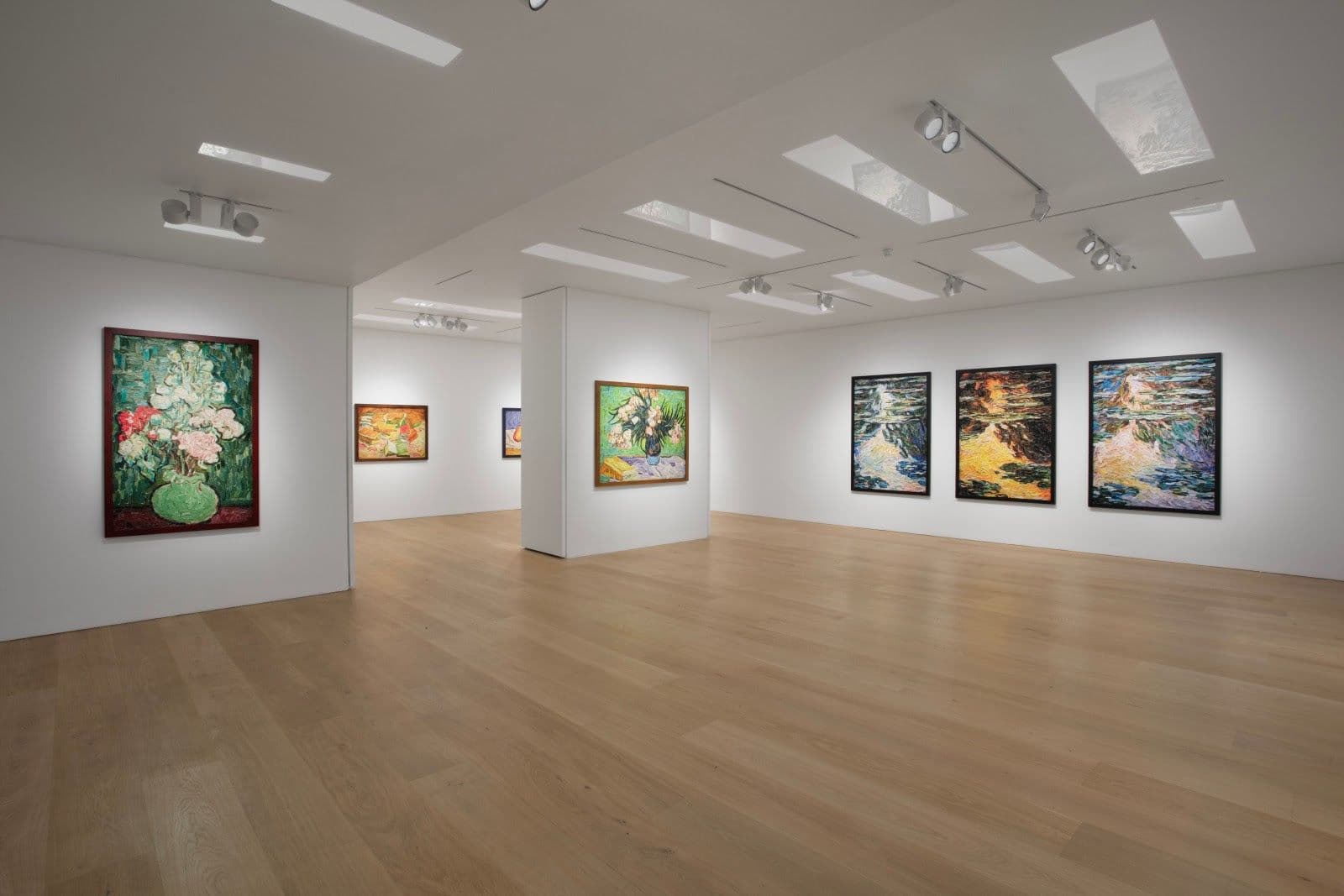
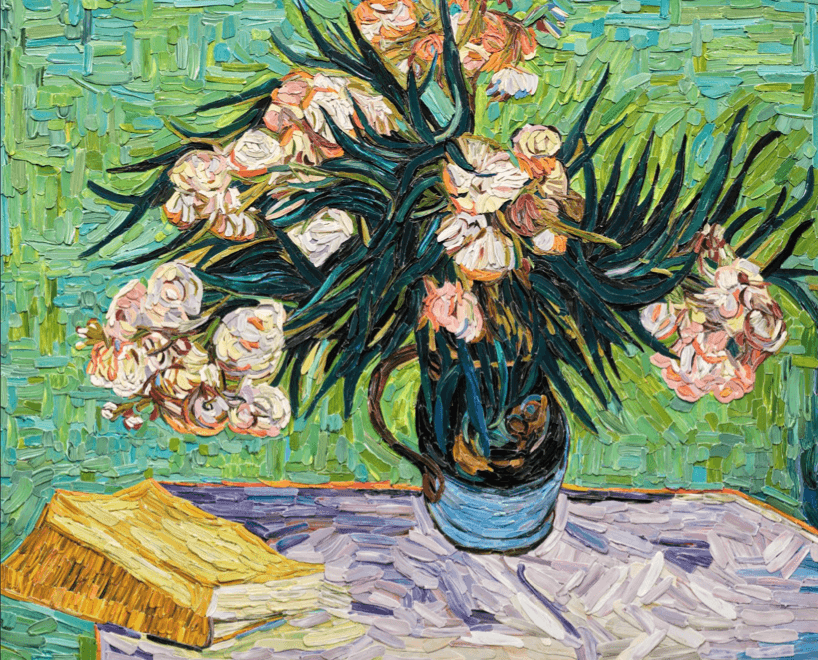
Ben Brown Fine ArtsBen Brown Fine Arts is delighted to present Vik Muniz: Brushstrokes, the first exhibition of the artist's bold and highly experimental Brushstrokes series at our London gallery. This new body of work extends Muniz’s longstanding exploration of visual perception, materiality, and the mechanics of image-making. In Brushstrokes, he turns to the very building block of painting – the brushstroke – reconstructing canonical images from the Impressionist and Post-Impressionist traditions through intricately layered photographic collages. The series draws upon the works of Vincent van Gogh, Joaquín Sorolla, Henri Matisse, Claude Monet, and Pierre-Auguste Renoir – painters who, between the late 19th and early 20th centuries, revolutionised pictorial language. Impressionism and its successors rejected academic rigidity in favour of perceptual immediacy, capturing the fugitive effects of light, motion, and atmosphere. These artists did not describe the world through line and contour, but evoked presence through colour – applied in loose, expressive marks that conveyed not exact likeness but lived sensation. Muniz mines this history, reconstructing their compositions with sculptural swathes of paint – photographed, collaged, and reconstituted into works that oscillate between fidelity and fabrication. Look closely, and each mark is distinct: thick ribbons of ultramarine, ochre, or carmine. Stand back, and the image resolves with startling clarity – a sailboat skimming sunlit water, a still life of fruit, a dappled garden scene. The illusion is complete, yet the means of construction remain nakedly visible. At first, Muniz assumed that actualising his vision of using brushstrokes to recreate these works would be relatively straightforward. But he soon realised the complexity involved. Each stroke had to be lit with exacting consistency to match the original painting’s directional light. A single inconsistency would collapse the illusion. The process became a puzzle of optics, lighting, and reconstruction – a challenge Muniz embraced. For Muniz, the difficulty is part of the allure. His practice thrives on complexity, and ease rarely holds his interest. Obstacles become catalysts for new ideas, prompting unexpected formal solutions and new conceptual avenues. Among the works on view is Nymphéas, after Claude Monet (2025), reimagining Monet’s Nymphéas (1907). Muniz electrifies the original through a sculptural syntax of colour. Three variations of the same composition highlight Monet’s radical treatment of hue as a vehicle for atmospheric depth and optical vibration. In doing so, Muniz foregrounds the Impressionist impulse to dismantle fixed perspective in favour of an experiential mode of seeing. In The Little Sailing Boat, after Joaquín Sorolla (2024), Muniz isolates Sorolla’s luminous brushwork, foregrounding the Spanish painter’s deft manipulation of light and movement through brisk, staccato marks. In Pineapples and Lemons, after Henri Matisse (2025), the joyful flatness of Matisse’s still life is reconstructed through painted fragments – each brushstroke placed with care, a nod to the formal clarity and chromatic daring that defined Fauvism and the late Impressionist legacy. The irony is sharp: there are no “real” brushstrokes in these works. What appears gestural is mediated – painted, photographed, digitally sequenced, then reassembled. It’s a hall of mirrors, a play of surfaces and simulacra, but with deep reverence for the innovations of the past. Muniz honours the Impressionists not just by borrowing their imagery, but by drawing attention to the audacity of their vision – how they broke painting down to its essence and built a new reality with nothing more than colour and light. Vik Muniz: Brushstrokes presents paintings without paint, gesture without touch – a compelling testament to the complexity of vision and a vivid meditation on how we see, remember, and reconstruct images in the age of reproduction. Vik Muniz, born in São Paulo in 1961, is renowned for his unique employment of a wide range of materials, including dust, sugar, chocolate, diamonds, caviar, toys, junk, scrap metal, dry pigment, vintage postcards and magazine shreds, to reconstruct images that tap into the viewer’s subconscious visual repository and ask us to reconsider the familiar imagery in its altered form. His expansive practice explores how we are influenced by and derive meaning from images, examining the relationship between reality and representation, order and chaos, individual and collective memory, as well as the interaction between the whole and its constituent parts. \Holding his first solo exhibition in 1988, Muniz’s work has been exhibited in prestigious institutions worldwide, including the International Center of Photography, New York; Whitney Museum of American Art, New York; Menil Collection, Houston; Museu de Arte Moderna São Paulo, São Paulo; Museu de Art Moderna, Rio de Janeiro; Fundació Joan Miró, Barcelona; Museo d’Arte Contemporanea, Rome; Irish Museum of Contemporary Art, Dublin; Tel Aviv Museum, Tel Aviv; and Long Museum, Shanghai. In 2001 he represented the Brazilian Pavilion at the 49th Venice Biennale. Muniz is the subject of an Academy Award nominated documentary film entitled Waste Land (2010) and serves as a UNESCO Goodwill Ambassador. His public art installation commissioned by the MTA Arts & Design for the 72nd street Second Avenues Subway station, New York, opened in 2016. He was a creative director of the Rio 2016 Paralympics opening ceremony. Muniz’s work features in the collections of the Museum of Modern Art (MoMA), New York; Solomon R. Guggenheim Museum, New York; Metropolitan Museum of Art, New York; Whitney Museum of American Art, New York; Museum of Fine Arts, Boston; Art Institute of Chicago, Chicago; Walker Art Center, Minneapolis; Museum of Fine Arts, Houston; Museu de Arte Moderna de São Paulo, São Paulo; Museum of Contemporary Art, Tokyo; Victoria and Albert Museum, London; and the Tate Modern, London.