
SoHo, New York
Hitoshi Morimoto
Ceramic City
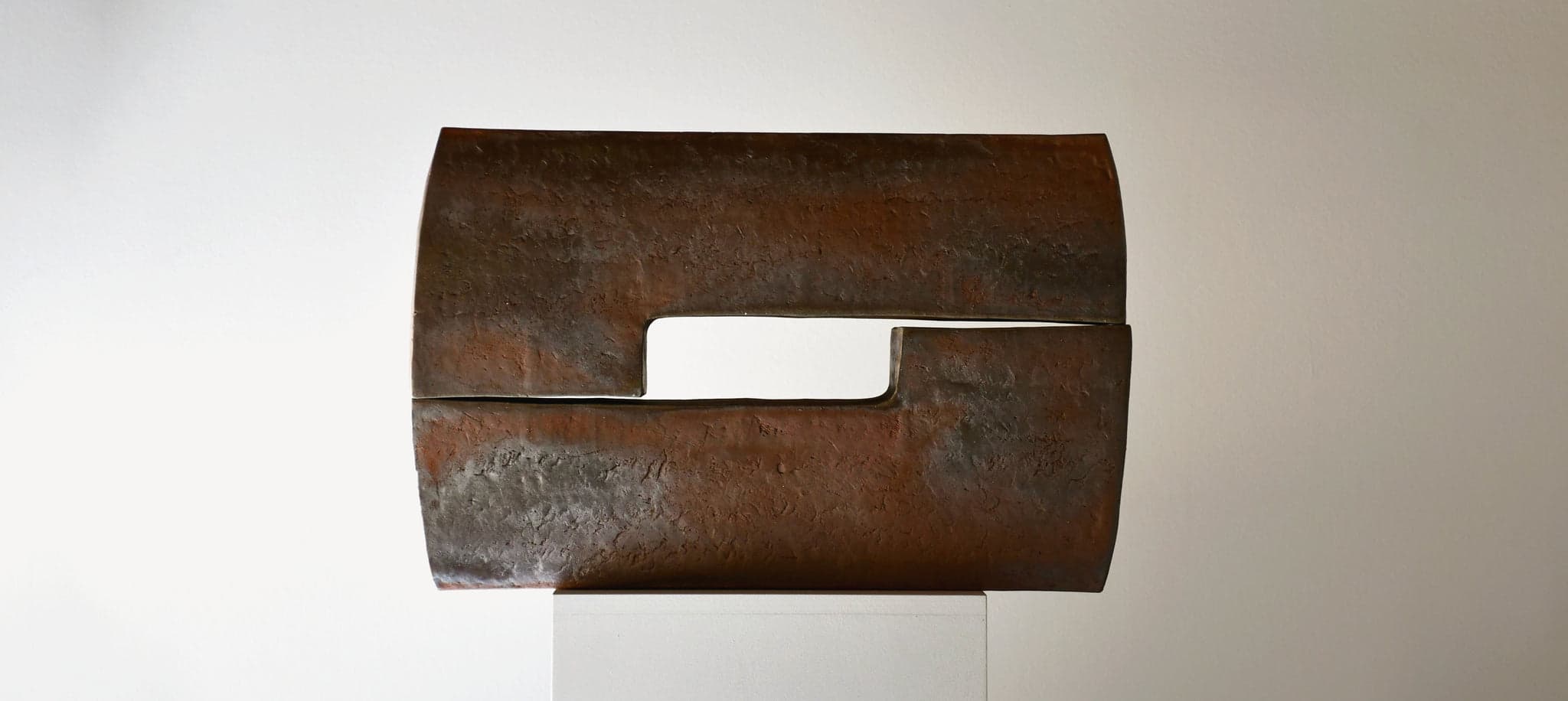
Guild GalleryGuild Gallery presents the first New York solo exhibition of second-generation Bizen ceramic artist Hitoshi Morimoto (b. 1976). Working in the thousand-year tradition of Bizen—Japan's unglazed, high-fired stoneware known as yakishime—Morimoto creates sculpture like music, arranging round and square forms together in space to create a new keshiki, or landscape. "Without glaze, form must sing," he says, through "edge, line, texture, and proportion." Many pieces take up to two years to complete and undergo week-long wood firings in his family's multi-chamber noborigama kiln. Rounded forms suggest "low notes," evoking vegetation or geological formations. Square, architectural pieces—fortress-like structures recalling both ancient buildings and modernist monuments—are "long tones." Together, they create what Morimoto calls "the layers of various sounds." The exhibition's wall works function as ceramic tapestry. One square-shaped piece features a convex surface that shifts the plane forward, creating dimensionality with light. Another appears deceptively flat at first glance, but reveals itself through subtle shifts of color, from black to gray to reddish brown to near black, on its surface. The palette is muddied by ash fall and flame blush. Near-midnight tones recall the iconic black-on-black paintings of Kazimir Malevich, the Russian polymath (1879-1935) who founded the movement known as Suprematism and, like Morimoto, saw color as a question of perception rather than a statement of intent. Grouped together, Morimoto's singular pieces build the rhythm—"tempo, chord, pause"—of a cityscape. Geometric monuments alongside organic forms. Vertical slits acting as windows that let light cut through. "I accept the kiln's accidents," Morimoto explains. Fire is unpredictable, he continues, so the artist who "shapes the clay" ultimately "surrenders" to the kiln and is "unable to control what emerges." This distance between intention and result is part of his process. To Morimoto, "detachment keeps the work honest." Born in 1976 to a tea-master mother and Bizen-ceramicist father Eisuke Morimoto, whose work was showcased at Guild Gallery's 2023 exhibition at Frieze Masters in London, Hitoshi studied sculpture at Tokyo Zokei University and apprenticed in Mino before returning to Bizen to work alongside his father. Inspired by ancient pottery and ruins, including Glastonbury, his work bridges the everyday—a flower branch in a spherical vessel—with a legacy of sculptural experimentation that traces back to the renegade Sōdeisha pottery of postwar Japan. Morimoto's practice returns, ultimately, to a single material truth: "In the end, only clay remains."