
Charlottenburg, Berlin
Bernard Réquichot
Bernard Réquichot
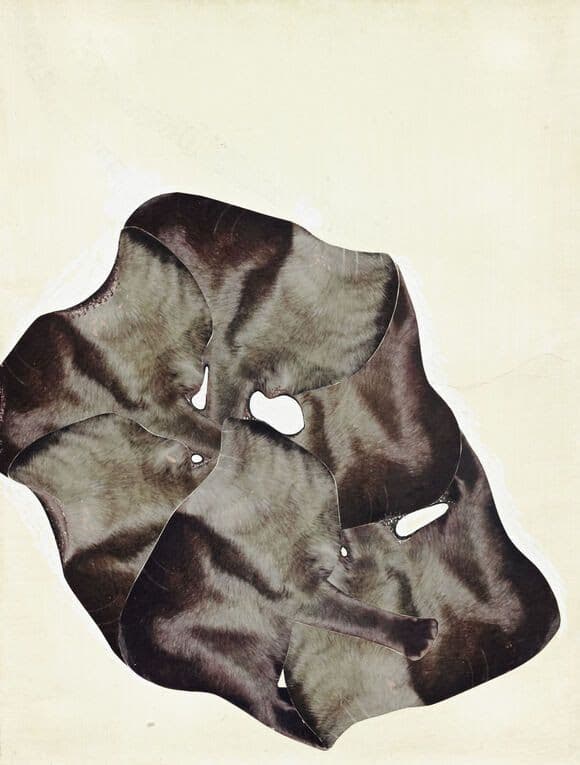
Michael WernerTo this day, there is no way to clearly categorize the work of French artist and writer Bernard Réquichot (1929–1961). His output is less a matter of a rounded oeuvre and more of a trace, an exploratory attempt to grant the image a space beyond the realm of the visible. Despite, or precisely because he was only creative for such a short period of time, and it came to an abrupt end when he fell from the window of his studio in Paris, Réquichot bequeathed us a radical enquiry into painting, and the depth and many sides to his work remain unsettling to this day. Réquichot is one of those rare species of artists who condition their visual language by devising a genuine pictorial semantics. It is one that has nothing to do with the surface of the painting or some mental space but is connected with in increasingly ritualized form the drive to tease out the limits of painting and find a way of capturing the indescribable. The flight into the pictorial space entails freefall from the lifeworld and at the same time immersion in precisely that pictorial space. Réquichot enters into a profound conversation with himself and does so in order to expand the inner space of what painting can achieve, taking his cue from his own processes of animation – in which death is not a rupture but a change in forms, rhythms, and consciousness. These arise in Réquichot’s pictorial worlds by dint of inner acts and not through some ambiguous approach to religion. Selected exhibtions: Centre Pompidou, Paris (2024, 2009, 2005, 1995, 1989); Musée Zadkine, Paris (2020); Musée d’Art Moderne de Paris (2012); Guggenheim Museum, Bilbao (1997); Royal Academy of Arts, London (1997); Centre d’Art Contemporain, Château de Tanlay (1992); Musée de l’Abbaye Sainte-Croix, Les Sables-d’Olonne (1977); Centre National d’Art Contemporain, Paris (1973) and documenta III, Kassel (1964).