
West, London
Jacob Fenton
Notable Figures
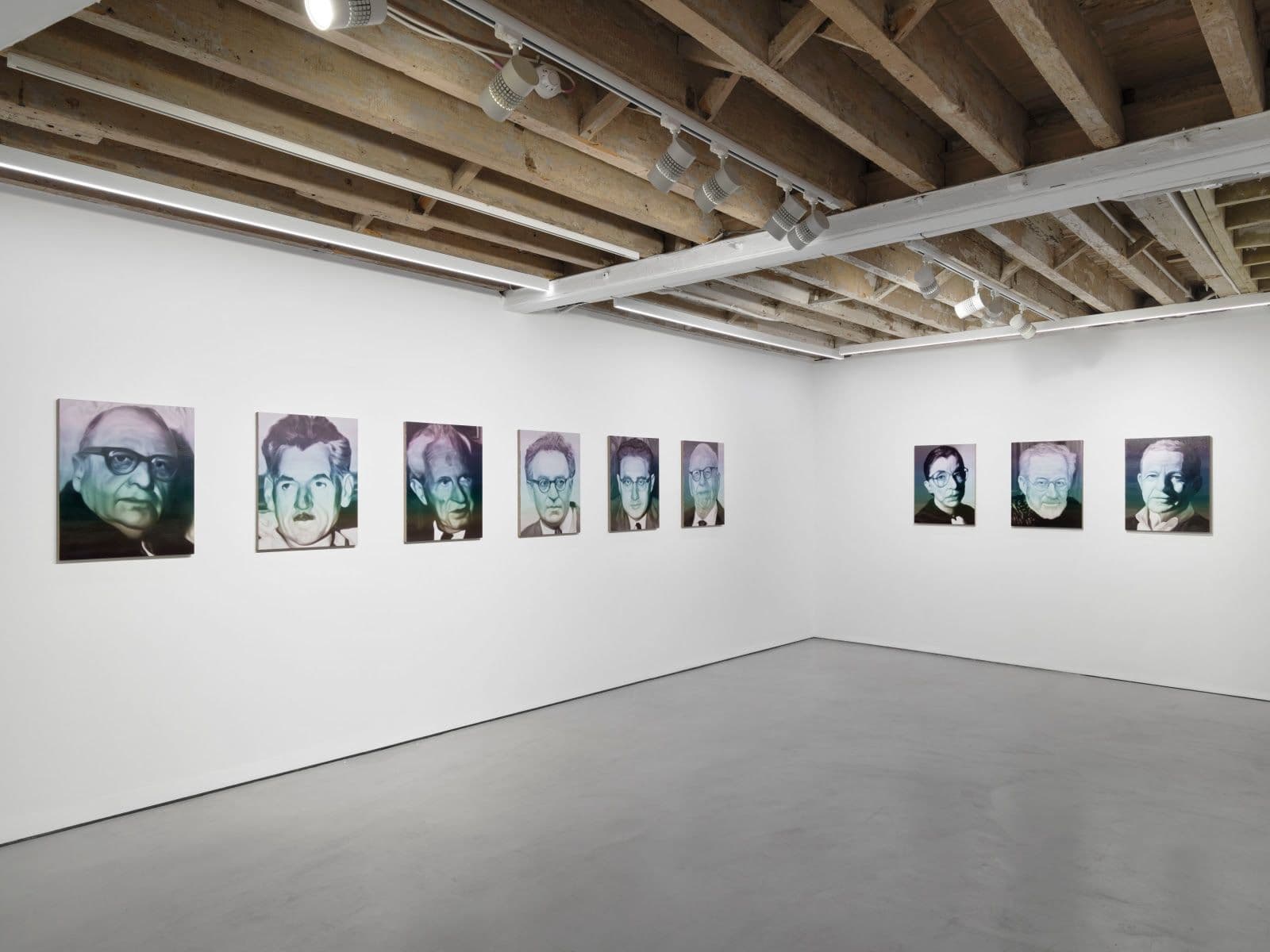
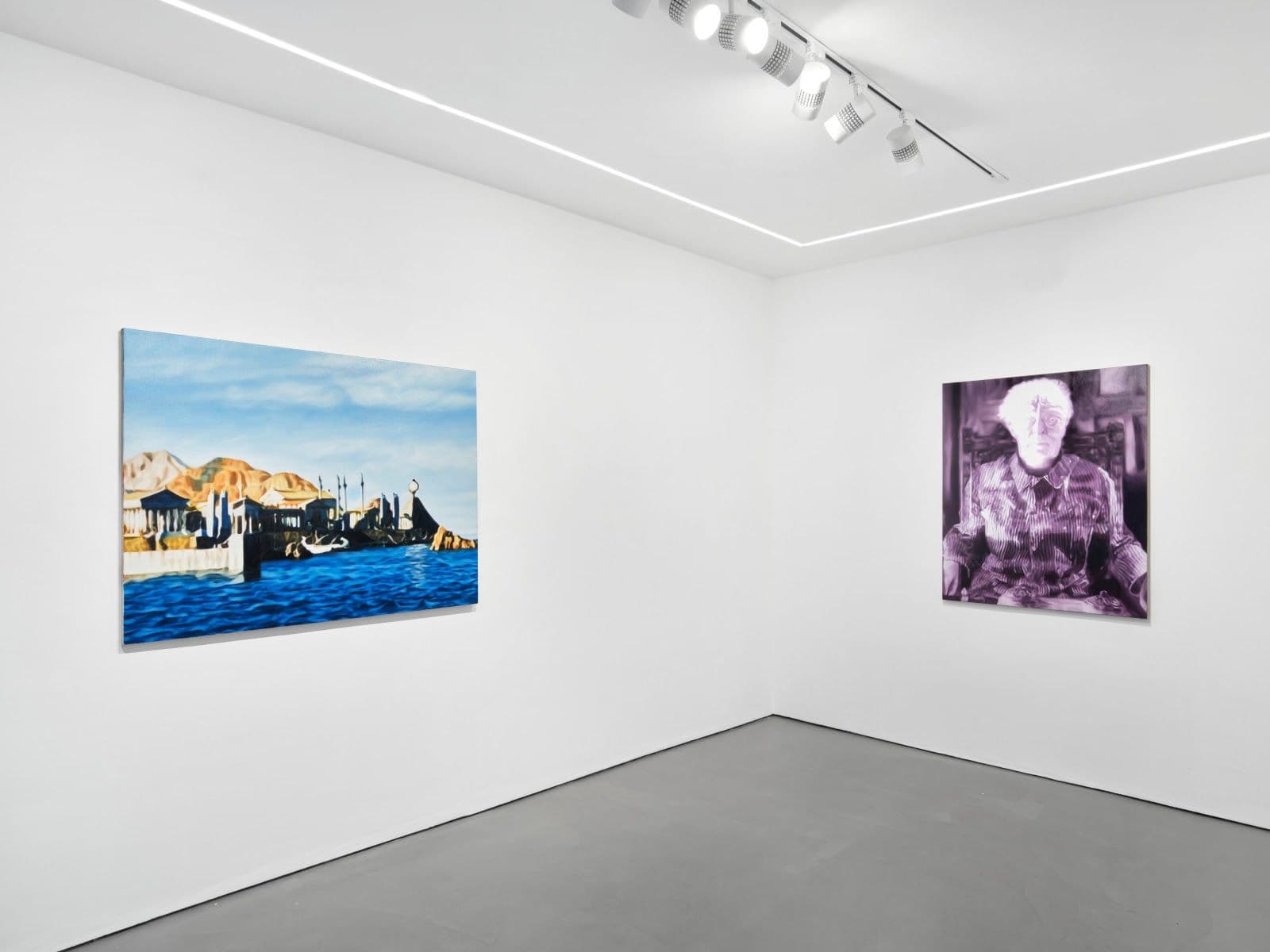
Josh LilleyJosh Lilley is proud to present Notable Figures, the inaugural solo exhibition of LA-based painter Jacob Fenton (b. 1999, Los Angeles, CA, USA). Rooted in a process of extensive research, Fenton’s practice proposes a meta-analysis on conspiracy as an enduring phenomenon of human history, one capable of reflecting both the prevailing concerns of a given time, as well as our perpetual and overriding search for connection. Communicating a moment of acute transmission, he re-contextualises in paint what has already been duplicated, circulated, and disassociated across an array of media. Each work bares the signifiers of reproduction; the contrast and liquidity of digitised material, the tinted filter recalling Xerox copying or Photoshop manipulation. Their polished surfaces present a provenance of distortion, an elision of indexical marks indicating successive iterations of the image. Drawing on imagery pulled from some of the darkest recesses of the web, Fenton’s works across both floors of the gallery utilise subject matter either representative of, or actively utilised within, conspiracy theories. While the contemporary political concern over the spread of misinformation via technology is relevant, the origins of Fenton’s sources pre-date the internet; conspiratorial thinking has been an ever present force throughout recorded history. The immediate malevolence of each theory may fluctuate, but Fenton highlights the latent power and seduction of each manifestation; all of these images are vessels for bias. In Orsic, Fenton presents a conspiracy based around a fabricated persona. Despite never existing, numerous references record Maria Orsic as a key member of the Vril Society, a group of mystics allegedly influential in Hitler’s rise to power. Her legend appears to have been the product of occult propaganda, solidified in a manipulated photograph made in the 1980s by Neo-Nazis and now the subject of Fenton’s painting. The themes her mythos touches on lead into each of the paintings in the exhibition; chief among them the corruptive potential of images. Hyperboreans: Year Zen encapsulates such a subversion- military documentation warped in the eyes of the conspiratorial to indicate the cover-up of a frozen Nazi Base. Disseminated on internet image-boards, these pictures postulate conspiracy as premonition. They are tokens that, through their sharing, manifest featly to not only an alternative community, but an alternative reality. The lower floor of the gallery will house the artist’s treatise on one of the longest standing and expansive conspiracy theories: The Jewish Cabal. Although popularised in the 1900s by the antisemitic, fabricated text The Protocols of the Elders of Zion, its prevalence and reach as a touchstone theory for the alt-right extends back into the annals of history and deep into the dark web of the present. Films circulate there, such as the Neo-Nazi Europa: The Last Battle, displaying a chronology of prominent Jewish figures, their generic portraits in black and white sequence eerily reminiscent of Gerhard Richter’s seminal 48 Portraits, executed for the 1972 Venice Biennale. Fenton has painted that same list in order, grouping the figures in concise combinations so as to focus the points of comparison between them, underlining the inherent surreality of the list. The prevalence of that list in alt-right circles can, in part, be attributed to its point of intersection across all main sub-genres of conspiracy; as both race and “new world order” orientated, it facilitates the implication for points of connection between every strata of society and specialism. But, perhaps more importantly, its continued prominence emphasises the notion that historical narratives spread through cultural transmission. This is a perdurable phenomenon, embodying society’s oldest prejudices whilst also conveying the reoccurring and sustained presence of a fascist, anti-establishment ideology that mutates commensurate with our technological evolution. It is in this light that Fenton’s work proposes a renewed relevance for the adaptability of painting, capable of engaging images in their ever evolving modes of mechanical reproduction, exploring their power to evince and infect. Josh Lilley is pleased to present Jacob Fenton’s (b. 1999, Los Angeles) debut exhibition at the gallery, his first solo presentation in the UK. Fenton weighs up Western society’s conception of truth in the digital age, questioning the purpose of imagery within hierarchies of power. The artist renders faithful reproductions of digital source material in eerily smooth oil paint, estranging his subjects from their contextual clues. Considering the innate credibility of an image, Fenton examines the visual props of conspiracy theories and power systems in today’s socio-political landscape.